Function and Flow
Stop Decorating the Perimeter. The Room Has a Center.
Pushing every sofa, chair, and cabinet to the walls can make a large room feel colder and less useful. Floating furniture creates edges, intimacy, and better flow.
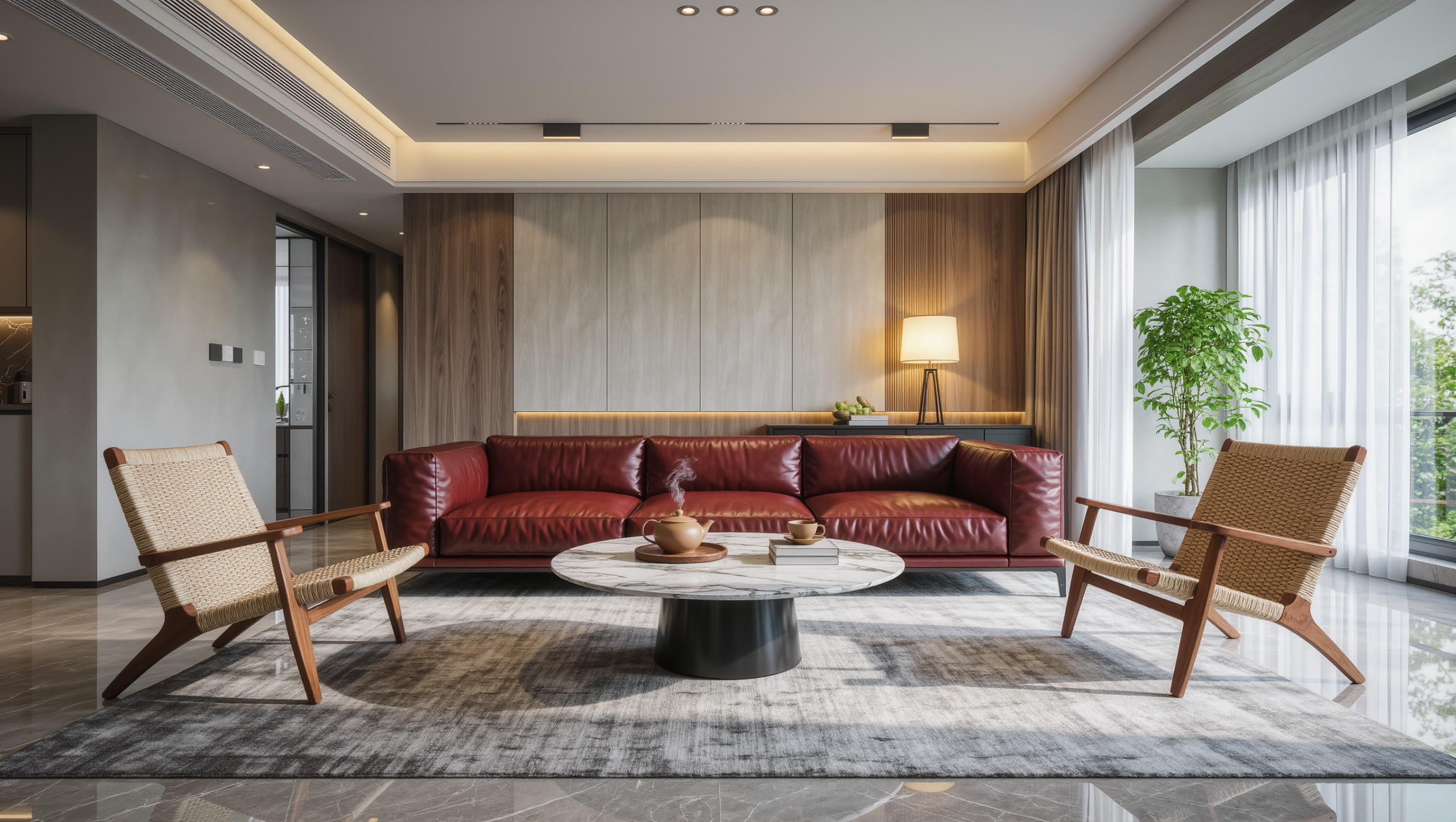
Pushing furniture against the walls feels logical in a large room because the room has so much wall. It is also one of the fastest ways to make the center feel vacant, the seating feel socially distant, and the whole arrangement look as though the furniture is waiting for a fire drill.
Large rooms usually improve when at least some furniture leaves the perimeter and starts shaping the space from inside it.
Float the piece that can create a boundary
The best candidate is often the sofa. A sofa placed several feet into the room can define the back edge of a conversation area, separate living from dining, or protect a circulation path behind it.
That exposed back is not a problem to hide. It is a useful architectural line. A console can reinforce it if you need lamps, storage, charging, or a visual finish. If the sofa back is beautiful and the room needs less furniture, leave it alone.
Build the seating for people, not the walls

Conversation gets awkward when seating is arranged according to room dimensions instead of human distance. Two chairs do not become more social because the room is twenty-four feet wide.
Pull the group inward. Let the rug, coffee table, and seating form a tighter relationship while the room remains generous around it. The occupied part should feel deliberate. The room does not get smaller in the process.
This is also the cure for a common large-room problem covered in The Living Room Has Too Many Centers: one arrangement should read as a coherent group before the eye starts wandering toward every other feature.
Use the space behind furniture on purpose
Once furniture floats, the area behind it becomes useful. It can become a passage, a narrow library edge, a console zone, a plant line, or simply breathing room between the seating and architecture.
What it should not become is a storage moat full of baskets, exercise equipment, cords, and the chair nobody knows where else to put.
If the back side of the room carries regular traffic, keep that path clean and obvious. If it is mostly visual space, resist filling it just because the floor is visible.
Do not float everything
A successful large room still needs perimeter anchors. Bookcases, sideboards, a desk, a piano, or a long cabinet can give the walls enough visual weight to keep the center arrangement from looking stranded.
Stop treating the perimeter as the only legal address. Not everything has to move inward.
Check power, light, and real-life maintenance
Floating a sofa is easy on a floor plan. Living with it means dealing with lamps, charging, floor outlets, vacuuming, and traffic around all sides.
Before committing, trace where cords would go. If a lamp cable has to cross a walkway, the layout is not finished. Floor outlets can be useful in a renovation, but they need to be planned, not wished into existence after the sectional arrives.
Lighting also has to follow the furniture. A large central group often works better with a mix of overhead light, nearby floor lamps, and table lamps rather than one ceiling fixture trying to illuminate the entire county.
Let the architecture keep some room
Floating furniture can improve the way large windows, fireplaces, and long walls are seen. Pulling a sofa away from a window can preserve curtains and airflow. Moving seating away from a fireplace can let the hearth read as architecture rather than a piece of equipment everyone has crowded around.
There should still be a relationship between the furniture and those features. The arrangement simply does not need to touch them.
Run the walk-around test
Move the largest piece first. Do not buy anything. Pull the sofa forward, turn it, or place it across the room and live with the change for several days. Walk the routes you actually use. Carry a laundry basket. Open the patio door. Sit in every chair at night.
If the room suddenly feels more intimate without feeling blocked, the perimeter was the problem.
A large room has enough square footage to let furniture behave like architecture. Use that advantage. Create a center, draw an edge with the pieces you already own, and let the walls become support instead of a magnet.
Same problem, elsewhere in the house
Room notes
Keep the room on the record.
One useful note at a time: what to test, what to ignore, and what changed when the room got another vote.