Function and Flow
Give the Formal Living Room a Tuesday
A formal living room should earn its square footage on ordinary days. Give it a believable daily role—reading, quiet conversation, music, coffee, or flexible hosting—without turning it into a second office or furniture showroom.

On this page
8
Count the number of times last year that the formal living room did the job it was furnished for. Three? Four? Now count the chairs in it. The arithmetic is the entire problem. If the room is meant to work socially rather than ceremonially, Tangled Thistle has the guest-conversation version of the layout test.
A room that sits beautifully empty for eleven months is over-specialized, and over-specialization in a house is expensive in a way that never appears on a receipt. It shows up as square footage the household walks past.
Count the visits, then count the chairs
The instinct when a room is underused is to reprogram it with ambition: a library, a music room, a second office, a place for the good conversations that somehow never happen in the kitchen. Assign five aspirational hobbies to a room and what you get is the same empty room with more equipment in it.
Pick one job. Two if the household is genuinely large. Reading, coffee, homework, cards, drinks before dinner, phone calls that need a door. What matters is not whether the activity sounds nice but whether someone would begin it without moving furniture first. If starting requires dragging a chair across the rug, it will not happen on a work night. It will happen once, on a weekend, to prove a point.
The formality is not what is wrong here
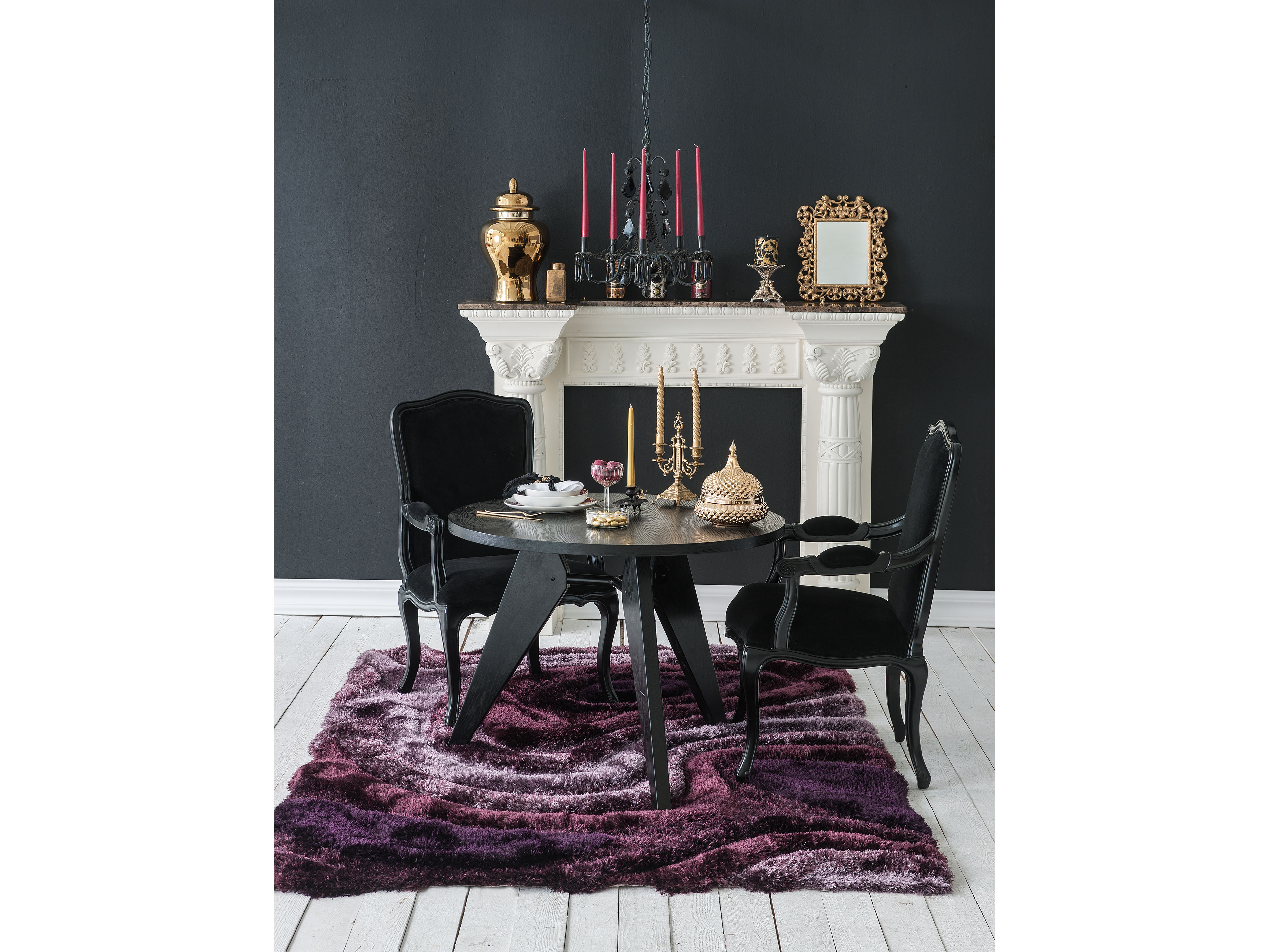
There is a standard piece of advice that says the cure for a formal room is to loosen it. Slipcovers. A sectional. Something forgiving. It is the wrong cure. The fireplace, the symmetry, the good rug, the curtains with actual weight in them are the reasons the room is worth arguing about at all. Strip those out and you have solved the problem by removing the room.
What is missing is reach. Somewhere to set a cup down, light that falls on a face instead of a ceiling medallion, a seat a person can occupy for forty minutes without negotiating with the upholstery. None of that asks the room to become casual. It asks the room to become usable, which is a different and much smaller renovation.
Seating for a crowd that is not coming
Most formal rooms are set for peak capacity, which means they are set wrong fifty weeks of the year. Ten seats arranged for ten people push everyone out to the walls, and two people sitting inside a ring built for ten have to project across a coffee table the size of a small landing strip. That is not hospitality. That is a conference table with better upholstery.
Furnish for the ordinary number and borrow for the exceptional one. Occasional chairs can live in a bedroom, a hall, or a closet and come out three times a year, and no guest in recorded history has thought less of a host for a chair that arrived from elsewhere. Pulling four seats out of a formal room usually makes it read as larger and more generous rather than emptier, because the ones left behind can finally sit close enough to talk.
Angle them toward each other rather than toward the room’s axis of symmetry. Give every primary seat a surface within arm’s reach and light that is not coming from twelve feet overhead. And if the room has both a fireplace and a view, let the seating admit that two things are worth looking at. Rigid symmetry around a single focal point is a diagram, not a conversation.
One chair with a job of its own
What pulls a person into an unused room is rarely a social arrangement. It is one good chair that has everything it needs already assembled around it: task light, a side table, power if a device is involved, and something worth facing. Complete the zone and somebody will use it daily. Leave out the lamp and you have made a sculpture.
This is the cheapest intervention in the whole room and the likeliest to work, because it does not require anyone else to be free. An accent chair becomes daily furniture the moment sitting in it stops being a decision.
The view from the hall is not the room
Formal rooms are usually seen before they are entered, from a doorway or a hall, and that first view does a lot of work. Decide what it should land on, whether that is the fireplace, the art, the piano, the window or the conversation group, and then go stand in the doorway and check what it actually lands on. Frequently it is the back of a sofa and the broad flank of an oversized coffee table, because the room was arranged for the doorway view and then nobody returned to the doorway.
Floating furniture is architecture from behind. Height, upholstery and placement all read on the approach. The standard answer is a console table, and a console is fine where the clearance exists, but it is not automatic. An open walking route behind the sofa is often worth more than another surface for objects. Pick whichever one the household will use, not whichever one looks finished.
Where the two views conflict, the people sitting down win. Arrival lasts four seconds. Tuesday is the rest of it.
A chandelier is not a lamp
The formal room almost always has one impressive fixture at ceiling height doing all of the work, and ceiling height is the worst available place from which to light a face, a page, or a conversation. The fixture can stay ceremonial. It simply should not be responsible for every job in the room. A space lit only from above at nine in the evening reads as a lobby, and lobbies are designed to be crossed.
Put light at sitting height and standing height instead: lamps beside the chairs, a wall light or two, something aimed at the art. Then switch the big source off and look at what remains. Most formal rooms improve sharply at night, because small pools of light carve human-scale territory out of a composition built to be admired from the edge. The room stops being one large impressive space and becomes three or four places a person could actually be.
If it still feels staged after dark, the layers are not doing enough. The site’s lighting guides work through the sequence.
Empty rooms fill up with other rooms’ problems
An underused room collects boxes, spare chairs, wrapping paper, seasonal decor between seasons, and everything the busy rooms could not hold. Then it is less usable, which justifies more of it. That is a feedback loop, and the way out of it is to give the room a daily job and then remove whatever does not serve that job. No storage system will do it for you.
Begin with the surfaces, because surfaces are where the room refuses hospitality most quietly. A coffee table carrying a stack of books, a tray, three objects and a plant has nowhere to put a drink, and a guest who cannot put a drink down will not stay long enough to want a second one. Keep one surface genuinely clear. Someone should be able to sit without first working out which part of the styling is permitted to move.
If the new job is a louder one, a family lounge or a movie room or cards or homework, decide in advance where the blankets, devices, papers and pulled-around chairs go at the end of the night. A reset that takes ninety seconds will happen. One that takes twenty minutes will not, and by the third week the room looks permanently mid-project. Closed storage is what lets a formal room absorb an informal life without visibly surrendering to it.
Seven days before you buy anything
Move a lamp in. Pull two chairs closer together. Clear one surface completely. Then use the room every single day for a week for one specific thing, and buy nothing at all while you do it.
What seven days tells you is not whether the room is beautiful. It already is; that was never the question. It tells you which pieces of furniture were participating and which ones were merely attending. Some of it will turn out to be scenery, and that is worth discovering before a new sofa arrives.
Most of these rooms need permission to stop waiting for company. A renovation would be the expensive way to avoid giving it.
Same problem, elsewhere in the house
Room notes
Keep the room on the record.
One useful note at a time: what to test, what to ignore, and what changed when the room got another vote.