Furniture and Scale
The Accent Chair Has No Alibi
An accent chair should earn its footprint through comfort, orientation, flexibility, or visual balance. Use this test before keeping a chair that only fills a corner.

The accent chair has been coasting on charm.
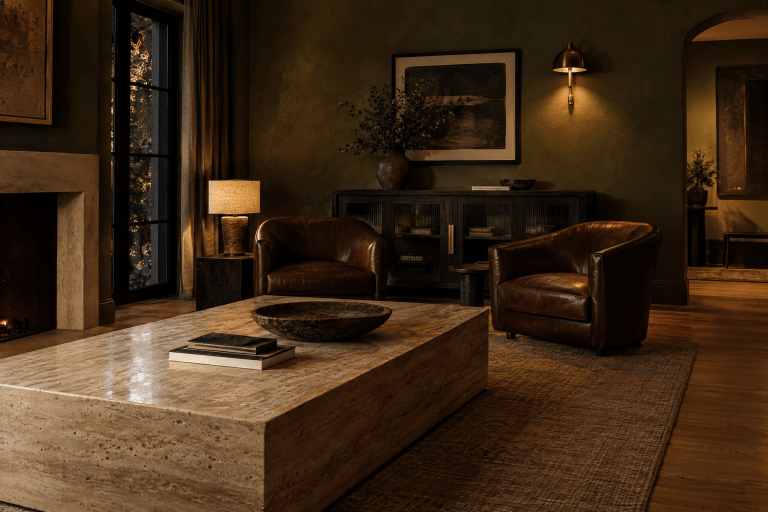
It photographs well, occupies a respectable corner, and may even be wearing an excellent fabric. But if nobody sits there, the lamp cannot reach it, and the chair blocks the cabinet every time it moves, the room is allowed to question its alibi.
An accent chair can earn its footprint through comfort, orientation, flexibility, or visual balance. It does not have to work every hour of the day, but it should create a real possibility that open floor would not.
Ask who actually chooses the chair
For a week, notice whether anyone sits there without being instructed. An ignored chair is useful evidence. The problem may be the seat itself, but it may also be placement: poor view, no side table, weak light, an isolated position, or a route that makes the chair feel like an obstacle before anyone reaches it.
Do not confuse infrequent use with failure if the chair has a legitimate occasional role, such as adding a comfortable guest seat. But name that role. A chair kept for hosting should be easy to pull into the social group without dismantling the room.
Check what the chair faces
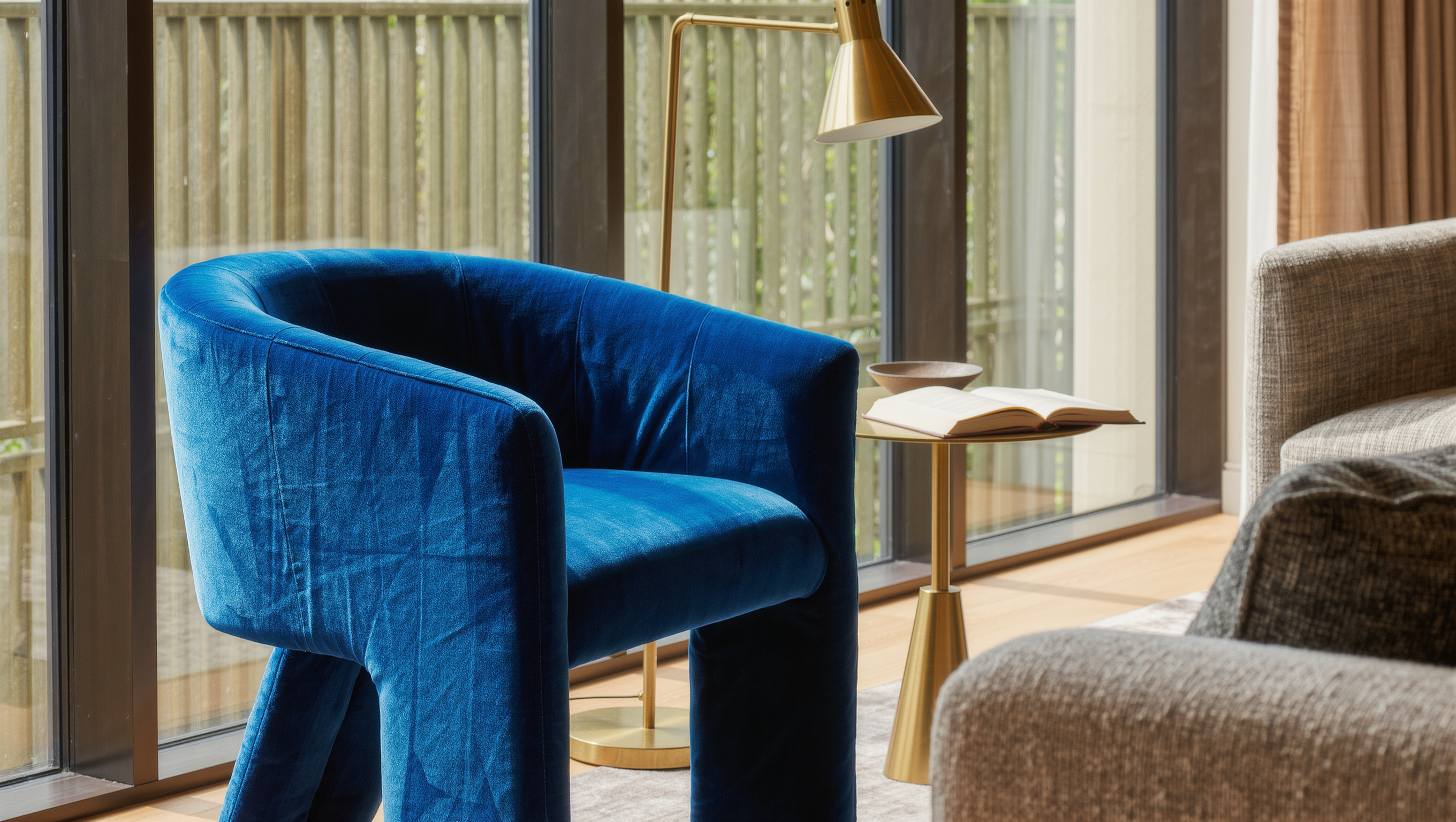
A chair can complete a conversation group, claim a window, support reading, or swivel between two focal points. It should not face a wall by accident or turn its back on the room simply because a gap existed there.
Angle the chair toward people first if conversation matters. If television and conversation both recur, a swivel base may add more functional value than decorative detail. If reading is the point, the chair needs useful light and a place to set down a book or drink.
Give the seat its supporting cast
Every good chair position has at least one supporting condition: light, reach, view, or company. Sit in the chair and test those conditions instead of evaluating it from the doorway.
Can you reach the table comfortably? Is the bulb visible in your eyes? Does a nearby door swing into the chair? Can someone pass when it is occupied?
For older guests or anyone with mobility needs, seat height, stable arms, clear approach, and an uncomplicated standing path may matter more than the chair’s sculptural silhouette.
Check whether the chair itself is comfortable
A chair can be perfectly placed and still fail because the seat is too shallow, too deep, too low, too upright, or badly supportive for the people expected to use it.
Sit for twenty minutes, not twenty seconds. Attractive discomfort is still discomfort.
Judge visual weight in the whole room
A compact chair can still look heavy if it is dark, skirted, and solid. A larger open-framed chair can appear lighter. Compare the chair with the sofa, rug, coffee table, and nearby vertical elements.
If one side of the room feels visually dense, the answer may be to move the chair, not add another object on the opposite side.
Color changes weight too. A high-contrast chair attracts attention; a chair closer to the wall or rug palette can settle into the composition. Neither choice is inherently better. Decide whether the chair is supposed to lead or support.
Check the chair’s approach
A seat tucked tightly into a corner may technically fit and feel uninviting because reaching it requires stepping around a table or squeezing past another piece.
People choose seats that are easy to enter and leave. Approach is part of comfort.
Make the reading version complete
If the chair is meant for reading, give it real task light, a reachable surface, and a comfortable body position. A floor lamp three feet behind the seat and a table across the rug do not count as a reading zone.
Use Lighting and Objects with a Job: The Side Table Test to finish the function rather than adding more decor.
Make the guest version flexible
If the chair exists mainly to expand seating during gatherings, test how easily it moves into the conversation group and where it parks the rest of the time.
Heavy chairs, fragile floors, and complicated routes can turn “flexible seating” into a fictional capability.
Try absence before replacement
Remove the chair for several days and leave the corner empty. Do not immediately fill the gap with a plant or basket. Watch what improves and what disappears.
If circulation opens and nobody misses the seat, emptiness may be the better design. If the room suddenly feels unbalanced or guests immediately lack a place to sit, the chair has proved its job.
Do not replace one unnecessary chair with another
If the chair fails because the room does not need seating there, buying a better-looking chair repeats the mistake at a higher price.
Only replace the chair after you know the function is real and the existing piece is the reason the function fails.
Use the empty corner as a comparison
Open floor can improve circulation, make adjacent furniture look stronger, and give the eye a visual pause.
Compare the chair against that value. Furniture does not compete with nothing. It competes with the benefits of open space.
If the chair stays, make its role obvious
Move the lamp closer. Add one reachable surface. Turn the chair toward the actual conversation. Clear the route around it. If it is a flexible guest seat, give it a parking position that works on ordinary days and a clear destination when company arrives.
Beauty counts, but it still has to beat the empty space
An accent chair does not need to justify its existence with constant productivity. Pleasure and beauty count. But it should create enough comfort, possibility, or compositional force to be better than open space.
If nobody sits there, nobody misses it, and the room improves when it leaves, the alibi has expired.
Same problem, elsewhere in the house
Room notes
Keep the room on the record.
One useful note at a time: what to test, what to ignore, and what changed when the room got another vote.