Multi-Use Rooms
The Great Room Learns to Hold More Than One Conversation
A large open room becomes several distinct places through furniture islands, lighting territories, partial boundaries, repeated materials, and enough negative space to keep every zone from shouting.
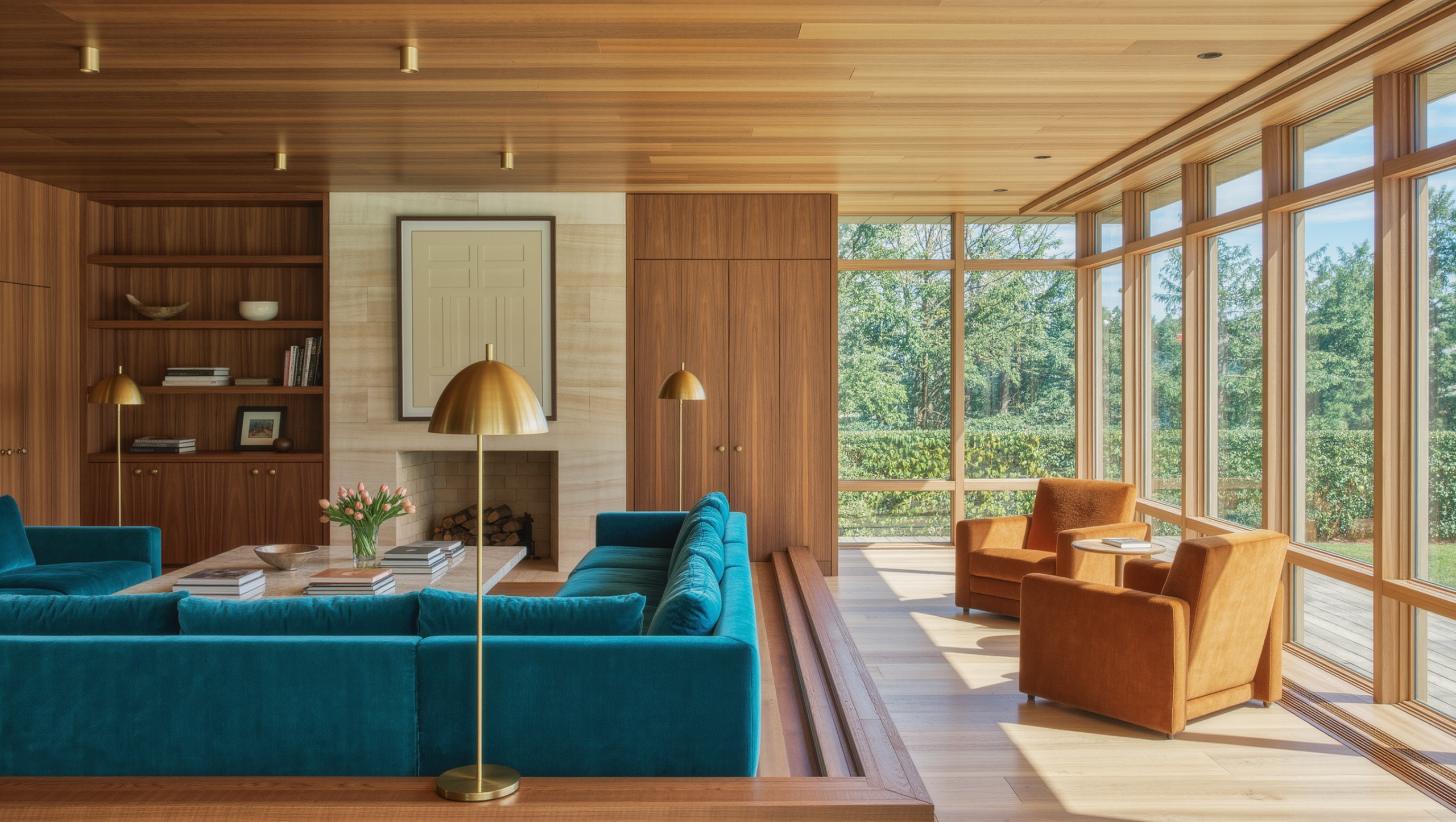
Large rooms are frequently praised for their openness and then abandoned inside it. A sofa drifts toward one wall. A television claims another. The middle becomes a carpeted republic with no government, no purpose, and an excellent echo.
The fix is to give the room several believable lives at once. Filling every empty area does the opposite, which is why the furniture you buy to fix a large room usually makes it worse. A great room can hold conversation, reading, music, work, play, or dinner without turning into a furniture showroom arranged by category.
Stop Treating the Perimeter as the Only Real Estate
Pushing everything to the walls exaggerates the distance and weakens every relationship in the room. Bring the furniture inward and let it form islands. A sofa and two chairs make a social center. A table behind that sofa becomes a library desk, a drinks station, or a work surface, depending on the hour. A pair of lounge chairs near a window holds a quieter life entirely, and the quieter life is usually the one people are short of.
Each group has to work on its own terms. People sitting in it should be able to talk without raising their voices, put a glass down without standing up, see something worth looking at, and get out without walking through somebody else’s evening. Those four things are the test.
Use Partial Boundaries Instead of Building Little Fortresses
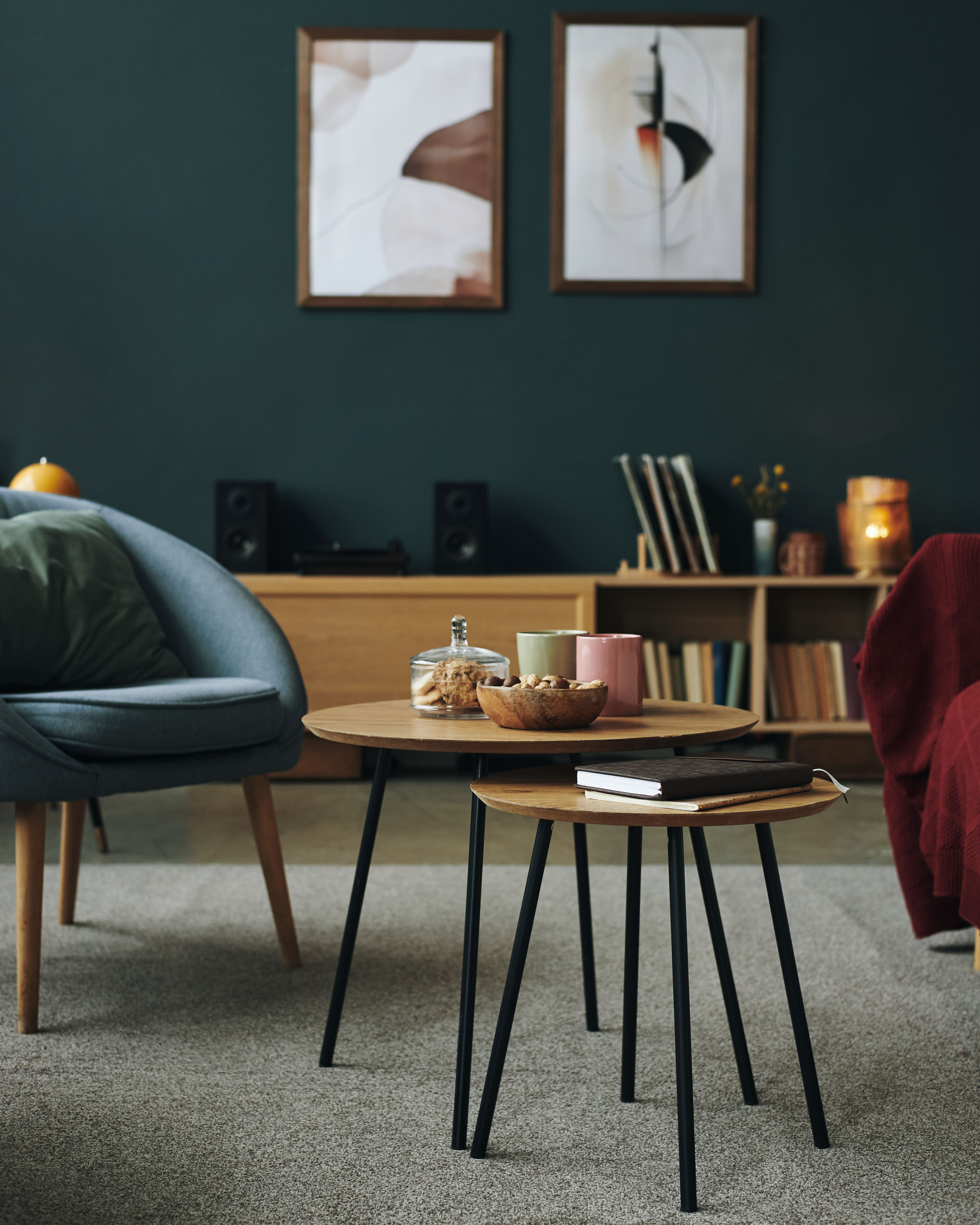
Open shelving, a long console, a screen, a change of rug, a suspended light, a row of plants, the back of a sofa. Any of them works. The boundary only has to say where one activity ends and the next begins. Push it further than that and you have chopped the room into unrelated booths.
A partial divider is most convincing when it has a second job. Shelving holds books and objects. A console takes lamps and serves drinks. A planted edge softens the acoustics and adds depth. Put up a barrier that does nothing else and it reads as temporary scenery, because that is what you have built.
Give Every Zone Its Own Light
One chandelier in the center of a large room cannot explain several activities. It can only announce that the room is large, which everybody standing in it already knows. It cannot do the rest. Light the territories separately. A pendant over the table. A floor lamp beside the reading chairs. Lower lamps around the conversation. Wall light where the route or the artwork needs the emphasis.
Several pools of light on separate switches make a big room intimate in a way one bright source never manages. At night, the unused portions can recede rather than remaining fully illuminated like an airport lounge awaiting inspection.
Repeat Materials to Keep the Room Related
Zones need distinction. The room still needs a family resemblance, and the two demands are not in conflict. Pick one wood tone, one metal finish, one color, one textile, or one shape, and repeat it everywhere. A dark line can run through the lighting, the table legs, the frames, and the shelving. A warm woven material can travel from the chairs to the baskets to the window.
Repetition is not matching. It is visual memory. The eye recognizes that the reading corner and dining area belong to the same room even though they behave differently.
Keep the Empty Space Useful
Empty floor is part of the composition. It carries the circulation. It gives relief between zones. It also lets a large object register as large, which is most of the reason you bought it. Empty floor should form clear passages or deliberate pauses, not accidental gaps between furniture that was too nervous to commit.
Stand in each doorway and look. You should be able to read the major paths from where you stand, without explaining them to anybody. What that first view owes you is a sequence of places, rather than one enormous arrangement trying to face everything at once.
Vary the Emotional Volume
Not every zone should run at the same visual intensity. Let one area carry the strongest color or the largest artwork. Keep another lower, softer, more enclosed. Let a third stay practical and spare. The variation is what creates the rhythm, and it lets you pick the atmosphere you need on a given evening instead of accepting the one the room insists on.
A large room becomes compelling when it offers several kinds of presence: sociable, private, focused, expansive, and quiet. Uniform styling wastes the scale by making every square foot say the same thing.
The Room Is Large Enough to Have a Plot
More furniture will not do any of this. The work is in the relationships: between people, activities, light, boundaries, and the floor you leave open.
Once the great room holds more than one conversation, its size stops being the main event. The room gains scenes, choices, and reasons to be used throughout the day instead of merely admired from the doorway.
Same problem, elsewhere in the house
Room notes
Keep the room on the record.
One useful note at a time: what to test, what to ignore, and what changed when the room got another vote.