Furniture and Scale
The Guest Room Has Most of the Year Off. Give It a Second Job.
A guest room can serve everyday life without making visitors sleep inside an office supply closet. Choose one secondary job and make it disappear gracefully.
A guest room is one of the strangest luxuries in a house.
It can sit perfectly made for weeks, preserving two pillows and a bedside lamp for a person who is not there, while the rest of the household tries to work, read, exercise, wrap gifts, sort clothes or hide from everyone else on the kitchen counter.
I like hospitality. I also like rooms to have a pulse when nobody is visiting.
The answer is not to turn the guest room into the household junk drawer with a mattress.
Give it one second job. A real one.
Choose the job from the life already leaking into other rooms
Do not invent a hobby because the guest room has square footage.
Look at the activities that are already homeless. Is a laptop permanently living at the dining table? Are craft supplies migrating through the kitchen? Is there nowhere quiet to read? Does exercise equipment keep appearing in the bedroom because that is where the only open floor lives? Is gift wrap stored in six unrelated closets?
The best second use is usually something that already exists and would improve the rest of the house if it had an address.
One job. Not office, gym, sewing room, library, music studio and emergency storage bunker. The guest room does not need a résumé.
Protect the bed from the second job
This is the line.
If the bed becomes the work surface, staging area, filing system or place where every unfinished project waits, the room no longer converts easily back to hospitality.
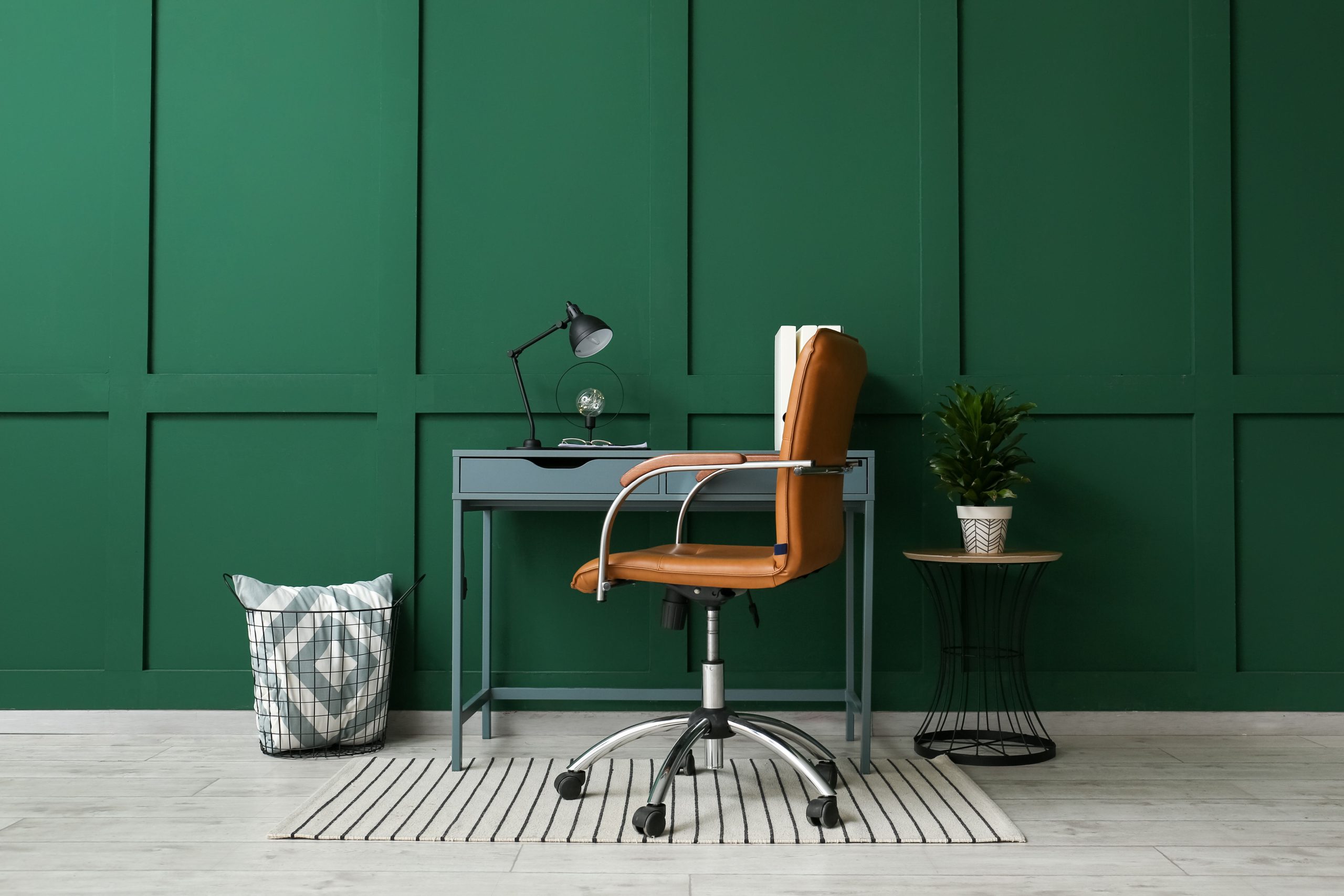
Give the secondary function its own surface. A desk that closes or clears quickly. A table with drawers. A cabinet that can hold the active materials. A chair and lamp for reading. A compact exercise zone with equipment that returns to one storage place.
The bed should remain a bed most of the time. That way getting ready for a guest means changing linens and clearing a few things, not excavating a craft fair.
Make the everyday furniture help the overnight version
The best pieces can serve both modes without pretending to be transformers.
A desk can become a luggage surface when cleared. A comfortable reading chair gives a guest somewhere to sit that is not the bed. A closed cabinet can hold office supplies on ordinary days and leave one shelf empty for a visitor. A bench can store extra bedding and support a suitcase.
Choose pieces you would want in a bedroom anyway. That keeps the room from looking like an office that happens to contain a bed.
And leave enough clearance around the bed that the second function does not turn the sleeping zone into an obstacle course.
Storage needs a vacancy rate
Guest-room closets attract everything without a permanent home.
Seasonal decor. Spare bedding. Out-of-season clothes. Boxes waiting for a decision. Luggage. Random lamps. The printer somebody refuses to look at.
Use the storage, but do not fill it to the point that a guest has nowhere to put a coat.
Leave some actual capacity. A few hangers. A drawer or shelf. Space on the luggage surface. An outlet that is not buried behind a stack of archival household mysteries.
The room can work for you most of the year and still remember what happens when somebody actually stays. The useful standard is not a made-up occupancy number; it is whether the room can return to guest mode without a weekend of excavation. Keep a little storage intentionally unassigned. Leave one reachable outlet and one bedside surface genuinely available. Make sure the secondary use can clear without requiring boxes to migrate into the hall. A room that has another job is fine. A room that has forgotten how to host is a storage room with unusually optimistic bedding.
The second job should close at night
This matters even when no guest is coming.
A room that visibly announces work every time you pass it can make the whole house feel unfinished. If the second function is an office, give papers and equipment somewhere to disappear. If it is a hobby room, contain the active materials. If it is exercise, avoid spreading equipment around the bed like a fitness-themed installation.
Closed storage is useful here because the room changes identity.
Erasing the everyday use is not the point. The room just has to switch modes without a full reset.
Give the guest the obvious things before the decorative things
A beautiful guest room still needs a place for a phone, water and glasses.
Put a reachable surface beside the bed. Give the room decent reading light. Make outlets or charging access understandable. Provide a hook. Leave room for luggage. Make the temperature controllable if the house allows it. Keep the route to the bathroom clear.
Then make it lovely.
Use color. Use a wallpaper you have been too nervous to use elsewhere. Add art with some conviction. Put a ridiculous lamp in the corner if the lamp has earned it.
Hospitality is not beige.
Can the room convert quickly?
Use the room normally for a stretch of ordinary days. Then imagine a guest is arriving in ten minutes.
What has to move?
If the answer is one laptop, a notebook and an exercise mat, the second use is probably compatible. If the bed is under inventory and the closet door cannot open because a desk chair lives in front of it, the room has stopped being multi-use and become contested territory.
Adjust the storage or reduce the secondary function until conversion is ordinary.
A guest room does not have to wait politely for guests.
It can support the household every day, provided its second job knows when to leave the stage.
Same problem, elsewhere in the house
Room notes
Keep the room on the record.
One useful note at a time: what to test, what to ignore, and what changed when the room got another vote.