Function and Flow
The Holiday That Got Haunted: A Small-Space Home Adaptation
Small spaces can carry holiday atmosphere, not unlimited holiday inventory. Concentrate one seasonal story, protect the room's everyday job, decorate vertically, and plan the January exit.
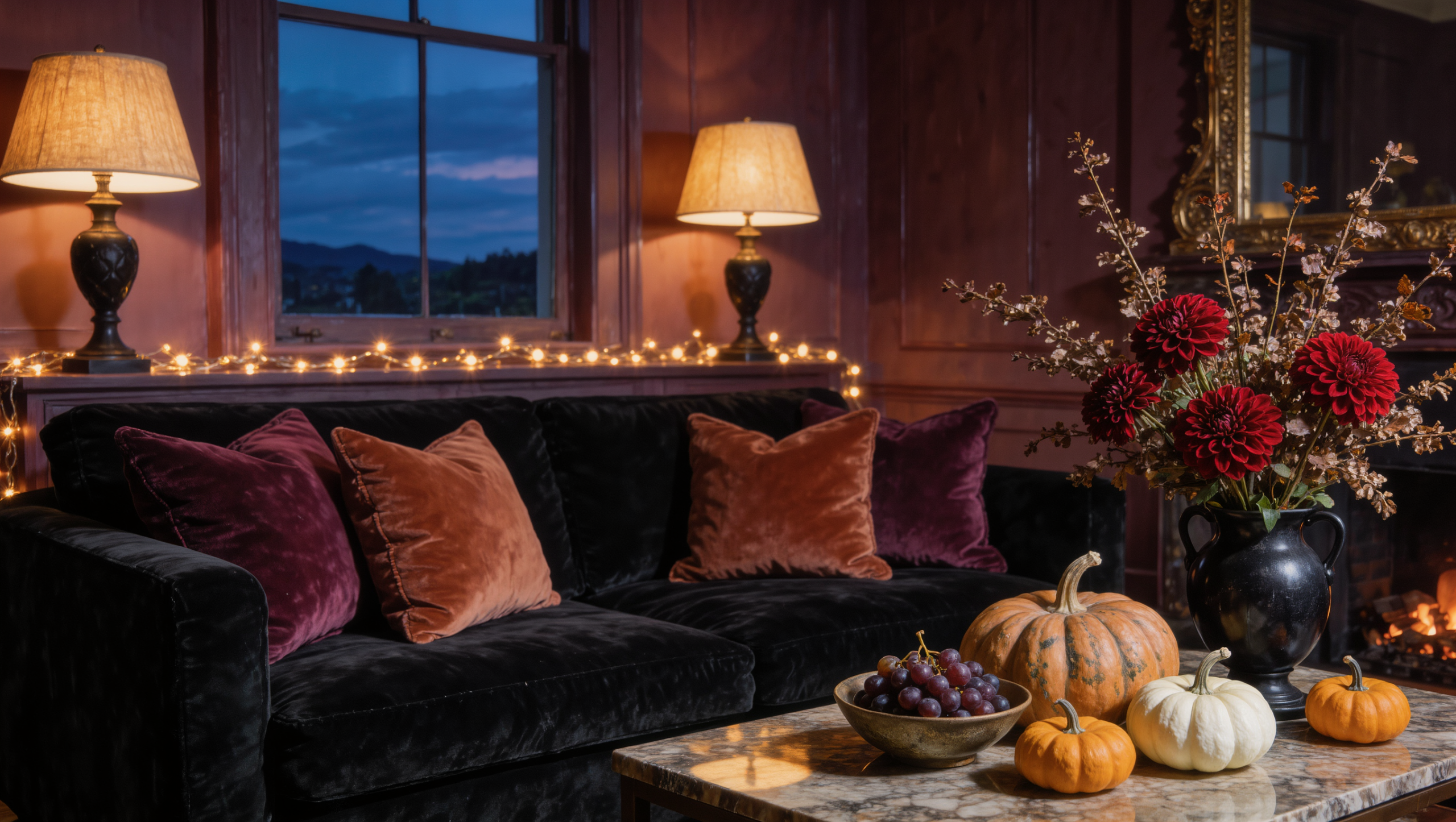
The holiday got haunted the moment the decorations took over the only useful surface, blocked the closet, and made the room require a seasonal evacuation plan.
Small spaces can carry holiday atmosphere beautifully. They simply cannot carry unlimited holiday inventory. The trick is concentration: one or two strong seasonal moves, clear circulation, and a storage plan that remembers January exists.
01
Protect the room’s job
The season is temporary. The door swing remains year-round.
02
One visual story
Choose a dominant theme and a supporting note—not six competing ideas.
03
Vertical before floor
Garlands and hanging elements transform a room without consuming the route.
04
Design the storage exit
Decide where everything goes in January before it goes up in December.
The holiday can be dramatic. The household should not have to live around the drama.
01 Foundation
Choose the room’s permanent job first
A studio still needs to sleep, eat, work, and move through December. A small living room still needs seating. An entry still needs a door that opens. Before decorating, identify the room’s primary job and protect it. Holiday layers should occupy secondary territory, not displace the furniture and surfaces the household uses every day.
Pick one visual story
Small spaces become chaotic when several holiday ideas compete at once: tartan, metallics, woodland, candy colors, vintage ornaments, greenery, novelty pillows, and enough string lights to signal aircraft. Choose one dominant visual story and one supporting note—deep green with brass, paper stars and warm white light, burgundy with natural branches. Let the room read the theme without every object joining in.
02 Volume and the tree
Use vertical volume, and right-size the tree
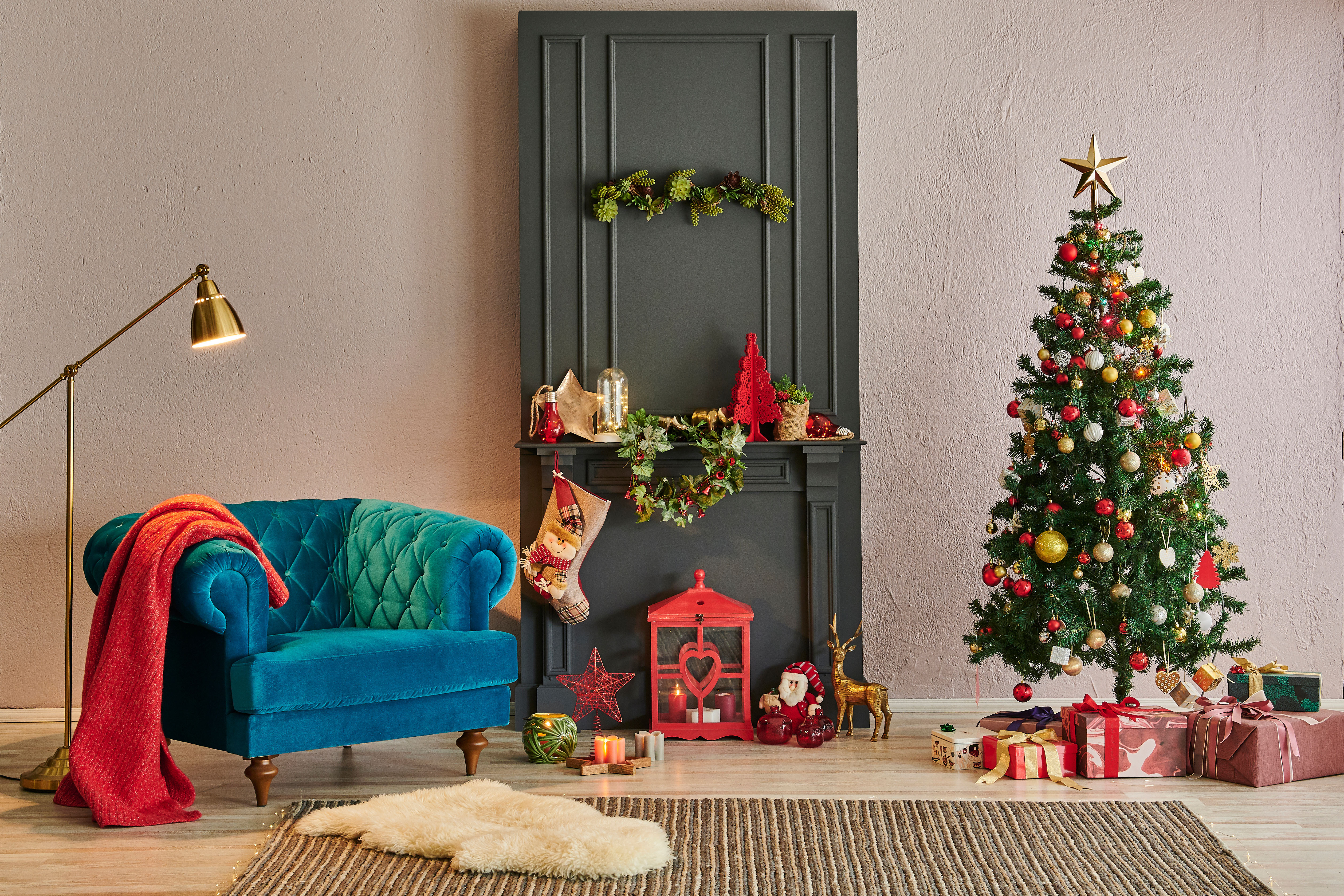
Walls, windows, mantels, shelving tops, doorways, and hanging elements can carry seasonal atmosphere without consuming the route. A garland above eye level, wreath, hanging paper ornament, tall branch arrangement, or window light can make a small room feel transformed while leaving floor and tables usable. Secure anything overhead appropriately and keep decorations away from heat sources, flames, and required exits.
A tabletop tree, narrow tree, branch installation, wall-mounted interpretation, or one dramatic evergreen arrangement can carry the same emotional role in less floor space. Do not judge the tree in isolation—judge the room after the tree arrives. Can the main chair still be used? Can the closet open? Does the path remain clear? If the tree makes ordinary life noticeably worse for a month, it is too large for the room regardless of how beautiful it is.
03 Light, surfaces, and scent
Keep the room usable underneath the atmosphere
Lighting
More than decor
Keep task and circulation lighting intact—seasonal light shouldn’t be the only usable light. See Lighting.
One surface
Stays functional
If the room has to be undecorated before someone can eat or work, the decoration has exceeded its footprint.
Rotate, don’t stack
An edit, not an annex
Put away a few everyday cushions or artworks for the season to create real capacity.
Scent
One, not a department store
Strong or competing scents become unpleasant quickly in a small volume.
Safety: use appropriately rated lighting products, avoid overloaded outlets, and keep cords out of routes. Candles and other flame sources require particular care around greenery, textiles, pets, and children.
04 Guests and exit
Plan the guest mode and the storage exit
If the small room also hosts, decide what changes only for the gathering. Extra chairs, serving pieces, coats, and bags need temporary locations that do not interfere with the everyday holiday setup. Winter gatherings bring bulkier outerwear—create a temporary coat zone in another room or use a designated rack rather than letting outerwear colonize the seating.
Where do ornaments, lights, wreaths, candles, and textiles go when the season ends? Small-space holiday decorating becomes much easier when the collection fits the storage available. Use containers sized for the actual storage zone and retire broken, unused, or duplicate decorations rather than storing them another whole year to confirm you still do not want them.
Novelty can be fun—put it somewhere easy to remove: one ornament, pillow, small artwork, or table object. Do not make a one-month joke responsible for a permanent furniture purchase or complicated wall treatment. The seasonal layer should leave cleanly.
The verdict
Atmosphere grows, friction doesn’t
Everything seasonal competes for floor the household already needed. In a small volume that usually means one seasonal idea carried far enough to feel like a decision, and a second one turned down flat.
January settles it. Anything that has to be dismantled around, carried over, or wedged into storage it does not fit has stopped being decoration. It is a second set of furniture wearing tinsel.
Same problem, elsewhere in the house
Room notes
Keep the room on the record.
One useful note at a time: what to test, what to ignore, and what changed when the room got another vote.