Awkward Spaces
The Closet Ceiling Is Storage You Forgot to Measure
The high zone above a closet rod can hold seasonal and infrequent items efficiently—if shelf depth, visibility, step access, and container size are planned instead of simply stacking boxes toward the ceiling.
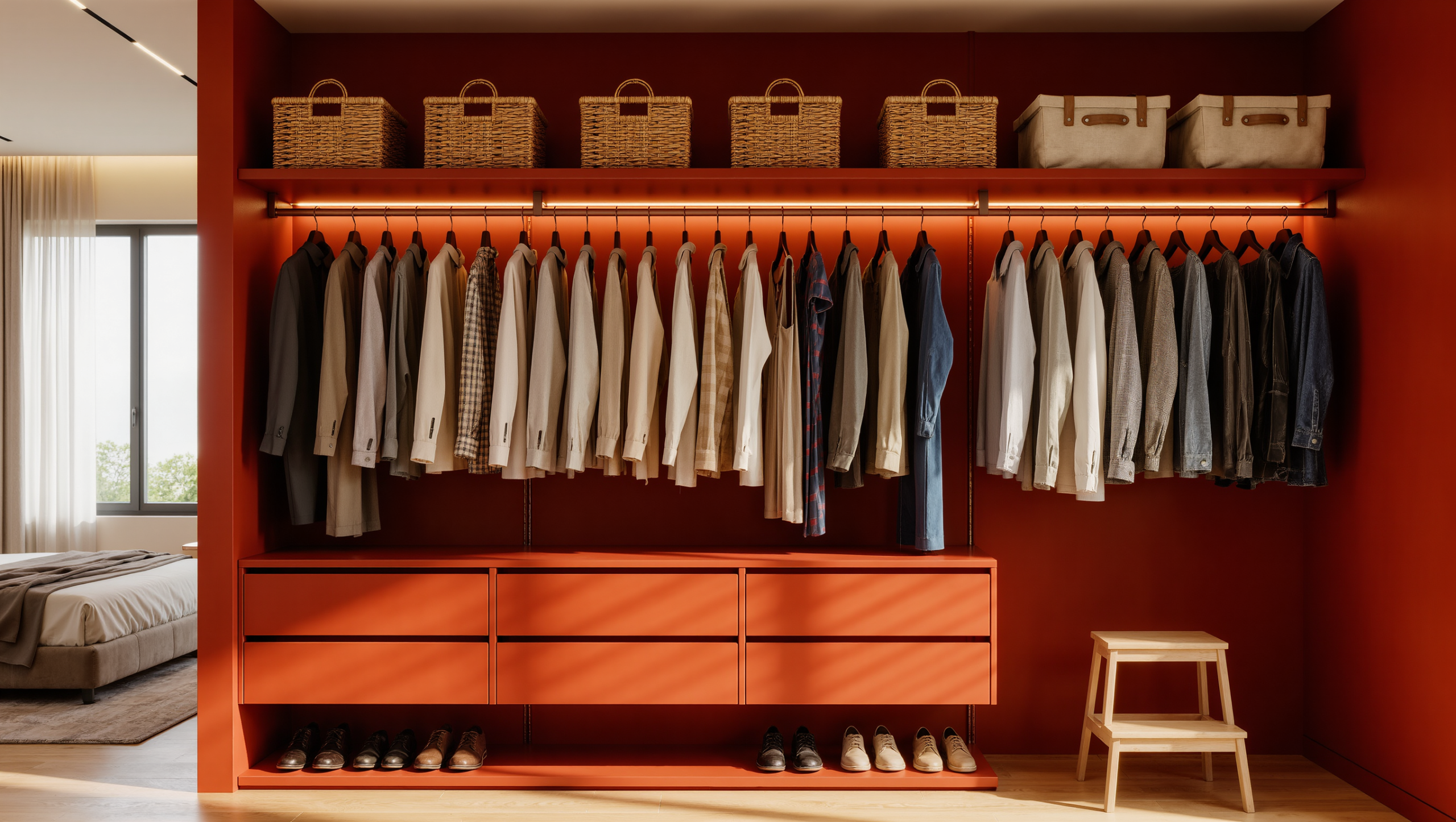
Closets often waste their highest two or three feet in a particularly irritating way: one shelf sits above the rod, and above that shelf is a tall volume holding mostly air and one box nobody can reach without removing something else.
The upper zone needs categories, access and dimensions before it needs shelves. Without all three it is elevated clutter with a ladder requirement.
Measure the full height, not the existing shelf
Record ceiling height, door height, shelf depth, rod height, and the space above the opening. A closet may have generous internal height that the doorway makes difficult to reach. That difference determines whether upper storage should be open, stepped, or built into deeper cabinets.
What height actually costs you
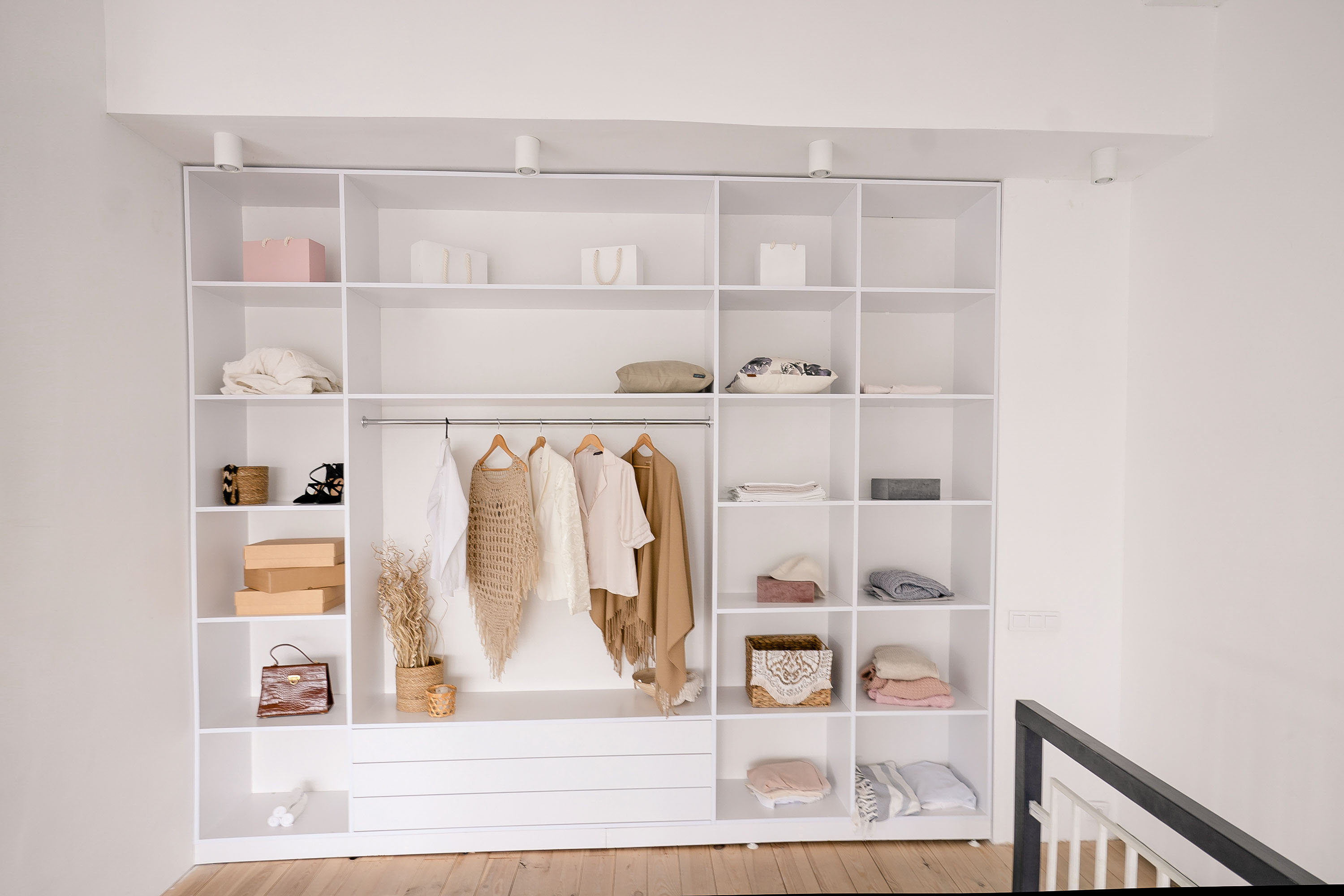
The top belongs to luggage, off-season clothing, spare bedding, keepsake boxes and refills. Everyday clothing, shoes and accessories stay low. That reads like a tidiness rule and it is not. Anything stored above shoulder height gets paid for twice, once in the reach and again in the reluctance, and it is the second payment that leaves a suitcase living permanently on the bedroom floor.
Two shallower shelves usually beat one tall void, because the containers stay small enough to lift down one-handed. Give the lower of the two your moderate-use categories and reserve the very top for genuine seasonal storage. A single seven-foot shelf does not get used as storage anyway. It gets used as a launch pad for whatever somebody happened to be carrying.
The container has to get through the door before it gets on the shelf
A large bin can fit the shelf perfectly and still be impossible to angle through the closet opening. Test the whole path, floor to shelf, with the container full rather than empty. Storage that needs a furniture-moving technique every single time gets used about twice, and then the contents live somewhere else.
Then label the front edge, in words, big enough to read from underneath. Transparent boxes help far less than people expect at seven feet, particularly when the box holds four unrelated categories and you are looking up at the shadowed side of it. One category per container is what makes retrieval quick, and it is also the thing that makes throwing any of it away possible three years from now.
Plan safe step access
If upper storage requires a step stool, keep a stable one nearby and make sure there is floor space to set it securely. Do not place frequently needed items where reaching them encourages climbing on chairs, shelves, or unstable furniture.
How much of the closet is actually yours?
In a dressing area or an open closet, running doors or cabinetry all the way up buys a cleaner wall and a great deal less dust. Put the unattractive seasonal material behind the upper doors and let the reachable zone stay visually calm.
Not every inch is available, though. Access panels, air returns, sprinklers and electrical components need clearance, and a storage plan that seals them in has not gained capacity. It has borrowed it from somebody who turns up later with a flashlight, a service call and no patience for millwork.
High storage is easy to forget precisely because it sits outside the normal sightline, and the forgetting is how a closet converts its best volume into an archive nobody chose to keep. The closet ceiling earns its place when it holds the things you rarely need in a way you can still get them down without an event. Height is only capacity if somebody planned the access, and access is the part that never shows up in the photograph.
Same problem, elsewhere in the house
Room notes
Keep the room on the record.
One useful note at a time: what to test, what to ignore, and what changed when the room got another vote.