Function and Flow
The Back Bar Is Where the Drama Belongs
The back wall of a home bar can carry color, stone, mirror, metal, tile, shelving, and light because the working counter needs to stay practical. Concentrate visual drama where it will not interfere with service.
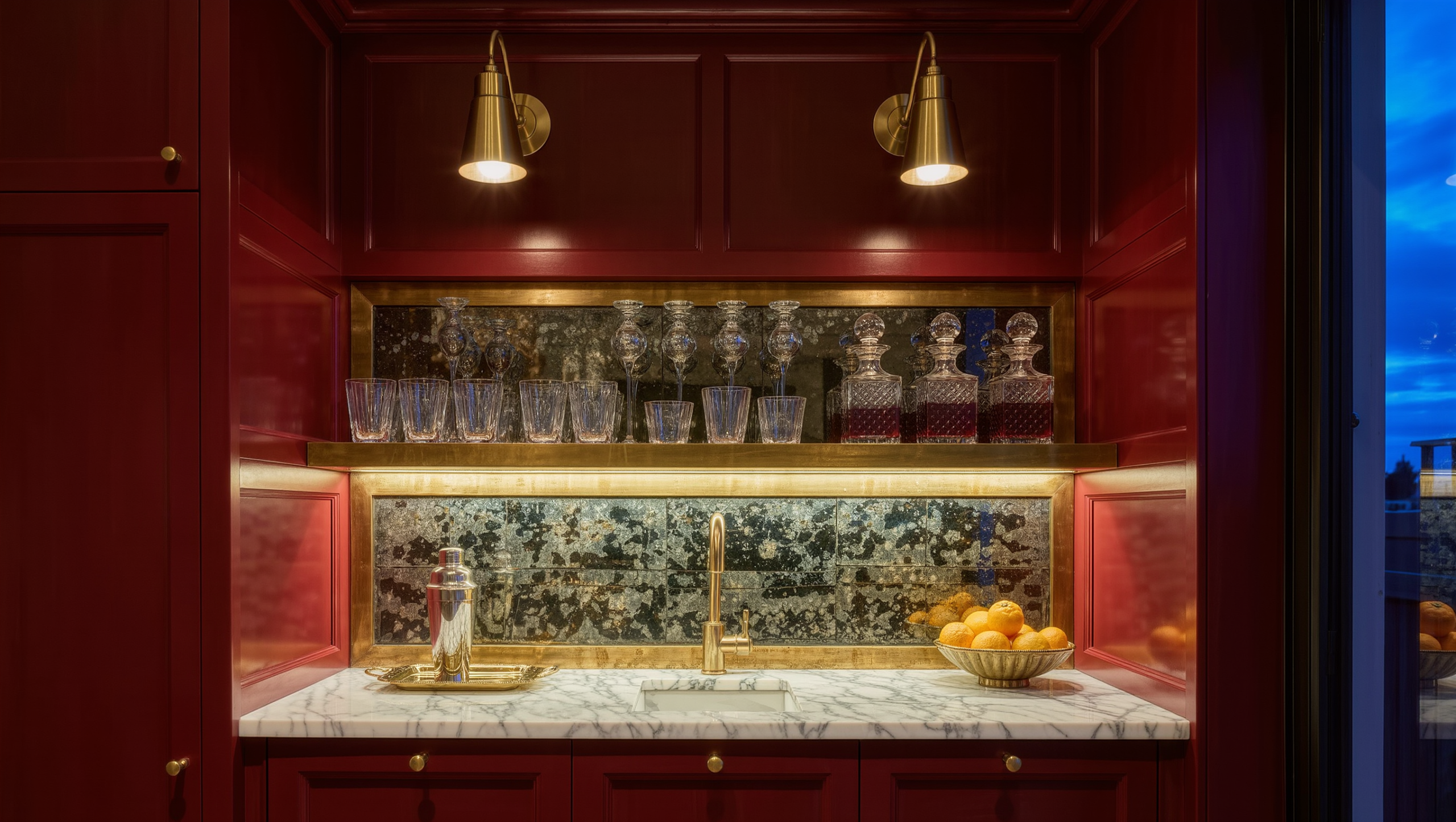
A home bar is one of the few places where a room can tolerate a little theatrical excess without immediately asking everyone to live inside it.
The best place for that excess is often the back bar. The counter has to survive water, bottles, cutting, wiping, elbows, and service. The wall behind it can carry the color, reflection, texture, and light that makes the bar feel like an event.
Let the work surface stay practical
Choose the counter for durability, cleanability, seam logic, and the actual tasks performed there. Then use the vertical plane for the material that would be too delicate, too reflective, too patterned, or too expensive to cover every horizontal inch.
Drama works better when it is not constantly being scrubbed with a damp towel.
One material, chosen with nerve
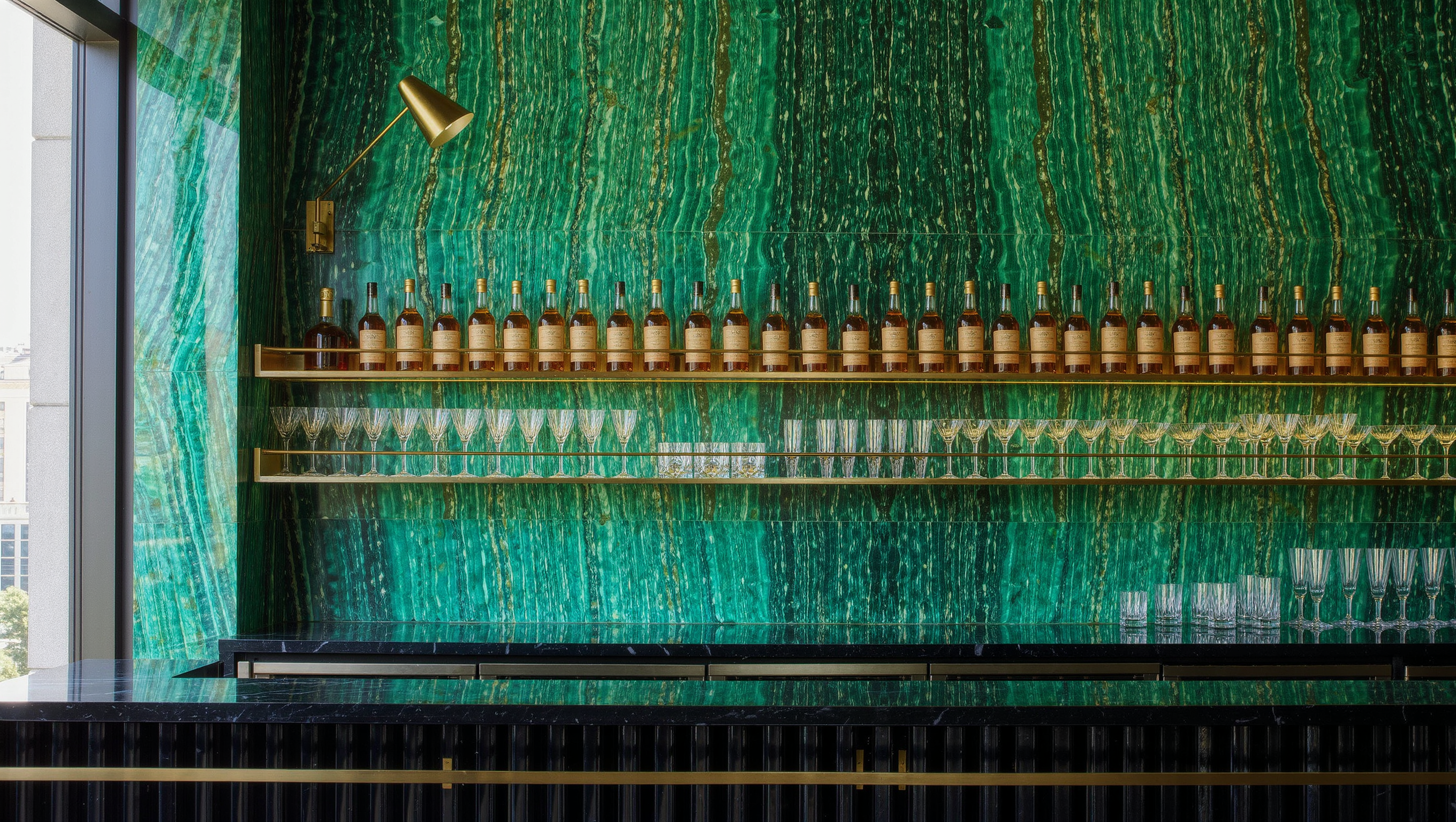
Bookmatched stone, handmade tile, smoked mirror, lacquer, wood veneer, fluted glass, metal, or saturated paint can all work. Do not stack five strong finishes because the bar is small enough to survive them individually.
One memorable material with disciplined shelving often looks richer than a sample board installed vertically.
Mirror deserves its own warning, because it is the finish people choose when they cannot decide. It doubles light and makes a shallow bar feel deeper. It also reflects every bottle, every person, every ceiling fixture and every unfinished corner standing behind them. Smoked, antiqued or tinted mirror softens all of that, but softening is not solving: the room being repeated still has to be worth repeating.
Grazing the wall the bottles are standing against
Shelf thickness, spacing, brackets and edge detail all matter here, because the back bar is the one piece of millwork in the house that gets looked at directly. A few substantial shelves read as architecture. Too many closely stacked ones turn bottles into inventory, and inventory is what a bar is trying not to be. Leave enough vertical variation for the tall bottles, a piece of art, or one stretch of nothing at all.
Light the wall itself. The objects standing there are only half the scene. A stone slab becomes dimensional when it is grazed. Textured tile wants directional light. Mirror needs diffused sources or it develops hotspots. Wood takes warm integrated lighting beautifully and almost nothing else.
Materials change character completely after dark, which is why the sample has to be seen under the actual fixture before anybody cuts stone.
Use color where the rest of the room is restrained
A deep red, green, blue, black, or ochre bar back can create a concentrated moment in an otherwise quiet dining or living room. Repeat the color once elsewhere in a smaller way so the bar feels connected rather than imported.
Keep outlets and switches from becoming the focal point
Plan electrical locations early. Outlets, appliance cords, control panels, and transformers can interrupt a carefully composed back wall if they are treated as afterthoughts. Integrate them where accessible without putting a white plastic rectangle in the middle of the stone everyone paid to see.
When the display starts costing you the counter
Leave clear counter below the visual feature. Keep frequently used bottles reachable. Avoid shelves so low they prevent someone from working or so deep they become head hazards.
The bar still has to make a drink.
Most of its life, the bar is switched off
The back bar stays visible all day. Whatever material you choose has to survive nine in the morning with the lighting off, no guests, no glasses, and daylight coming in from the wrong side. Bookmatched stone that looked operatic at eleven at night can look like a bank lobby at breakfast. Keep the stone anyway, if it earns it; just see the sample in both conditions before anybody signs for it.
The back bar earns the drama because it is a contained vertical moment. Make that one plane memorable, keep the workflow calm, and let the room have a little nerve without making every surface compete for attention.
Before choosing the finish: tape the shelf depths and clear working zone, prop the largest practical material sample where it will actually go, and look at it once in daylight and once with the bar lighting on. If the surface steals the work area, throws glare back into the room, or only looks convincing under one lighting condition, the back wall has not earned permanence yet. Use Home Bars for the larger service layout and Lighting when the material is depending on illumination to do the work.
Same problem, elsewhere in the house
Room notes
Keep the room on the record.
One useful note at a time: what to test, what to ignore, and what changed when the room got another vote.