Function and Flow
The Office Chair Is Designing More of the Room Than You Think
The office chair is moving furniture: it needs pullback, swivel, foot space, access to storage, and a clear route away from the desk. Plan its full operating footprint before sizing the rest of the office.
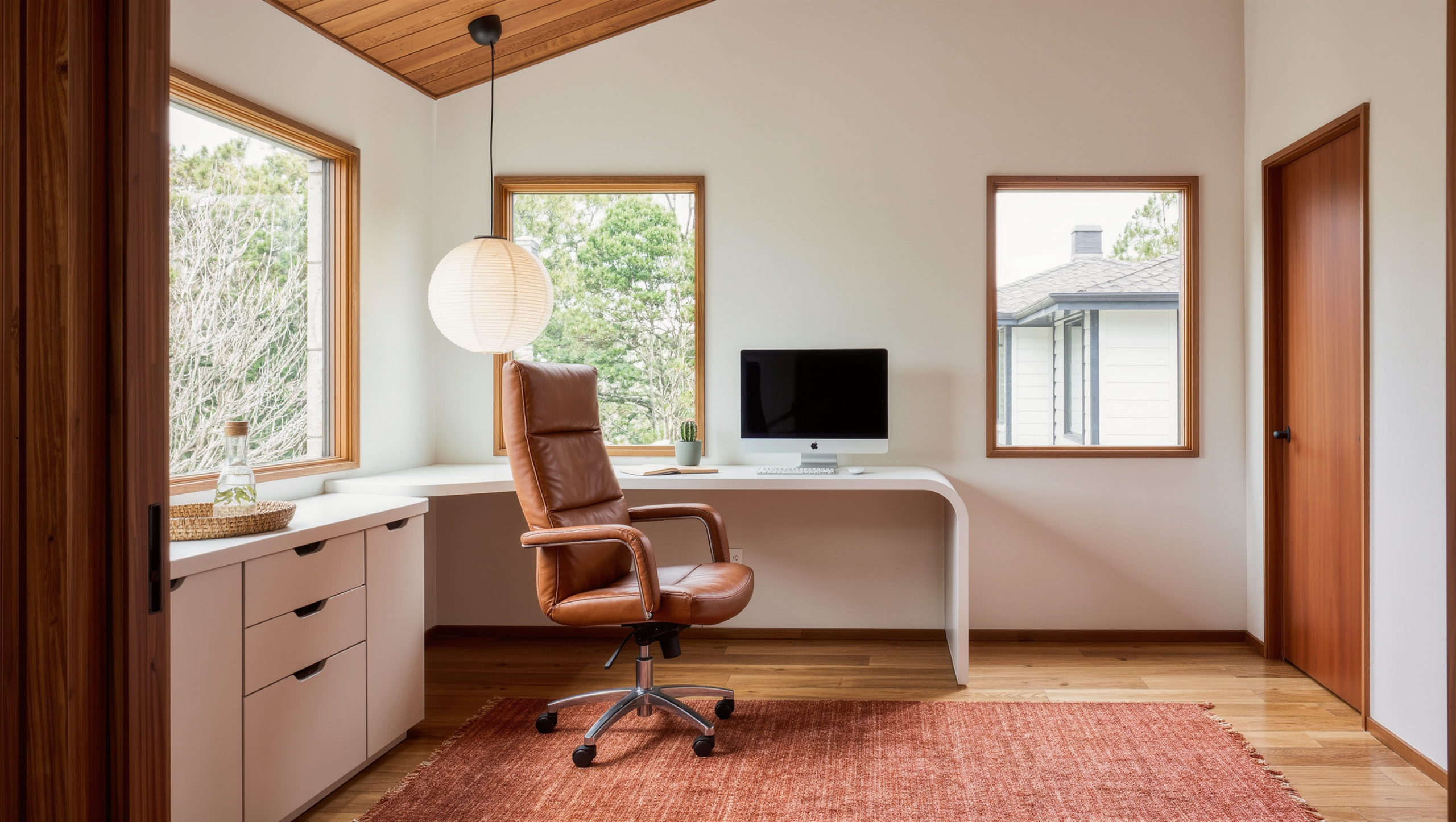
The desk gets measured. The bookcase gets measured. The office chair is shown tucked neatly underneath like it has agreed never to move again.
Then a person sits down and the chair claims half the room.
Office chairs are moving furniture. They roll, swivel, recline, pull back, and carry a human body through a larger footprint than their seat dimensions suggest.
Measure the chair in use, not parked
Pull the chair back far enough to stand comfortably. Swivel ninety degrees. Recline if the chair does. Note where the casters, arms, and back land. That operating envelope is the real footprint.
In a small office, it may determine which wall can hold storage and whether the door can open fully.
Keep the exit route clear
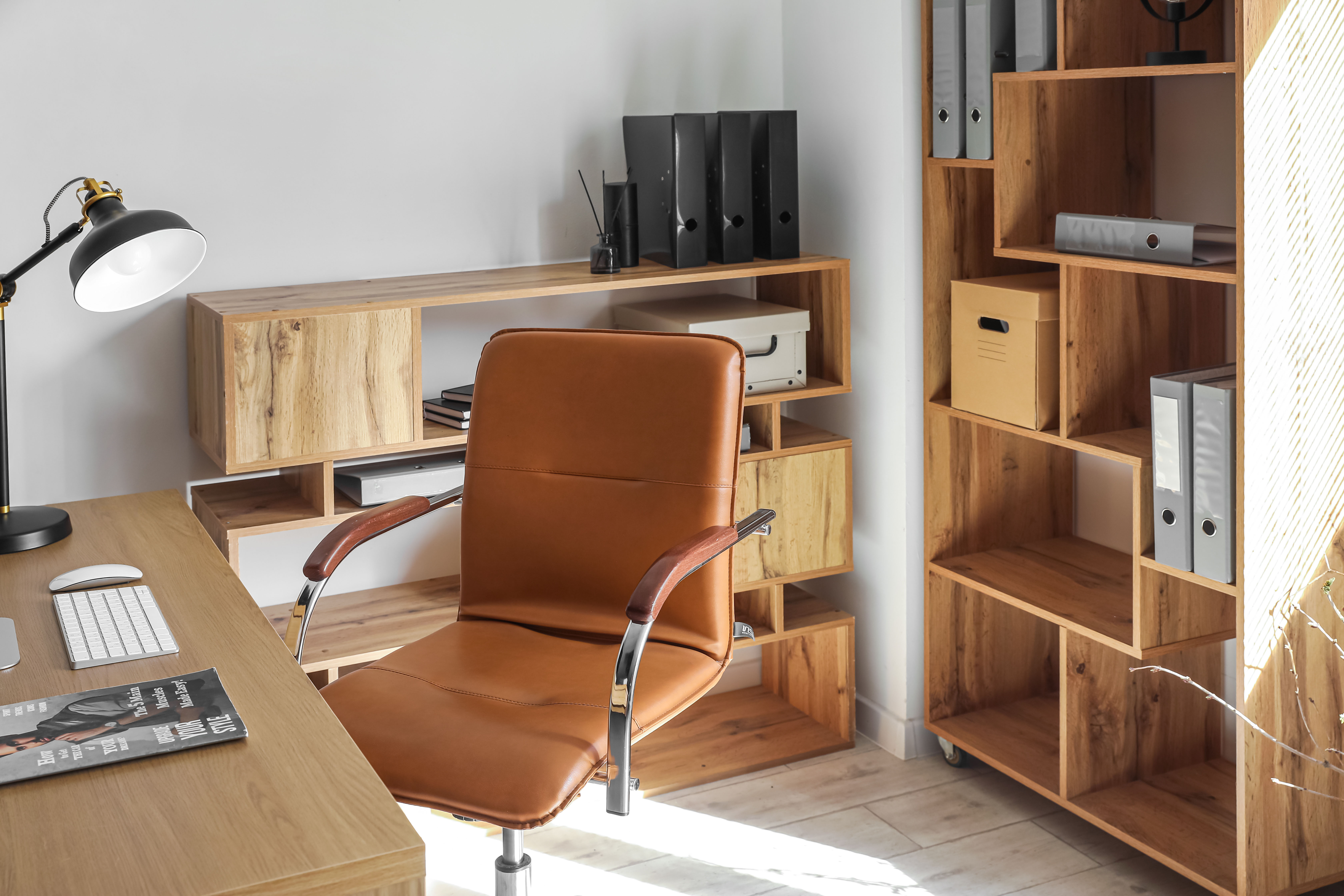
You should be able to leave the desk without moving another chair, closing a cabinet, or squeezing between furniture. If the desk floats in the room, decide which side is the natural exit and protect it.
Workdays contain enough friction without adding a chair escape maneuver.
Check drawer access while seated
File cabinets and desk drawers often look accessible until the chair arms block them. Put the most-used storage on the side the body can reach and the chair can clear. Less frequent storage can sit behind or farther away. A file drawer that only opens after you stand up, roll the chair sideways and apologize to it will be opened roughly never, and its contents will be living on the desk by Thursday.
Do not let casters choose the rug by accident
A thick rug can make rolling difficult; a small rug can catch chair wheels at the edge; hard flooring can make a lightweight chair drift. Choose the floor treatment with the chair’s movement in mind.
If a protective mat is needed, size it for the full range of motion rather than a small rectangle beneath the parked chair.
Leave room behind the backrest
A chair placed too close to a wall damages paint, limits recline, and makes the office feel cramped. That gray scuff line at backrest height is worth reading before you repaint over it: it marks, to the inch, where the chair actually stops, which is rarely where the plan said it would. If shelving sits behind the chair, allow enough clearance to stand and access it without moving the desk setup.
Armrests change desk fit
Some chairs tuck under a desk; others stop at the arms. That difference affects how far the chair projects into the room when not in use. Measure the actual chair against the underside of the desk, including any apron, drawer, or cable tray.
Use the chair to test scale
A large executive chair can visually dominate a compact office. A very light task chair can look undersized beside substantial built-ins. Comfort and ergonomics come first, but color, material, back height, and visual mass should still respond to the room. In a shared room the chair is often the first thing anyone sees from the doorway, and nothing says it has to be black mesh. A cognac leather seat, a tomato-red frame or a properly woven back can do the same ergonomic job and look as though it was invited.
Plan cable placement outside the wheel path
Power strips and loose cords near casters become daily hazards and equipment damage waiting to happen. Route cables along the desk, wall, or dedicated channel so the chair does not roll over them.
Try the whole sequence
Sit. Reach for a file. Roll back. Stand. Open the door. Walk to the printer. Return. If the chair repeatedly collides with the room, the layout is not finished.
The office chair is one of the room’s largest moving systems. Give it the space it actually uses, and the rest of the office becomes much easier to design around real work instead of a tidy furniture diagram.
Same problem, elsewhere in the house
Room notes
Keep the room on the record.
One useful note at a time: what to test, what to ignore, and what changed when the room got another vote.