Function and Flow
A Chandelier Cannot Carry 900 Square Feet by Itself
Large rooms need several layers of light tied to actual uses. One dramatic fixture can anchor the ceiling, but it cannot make every seat, wall, and path work after dark.
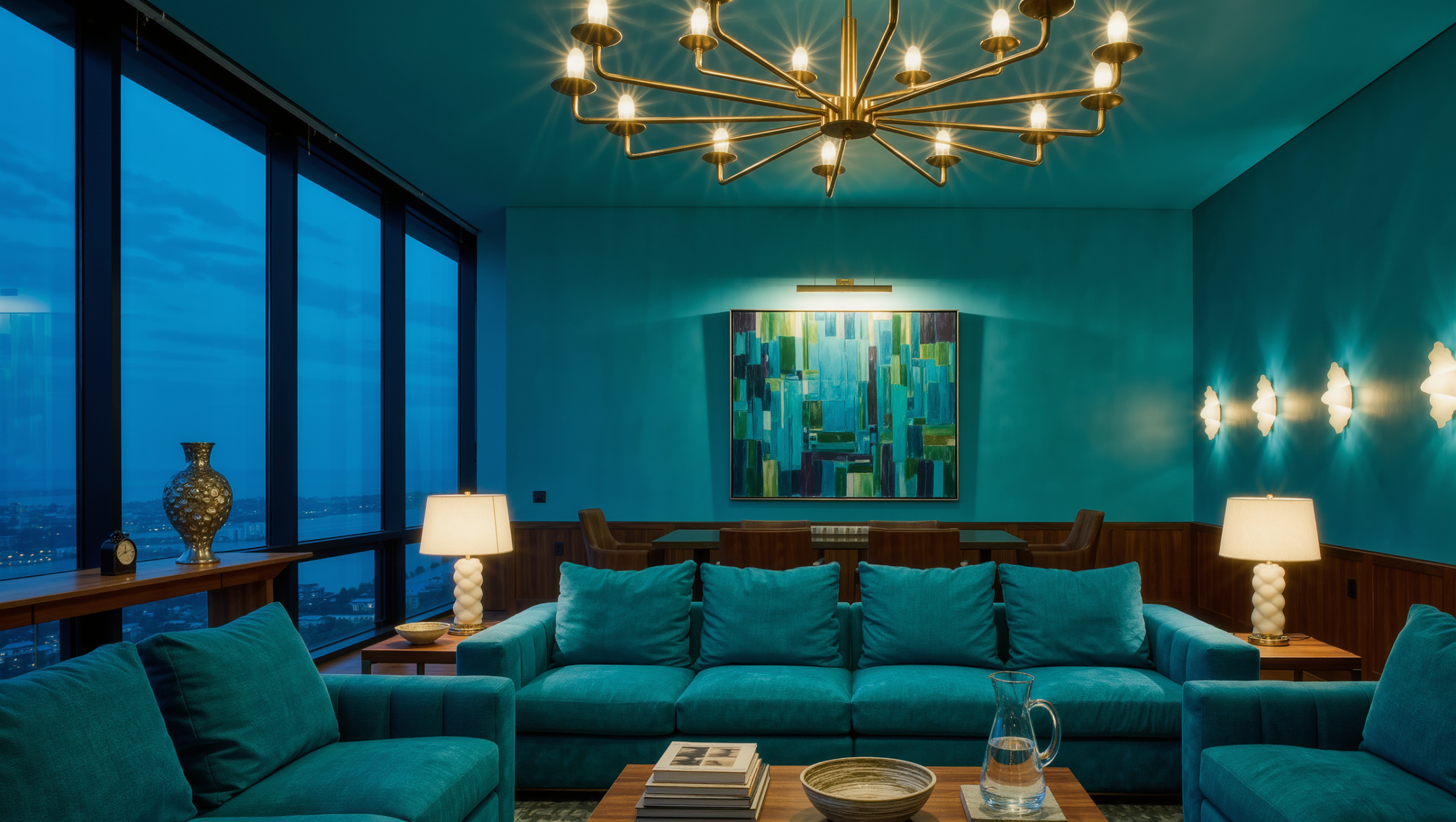
Large rooms often get one enormous light fixture because the ceiling is enormous. The chandelier arrives, looks appropriately dramatic, and then everyone discovers the room is still dim in the corners, harsh at the center, and useless for reading.
A statement fixture can own the upper volume. It cannot do every lighting job beneath it.
Plan light by function, not fixture category
The ambient-task-accent split gets repeated so often it has started to sound like filing, which is a shame, because it is the reason one fitting cannot do the job: a baseline for the whole volume, a pool of light wherever somebody is reading or serving or playing something, and emphasis on the art, the texture, the shelving, the edges. Three problems, three distances, three heights.
A chandelier can only answer the first of those, and in a room this size it answers it unevenly — brightest directly underneath, dimmest exactly where the furniture went.
Build the layers around the furniture plan rather than the ceiling plan. If the sofa moves, the lamps move with it. If the game table becomes a reading table, its light has to do both jobs, and it will not do either one from twelve feet up.
Light the edges so the room stops disappearing

A large room lit only from the center can make the perimeter feel farther away. Add light near walls, art, shelving, curtains, and architectural features so the eye can read the whole volume after dark.
Floor lamps in secondary zones, sconces on long walls, picture lights, low lamps on consoles, and carefully aimed accent fixtures can create depth that a central fixture cannot.
This does not mean every wall needs a glow. It means the room should not fall off into darkness immediately beyond the coffee table.
Every zone needs its own switch
If the room holds several functions, each one has to be able to operate without turning on the entire ceiling. The reading corner needs a reading light. The game table needs usable light on the surface. The conversation zone should be allowed to go soft when nothing is being done in it. The dining end needs enough light for the table without blasting the sofa four feet away.
Separate controls and dimming are what turn a collection of fixtures into a lighting plan. Without them the household has exactly one decision available, everything or nothing, and it will choose everything, every evening, for years, because the alternative is sitting in the dark.
Fixtures can help draw those zones as well, but only when they are sized to what sits underneath rather than to the ceiling. A pendant over a dining table tells the eye where that room begins. A chandelier over a central seating group does the same work. A fitting that is correctly enormous for the volume and wildly wrong for the table below just looks as though it was chosen by the cubic foot.
Use portable lamps to make large rooms flexible
Table and floor lamps are especially useful in generous rooms because the furniture may evolve. A second seating group may disappear. A game table may become a library table. A chair may migrate toward a better window.
Portable light can follow those changes without reopening the electrical plan every time the room develops a new habit.
The catch is power. Floating furniture needs outlets or a cord strategy that does not cross circulation. Plan that before the lamp arrives.
The fixture is not a problem until somebody sits down
Tall rooms tempt people toward brighter bulbs, because the source is a long way off and the light seems to arrive weaker than it left. Then a person sits down, and a bare bright lamp is the first thing in their eyeline for the rest of the evening. Shades, diffusers, bounce light and careful aiming are what stop an expensive fitting from becoming the thing everybody ends up angling away from.
Sit in every primary seat after dark and look toward the fixtures. If the source is what you notice, the room has more light and less comfort, and no additional lumens will repair that.
After that, decide how many versions of the room you actually need. A practical bright mode for cleaning. An ordinary evening. A hosting evening. A quiet late one. None of that requires an automation system; it requires layered fixtures and controls that can be operated independently of each other.
The chandelier can keep the drama. Give it help. Light the edges, support the tasks, make the zones independently usable, and let the room change after dark instead of becoming one giant ceiling fixture with furniture underneath.
Same problem, elsewhere in the house
Room notes
Keep the room on the record.
One useful note at a time: what to test, what to ignore, and what changed when the room got another vote.