Furniture and Scale
A Flat Room Needs a Better Skyline
A flat room needs height variation. Use lighting, plants, art, curtains, shelving, furniture backs, and negative space to build a stronger visual skyline without clutter.
On this page
12
Some rooms are not boring because they lack color. They are boring because everything stops at roughly the same altitude.
Sofa back. Chair back. Console. Sideboard. Table lamps of suspiciously identical height. The eye makes one horizontal sweep and finds no reason to look up, down, or across.
Build a better skyline. More stuff will not do it.
Read the room as a silhouette
Stand in the doorway and ignore color for a moment. Look only at the upper edges of the major objects. If they form a nearly level band, the room lacks vertical rhythm.
Now look for natural high points: a window, fireplace, doorway, tall bookcase, ceiling beam, or large artwork. One or two of these can anchor the skyline. The rest of the room can rise and fall around them.
Add height where it also performs a job
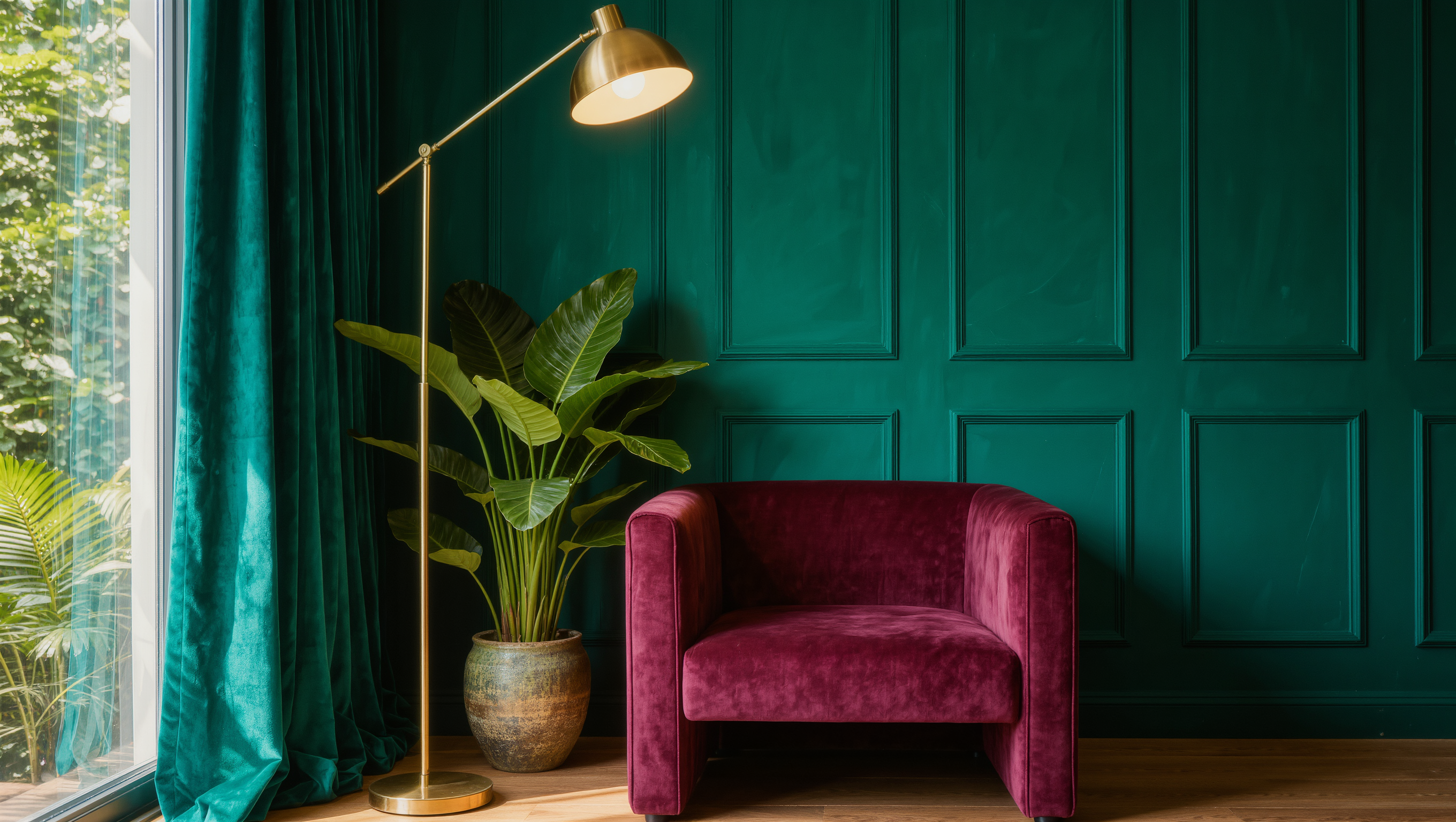
A tall floor lamp can bring light to a reading seat. Full-height curtains can make a window feel more generous while controlling glare and privacy. A large plant can soften a hard corner. Shelving can use vertical volume for books and objects that are already part of the room.
Choose height with purpose. A decorative ladder, pedestal, or tower of objects that exists only to occupy air will solve the silhouette while creating another maintenance problem.
Use art as architecture
One larger artwork or a disciplined vertical grouping can pull the eye above furniture level. Hang it in relationship to the object below rather than automatically centering it on the wall. The composition should feel connected from floor to ceiling.
If a gallery wall is the move, give it a clear outer shape. A loose collection can be lively; it still needs enough visual logic that it reads as one shape rather than as several frames waiting for instructions.
Use curtains to connect furniture to the ceiling
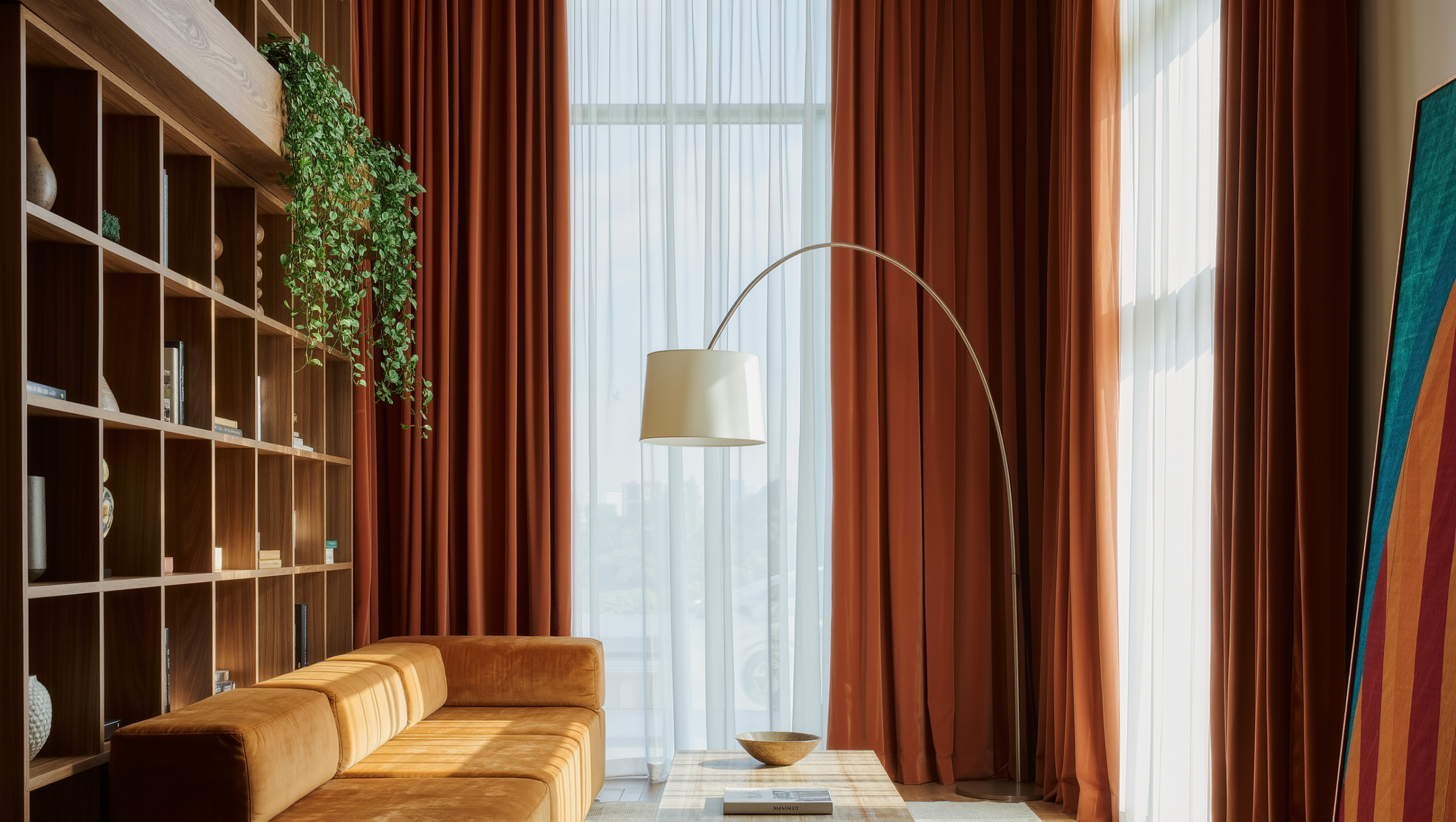
Window treatments can create one of the strongest vertical lines in the room. When appropriate, full-height curtains make the window feel more substantial and give nearby furniture a taller architectural context.
Do not hang them high merely because a diagram said so. Check the actual ceiling, window proportions, radiator or vent conditions, hardware support, and how much fabric can stack without stealing daylight.
Give tall storage enough visual reason
A high cabinet or bookcase can solve the skyline and add useful capacity, but only if the room needs the storage. Tall furniture placed purely to fix a visual problem often creates a heavy block that becomes another thing to balance.
Measure the inventory first. If the room does not need storage, art, light, or curtain height may be the lighter intervention.
Do not fill every low point
A skyline needs valleys. Negative space around a tall element is what allows height to register. If every wall contains shelving, every corner contains a plant, and every surface carries a lamp, the room becomes uniformly busy instead of dynamically layered.
Leave one quiet stretch of wall. Let one corner remain low. The contrast makes the strong vertical moves more effective.
Let lighting create a second skyline at night
During the day, windows and furniture establish the room’s profile. After dark, pools of light can redraw it. A floor lamp creates one high glow, a table lamp establishes a middle level, and low shelf or wall light adds depth near the perimeter.
A single bright ceiling source flattens these differences. Layered lighting lets the room keep its shape after sunset. See Lighting and Light and Atmosphere for more.
Use the ceiling only if the room still needs an upper event
Paint, wallpaper, beams, or a strong fixture can give the upper plane authority, but a room with tall curtains, art, and a floor lamp may already have enough vertical rhythm.
Do not solve every height problem simultaneously. One clear high point is often more effective than several competing gestures above eye level.
Balance visual weight with height
A tall open plant is visually lighter than a tall dark cabinet. A narrow brass floor lamp is lighter than a wide upholstered chair even when it reaches much higher. Think about both dimensions at once: where the room rises and how dense each rise feels.
If one side of the room contains all the tall, dark elements, distribute a lighter vertical note elsewhere—curtain, lamp, art, or plant—rather than automatically adding another cabinet.
Use one low moment on purpose
Low furniture can make a window, artwork, or tall feature look stronger by contrast. A low bench under art or a squat coffee table beneath a high pendant creates movement in the silhouette.
The room needs visible changes in level. Every object climbing would be exhausting.
Check the skyline from seated height
A room may look balanced from the doorway and flat from the sofa. Sit where people actually spend time and look across the room.
What sits above the television? Does the far wall end at console height? Is the one tall element behind you and therefore absent from the lived view?
Design the skyline from the positions people occupy. The photograph is taken at standing height by someone who is about to leave the room.
The room should rise and fall
A lively interior has cadence. Something low, something generous at seat height, something that climbs, and enough open wall or ceiling between them to make the differences legible.
Before buying another accessory, test one vertical move. Raise the curtain, relocate the floor lamp, hang the artwork, or let a plant occupy the height it was bought for. The room may not need more decoration. It may simply need to remember that it has a ceiling.
Same problem, elsewhere in the house
Room notes
Keep the room on the record.
One useful note at a time: what to test, what to ignore, and what changed when the room got another vote.