Furniture and Scale
That Giant Sofa Can Stay. The Rest of the Room Just Needs Better Nerves.
An oversized sofa can work in a small living room when the layout gives it authority, reduces competing furniture, protects circulation, and balances its visual weight.
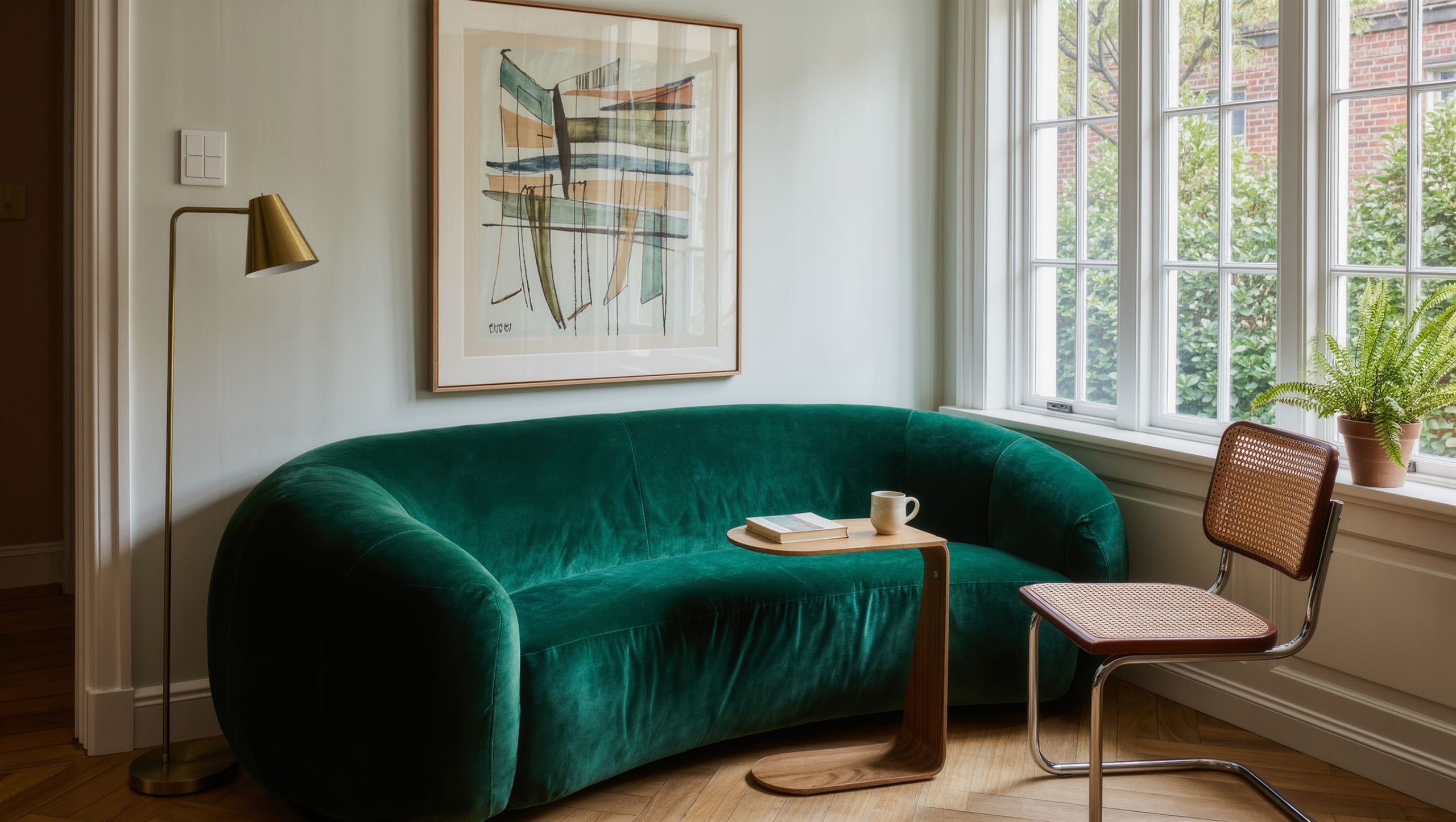
That giant sofa can stay. The rest of the room just needs better nerves.
A large sofa becomes the villain quickly because it is easy to blame the biggest object in the room. Sometimes it really is too large. Sometimes the room simply surrounds it with a tiny rug, small tables, timid lamps, and underscaled art until the sofa looks like it ate the furniture department.
A sofa reads at the size of the things standing next to it, not the size on the delivery note. Before replacing the expensive piece, fix everything it is being compared against.
Confirm that the sofa actually fits functionally
Open every nearby door, drawer, and cabinet. Walk the main route. Sit, stand, recline, and pass behind or in front of the sofa as the room requires.
If the sofa blocks circulation, prevents access, or makes required movement unsafe, the problem is physical and needs a physical solution.
If it fits functionally and merely looks enormous, keep reading.
Give the sofa a rug with authority
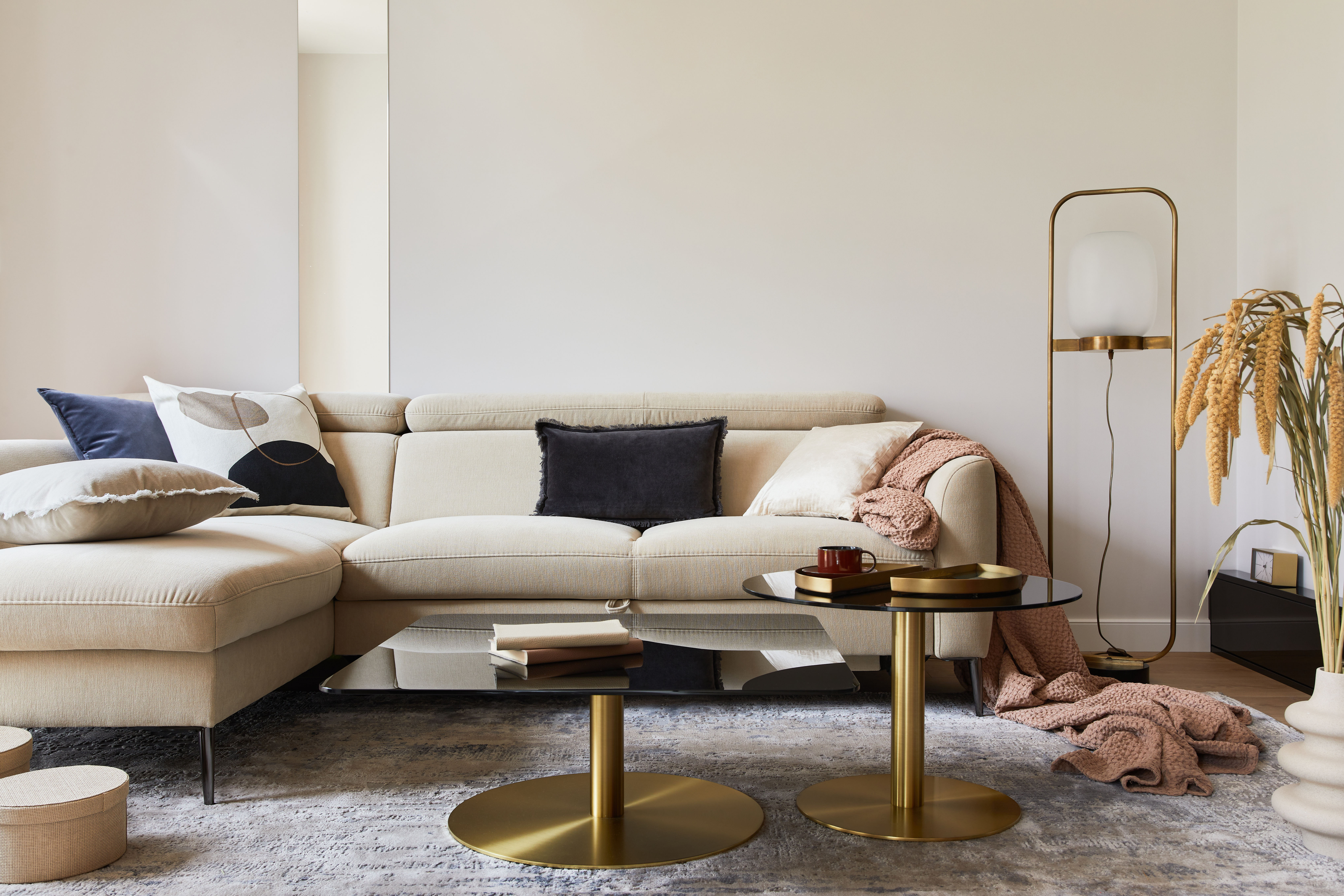
A tiny rug can make a substantial sofa look even bigger because the furniture has no convincing floor territory around it.
Test a larger rug footprint with tape. The rug should relate to the sofa and supporting chairs as a group rather than sitting under the coffee table like a placemat.
Use Your Small Living Room Rug Is Probably Too Small for the full test.
Scale the art to the wall and sofa
Small art over a large sofa can make both look awkward. One larger artwork, textile, mirror, or disciplined group can give the wall enough visual weight to answer the furniture below.
Mock the dimensions with paper before buying. The wall often needs more authority, not more little frames.
Choose tables that can hold their own
A broad sofa beside tiny side tables looks more massive by comparison. Coffee and side tables should be reachable and appropriately scaled to the seating.
This does not mean everything needs to become heavy. An open-frame table can be physically large and visually light. The point is credible relationship.
Use a taller lamp or vertical element
A giant sofa can dominate because everything else stops at the same low horizon. Add height through a floor lamp, full-height curtains, tall plant, cabinet, or artwork.
One strong vertical move can rebalance the room without adding another large piece of floor furniture.
Stop surrounding the sofa with small furniture
The instinct to compensate for a large sofa by choosing tiny supporting pieces often backfires. It creates more edges, more visual fragmentation, and a stronger contrast between the sofa and everything else.
Use fewer pieces with enough presence to belong.
Let negative space protect the sofa
Large furniture needs room around it. If every remaining corner is filled because the sofa already feels large, the room becomes edge-to-edge objects.
Leave one open area. The sofa may look calmer when it has space instead of a crowd of small apologies.
Use the wall behind it strategically
If the sofa sits against a wall, consider whether paint, paneling, a large textile, or art could make that wall a coherent field.
A strong background can integrate the sofa into the architecture rather than leaving it as a large isolated object. Against a pale, empty wall a big sofa looks like a delivery nobody has finished unpacking. Against a painted field or a textile with some heft, it looks as though it was invited.
Check whether the sofa should float
In some rooms, pulling a large sofa slightly away from the wall improves circulation or pulls the seats into a real conversation group. In others, floating it wastes critical floor area.
Test the move with the actual route before deciding.
Use curtains to increase vertical scale
Full-height curtains can make a substantial sofa feel more proportionate to the room because the walls gain vertical presence.
Hang and size them according to the actual window, ceiling, and hardware conditions rather than generic internet formulas.
Color can reduce or emphasize mass
A sofa that contrasts sharply with every surrounding surface will read more strongly. Bringing one related color into the rug, wall, or art can integrate it.
Conversely, if the sofa deserves to be the focal point, let the contrast remain and quiet the smaller competitors.
Do not shrink every pathway to save it
If keeping the sofa requires squeezing critical routes, blocking access, or eliminating every other useful function, the room is telling you something.
Better nerves are not denial. The sofa can stay only if the room can still work.
Consider the household’s actual seating need
A giant sectional makes sense when several people use it regularly, lounging is the room’s main job, or the household genuinely values sprawling comfort.
If one person sits on one cushion and the rest of the sofa stores laundry, the size may not be earning its footprint.
The sofa can stay
A large sofa is not automatically a scale mistake. It becomes one when the route fails, the room loses every other useful function, or the supporting elements are too timid to create a coherent composition.
Before replacing it, strengthen the rug, art, tables, height, and negative space. The sofa may not need to leave. It may simply need the room to stop apologizing for it.
Same problem, elsewhere in the house
Room notes
Keep the room on the record.
One useful note at a time: what to test, what to ignore, and what changed when the room got another vote.