Furniture and Scale
Open vs. Closed Storage: A Seven-Day Observation Tracker
Use a storage-exposure matrix and seven-day tracker to decide what should stay open, become hybrid, move behind doors, or leave the room.
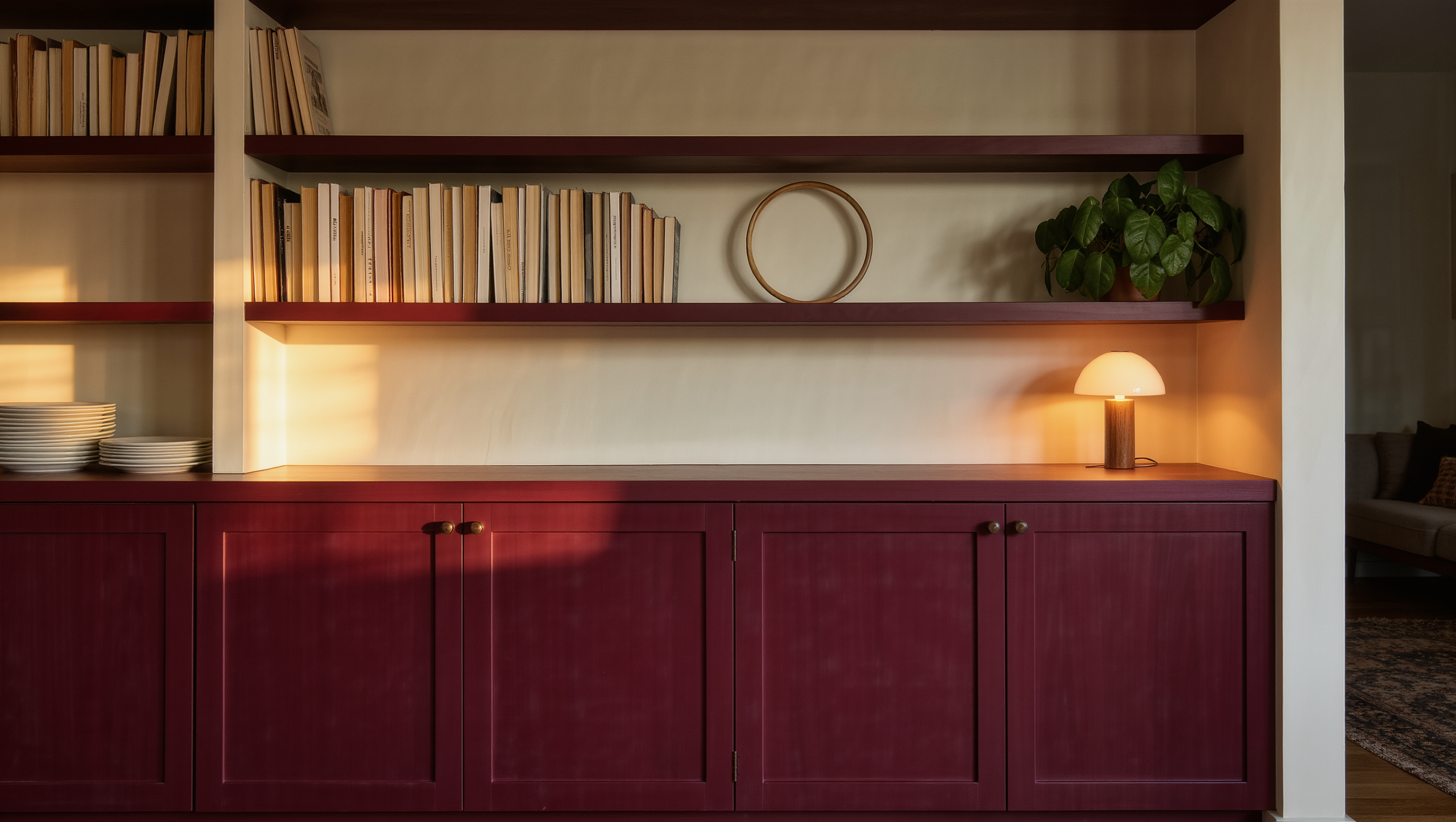
Open storage is not automatically honest, and closed storage is not automatically calm. One exposes the work. The other can hide it behind a larger object.
The useful question is which exposure mode helps the room perform: open, hybrid, closed, or relocated.
Use boundary: This is an editorial observation tool, not a controlled experiment, accessibility certification, product-stability assessment, or installation instruction. Immediate hazards override the seven-day period. Verify current product instructions, recalls, load limits, property permission, and qualified installation requirements where applicable.
Open
Everything joins the visual fieldFast retrieval when categories are legible. Dust and disorder stay visible.
Hybrid
Daily use visible; the rest containedPreserve rhythm while reducing irregular detail.
Closed
Fronts reduce detail, add massHighest enclosure. Can feel calm or become the room’s largest block.
Relocate
Leave this room’s systemRestores hierarchy only when the destination follows the use route.
01 Field setup
Name the category before judging the cabinet
Choose one category to observe: books, daily tools, paper, textiles, back stock, fragile objects, hobby supplies, or another defined group. Do not grade the entire room at once. Record where the category is used, who uses it, how often it moves, what protects it, and what prevents a complete reset. Books are the classic trap: an open shelf of spines looks like a personality right up until the paperbacks start lying sideways on top of each other and the shelf becomes a landslide with good taste.
02 Matrix
Storage-exposure matrix
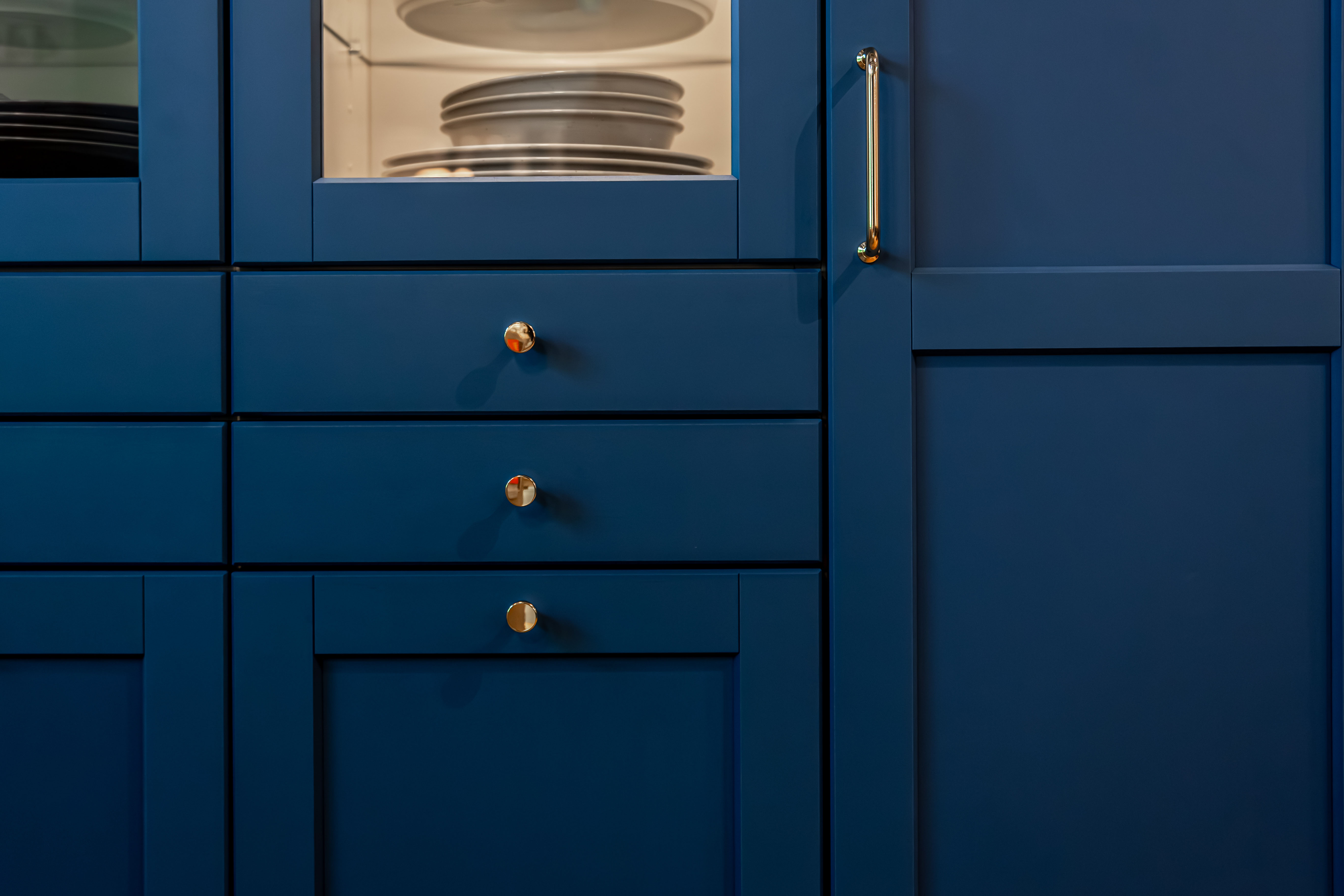
Compare exposure modes by the behavior they create, not by the look you want to buy next.
| Decision field | Open | Hybrid | Closed | Relocate or release |
|---|---|---|---|---|
| Visibility | Everything joins the room’s visual field. | Daily-use categories stay visible; irregular categories are contained. | Fronts reduce visible detail but add architectural mass. | The category leaves the room’s visual system. |
| Retrieval | Fast when categories and reach are legible. | Fast for active items; one additional step for contained items. | Depends on labels, internal order, and door or drawer sequence. | Works only when the destination follows the use route. |
| Maintenance | Dust and visual editing stay visible. | Maintenance can be assigned by category. | Fronts still need care; internal disorder is easier to hide. | Reduces maintenance only when the category is unnecessary here. |
| Protection | Lowest enclosure from dust, grease, light, pets, or impact. | Protect the categories that need it. | Highest enclosure, subject to the actual product and environment. | May improve protection when the destination is appropriate. |
| Room effect | Can feel light or visually busy. | Can preserve rhythm while reducing irregular detail. | Can feel calm or become the room’s largest visual block. | Can restore hierarchy and circulation. |
03 Seven-day log
Observe seven ordinary days
Do not style the system for the test. Watch what ordinary use does to it. A workaround is evidence: it shows where the storage asks the household to compensate.
| Day | What moved | Workaround | Maintenance | Reach or approach | Safety or property issue | Visual effect | Next move |
|---|---|---|---|---|---|---|---|
| 1 | |||||||
| 2 | |||||||
| 3 | |||||||
| 4 | |||||||
| 5 | |||||||
| 6 | |||||||
| 7 |
04 Review
Review what the category made the room do
- Which objects were used often enough to deserve immediate visibility?
- Which objects needed protection, privacy, or visual containment?
- Which items migrated because storage was too far from the activity?
- Which door, drawer, shelf, or bin created an extra movement?
- Did the system block a route, door, outlet, vent, sightline, or adjacent task?
- Did a visually calmer front create a heavier volume?
- Could the intended user see, approach, grasp, and return the category without strain or obstruction?
- What did not belong in this room at all?
Issue one verdict
Keep open
When the exposure is doing workVisibility materially improves retrieval, the category stays orderly in ordinary use, and the room can absorb the exposure.
Go hybrid
Split by behaviorDaily-use categories benefit from visibility while irregular, fragile, private, or visually noisy categories need containment.
Close
Protection over displayProtection and visual reduction outweigh the added mass and operating sequence.
Relocate or release
Wrong room, wrong routeThe category does not belong on this route or in this room.
Installation boundary: “It fits” is not an installation method. Identify the exact product class and verify what actually controls it: current product instructions and recalls, stability, anchoring, substrate, hidden utilities, fastener compatibility, load, property permission, code, or qualified installation. This field kit does not provide mounting instructions or certify safety.
The same seven-day format works on a layout decision in the seven-day sofa position test. If the week makes the case for closing things away, storage that does not look like storage picks up from there.
Same problem, elsewhere in the house
Room notes
Keep the room on the record.
One useful note at a time: what to test, what to ignore, and what changed when the room got another vote.