Furniture and Scale
The Empty-Surface Trial
Clear one overworked surface for seven days, track what returns, and let the room reveal the missing route before another basket enters the witness stand.
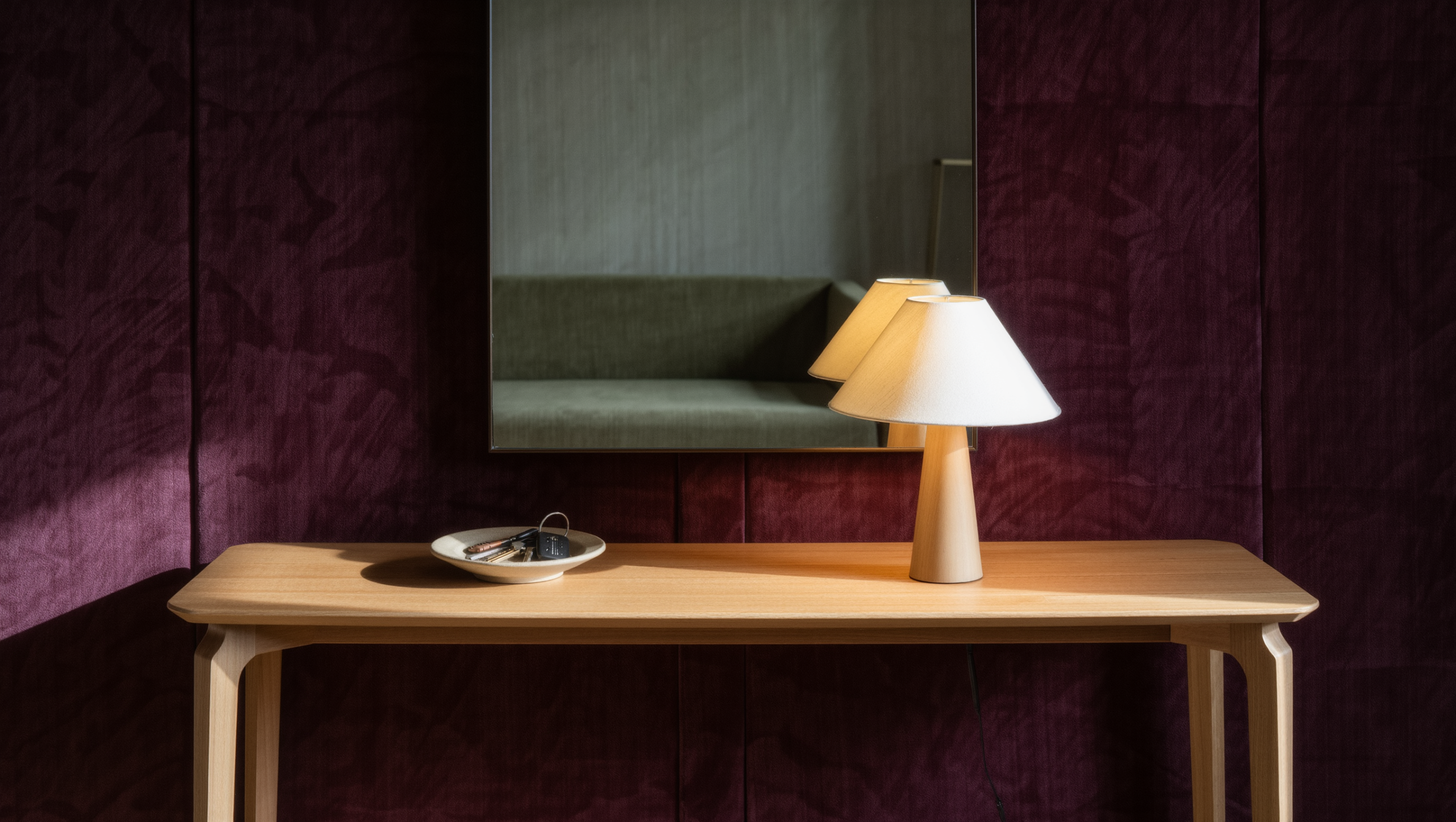
An empty surface is a test, and nobody gets moral credit for passing it.
When every table, console, dresser, and counter becomes permanent storage, the room loses landing space, visual rest, and the ability to show what actually belongs there. Purging the house into a white cube answers nothing. Find out which objects keep returning, what job they are trying to complete, and where the route breaks.
For seven days, one surface becomes evidence.
Choose the surface with the most daily friction
Pick one surface that repeatedly blocks a task: the console that cannot receive keys, the dresser that cannot support getting ready, the kitchen counter that has no safe place for a hot pan, or the dining table that quietly changed careers.
Do not choose the easiest surface. Choose the one that makes you mutter.
Record the baseline before clearing it

Take one photograph from the position where the surface is normally used. List what is present and what the surface is supposed to make possible.
- What task is currently blocked?
- Which objects are actively used here?
- Which objects are merely passing through?
- Which objects are waiting for a decision?
- What happens when the surface is unavailable?
Then clear it completely. Move the contents into one temporary holding box nearby. Do not scatter them around the room, and do not buy organizers. The trial is looking for behavior, not auditioning baskets.
Use the seven-day evidence card
Photograph the surface at the same time each day. Use this simple record:
| Day | What returned? | Where did it come from? | What job was it trying to do? | What blocked the next step? |
|---|---|---|---|---|
| 1 | ||||
| 2 | ||||
| 3 | ||||
| 4 | ||||
| 5 | ||||
| 6 | ||||
| 7 |
Mail, chargers, medication, bags, half-finished projects, dishes, receipts, and objects waiting to travel elsewhere are different failures with different remedies, and calling all of them clutter is how they stay unsolved.
Sort what returns by behavior
- Landing items arrive with a person: keys, glasses, bags, wallets, headphones.
- Working items support the surface’s actual job: a lamp, notebook, tray, mirror, or serving utensil.
- Transit items are headed somewhere else but lack a reliable route.
- Decision items remain visible because no keep, repair, return, file, or discard decision has been made.
- Homeless items are used regularly but have no practical home near the point of use.
- Identity props stay because removing them feels like changing what the room says about you, even when they obstruct daily life.
The categories matter because “buy storage” solves only one of them, and sometimes not even that one.
Assign one primary job
Name the surface’s first responsibility in plain language: arrival, dressing, eating, work, food preparation, display, or temporary staging.
Items that directly support that job may return. Everything else needs a nearby home, a faster route, a scheduled decision, or an honest exit from the room.
A surface may serve a secondary job, but it should not be asked to perform six unrelated jobs continuously. That is not flexibility. It is a labor dispute with legs.
Fix the route before adding the container
For each returning category, follow the object backward and forward:
- Where does it enter the room?
- Where is it used?
- What must happen after use?
- Where should it land next?
- What distance, door, missing hook, unavailable outlet, full drawer, or unresolved decision interrupts that route?
Place the solution where the behavior happens. A charger home across the room from the only usable outlet is decorative fiction. A mail system that requires three later decisions will become a pile with stationery.
Run the second week with one change
Choose the smallest intervention supported by the evidence:
- move an existing tray to the actual landing point;
- relocate a frequently used item within one natural step;
- create one bounded transit zone with a daily clearing time;
- remove a display object that prevents the surface from working;
- assign a decision deadline to the holding box;
- change the surface’s job if its inherited purpose no longer matches the room.
Repeat the seven-day trial. If the same pattern returns, the intervention treated the symptom. Adjust the route, not the label.
Read the verdict
- The surface stays usable: the room needed a clear rule more than new storage.
- The same three items return: create a precise point-of-use home.
- Many transit items return: repair the route to their real destinations.
- Decision items dominate: the room needs a decision session, not furniture.
- Nothing returns: the surface may not need permanent styling at all.
- Everything returns immediately: the surface’s assigned job is probably false or the surrounding storage is inaccessible.
The purchase gate
Buy something only when the trial can name the exact recurring category, required capacity, point of use, operating clearance, retrieval behavior, and maintenance burden. Measure the object and the route it must travel before it enters the room.
Until then, the room has not requested a basket. Advertising has.
Put the room on trial again
Use Put the Room on Trial when the surface problem points to a larger conflict in circulation, storage, light, or function.
Next move: Circle the three categories that returned most often. Give each one a home or route within one natural step of the surface, then run the second week without adding another piece of furniture.
Before permanent installation or furniture changes, check stability, electrical conditions, access needs, lease terms, and manufacturer instructions relevant to the specific change.
Same problem, elsewhere in the house
Room notes
Keep the room on the record.
One useful note at a time: what to test, what to ignore, and what changed when the room got another vote.