Function and Flow
Premium Outdoor Comfort Is a System, Not a Shopping List
Outdoor comfort is a system: seating, shade, heat, light, surfaces, sound, storage, and circulation have to work together before any feature feels premium.
On this page
10
Luxury outside is being able to stay in the chair.
I am skeptical of expensive-for-the-sake-of-expensive in general. A high price is not a personality, and it is definitely not proof that the room works.
Outdoor spaces are getting more complete. Houzz’s 2026 research shows sofas and lounge chairs in 71% of outdoor lounge areas, lighting in 66%, coffee or side tables in 55%, and fireplaces or fire pits in 48%. That tells me people are not thinking of the patio as leftover square footage anymore. Good.
It is worth reading that sample carefully before treating it as a picture of how everyone lives. Those percentages describe lounge areas inside renovated outdoor spaces, which means the population being counted is people who had the money and the appetite to renovate a yard. The figures tell you what a well-funded outdoor room now contains. They do not tell you what one needs. A great deal of money disappears into the gap between those two sentences.
What I do not want is a luxury checklist: sectional, hearth, heater, recessed lights, motorized shade, outdoor television, done.
Comfort turns up when the features stop fighting each other, and a longer list mostly gives them more to fight about.
The body gets first vote
Deep seating looks luxurious until the seat is so low you need leverage to stand up, the back is six inches too far away, the cushion collapses around you, or the table is positioned at exactly the distance that requires a tiny forward lunge every time you want your drink.
Sit in the furniture for more than three polite showroom minutes.
Check seat depth. Back angle. Arm height. Cushion recovery. How your feet land. Whether somebody shorter or taller can use it without looking like they have been swallowed by upholstery.
I do not care how beautiful the chair is if I keep shifting around trying to get comfortable. Premium starts with not wanting to leave.
Every seat deserves somewhere to put something
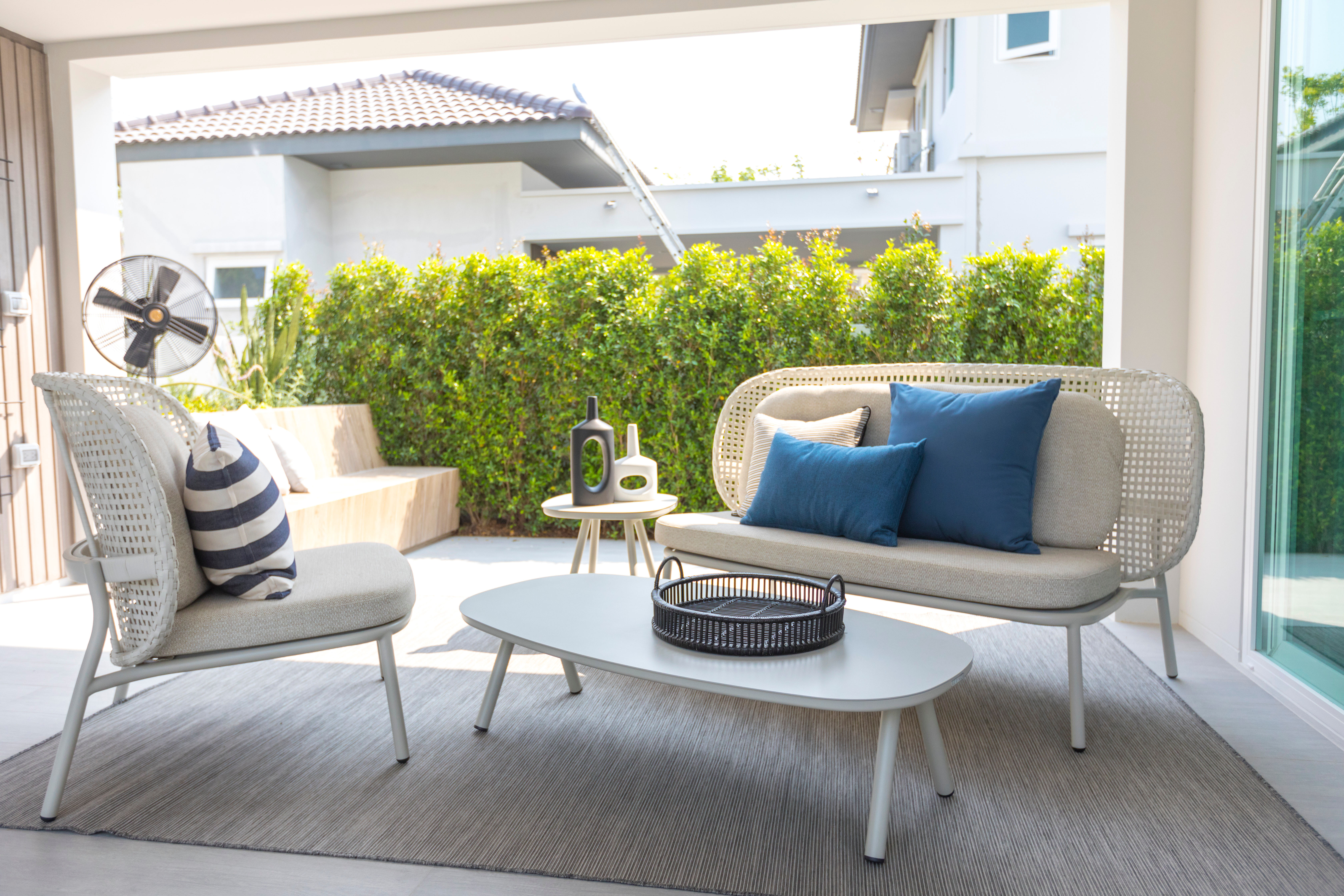
This is profoundly unsexy and one of the fastest ways to tell whether a seating plan was designed for people or photographs.
A drink. Phone. Book. Sunglasses. Plate. Tiny bowl of something you were apparently going to eat casually while outside.
One coffee table in the middle of a giant sectional does not serve every seat. Side tables, drink ledges, ottomans with trays, built-in edges, even a well-placed stool can do more for daily comfort than another decorative object.
Luxury includes not balancing your water on the ground because the table is four feet away.
Temperature is a system, not a heater
Shade, airflow, radiant heat, fire, fans, wind protection, textiles, and seasonal sun all solve different problems.
Figure out the hour the room becomes annoying.
Too hot at four? Shade may matter more than the new sofa. Cold after sunset? A heater may help, but wind protection and seating placement may change more. Blinding low sun at dinner? The pergola roof may be doing absolutely nothing for that angle.
Design for the hour that currently sends you back inside.
That is the one worth spending money on.
A hearth should organize the room even when nobody lights it
Stone fireplaces and substantial fire features can give an outdoor room real architectural weight. I understand the appeal. A dark hearth, good seating, low light, cold night—yes.
But the feature has to earn the real estate.
Where do people sit? How close is actually comfortable? Does the main route cut through the heat zone? Where does smoke go? What does the composition look like in July when nobody wants a fire anywhere near them?
The hearth should still make sense when it is off.
Otherwise it is an expensive seasonal monument occupying the best wall.
Lighting can make luxury look like a loading dock in under thirty seconds
Recessed lights under a pavilion are useful. A ceiling filled with bright downlights aimed directly at people’s heads is not automatically sophisticated because the fixtures were expensive.
Layer it.
Task light where food or cooking needs visibility. Lower light around seating. Path light where feet need help. Accent light where planting, stone, water, or architecture can actually carry a little drama.
Control glare. Put fixtures on useful scenes. Let some darkness remain.
I want to see the person across from me, not every crumb on the paving.
Softness is wonderful until the weather app becomes your supervisor
Pillows, throws, upholstered pieces, rugs—yes, they can make an outdoor room feel much more finished.
They can also create a ridiculous amount of daily logistics.
Choose outdoor-rated textiles for the actual exposure. Decide what can stay out, what needs a cover, what needs nearby storage, and what you are realistically willing to carry.
I have no interest in sprinting through the house every time a cloud develops because the patio owns more delicate fabric than the bedroom.
Softness should increase comfort. It should not create a household department.
Expensive material is not automatically premium material
Stone, teak, metal, concrete, performance textiles, leather-like outdoor materials—all of them age differently.
Some develop a patina that makes them better. Some simply reveal that nobody explained maintenance. Before spending more, learn what year three looks like. The showroom version under perfect light is the honeymoon.
Can it be repaired? Can cushions be replaced? Does the finish tolerate the climate? Will the surface get dangerously hot? What does mineral-heavy water do to it? What happens when snow sits against it?
Durability is part of luxury because replacing things is annoying.
Sound can ruin the whole expensive production
A pool pump. Heater fan. Outdoor television. Road noise. Mechanical equipment. One speaker trying to cover the entire yard.
You can spend heavily on furniture and still build a room nobody wants to sit in because the sound environment is exhausting.
Listen before you add.
Use distance, planting, walls, equipment placement, and lower localized audio where appropriate. Sometimes the premium upgrade is moving the loud thing.
A room that feels quieter often feels more expensive because your body is not fighting it.
Do not permanently design for the maximum guest count
This is how beautiful patios become furniture storage with a beverage service.
Design the daily room first. Two people should not have to sit in a seating arrangement built entirely for twelve. Keep flexible stools, chairs, or benches that can arrive when the crowd does.
Hosting changes circulation, table access, heat, conversation, and where everybody puts things. The room should be able to expand without being permanently overbooked.
I love a big event. I will absolutely take an occasion too far if given the opportunity. I still do not want my everyday outdoor room frozen in party mode for the other 350 days.
The truly premium version feels easy
A heater can be worth it. A stone hearth can be worth it. Motorized shades, beautiful lighting, a deep sectional, a custom pavilion—any of those can be fantastic when they solve the right problem.
But the room feels luxurious because the chair supports you, the drink has somewhere to go, the temperature is comfortable, the light is flattering, the sound is calm, the route is clear, and nobody is hauling six cushions through the kitchen because rain started.
That is the system.
And that is why I would spend on the thing that makes you leave before I spent on the thing that makes the room look expensive.
Sit outside for one full hour at the time you most want to use the space. Notice every reason you shift, squint, stand up, get cold, get hot, move your drink, raise your voice, or finally go back inside.
Spend on those problems in that order.
Luxury should make the room easier to inhabit, not more elaborate to maintain.
Source note: 2026 U.S. Houzz Outdoor Trends Study.
Same problem, elsewhere in the house
Room notes
Keep the room on the record.
One useful note at a time: what to test, what to ignore, and what changed when the room got another vote.