Function and Flow
Studio Shamshiri: Let the Architecture Keep Its Accent
Studio Shamshiri is useful to study because its rooms separate architectural character from inherited inconvenience, allowing old and new to coexist without fake continuity.
An old house presents a false choice more often than it should: preserve everything and live around somebody else’s habits, or modernize so thoroughly that whatever was worth keeping disappears along with the inconvenience. Studio Shamshiri makes the case for a useful middle ground — identify what actually gives a room its character, protect that, and fix the systems that keep present-day life from working. The building shouldn’t have to forget what it is to feel current.
The plywood was under the Sheetrock
Their own project archive settles the argument. The Lechner House in Studio City is a 1948 Rudolph Schindler, described on the studio’s site as one of the last masterpieces of that arm of California modernism, and by the time it reached them it had been comprehensively hidden. Plain plywood walls and a hard-angled stainless-steel fireplace — Schindler’s actual signatures — had been buried under Sheetrock and other finishes with nothing to do with his vocabulary. A large part of the restoration was removal.

Two things in that are transferable, and the second is the uncomfortable one. First: somebody once covered that plywood because plywood read as cheap, and somebody later uncovered it because it read as authorship. Material value is a fashion with a very long wavelength, which should make anybody pause before ripping out a finish purely because it currently looks poor. A fair amount of what gets tossed into a dumpster this year is what somebody pays a specialist to reinstate in thirty.
Second: the studio openly declined slavish devotion to the original drawings. They rebuilt the best of Schindler’s ideas, kept the logic, and let the people who actually live there have a say. That is a harder position to hold than either purism or demolition, because it obliges you to state which of the original decisions were good — out loud, in front of a famous name. Most renovations avoid that sentence entirely, which is why they end up either embalmed or erased.
Character and inconvenience are not the same problem
An old room might hold a beautiful fireplace, a distinctive ceiling, and a circulation path built for a household that no longer exists — treating all of it as equally sacred isn’t preservation, it’s avoiding judgment. The better question is what each inherited feature actually contributes: architectural character and craftsmanship, or just friction against modern use? Keep the character. Fix the friction. And before flattening an odd stair or an off-center opening because the furniture plan doesn’t know what to do with it, test whether the room gets more specific when the rest of the design supports the irregularity instead of fighting it — sometimes that’s the only thing keeping the renovation from turning generic.
A new thing is allowed to look new
New pieces don’t need to impersonate the past to belong in an old room. Contemporary art can look contemporary; bespoke furniture can solve a current problem without disguising itself as period furniture. Different eras coexist when scale, material, and sightline hold them together — fake continuity isn’t automatically more respectful, and sometimes a clearly new intervention makes the old architecture more legible precisely because the difference stays visible. Natural materials do useful bridging work here: a contemporary form made from a material that already belongs to the house can feel more integrated than a historically styled piece with no physical conviction behind it.
Scale matters more than period correctness
An older house often has ceiling heights and window positions that standard contemporary furniture doesn’t understand, which is where custom or carefully chosen pieces earn their keep — they solve geometry, not perform luxury. A bench sized for a strange recess, a table that responds to a narrow bay: measure the architectural condition first, then choose furniture that respects it instead of asking the room to accommodate the catalog. Color follows the same logic — when a room already has strong wood, stone, or brick, that material is part of the palette whether the decorating plan acknowledges it or not. Start with what shouldn’t change. The room is already voting.
Original is not the same as worth keeping
Respecting architecture can turn into romantic paralysis — old houses can have poor lighting, weak storage, and rooms arranged for a form of domestic life nobody’s obligated to recreate. I would not preserve inconvenience simply because it’s original, and I wouldn’t treat vintage furniture as a substitute for actual architectural sensitivity. The useful discipline is selective: preserve what gives the place identity, then make the contemporary changes clear and competent enough to support how people actually live now.
Source: Studio Shamshiri’s studio background, press archive and project pages, including its account of the 1948 Rudolph Schindler Lechner House in Studio City and the 2019 Maison de la Luz in New Orleans; Architectural Digest’s AD100 profile of the practice.
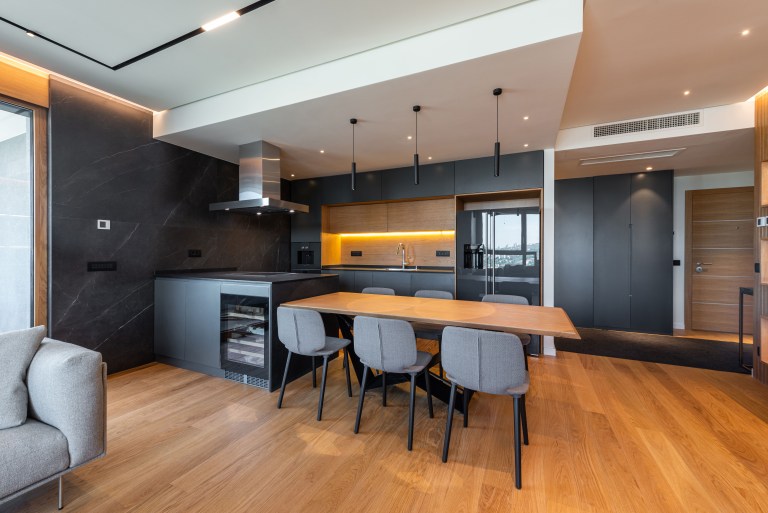
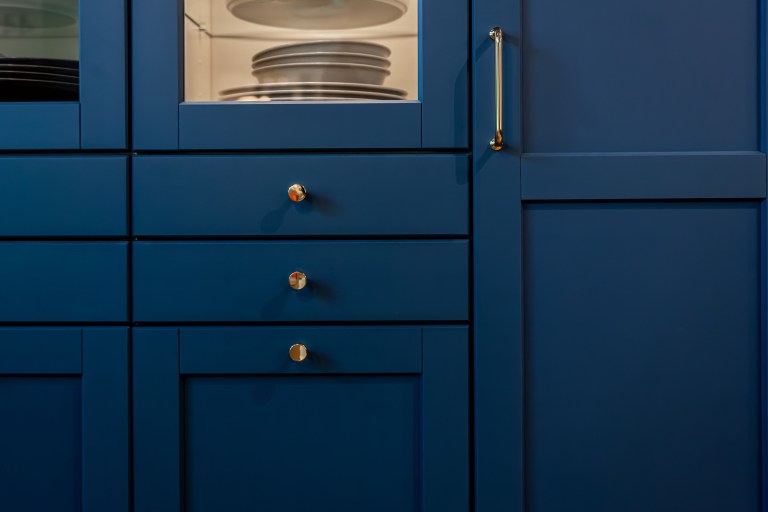
Designer study. This concise study is part of Designers Worth Studying, the deeper Room for Drama index for what to borrow, what not to copy, and how each idea survives an actual room. Photographs in this series are Room for Drama’s own illustrative images, not photographs of the studio’s projects.
Same problem, elsewhere in the house
Room notes
Keep the room on the record.
One useful note at a time: what to test, what to ignore, and what changed when the room got another vote.