Function and Flow
The Small Front Yard Has to Do More Than Behave
Design a small front yard around arrival, privacy, planting, storage, seasonal structure, and curb appeal without sacrificing the route to the door.
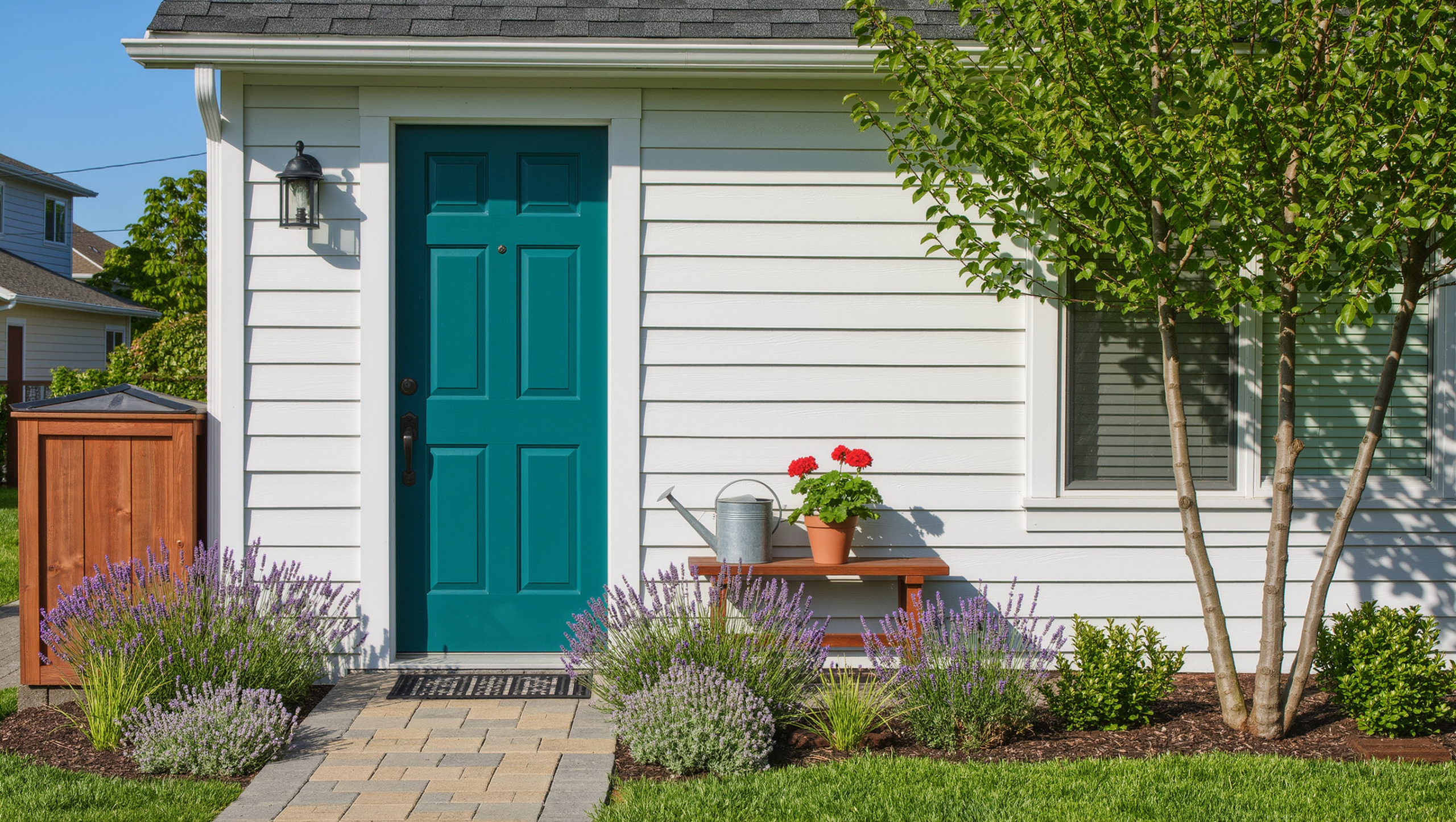
A small front yard is not leftover landscape between the sidewalk and the door. It is the first room the house asks people to understand.
When space is limited, the front yard has to manage arrival, visibility, privacy, planting, bins, bikes, snow, deliveries, lighting, and the fact that everybody sees it before they know anything else about the home.
Protect the arrival route first
The path to the front door should be obvious from the street or drive. Avoid forcing visitors to guess whether they should cross lawn, squeeze past parked cars, or follow a decorative stepping-stone puzzle.
Keep the route wide enough for ordinary use and consider mobility, packages, strollers, snow clearing, and two people passing where appropriate.
Give the door enough visual authority
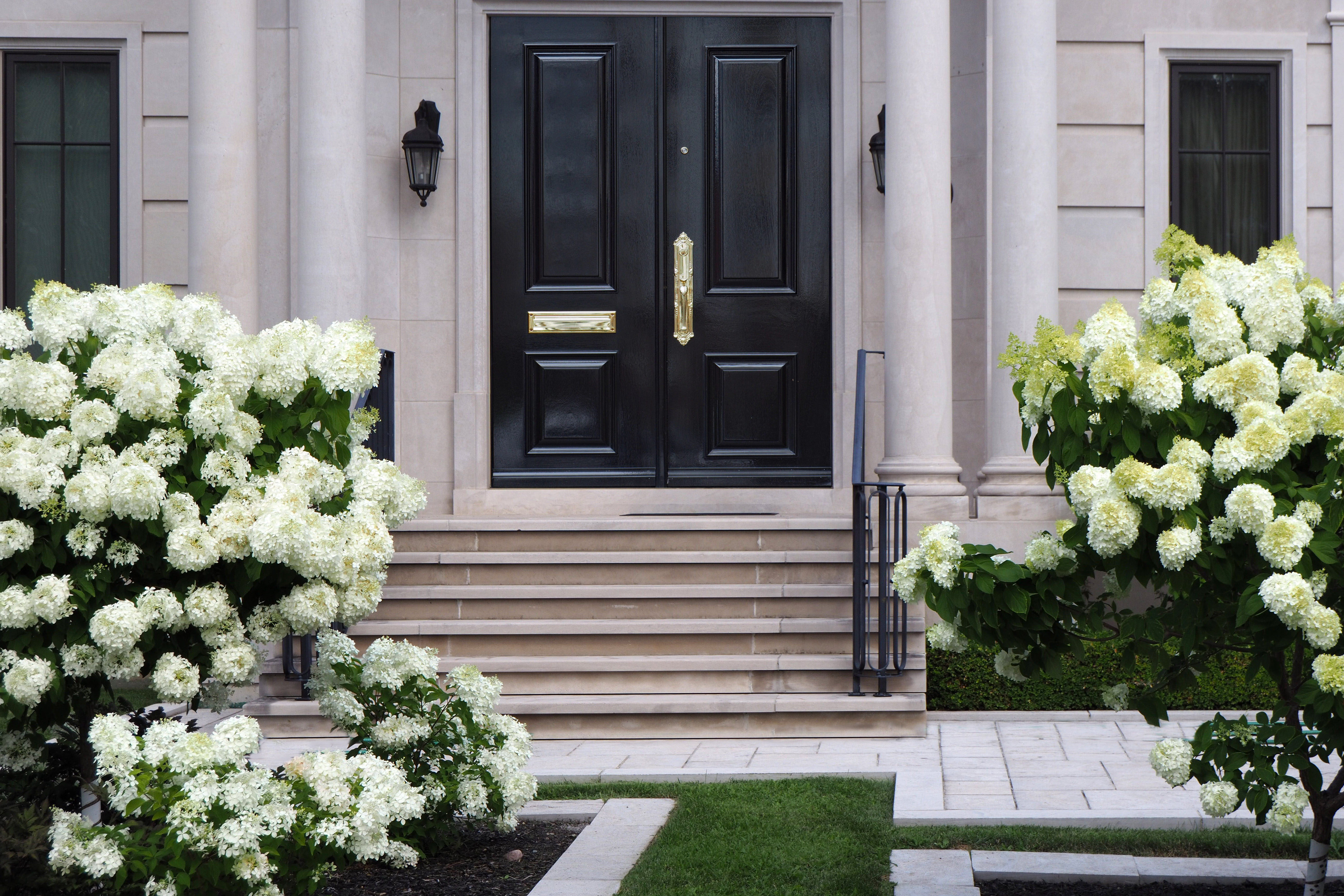
The entry should win against competing garage doors, bins, meters, hedges, and planting. Use light, contrast, a clear path, one larger planter, or a strong threshold rather than scattering small decorations.
If the front door is recessed or visually weak, strengthen the sequence leading to it instead of adding more objects at the door itself.
Frame the house, screen the sidewalk, and do neither to death
Planting softens a facade, buys privacy and carries the seasons, and it should manage all of that without erasing a window, closing a sightline, or narrowing the path. The mistake is almost never the plant. It is the label. Read the mature size and then believe it, because the shrub that sits perfectly under the window at planting is a pruning obligation by year three and a hedge across the glass by year six — and by then pulling it out feels like vandalism, so most people keep cutting it and quietly resenting it.
Privacy from the sidewalk is the same problem lying down. A small front yard can have separation without turning defensive: a low hedge, layered shrubs, open fencing, a small tree, a change in grade. Each works at the height that actually matters, which is the height of a person walking past, and none of them requires a wall. Before anything permanent goes in, check local rules on fences, sight triangles, utilities and property-line planting. A screen you have to take down again is worse than no screen at all.
The bins are going to be somewhere. Decide where.
Trash, recycling, hoses, the package box, the bikes, the meter — all of it exists, all of it is already in the front yard, and none of it improves by being left out of the drawing. Give each one a legitimate address and screen what can be screened. What cannot be screened: never bury a meter, panel, shutoff or access point behind planting anybody has to fight through. The person who needs it will reach it regardless, and the planting will lose that argument.
One narrow screened bay, or a built storage move that takes the bins out of the sightline properly, beats asking three ornamental grasses to conceal municipal infrastructure. They will not conceal it. They will be three grasses standing in front of a wheelie bin, which reads worse than the bin on its own.
Use fewer planting gestures at larger scale
Small front yards become visually noisy when every square foot has a different plant, pot, edging material, and decorative feature. Repeat a limited plant palette and let one tree, shrub mass, or bed carry real weight.
Scale can make a small space feel more confident rather than smaller.
Think about winter and the off-season
Evergreen structure, bark, branching, grasses, seed heads, hardscape, and lighting matter when flowers are gone. In snowy climates, identify where shoveled or plowed snow can land without crushing the entire planting plan.
Salt exposure, roof shedding, and freeze-thaw conditions should also influence plant and material choices.
Light the route, not the whole yard
Front-yard lighting should make steps, paths, the door, and address numbers easy to read while preserving contrast and avoiding glare toward neighbors or the street.
Use exterior-rated fixtures and qualified electrical installation where permanent wiring or new circuits are involved.
Let curb appeal come from coherence
Curb appeal is strongest when the house, path, planting, and entry tell one story. Match plant scale to the architecture, repeat a material from the house, and keep edging and containers disciplined.
Do not design only for the photograph from across the street. Walk the route and sit inside looking out.
Plan for growth and replacement
A front yard changes every season and every year. Leave enough room for plants to mature, for paths to stay open, and for one plant to fail without destroying the whole composition.
A design that works only at installation is a rendering, not a landscape.
The small-front-yard audit
- Can a visitor find the front door immediately?
- Is the path comfortable in bad weather and with packages?
- Do plants frame rather than block windows and routes?
- Are bins and utilities handled deliberately?
- Does the yard retain structure outside peak bloom?
- Is privacy created without making the entry defensive?
- Will mature plant sizes still fit?
See Outside and Space Intelligence for more work on routes, thresholds, and small outdoor spaces.
A small front yard has no room for decorative indecision. Everything out there is visible from the street, and most of it is visible at once. Get the arrival, the screening and the bins cooperating and curb appeal is simply what is left once nothing is in the way.
Same problem, elsewhere in the house
Room notes
Keep the room on the record.
One useful note at a time: what to test, what to ignore, and what changed when the room got another vote.