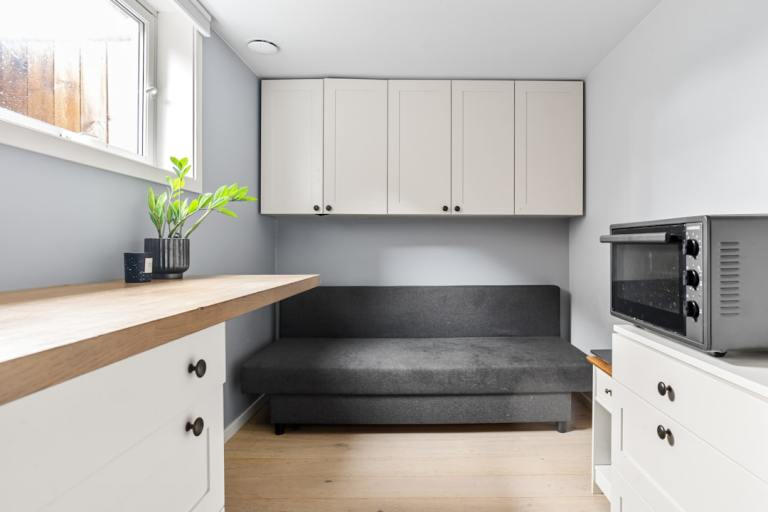
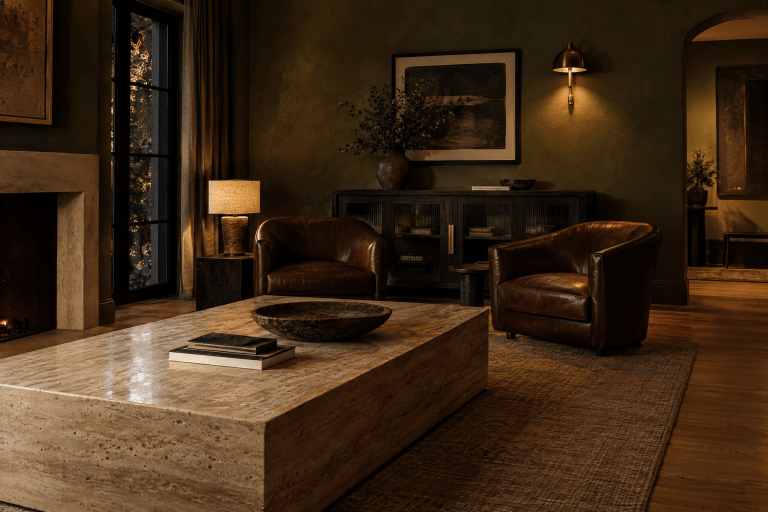
Light and Atmosphere
Your Tiny Room Has No Business Sacrificing a Table to a Lamp
In a compact room, lighting should not consume every nightstand, desk corner, and side table. Move the right light source to the wall, ceiling, shelf, or furniture itself.
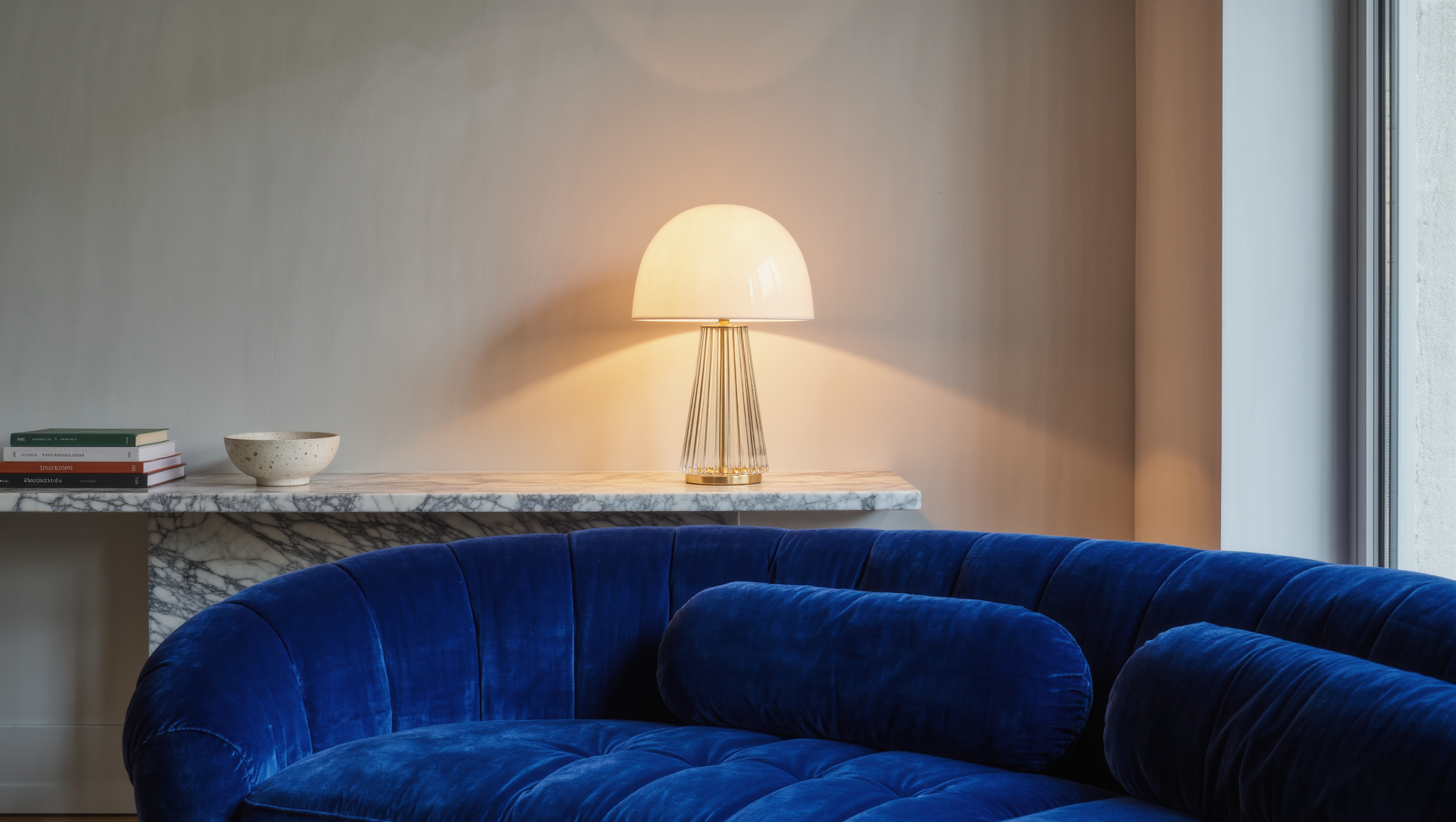
In a large room, a lamp can afford to be furniture-adjacent sculpture. In a tiny room, the lamp is often sitting on the only surface available for a glass of water, a book, a laptop, or dinner. That is a bad trade if the light can do the same job from somewhere else.
So charge every lamp rent. Ask what surface it occupies and what that surface would otherwise be doing, and if the answer is the only useful one in the room, the lamp is badly behind on its rent. Light goes on walls, ceilings, shelf undersides, headboards, clamps — anywhere that isn’t the surface a person needs.
Free the surface that already has another job
A bedside table should be able to hold the few things needed at night. A desk should have enough open area to work. A tiny dining table should not permanently lose one seat to a decorative lamp. When a fixture is taking space from the primary activity, it is a strong candidate to relocate.
IKEA’s small-living guidance explicitly recommends hanging lamps where floor and surface area are tight. The principle scales beyond pendants: the valuable resource is the surface you recover, whatever the fixture type.
Plug-in sconces are the renter’s useful compromise
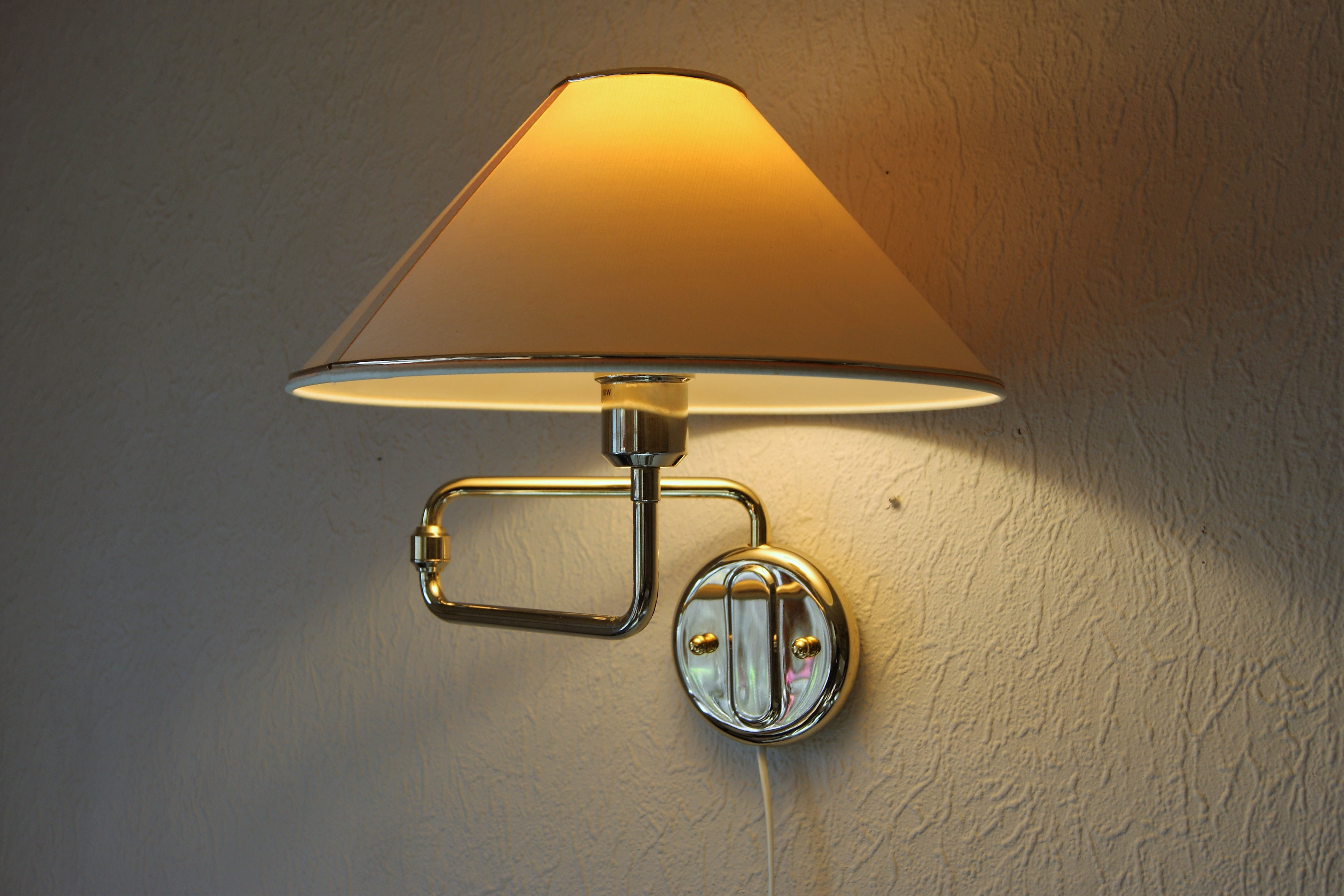
A plug-in sconce can give a bed, reading chair, or desk directional light without rewiring the room. Swing-arm versions are particularly useful when one fixture needs to serve more than one position. Manage the cord deliberately so the solution does not look like a wall lamp attached to an extension problem.
Hardwired sconces can create an even cleaner result in an owned home or renovation, but location matters. Put the light where the task occurs, not where two perfectly symmetrical fixtures happen to look good in elevation.
Use the ceiling for more than one central glare source
A pendant can define a tiny dining area without adding a floor lamp or table lamp. Track or adjustable ceiling lighting can direct light toward art, storage, or work zones. Indirect light bounced off the ceiling can make a compact room feel softer and less visually crowded than several exposed sources at eye level.
A small apartment featured by Houzz used concealed LED lighting above a large storage element to wash the ceiling and avoid adding visible fixtures to an already tight interior. Reduce visual noise where the room is already doing a lot. Hiding every lamp would just move the problem into the ceiling.
One caution, because cheap versions of the idea go wrong fast: a strip of LED tape stuck along a shelf edge and left visible is not concealed lighting. It is a row of small bright dots reflected in every glossy thing you own. If the source can be seen from the sofa, it has stopped being atmosphere and started being a fixture you forgot to buy a shade for.
Layer by task, not by fixture count
You do not need seven lamps because design advice said “layered lighting.” You need enough distinct sources to support the room’s actual modes. A small bedroom might need soft ambient light, focused reading light, and enough illumination at the closet to see clothing accurately. A studio may need work light by day and lower ambient light at night so the office does not remain visually on duty.
Dimmers and separate controls can matter more than additional fixtures. So can color temperature consistency, glare control, and keeping bright sources out of direct sightlines.
What a nightstand is for
Here is the whole argument in one object. A nightstand in a small bedroom should be able to hold a glass of water, a book you are halfway through, a pair of glasses and a phone, all at once, without anything balanced on anything else. Most of them can’t, and the reason is almost never the size of the nightstand.
Research note: This article draws on IKEA’s compact-living lighting guidance and documented small-apartment lighting strategies published by Houzz. Electrical work, fixture ratings, cord routing, mounting, and wet-location requirements should be handled according to the product and applicable electrical rules.
Same problem, elsewhere in the house
Room notes
Keep the room on the record.
One useful note at a time: what to test, what to ignore, and what changed when the room got another vote.