Materials, Color & Finish
Stop Chopping the Small Home Into Twelve Different Finishes
A small home can handle bold materials, but too many abrupt finish changes fragment the plan. Use continuity strategically so rooms relate without becoming bland.
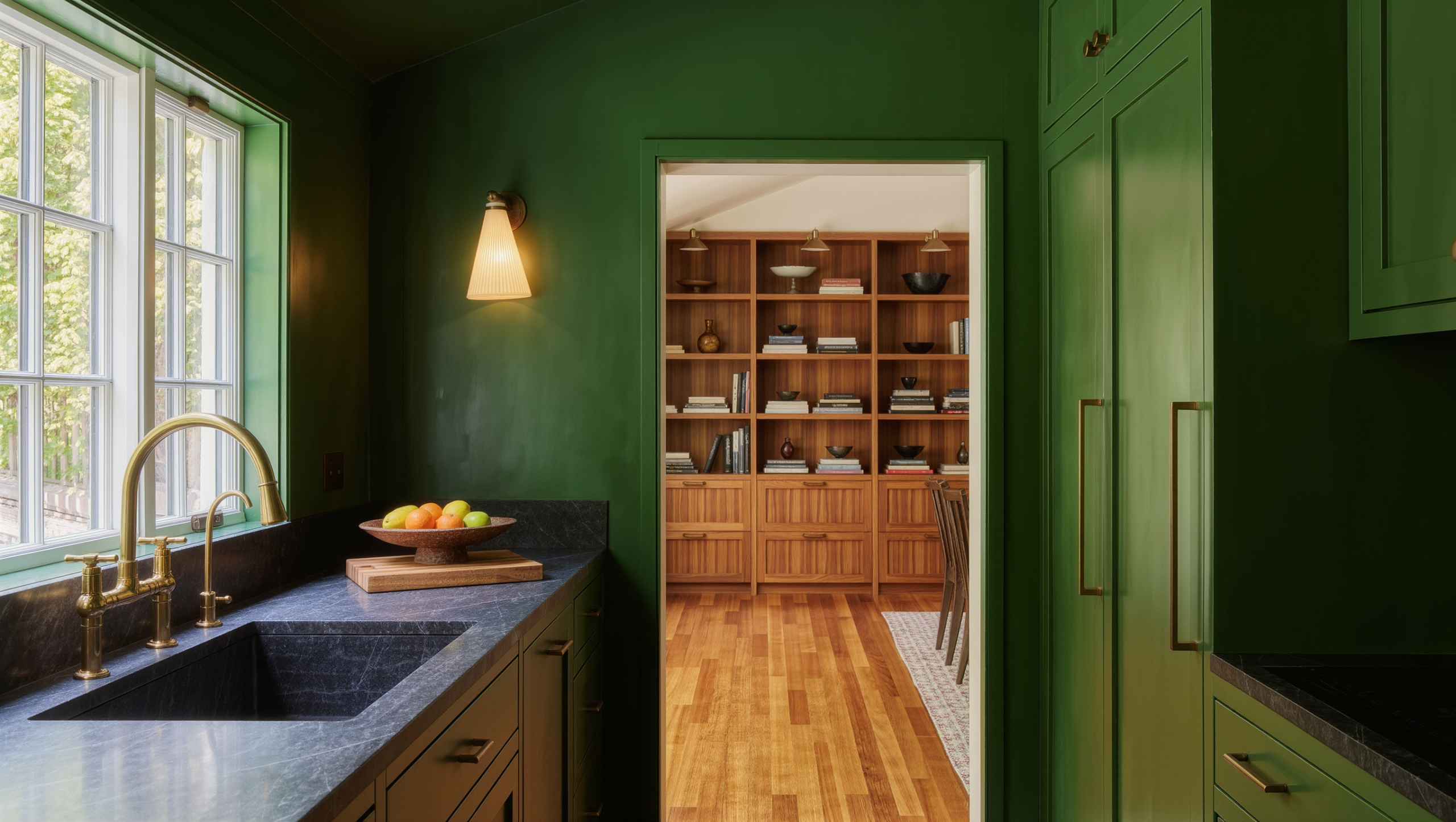
A small home holds together when its surfaces agree with each other. Beige is not the only way to get that. When the entry has one floor, the kitchen another, the living area a third, every threshold gets a new paint idea, and the cabinetry introduces three unrelated wood tones, the eye spends the entire apartment processing borders.
Continuity is a way to decide which changes deserve to be visible.
Let the floor carry the longest line possible
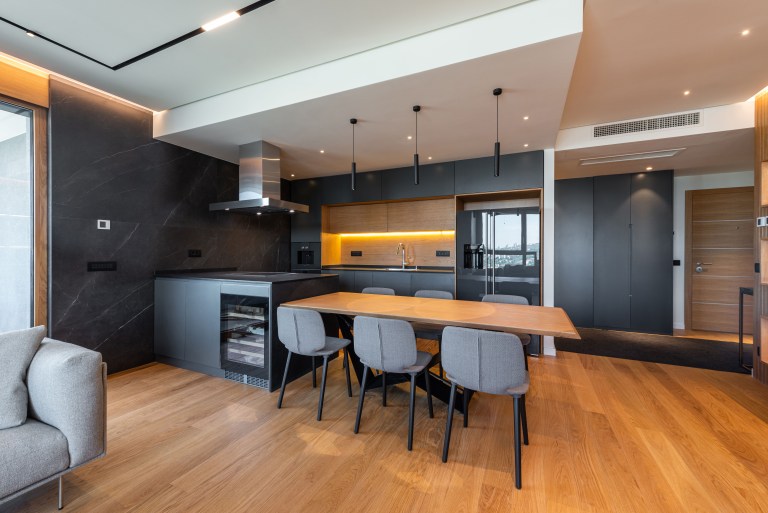
Flooring is one of the strongest visual organizers in a compact plan because it runs beneath everything else. When one material can continue through connected living areas, the eye reads a longer uninterrupted field. Compact-apartment renovations published by ArchDaily lean on this again and again, running one seamless floor through the whole plan so the interior reads as a single space.
This does not mean forcing one material into places where it performs badly. Wet areas, entries, and kitchens may need different durability, slip resistance, water tolerance, or maintenance. The better question is whether the transition can occur at an architectural boundary and whether the two materials relate in tone, scale, or direction rather than announcing a territorial dispute.
Repeat a material before introducing a new one
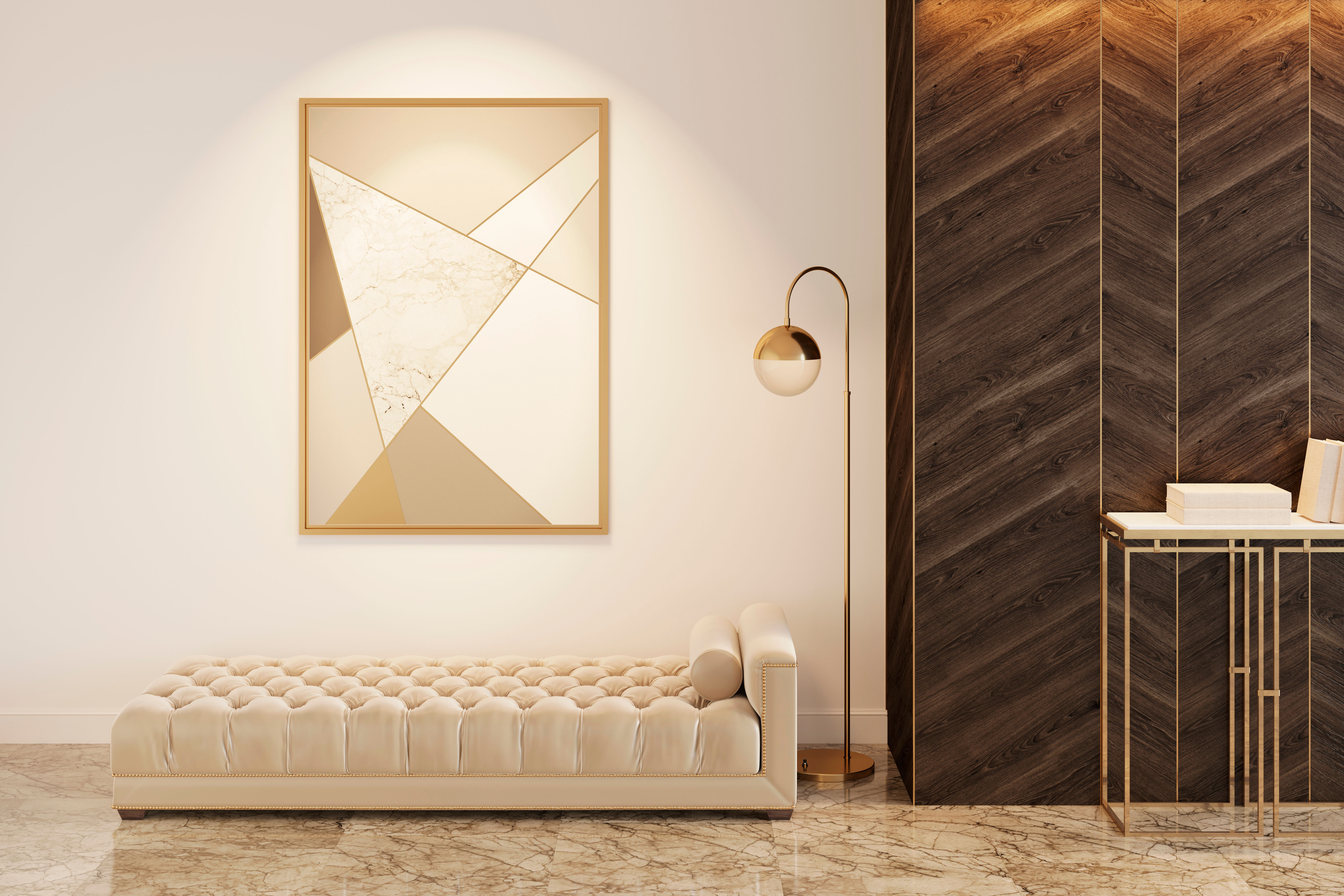
If warm oak appears in the living room, let it recur in a shelf, table, cabinet detail, or frame elsewhere. If black metal is the lighting language, it does not need to become a faucet, mirror, chair, handle, and curtain rod in every room, but one quiet repeat can make separate spaces feel related.
The point is not matching. Matching is easy and often dull. The point is rhythm: the home should have a few recognizable material notes rather than a new instrument entering at every doorway.
Use contrast where you want the room to stop
Contrast is powerful in small spaces because the distances are short. A dark cabinet wall can deliberately terminate a sightline. A change in tile can define the shower. A deep paint color can turn a tiny office niche into a clear destination. Every one of those boundaries is doing a job.
What makes a home feel fragmented is not contrast itself. It is accidental contrast: the flooring changes because a renovation stopped there, the baseboards change because nobody specified them together, or three white paints disagree under the same light. The room notices even when the homeowner cannot immediately name why it feels unsettled.
Do not use continuity to erase personality
A continuous floor can support a plum bedroom, a lacquered cabinet, a patterned ceiling, or one ridiculous chair. In fact, a coherent base often gives bolder moments more authority because they are not competing with twelve background decisions. Small spaces can absolutely be dramatic. They simply benefit from knowing which surfaces are the chorus and which one gets the solo.
Count the changes from the front door
Walk the home and count the visible material changes from the front door to the farthest window. Keep the changes that mark a real functional or architectural shift. Question the ones that merely happened. A small home feels more generous when the eye can travel before it has to stop and process another border.
Research note: This article is informed by recent and established compact-apartment projects published by ArchDaily in which continuous floors, concealed structure, and consistent material volumes are used to strengthen spatial continuity. Material selection still needs to account for moisture, slip resistance, wear, transitions, and substrate conditions.
Same problem, elsewhere in the house
Room notes
Keep the room on the record.
One useful note at a time: what to test, what to ignore, and what changed when the room got another vote.