Light and Atmosphere
A Mirror Should Borrow Light, Not Multiply the Mess
Mirrors can extend light and depth in a small room, but placement matters more than size. Reflect the useful view, not the clutter, glare, or television.

“Add a mirror” is the small-space equivalent of “add a plant.” Sometimes correct. Frequently underthought. A mirror does not create space. It creates a second visual event, and the quality of that event depends entirely on what you make it repeat.
Put a large mirror opposite a bright window and it can extend light and carry the exterior view deeper into the room. Put the same mirror opposite an open coat rack, a television, and the kitchen recycling and you have successfully doubled the evidence.
Reflect the best axis in the room
Stand where the mirror might go and look directly across the room. What will it contain most of the day? The best candidates are windows, art, a long clear sightline, a handsome light fixture, a textured wall, or a portion of the room with enough visual quiet to survive duplication.
Case studies of small apartments often use mirrored surfaces to amplify natural openings rather than simply decorate a wall. In a Tel Aviv duplex published by ArchDaily, mirrors were positioned to increase the presence of the apartment’s many windows and natural light. The principle is precise: the mirror supports the architecture that already makes the space feel open.
There is actual perception behind the trick
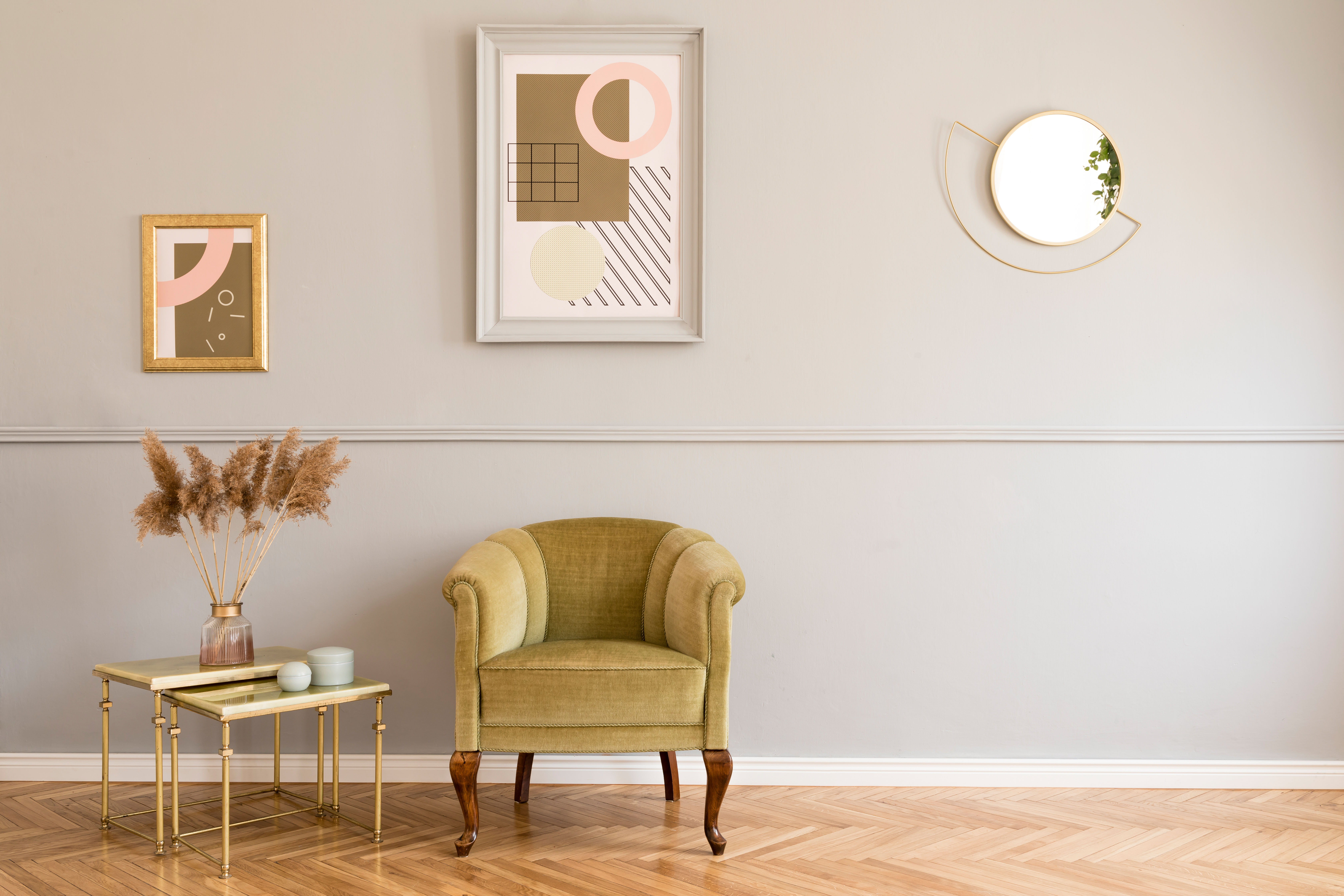
Research on mirror perception has found that reflections provide additional cues for judging size and distance. That does not mean a mirror literally makes a room feel twice as large, and it certainly does not justify every mirrored wall from the 1980s, though it does help explain why a well-placed reflection can complicate the perceived boundary of a room and create a stronger sense of depth. Well-placed is carrying the whole sentence. A mirror hung where it happens to fit, over the console because that is where consoles get mirrors, is not doing perceptual work. It is filling a gap in the hanging plan and charging you for glass.
Do not aim glare at the sofa
Direct sun reflected at eye level can be punishing. So can a mirror that catches a bare bulb or turns a pendant into a second bright source from the wrong angle. Test the proposed position in morning, midday, and evening light before mounting a large piece. A temporary mirror, even a smaller one held in place, can reveal the problem quickly.
If the room is dark because it has little daylight, a mirror can redistribute some available brightness but cannot replace a lighting plan. Layered ambient, task, and accent light still has work to do after sunset.
One large reflection is often calmer than a collection
Several small mirrors create several frames, several reflected fragments, and several competing edges. That can be wonderful if the room wants ornament. It is less helpful if the objective is spatial calm. A single large mirror or mirrored cabinet can create a cleaner visual field and let the reflected scene read as one composition.
Scale it to the wall and the furniture beneath it. A mirror that is too small can look tentative; one that is enormous but poorly related to surrounding objects can become a portal to nowhere. The drama is in the proportion, not the square footage of glass.
Decide what deserves to exist twice
Before the drill comes out, then: what, exactly, deserves to exist twice in this room? If the answer is daylight, a view, a long axis, one good object — go ahead, and make it big enough to mean it. If the answer is cords, shoes, open shelving and the back of the dining chairs, the wall is innocent. Leave it alone.
Research note: The visual-depth discussion is informed by peer-reviewed perception research indexed in PubMed and by ArchDaily’s Mirror Maze Apartment case study. Daylight effects are contextual; glare, privacy, orientation, and actual light levels should be assessed in the room rather than assumed from a photograph.
Same problem, elsewhere in the house
Room notes
Keep the room on the record.
One useful note at a time: what to test, what to ignore, and what changed when the room got another vote.