Function and Flow
The Back of the Sofa Is Now Part of the Room
The moment a sofa floats away from the wall, its back becomes architecture. That does not mean it automatically needs a console table behind it.
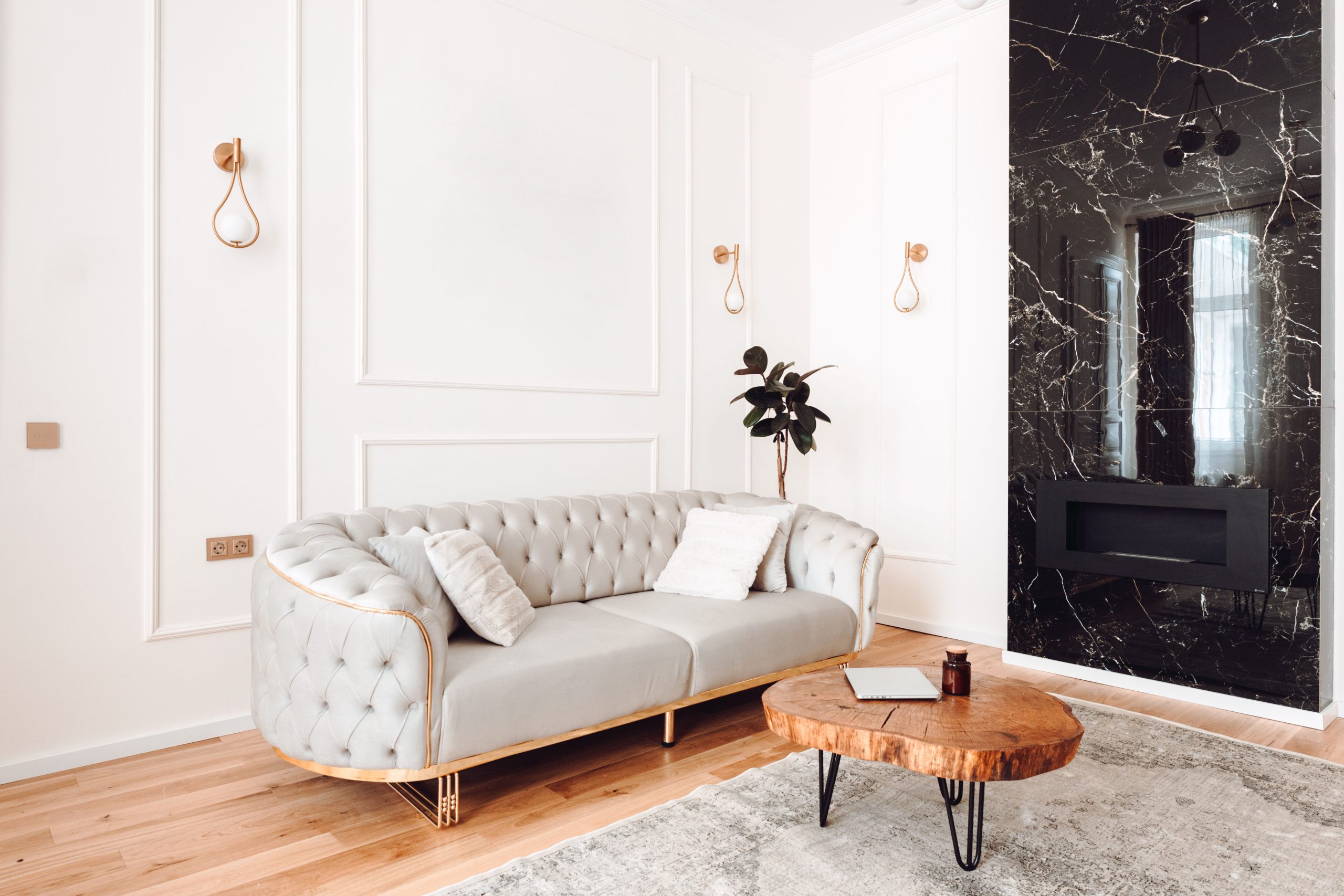
Push a sofa against the wall and the back of it disappears from the conversation.
Float it into the room and suddenly the back is a wall.
A low, upholstered, slightly expensive wall that now faces the entry, dining table, kitchen or whatever else exists behind it.
People see an exposed sofa back and panic-buy a console table.
Sometimes that is exactly right.
Sometimes the sofa was fine until it acquired a piece of furniture whose only job is to apologize for the fact that the sofa has a back.
Some sofa backs were never meant to be seen
Look at the sofa from behind.
Not from the flattering front corner. Straight on.
Is the upholstery continuous? Are the seams finished cleanly? Is there a strange flap, visible hardware, sagging fabric or a row of zippers that were clearly never intended for public life?
Some sofas are designed to float. Others are designed with the quiet confidence that nobody will ever inspect their rear.
If the back is visually clean, let it be visible for a few days before adding anything.
You may discover the room benefits from the lower, simpler line.
A console table needs a job beyond camouflage
If you add a console, make it useful.
It can hold lamps where the seating group needs light. It can create a landing surface between living and dining zones. It can carry books, a tray, flowers or objects that help the room connect to whatever is behind the sofa.
It can also become a narrow hallway full of decorative objects waiting to be knocked over by anyone walking past.
Measure the remaining circulation after the table is added.
A ten-inch-deep console is still ten inches of room. Add stools underneath and now the furniture has multiplied.
Do not spend a foot of circulation to solve a problem the sofa did not actually have.
The height matters more than people think
A console that rises well above the sofa back can look like a barricade.
One that is dramatically lower may disappear or feel unrelated.
Usually the strongest relationship comes from a table that sits close to or slightly below the visible sofa back, depending on the sofa shape and what the table is doing.
But test the full composition.
A lamp on the console changes the height. Tall branches change it again. A stack of books can turn a clean dividing line into a layered screen.
The object on top is part of the measurement.
The landing strip nobody planned
Any horizontal surface near a main route develops ambition.
Keys. Mail. Backpack. Water bottle. Sunglasses. Charger. One mysterious receipt nobody wants to throw away yet.
If the console sits between the living room and entry path, it may become the household landing strip whether the design intended that or not.
That can be useful. Give the behavior structure.
A tray. A drawer. A closed box. A lamp that leaves enough surface for the ordinary objects.
Or keep the surface intentionally too narrow for clutter and give those things a better home elsewhere.
The worst version is pretending the table is decorative while using it operationally every day.
The sofa back can define a room without adding a divider
In an open plan, the back of a sofa is one of the cleanest ways to establish a boundary.
Living room here. Dining room there.
No screen. No shelving unit. No ceiling treatment. Just furniture giving the floor plan a sentence break.
That works best when the sofa aligns with something meaningful: the rug edge, table axis, doorway, kitchen run or circulation path.
If the sofa floats at a random angle because the television demanded it, the back may feel less like architecture and more like an obstruction.
Use the line deliberately.
Lighting can replace the console
If the real reason you want a console is lamps, ask whether another lighting solution is better.
A floor lamp at one end. A wall light where wiring and placement allow. A portable lamp on a nearby side table. A ceiling fixture that provides ambient light while task light comes from somewhere else.
The sofa does not need a table behind it simply to earn illumination.
Keep the floor open if the room benefits from it.
A bench behind the sofa is a different proposition
In some rooms, a low bench can be more useful than a console.
It can provide occasional seating, a place to set a bag, or a soft transition between zones.
But test what happens when someone actually sits there.
Is there enough space behind the bench? Does it block the path? Does the person stare directly at the back of a sofa cushion from twelve inches away?
Furniture should not be theoretically multifunctional and practically absurd.
The answer may be a better sofa
If you know the room requires a floated sofa and you are still shopping, look at the back before buying.
Finished upholstery. Clean seams. Appropriate depth. Legs or base that look good from all sides. A height that divides the room without becoming a fortress.
People spend enormous effort evaluating the front of furniture that will be seen from behind every day.
Turn it around in the showroom.
The room will.
Live with the exposed sofa back first
Float the sofa in its best position and live with nothing behind it. Not a lamp, not a tray, nothing.
Walk around it. Look from the entry. Sit at the dining table. Notice whether the exposed back feels unfinished or simply calm.
If you keep wishing for light, storage or a landing surface, add the piece that solves that specific need.
If you stop noticing the back entirely, you have saved a piece of furniture, a foot of circulation and whatever the console was going to cost.
The back of the sofa is part of the room now. It does not automatically require a supporting cast.
Same problem, elsewhere in the house
Room notes
Keep the room on the record.
One useful note at a time: what to test, what to ignore, and what changed when the room got another vote.