Awkward Spaces
The Beauty of an Empty Corner: When Not to Fill It
An empty corner can be the pause that makes a room work. Learn when to leave space open and when a corner genuinely needs seating, storage, light, art, or plants.
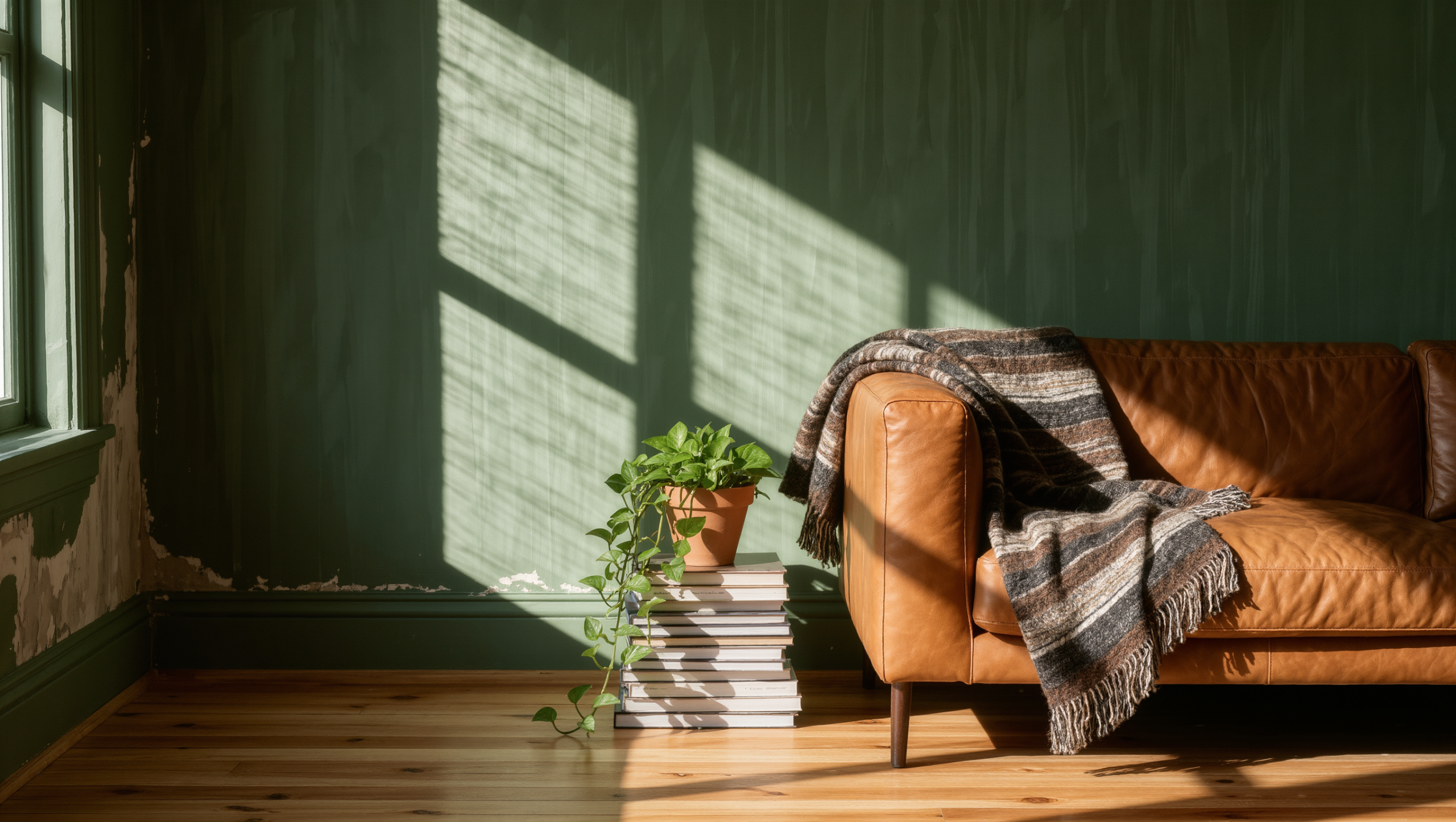
This corner is doing nothing. That might be exactly what it should be doing.
Interior advice has a bad habit of treating every blank patch of floor as unfinished business. Add a chair. Add a plant. Add a basket. Add a pedestal with an object nobody is allowed to touch, ever, on pain of death. Do this enough times and the room has no silence left—just several objects standing around at a party they weren’t really invited to, because somebody got nervous about seeing bare floor.
An empty corner is not automatically a missed opportunity. Sometimes it’s the negative space that lets a stronger piece register. Sometimes it’s the turning radius that keeps circulation easy. Sometimes it’s just the flexible territory a room needs when ordinary life inevitably changes the plan, which ordinary life always does.
Empty space can complete the composition
A strong sofa, cabinet, artwork, fireplace, or window usually needs open space around it to actually read. Fill every edge and hierarchy weakens, because the eye has nowhere quiet to land between the bigger decisions in the room. Everything is shouting and nothing is actually being heard.
Stand at the doorway and look at the whole room. If that corner creates a visual pause between two stronger moments, protect it like it owes you money. Whether the corner itself looks decorated hardly matters. The test is whether filling it would make the rest of the room easier or harder to understand. Negative space is spacing and emphasis, and it gives the room somewhere to take a breath.
Ask whether a real job is waiting there

Some empty corners are evidence of a genuinely missing function. Maybe the sofa has no reachable table. Maybe the room needs a reading seat, a landing spot for a guest’s bag, a lamp in a zone that’s actually dark at night. Those are jobs. A chair placed there because the corner looked a little lonely is not—that chair is just going to sit there judging you.
Name the job before you assign an object, and be specific. “Seating” isn’t a brief. “A chair used three evenings a week for reading, with light and a place for a drink” is a brief. If you can’t describe what the object will actually help someone do, the corner probably doesn’t need one, and you can stop shopping for it in good conscience. And if a real job does turn up, run it through the awkward corner decision tree before anything gets ordered.
Check circulation before you decorate. Corners often sit next to doors, turns, closet access, stairs, the route between two big furniture pieces—which makes them look available on a floor plan while being extremely busy in real life. Walk the route at normal speed. Carry a laundry basket through it. Open the nearby door. Pull out the adjacent drawer. Sit in the closest chair and stand back up. A plant that looks harmless on day one may grow directly into the turn by month three, and a floor lamp base can end up exactly where feet pivot at 6 a.m., which nobody discovers until it’s dark and someone yelps.
Check the neighbors before you blame the corner
Sometimes a corner only looks empty because the objects next to it are underscaled. A tiny lamp, a narrow console, a timid little artwork can make the remaining wall read as vacancy even when nothing is technically missing. Filling the corner treats the symptom and leaves the actual problem, weak visual weight next door, fully and comfortably intact.
Before you add something new, try strengthening what’s already there. Raise the lamp. Widen the art arrangement. Steal the biggest plant in the house from whatever room has been quietly ignoring it. If that fixes the corner, it was never short of an object. Its neighbors were short of scale.
If the corner needs presence but not furniture, move the intervention up the wall instead of onto the floor—art, paint, a wall light, a tall curtain, a material change. This is especially useful in small rooms and narrow passages, where floor-standing objects charge rent in circulation whether you invited them or not. A dramatic paint field or one substantial artwork often does more work than three small filler objects standing around trying to look busy.
Seasonal emptiness is allowed. Dust is not.
An empty summer corner might hold a reading lamp come winter. A spot reserved for a holiday tree doesn’t need permanent furniture the other eleven months just to avoid looking unfinished. Rooms are allowed flexible negative space, and that flexibility often keeps a room genuinely useful across hosting, cleaning, and whatever life phase you’re currently in.
None of which excuses a corner full of dust, dangling cords, and an abandoned moving box you swear you’ll deal with. That is not a bold minimalist statement. It’s unfinished maintenance, and everyone who walks by knows it. Clear the zone completely, deal with the cords, let the baseboard and flooring and light look deliberate. Empty space only earns its keep when it reads as a decision.
Run the two-week test before you buy anything
Remove the filler object and actually live with the space for two weeks. Don’t immediately replace it with a slightly better-looking version of the same uncertainty. That would be a costume change.
Notice whether the route improves. Whether the nearby furniture suddenly looks stronger on its own. Whether anyone genuinely misses a function that object was serving. Whether the room feels calmer walking in from the main entrance. If nobody misses it and the composition improves, congratulations. The emptiness was doing real design work this whole time, without asking for credit.
And if the household immediately invents a use for the corner—books start stacking on the floor, a lamp keeps migrating there, someone keeps dragging a chair into the spot—that’s evidence too. Now you actually have a brief, and you didn’t even have to go shopping for it.
Not every blank area is a problem, and not every square foot needs employment. A room needs hierarchy, movement, and somewhere the eye can stop working for a second. Sometimes the most confident decision is recognizing that the corner already contributes by staying quietly out of everyone’s way, and buying nothing for it at all.
Same problem, elsewhere in the house
Room notes
Keep the room on the record.
One useful note at a time: what to test, what to ignore, and what changed when the room got another vote.