Function and Flow
A Wellness Room Should Change What You Actually Do There
Create a wellness room around the behavior you want to support—rest, stretching, meditation, recovery, reading, or quiet—using light, sound, storage, comfort, and a low-friction routine.
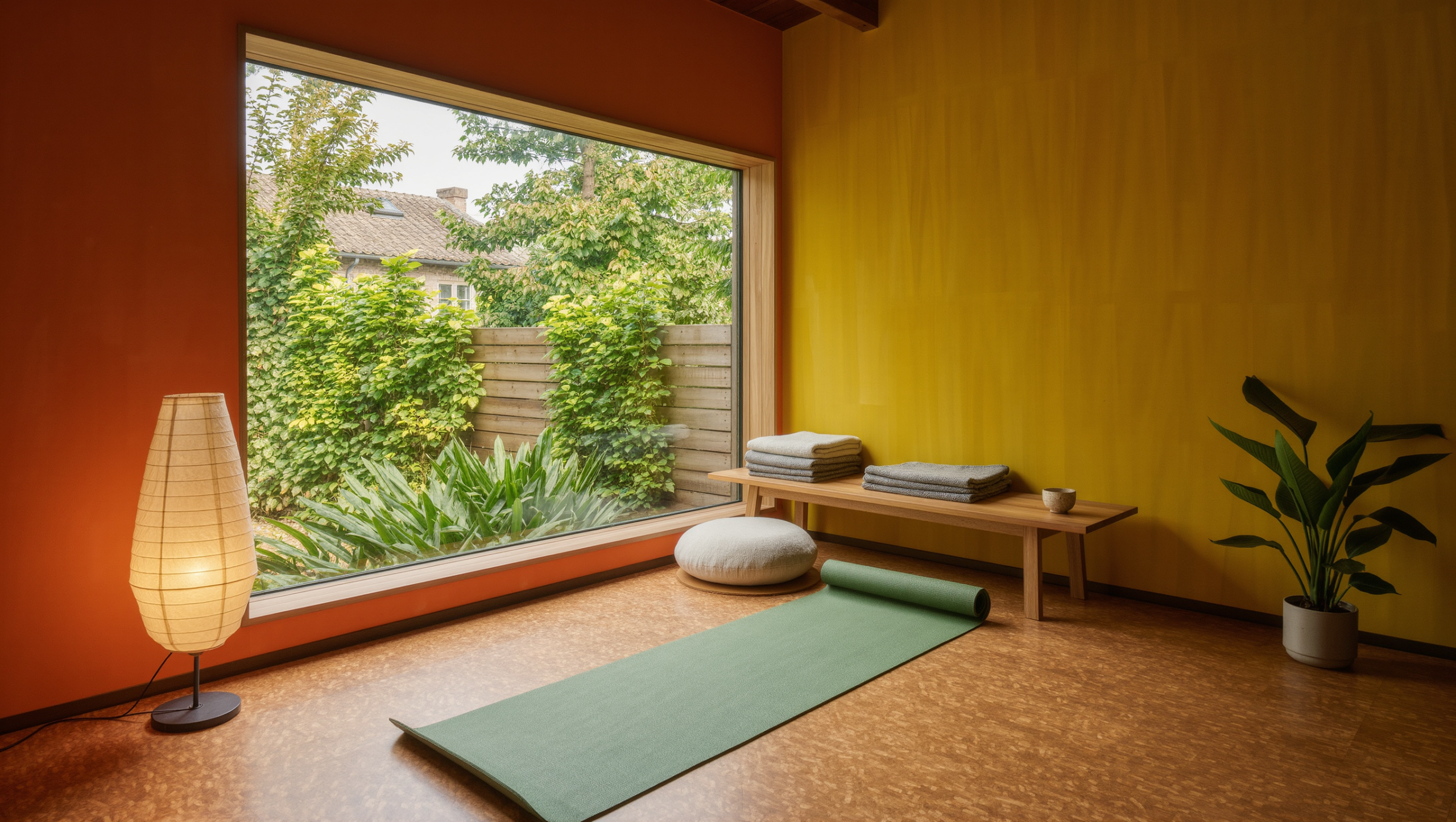
A wellness room is not a beige room with a yoga mat waiting for a photograph.
If a space is meant to help you rest, stretch, meditate, recover, read, breathe, or simply get away from household noise, the design has to make that behavior easier. Calm is the result of fewer obstacles, better sensory conditions, and a room that knows what it is asking you to do.
Name the behavior before you name the style
“Wellness” is too broad to design around. Decide what the room is for in verbs: stretch, sit, breathe, nap, journal, recover, read, listen, move. A room for slow stretching needs a different floor, light level, and clear zone than a room for reading or quiet conversation.
Choose one primary behavior and no more than two secondary ones. If the room must support everything from exercise to aromatherapy to Zoom calls, it will quietly become another multi-use room with a candle.
Remove setup friction
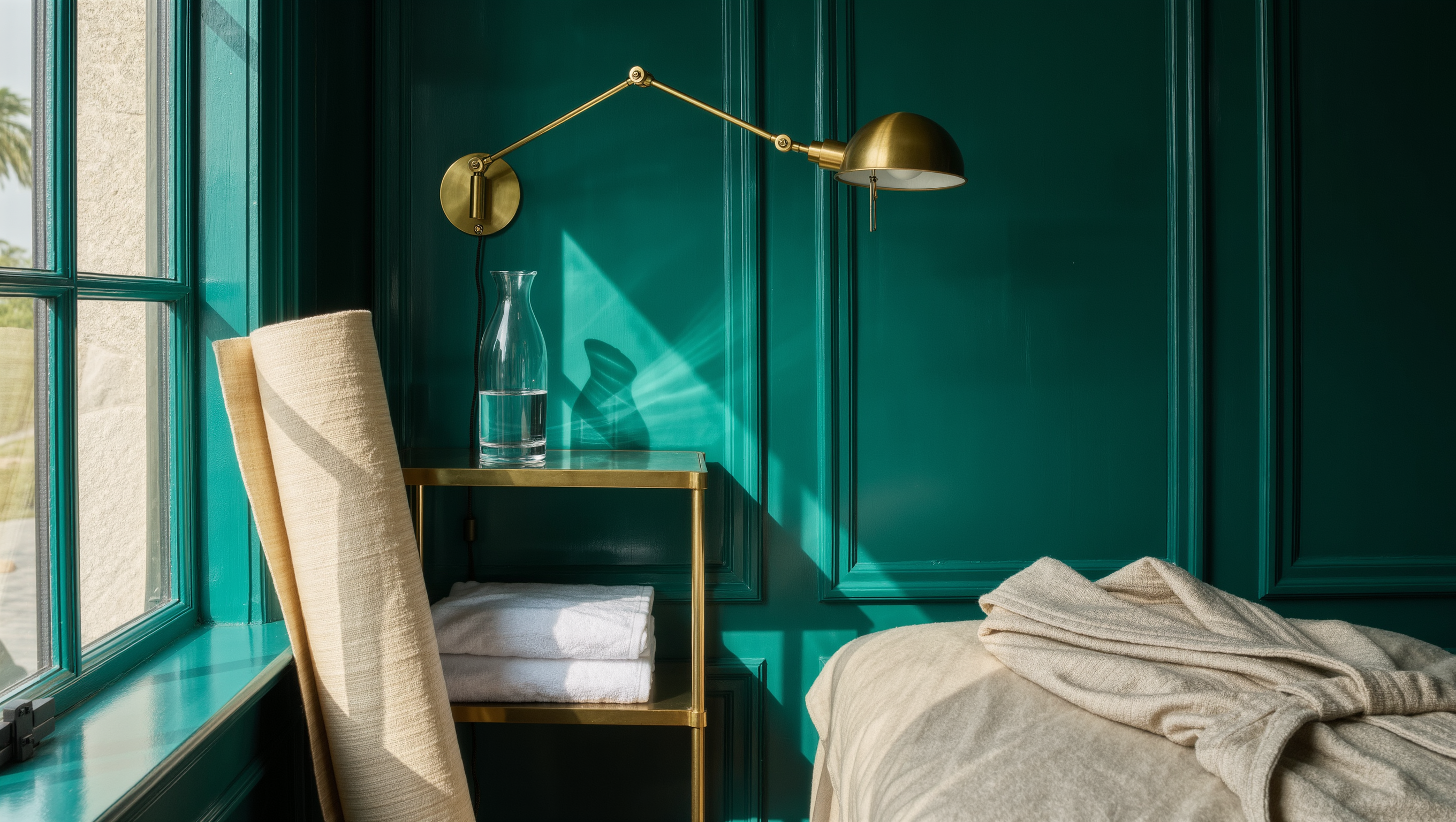
The room should be usable within a minute or two of entering it. If the mat is buried in a closet, the speaker needs pairing, the chair is covered in laundry, and the lamp is across the room, the wellness routine has already acquired a project manager.
Keep the essential equipment visible or within one easy reach. Store secondary items nearby. The room should reset itself through obvious homes for the things that belong there.
Design light by time of use
Morning use may benefit from daylight and brighter task light. Evening use usually needs lower, warmer-feeling illumination and less glare. Layer ambient, task, and low perimeter light rather than relying on a single overhead source.
A wellness room should still be safe to move through. Soft light is not the same as insufficient light. Steps, floor transitions, cords, and equipment need to remain clearly visible.
Control what the room sounds like
Hard floors, bare windows, and empty walls can make even a visually calm room feel sharp. Rugs, curtains, upholstery, books, soft wall materials, and acoustic panels can reduce echo and make the space feel quieter without turning it into a sound booth.
If the room is near a kitchen, television, street, or mechanical equipment, identify the dominant noise source before buying a white-noise machine. Sometimes the better move is a door sweep, curtain, furniture shift, or timing change.
Give the body somewhere credible to land
A wellness room needs furniture that supports the intended posture. A beautiful floor cushion that no one can comfortably rise from is not doing the job. A reading chair needs arm support, a reachable light, and a place for a drink or book. A stretching zone needs clear floor area and enough room for the full movement beyond the mat footprint.
Test the room with the bodies that will actually use it. Comfort is personal, and accessibility needs vary.
Use color as support, not prescription
There is no universal “calming color.” Some people settle in deep green; others find it heavy. Some prefer pale rooms; others relax more easily in enveloping color. Test paint and textiles in the actual room at the times you expect to use it.
What matters more than a named color family is whether the palette reduces visual interruption. Repetition, controlled contrast, and a limited number of competing focal points often do more for calm than chasing the right shade of sage.
The props are optional. All of them.
Natural light, a view, wood grain, stone, woven fibre, moving air, the sound of water, the fact that the room looks different in October than it did in June — any of these connects a space to the outdoors. Plants do too, when the light and the watering habit can genuinely support them. What plants do not do is certify the room. Six struggling pots on a north wall are not evidence of wellness; they are six obligations acquired while trying to reduce your obligations. Fewer and larger, or none at all, and let the materials and the view carry it.
Scent is the same argument with more at stake, since people differ in sensitivity, allergy, and plain preference, and a room that only works while something is diffusing is not a calm room. It is a room on life support. Use fragrance if you enjoy it, but keep it controllable, easy to stop, and make sure the space is finished without it.
Hide the administrative layer
Chargers, cleaning supplies, folded blankets, resistance bands, headphones, journals, and backup items need storage. Put them close enough to support use but quiet enough that the room does not read like an equipment closet.
One closed cabinet, bench, basket system, or shallow wall unit may be enough. Do not add six tiny containers when one larger storage move would reduce visual noise.
Build a threshold, then keep it small
The rooms that work feel different before the activity begins, and the switch is usually one physical action: shoes off, curtain pulled, a single lamp on, phone into the drawer. That is a threshold. It is a cue, not a ceremony, and the distinction is the whole thing — the moment the cue takes four steps it becomes another task, and tasks are what you came in here to escape.
One action. Repeatable while tired. If you cannot perform it in the dark, half asleep, without deciding anything, it is too elaborate to survive a bad week — and a bad week is precisely when the room has to work.
Audit whether the room is actually working
- Can you begin the primary activity within two minutes?
- Is the room comfortable at the actual time you use it?
- Can you move through it safely without shifting furniture?
- Does noise from the rest of the home intrude?
- Can the room reset in less than ten minutes?
- Is there anything in the room that exists only because “wellness rooms” are supposed to have it?
For related guidance, see Atmosphere and Rooms in Real Life.
Walk the room and answer that final audit question object by object, out loud if it helps. Anything in there because wellness rooms are supposed to have one can leave today. Nobody is coming to inspect. The room does not have to look serene to a stranger — it has to make the thing you actually want to do about four steps easier, and everything that is not doing that is in the way.
Same problem, elsewhere in the house
Room notes
Keep the room on the record.
One useful note at a time: what to test, what to ignore, and what changed when the room got another vote.