Furniture and Scale
Closed Storage Can Still Make a Room Feel Loud
Doors can reduce visible labels and still make a room feel heavier. Test the cabinet’s visual mass, operating clearance, reset behavior, and point-of-use logic before calling it calm.
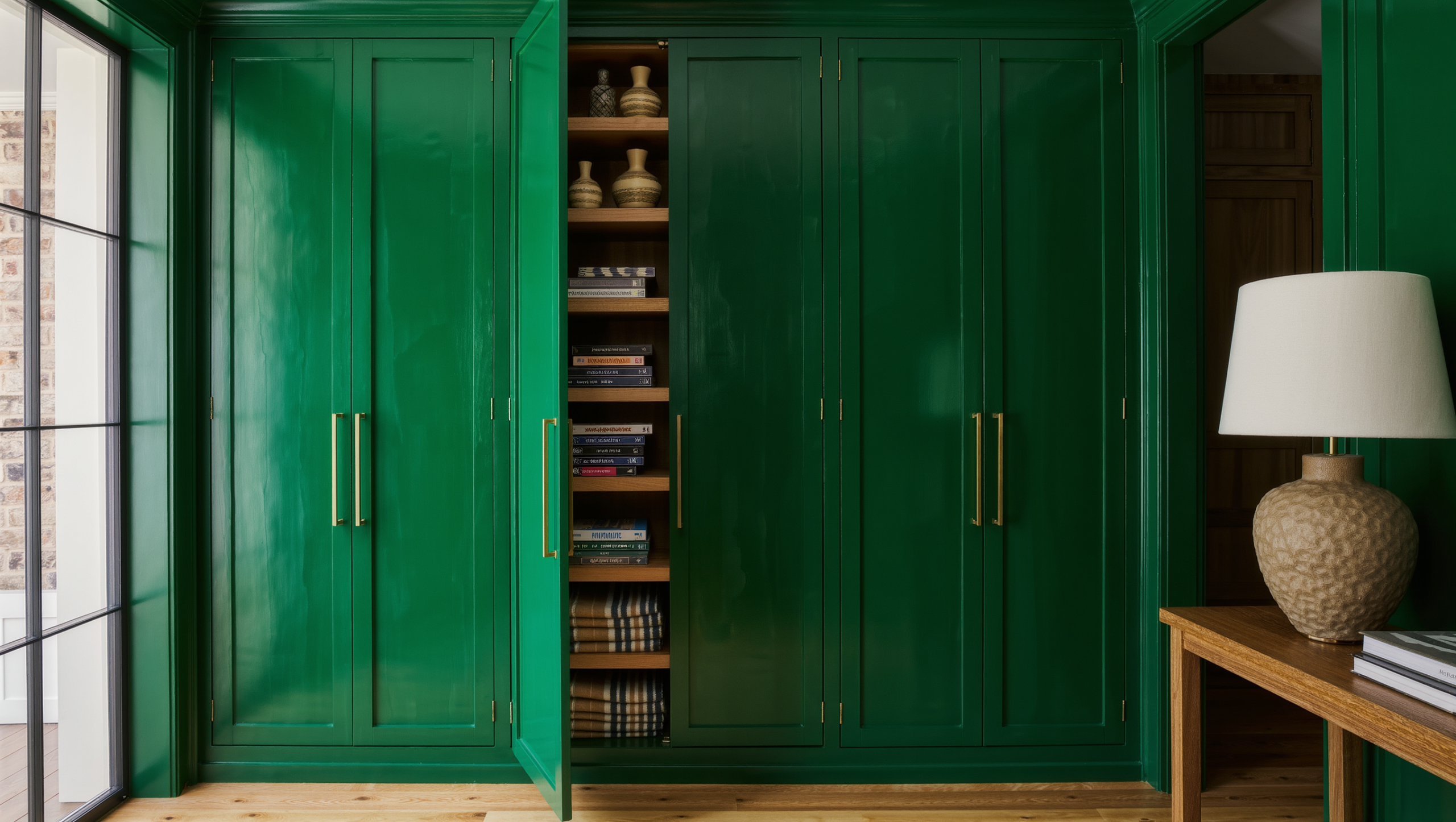
Closed storage can quiet a room. It can also replace many small objects with one large, expensive wall wearing handles.
A door removes labels, packaging, and mixed categories from view. The cabinet then adds height, depth, shadow, operating clearance, and visual mass. Calm is not automatic. It has merely changed costumes.
Judge It From the Doorway Before You Judge the Contents
Before buying another cabinet, study the room from the doorway and from the seat used most often. Closed storage may be technically tidy while still feeling visually heavy, awkwardly placed, or difficult to use.
- The cabinet dominates the doorway view.
- Doors or drawers compete with circulation.
- Frequently used objects require too many steps to retrieve.
- Overflow remains hidden until the system collapses dramatically.
- The room has become calmer inside the cabinet and more crowded everywhere else.
Closed Storage Solves One Kind of Noise
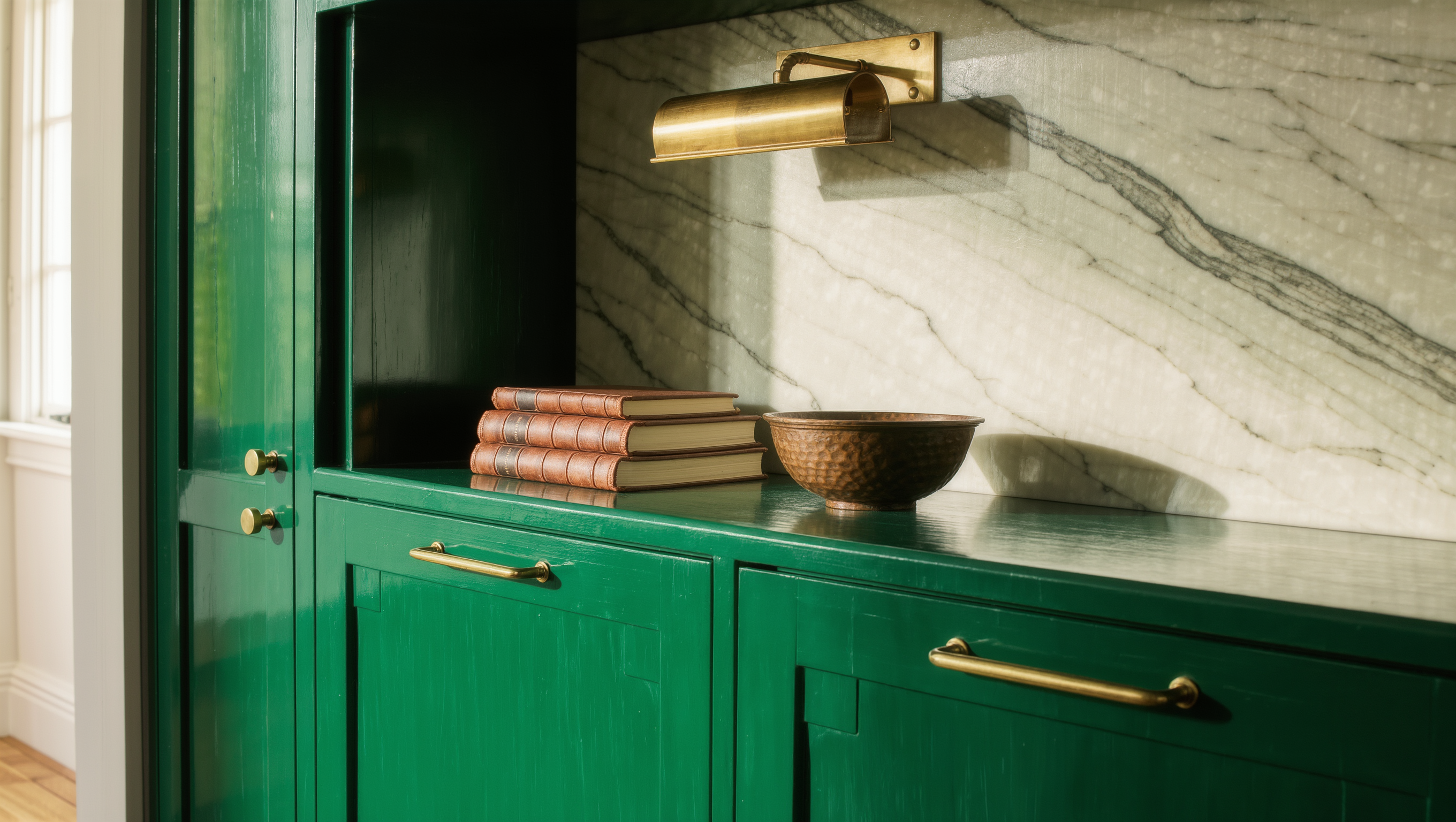
Enclosure is excellent for irregular packaging, paperwork, cables, fragile objects, private items, and mixed categories that create visual static. It is less useful when the objects are used constantly, need ventilation, or must remain visible to be remembered.
The question is not whether closed storage is better than open storage. The question is which objects benefit from concealment and which become harder to manage once they disappear behind a door.
Sort Conceal, Display, and Daily Reach
Sort the proposed contents into three groups: conceal, display, and reach daily. The first group belongs behind doors. The second may deserve open shelves or a deliberate surface. The third needs shallow, accessible storage at a comfortable height.
A hybrid unit often works better than a solid wall of cabinetry. Closed lower storage can absorb practical clutter while open upper shelves keep the room from feeling sealed shut. A single open niche can also interrupt a heavy bank of doors and create somewhere for light, art, or a useful tray.
Test the Full Volume
Mark the proposed width, height, and depth with painter’s tape or cardboard. Then add the invisible space the furniture requires: door swing, drawer extension, standing room, and the route another person needs while the unit is open. A cabinet is not the polite rectangle shown in a product thumbnail.
Check the sightline from the entry. Tall storage placed immediately beside a doorway can make the room feel narrower before anyone has stepped inside. If the unit must be tall, move it toward a less dominant wall, reduce its depth, or paint it to merge with the architecture rather than announce itself as a separate block.
Check the Reset Path
The return trip is what judges storage. If getting something back out takes a minor archaeological expedition, the object has been buried at a convenient depth, and the household will quietly stop retrieving it. Closed fronts do not create internal order. If every category is stacked behind another, the room has hidden the problem rather than solved it.
Give the most-used items the easiest positions. Use drawers for small loose categories, shelves for objects that can stand independently, and labeled interior boxes only where the label genuinely saves time. Avoid filling a deep cabinet from front to back unless the rear items are rarely needed.
Use Material and Detail to Reduce the Weight
A large cabinet can feel lighter without becoming visually timid. Match the wall color, use recessed or low-contrast handles, continue the baseboard across built-ins, and leave a small amount of negative space around freestanding pieces. Legs, shadow gaps, glass panels, woven inserts, or a contrasting interior can also prevent the unit from reading as one uninterrupted slab.
Reflective finishes increase presence, while matte finishes absorb light. Strong grain, high-contrast hardware, and many small door divisions add visual activity. None of these choices is wrong, but they accumulate. A room seeking calm rarely benefits from twelve tiny doors, six finishes, and hardware performing a tap routine.
When Open Storage Is Actually Calmer
Open storage can feel quieter when it holds a small, coherent category: books, ceramics, records, or frequently used kitchenware. The problem begins when open shelves become overflow territory for unrelated objects.
Use open storage when the contents share scale, material, color, or purpose. Leave some space empty. The shelf needs intervals, not total occupation. Closed storage should absorb the visually unruly categories so the open areas can remain selective.
Until the Tape Survives a Week, Nothing Is Decided
Live with the taped footprint. Walk past it carrying laundry. Open the doors near it. Sit in the room after dark with the lamps on and decide whether the block in the corner has joined the architecture or is still standing there like a visitor nobody invited.
Hold the purchase while any of this is still true:
- The cabinet has been measured and the contents have not.
- Nobody has looked at the doorway photograph, or somebody has and then went quiet.
- The category used most often still cannot be put back one-handed.
- The unit is already full on the day it arrives.
Closed storage is worth its footprint when the reset gets shorter and the route stays open. When neither of those changes, the doors have simply closed the meeting.
Same problem, elsewhere in the house
Room notes
Keep the room on the record.
One useful note at a time: what to test, what to ignore, and what changed when the room got another vote.