Outdoor Rooms
A Clover Lawn Is an Option, Not a Moral Upgrade
Decide whether clover, microclover, a clover-grass mix, or another lawn alternative actually fits your climate, traffic, pets, pollinators, maintenance, and neighborhood conditions.

A clover lawn can be lower-input, green, soft, and full of pollinator activity. It can also be the wrong plant in the wrong climate, fail under heavy use, disappear seasonally, or create exactly the maintenance problem you thought you were escaping.
Clover versus grass is the wrong argument, because nobody owns an abstract lawn. The question is whether a clover ground plane can do the jobs this particular patch of ground is being asked to do, and the answer might be clover, a clover-grass mix, a native groundcover, or simply less conventional turf than there is now. Climate, use, pets, maintenance, and local rules decide that. Ideology does not get a vote.
What is the lawn actually for
A decorative front lawn, a dog run, a children’s play area, a picnic surface, a shortcut to the gate, a sunbathing patch, and a green field nobody ever stands on are seven different jobs, and only one of them is about appearance. Clover tolerates use. It does not behave like durable turf under repeated running, sports, or a dog that takes the same line to the fence forty times a day.
Walk the high-traffic routes before buying anything. Often the answer is not a full replacement at all — it is a smaller durable lawn exactly where the feet are, with lower-input planting holding everything else.
Check whether clover belongs in your region
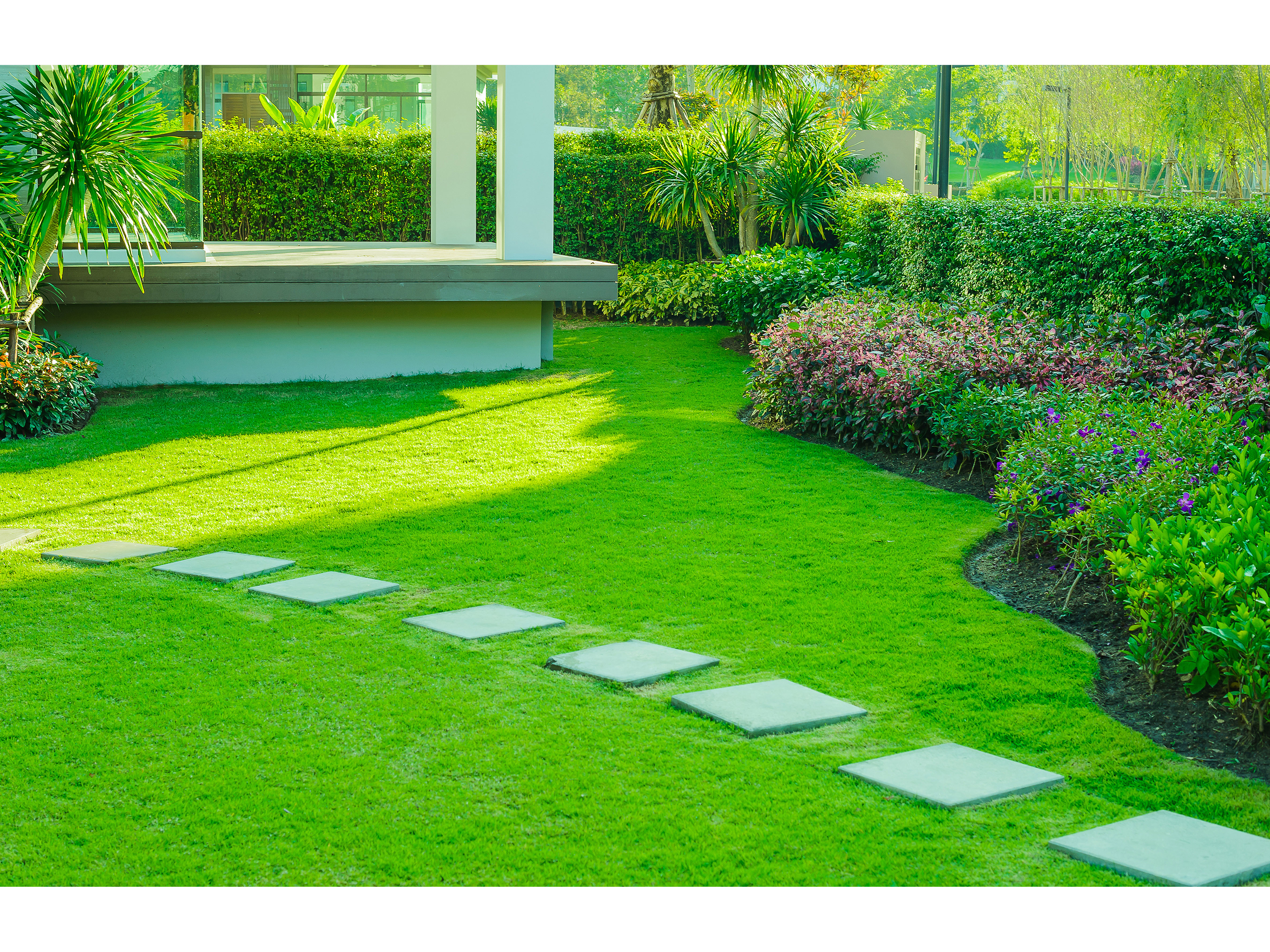
White clover and microclover are widely used lawn alternatives, but they are not native everywhere and may not be the best ecological choice for every site. Local native groundcovers, sedges, low-growing grasses, or mixed lawns may perform better.
Use local extension resources, native-plant organizations, and reputable nurseries to compare alternatives for your climate and soil rather than buying a national seed mix because the package looks optimistic.
It will not look like the photograph in August
Clover looks lush in weather it likes and thin, brown, dormant, or blotchy in heat, cold, drought, or the weeks between seasons, depending on where you live. That is not a failure of the clover. It is a question about you: do you need green every month of the year, or is seasonal change something you can watch happen without reaching for a bag of anything?
If the answer is continuity, stop chasing a monoculture. A clover-grass mix gives both halves — clover adds diversity and fixes nitrogen, turf contributes wear tolerance and holds color through the shoulder seasons — and the right proportions depend on climate and use rather than on principle. A resilient lawn is a managed plant community, not one species under permanent correction.
Consider pollinators and people together
Flowering clover can provide forage for bees and other insects. That is valuable in many gardens, but it also means active pollinators at foot level.
Households with severe sting allergies, very young barefoot children, or high-intensity play may prefer to mow flowering areas before peak use, locate flowering groundcovers away from the primary play zone, or choose a different planting strategy.
“No mow” is doing a great deal of work in that sentence
Clover may want the mower less often than conventional turf, depending on how tidy you need it to look. Less often is not never. You will still mow for height, for flowers, for weeds, to encourage reseeding, or because the surface has gone shaggy in one corner and flat in the other and the difference has started to bother you.
Be honest about which thing you actually want: fewer mowing sessions, no mowing at all, or less fertilizer and irrigation. Those are three different briefs with three different answers, and only one of them is really a question about clover.
The transition is the risky part, not the end state
Existing turf will outcompete newly seeded clover if the site is not prepared properly. Poor seed-to-soil contact, wrong timing, compaction, inconsistent moisture — all four produce the same patchy result, and the patchiness is what people see for the next year. Follow regionally appropriate establishment guidance, and do not convert the whole property on one throw. Put a smaller area in first and watch it through heat, cold, rain, pets, and ordinary use before committing the rest.
While the ground is thin it is open for business, and plants you did not invite will notice before you do. Learn which volunteers are acceptable spontaneous diversity and which are invasive or legally regulated in your region, because those are different problems with different consequences. The conversion has worked when the plants you chose hold the ground densely enough to keep refusing everything else.
The dog has already decided part of this
Urine, running routes, digging, mud in wet weather, flea and tick conditions — all of it varies by site and by groundcover, and no lawn alternative is pet-proof. Anything marketed as pet-proof is being marketed by someone who has not met your dog.
Put the hardest-wearing surface exactly where the animal runs, which takes no surveying to find, because the grass there is already gone. Softer alternatives go everywhere else.
Check local rules before replacing a front lawn
HOA standards, municipal weed ordinances, sight-triangle requirements, and neighborhood rules can affect what is allowed or how a low-growing lawn alternative must be maintained.
A beautiful ecological argument is still an expensive way to discover that the city interprets your flowering lawn as unmanaged vegetation.
Six candidates, and they are not interchangeable
- Clover or microclover — moderate use, flowering, lower inputs. The obvious candidate, which is not the same as the right one.
- Clover-grass mix — where wear and seasonal continuity matter more than purity.
- Native groundcover — the best ecological fit wherever a regional species stays low enough to live with.
- Sedge or low grass matrix — climate and soil dependent, and worth the research when they line up.
- Meadow or wildflower planting — lovely, and not a surface anyone walks on. Only where walking and play are not the job.
- A smaller conventional turf lawn — still correct where concentrated activity genuinely needs it. Shrinking the turf counts as a lawn alternative. Nobody hands out points for it, but it works.
See Outside and Xeriscaping Is a Water Strategy, Not a Gravel Aesthetic.
The effective lawn alternative is the one that survives your climate, your feet, your maintenance habits, and your tolerance for seasonal change. Clover is one candidate, not a personality test.
Same problem, elsewhere in the house
Room notes
Keep the room on the record.
One useful note at a time: what to test, what to ignore, and what changed when the room got another vote.