Outdoor Rooms
Xeriscaping Is a Water Strategy, Not a Gravel Aesthetic
Design a water-wise landscape by matching plants to site conditions, reducing unnecessary turf, grouping irrigation needs, protecting soil, and planning for shade and seasonal structure.
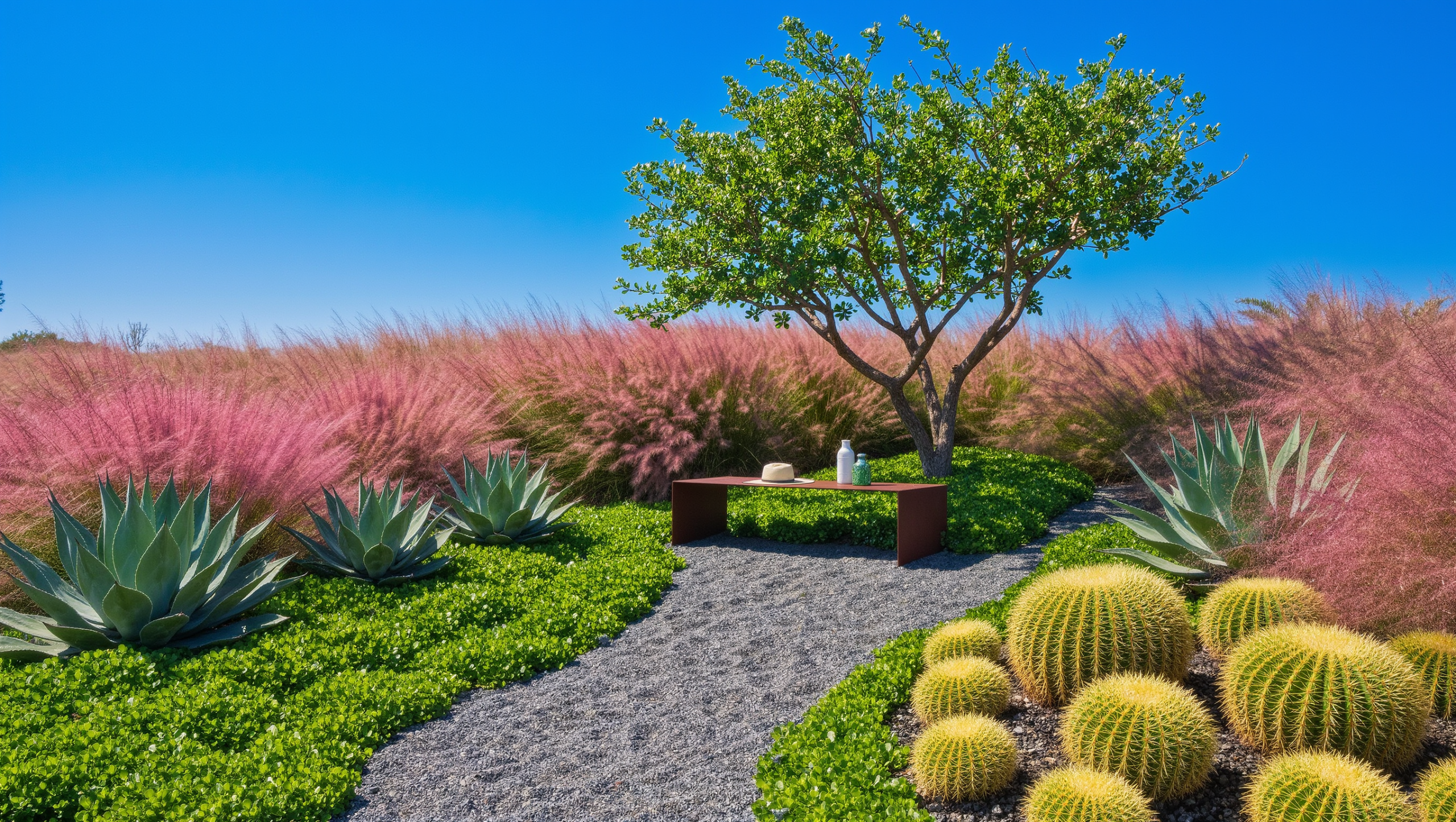
Xeriscaping is not the art of replacing every living thing with gravel and one apologetic yucca.
The real idea is better than that. Make the landscape ask for less supplemental water, by designing around the climate, the soil, the exposure, the plant communities, the shade, the irrigation zones, and how much turf the household genuinely uses. That work is site-specific. It is not a style you can buy.
Start with the water budget, not the plant list
Walk the property after the irrigation runs, then walk it again after rain. Note the walls that get hottest, where heat reflects, where wind funnels through, where shade sits, where water pools, where the roof dumps its runoff, where the soil is compacted, and where the turf is already losing. Those conditions are deciding where your water goes. They are doing it now, before a single drought-tolerant plant arrives.
Then split the yard into practical water-use zones. The vegetable bed drinks more often than a shrub border. A newly planted tree sits on a different establishment schedule than a dry garden that settled in years ago. Running the whole yard as one irrigation zone is usually the first inefficiency, and it is usually the cheapest one to fix.
Keep turf only where turf earns its water
Grass earns its water where people play on it, lie down on it, walk across it, or need a durable open surface. It earns much less on a steep slope, in a narrow side strip, across a decorative front-yard expanse, along a hot parkway, or in an awkward corner nobody has entered in years.
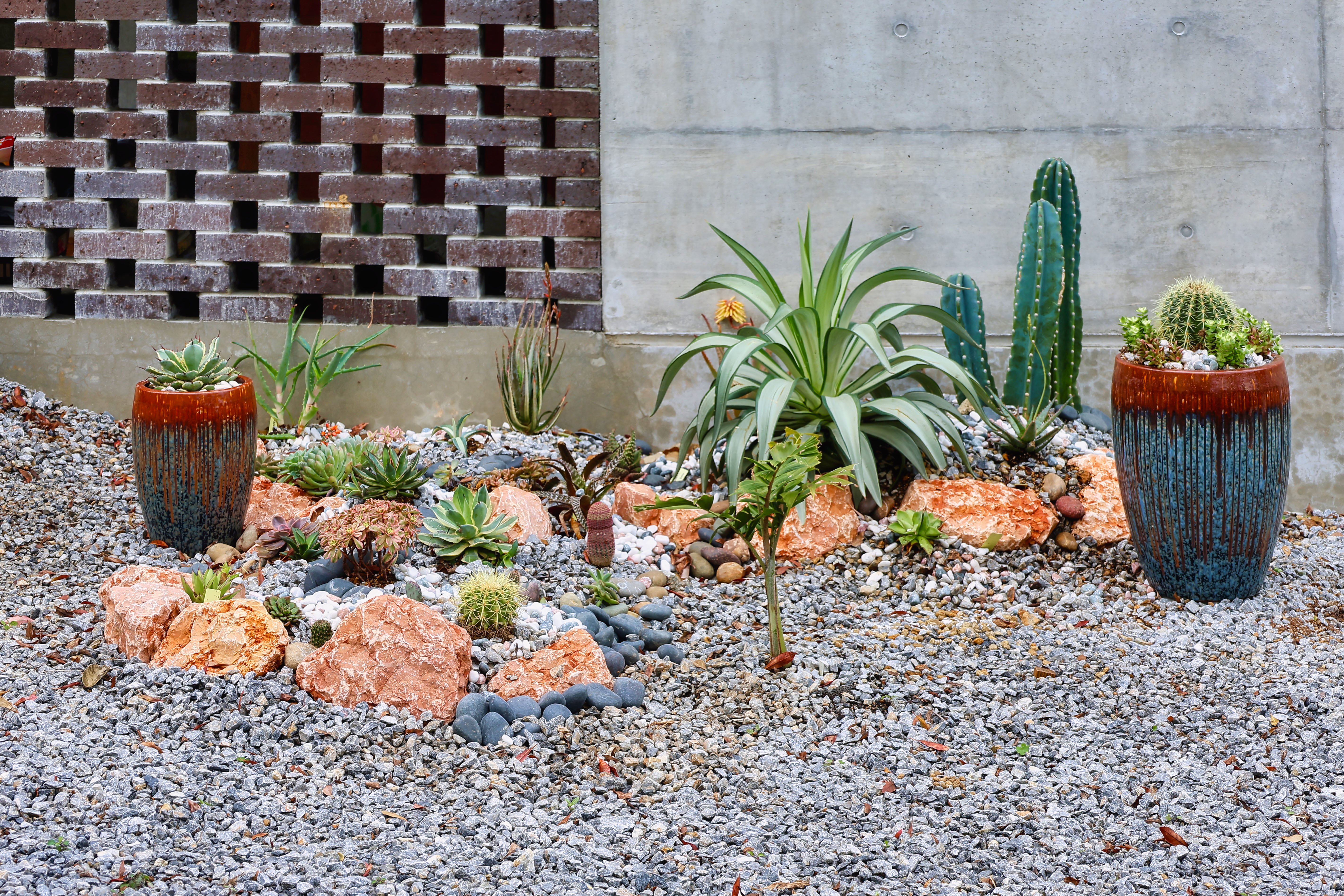
Measure the turf that supports an actual activity, and be honest while you are measuring it. Replace the rest in stages with planting beds, low-water groundcovers, permeable paths, gravel gardens, or whatever else suits the climate.
Choose plants by conditions, not by a drought-tolerant label
The same plant can shrug off drought in one region and die in another, undone by winter cold, humidity, drainage, soil chemistry, or when the rain happens to fall. So start from what is recommended for your region and your site conditions, then check the mature size and what the thing will ask of you every year.
Native plants are often excellent, but native is not a synonym for low-water in every position. A plant native to a wet meadow still wants moisture. Match the ecological condition, not merely the zip code.
Group plants by water need
Hydrozoning is one of the least glamorous and most effective parts of water-wise design. Keep plants with similar irrigation needs together so one thirsty specimen does not force an entire bed onto a wetter schedule.
Spend the higher-water planting where somebody stands close enough to see it: the entry, the outdoor seating, the edible beds, one small focal garden. The drier planting takes the large background areas, where nobody is examining individual leaves anyway.
Build shade into the long-term plan
Shade takes heat stress off people, off paving, off soil, off the planting. One tree or one large shrub in the right position can change the water demand and the comfort of an entire outdoor zone, though not this year and not next.
Choose the species and the position with the mature canopy in mind, and the roots, the utilities, the structures, the wildfire conditions, and the local climate. Trees are infrastructure; they should not be treated like oversized annuals.
Protect the soil instead of baking it
Bare soil loses moisture and loses structure, and it does both quietly. Organic mulch cuts evaporation and improves the soil over time across many planted areas. Mineral mulch suits dry-climate and fire-conscious conditions when it is used appropriately.
Do not bury trunks or crowns. And do not assume one mulch answers the whole yard, because soil type, drainage, pests, wildfire guidance, and the plant community all have opinions about it.
Do not overuse decorative rock
A large field of stone will reduce irrigation. It will also intensify heat, throw glare, compact the soil while it is being installed, and produce an environment that is hard on roots and hard on the people standing in it.
Use gravel and stone as deliberate ground planes, paths, drainage elements, or contrast—not as a universal substitute for landscape.
Make irrigation precise enough to disappear
Water roots, not sidewalks. Repair the leaks, correct the overspray, separate the plant zones, and change the schedule when the season changes rather than when somebody finally remembers. Drip and low-volume systems do well in many planted beds, provided they are designed correctly and then actually maintained.
Irrigation design, backflow protection, pressure, permitting, and connection requirements all vary locally. A new system, or a substantially modified one, follows the local rules and takes qualified professional guidance where that is required.
Plan for establishment water
Low-water landscapes are not no-water landscapes, and they are furthest from it during establishment. New plants need real moisture while the roots go down. Cut the water too aggressively in that first season and a smart design becomes an expensive replacement cycle.
Find out how long each plant type usually needs establishment irrigation in your climate. Then taper, watching the weather, the soil moisture, and what the plant is telling you.
Design for winter and dormancy
A water-wise garden still has to hold up once the flowers have gone. Evergreen mass where it suits, strong branching, ornamental grasses, seedheads, bark, stone, walls, and forms that repeat: those are what carry the composition through the dormant months.
This is how a low-water landscape avoids looking unfinished for half the year.
Measure success by performance
- How much turf is actively used?
- Which areas receive water they do not need?
- Are plants grouped by similar moisture requirements?
- Does the design create useful shade?
- Is soil protected from heat and erosion?
- Can irrigation be adjusted by zone and season?
- Does the landscape still have structure outside peak bloom?
See Outside and Native Landscaping Without the Wild-Mess Excuse for related Room for Drama guidance.
The best xeriscape does not advertise how little water it uses. It simply looks like the place finally stopped arguing with its climate.
Same problem, elsewhere in the house
Room notes
Keep the room on the record.
One useful note at a time: what to test, what to ignore, and what changed when the room got another vote.