Function and Flow
Curtains Have Left the Window and Started Rearranging the House
Space-shaping drapes and portières are one of 2026’s smartest room-splitting moves: flexible privacy, softer acoustics, and actual drama without committing to another wall.
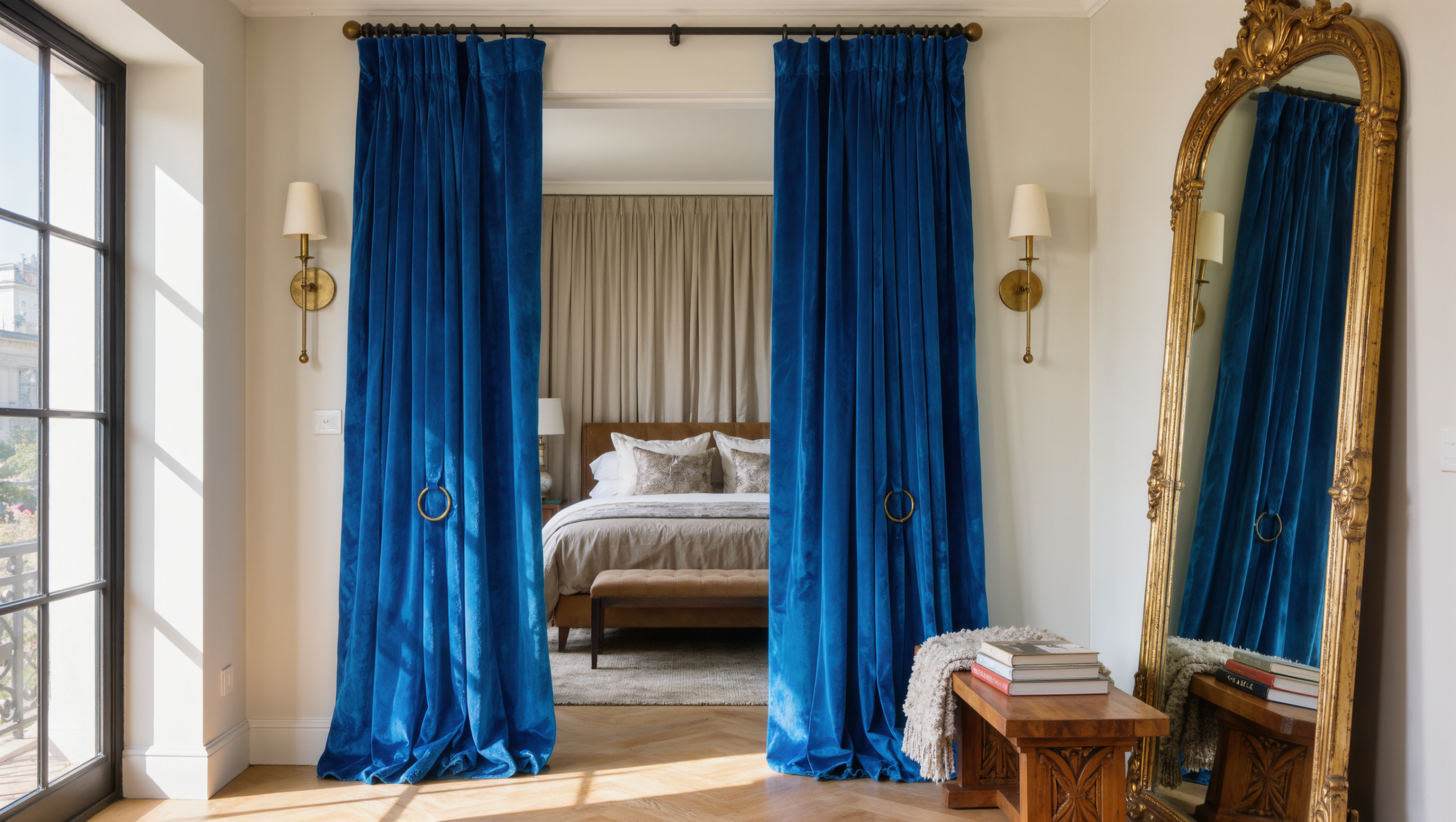
Apparently the curtain got tired of standing politely beside the window and has decided it would like architectural authority.
I support this promotion.
Space-shaping drapery—ceiling-track curtains, portières, fabric panels, and other soft partitions—is one of the more interesting 2026 answers to the large-room problem because it can create privacy without turning the house into a collection of boxes. Open it and the room reconnects. Close it and suddenly the desk, bed, television, or gloriously chaotic project table has somewhere else to be.
This is not a shower curtain nailed to the ceiling
The difference between fabric that shapes a room and fabric that looks temporary is authority. The track needs to look built in, not nailed up. The panel needs enough fullness to hang with weight. The length needs to be precise. The textile needs to make sense from both sides because, unlike a window treatment, you may be looking at the back of it from another room.
Our existing piece on window treatments as architecture deals with the glass. This is the more mischievous version: use the textile to change the floor plan itself.
Use fabric where the room needs optional privacy

A permanent wall is excellent when you want a permanent wall. It is absurd when you want separation for two hours and openness for the other twenty-two.
A curtain works beautifully between a primary bedroom and lounge, around a work zone in a great room, across an opening to a pantry or utility area, beside a guest sleeping zone, or around a media corner that should disappear when the television is off. It is especially useful when the house keeps changing jobs throughout the day.
Choose opacity by what you are actually hiding
Sheer fabric is not privacy. It is atmosphere with excellent public relations.
A translucent textile can soften a transition, filter a view, and create the feeling of a boundary while letting daylight move through. A lined or heavier fabric can provide much stronger visual privacy and a darker, more enclosed mood. If the job is to hide a guest bed or an office monitor, hold a sample up in the actual room with the lights on behind it. Fabric becomes surprisingly honest after dark.
The stack-back is part of the floor plan
When the divider is open, where does all that fabric go?
It needs a deliberate parking place. Stack it against a short return wall, into a pocket, beside a built-in, or at one end of the track where it will read like a generous column of textile rather than a curtain that missed its window. If it blocks a doorway, light switch, artwork, or the one good view in the room when open, the plan has failed before the fabric arrives.
Go theatrical when the architecture can carry it
This is Room for Drama. I am not going to tell you every divider should be oatmeal linen.
A jewel-toned velvet portière, an oversized botanical, a striped woven textile, or a contrast border can turn the boundary into an event. If the surrounding room already has pattern, make the curtain part of the palette rather than introducing an unrelated costume change. If the architecture is quiet, this may be exactly where it gets to become interesting.
The key is scale. A large opening wants enough textile to hang with weight. Tiny pattern across fifteen feet of fabric can turn into visual static; an oversized repeat may become magnificent.
Fabric can soften sound. It cannot repeal acoustics.
Heavier textiles can reduce some reflected sound and make a large hard room feel less echoey. That is useful. It is not the same as acoustic isolation between rooms. If somebody needs confidential calls, sleep-level quiet, or serious television separation, the partition system has to be designed for that performance.
Use the curtain because flexible visual separation and softer reverberation solve the problem—not because the product description used the word acoustic three times.
Mounting deserves more respect than the fabric swatch
Ceiling tracks carrying a substantial run of fabric need appropriate attachment for the ceiling condition and the weight of the treatment. Keep drapery clear of fireplaces, heaters, cooking zones, and other heat or flame sources, and do not obstruct required access or egress. Long, motorized, unusually heavy, or complicated installations are good places to involve a qualified installer instead of testing whether optimism counts as a fastener.
The room should still make sense with it open
This is my favorite part of the idea. A good soft partition gives the house two legitimate layouts. Closed, the zones feel contained. Open, the room does not reveal that the entire design depended on a piece of fabric being in the middle of it.
That is better flexibility than most furniture with seventeen hinges and a YouTube tutorial.
Research note: House Beautiful identifies “space-shaping drapes” as a major 2026 interior trend, with designers using ceiling-mounted soft partitions to create privacy, divide space and preserve connection without fixed walls.
Same problem, elsewhere in the house
Room notes
Keep the room on the record.
One useful note at a time: what to test, what to ignore, and what changed when the room got another vote.