Multi-Use Rooms
One Curtain, Three Rooms: The Soft Boundary That Changes Everything
Use a full-height curtain as architecture: divide an open room, conceal work, soften sound, control light, and create a dramatic transformation without building a wall.
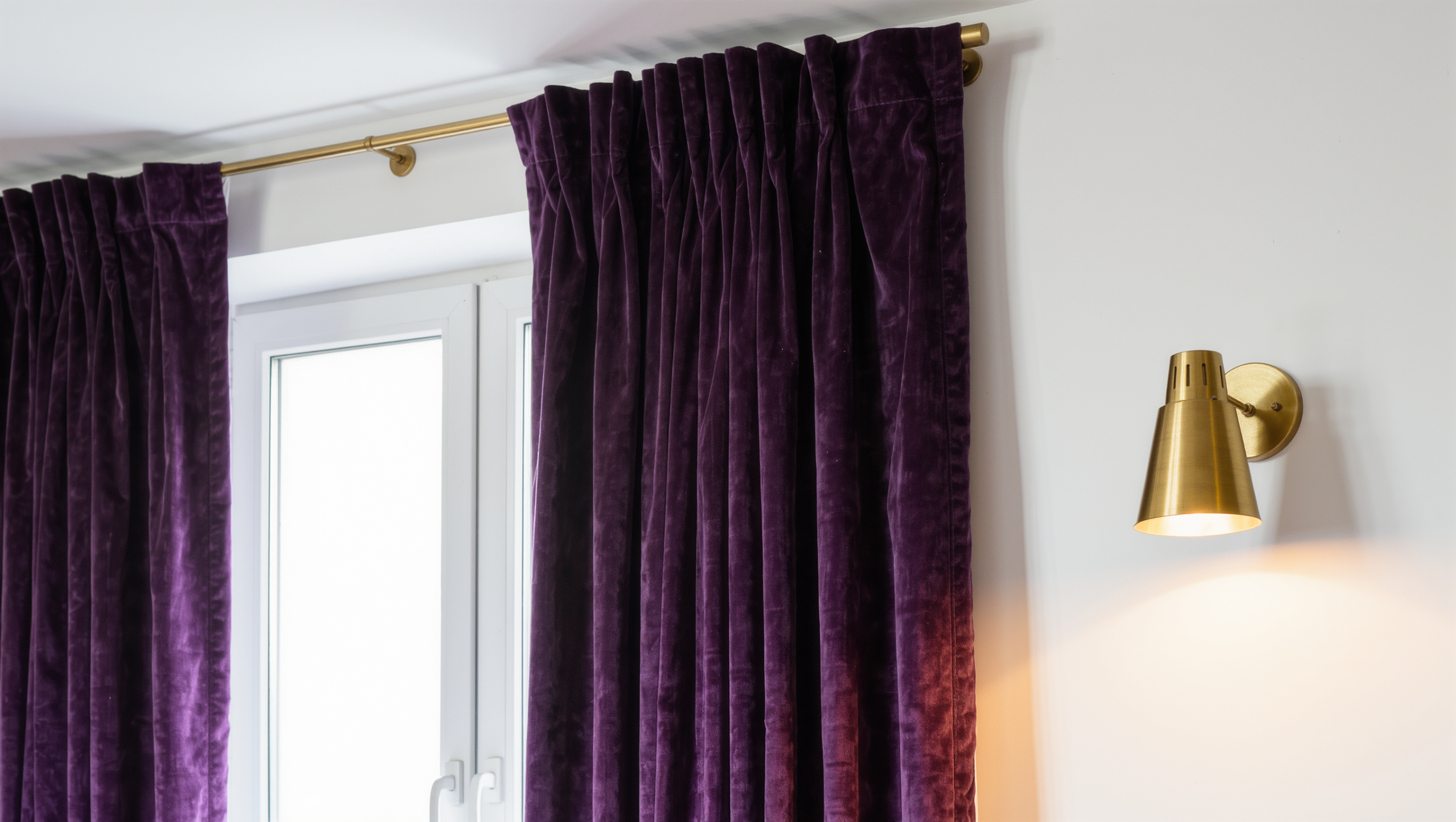
A curtain can do far more than decorate a window. Hung in the right place, it becomes a wall with better manners: present when needed, absent when not, capable of changing light, sound, privacy, and the apparent shape of a room in one movement.
This is a big move disguised as fabric.
Why the soft boundary works
Open rooms often fail because every activity remains visible at once. The desk stares at the sofa. The bed participates in dinner. Storage becomes part of every sightline.
A curtain interrupts that constant exposure without permanently shrinking the space. Closed, it creates a distinct room. Open, it restores the larger volume.
Life one: the office disappears
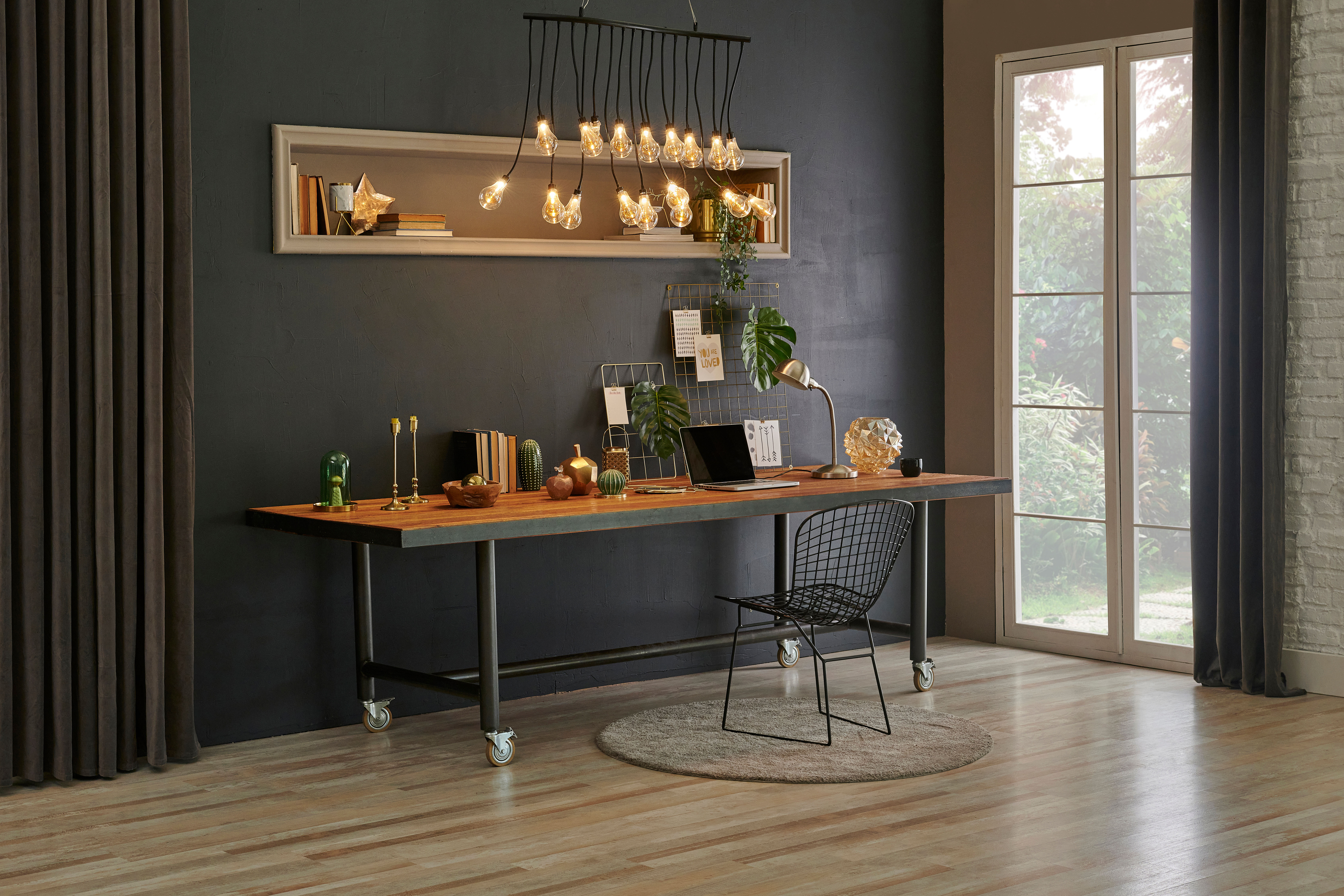
In a living room or bedroom office, run the curtain across the entire work zone rather than hanging a small panel directly in front of the desk. The generous width makes the intervention feel architectural instead of apologetic.
Behind it, shelves, equipment, and paper can remain organized without demanding visual attention after work. The room changes state in seconds.
Life two: a sleeping zone gains privacy
In a studio or loft, a ceiling-mounted curtain can establish a bedroom without constructing a sealed box. It softens the view of the bed, absorbs some sound, and creates an evening ritual of enclosure.
The strongest versions use enough fabric to hold folds when closed. A taut sheet on a wire reads as temporary because it is. Fullness is what gives the boundary presence.
Life three: one large room becomes intimate
A curtain can divide an oversized living room into a conversation area and a quieter library, separate a dining table from a family room, or close off a guest zone during visits.
The point is not always privacy. Sometimes a large room simply needs a smaller emotional scale. Fabric creates that intimacy without adding a bulky partition to the center of the plan.
Choose fabric for the job
Sheer fabric filters and suggests. Linen or cotton provides visual separation while keeping movement. Velvet and dense wool create stronger darkness, acoustic softness, and ceremony. Pattern turns the boundary into a major visual event.
A room that needs calm may want a fabric close to the wall color. A room that needs nerve may want stripes, saturated color, or an enormous botanical print.
Decide how much privacy is actually required
Visual separation, acoustic separation, darkness, and true privacy are different requirements. A curtain handles the first one well. It softens echo on its own side without doing much to stop sound traveling through it, and a heavy lined fabric can help a great deal with darkness. It is not a soundproof wall or a secure room, and a person on the far side of it can still hear every word of a phone call.
Choose the boundary because it matches the actual need, not because fabric is easier than construction.
Take it to the ceiling
The most convincing installation begins at the ceiling and ends close to the floor. Full height emphasizes volume and makes the fabric read as a movable plane.
The track should follow the intended architecture: straight for a clean division, curved for a cocoon, or wrapped around a zone that needs to disappear completely.
Give the open curtain somewhere to go
A boundary is only flexible if the fabric parks cleanly when open. Account for stack width so the curtain does not block a doorway, window, cabinet, or important view.
That stack becomes part of the room’s permanent appearance. Choose its location deliberately.
Protect ventilation, heating, and cooling
A curtain can interrupt air movement, cover vents, trap heat, or change how a room conditions itself.
Check radiators, floor registers, returns, heaters, and other systems before installing a full-height boundary. Keep fabric appropriately separated from heat and follow product and building guidance.
Keep egress and doors clear
Do not use a curtain to obscure required exits, stairs, or door operation. The track and fabric should not create a hidden obstacle in the main route.
Where safety, code, or accessibility conditions apply, those requirements lead.
Think about cleaning before choosing velvet drama
Large fabric surfaces collect dust, pet hair, cooking residue, and ordinary wear. Check cleaning requirements before committing to a material that spans an entire room.
Removable or washable panels may be worth more than a luxurious fabric that turns maintenance into a specialist event.
Use the curtain as a lighting tool
Closed fabric changes both daylight and artificial light. A pale curtain may glow. A dark curtain may absorb light and make the enclosed zone feel more intimate.
Test the room with the curtain closed at the hours it will be used. The newly separated space may need its own lamp or task light.
Let the curtain carry one visual idea
A large fabric plane can handle stronger pattern or color than a small accessory because it reads as architecture.
If the curtain is visually dramatic, let surrounding objects become quieter. The boundary does not need a supporting cast of matching pillows to prove it belongs.
The rehearsal
Before installing a permanent ceiling track, test the boundary with a tension system, temporary hooks where appropriate, or a length of inexpensive fabric held at the proposed line.
Close it during the activities that need separation. Open it at other times. Watch the routes. Notice whether the new enclosure improves focus and comfort or merely creates a fabric obstacle.
A boundary that understands nuance
A wall is not always the answer. Sometimes the room needs a boundary that understands nuance.
And notice the thing a wall cannot do at all. Fabric takes the edge off the echo, which is a good half of why a large open room is tiring to sit in for a whole evening. You will hear that before you see it: draw the curtain once and the television, the kitchen and the conversation stop arriving together off the same hard ceiling.
Same problem, elsewhere in the house
Room notes
Keep the room on the record.
One useful note at a time: what to test, what to ignore, and what changed when the room got another vote.