Furniture and Scale
Four Chairs, Eight Guests, No Panic
Host eight people with four dining chairs by using flexible seating, a tighter menu, distributed surfaces, and a room plan that values comfort over matching furniture.
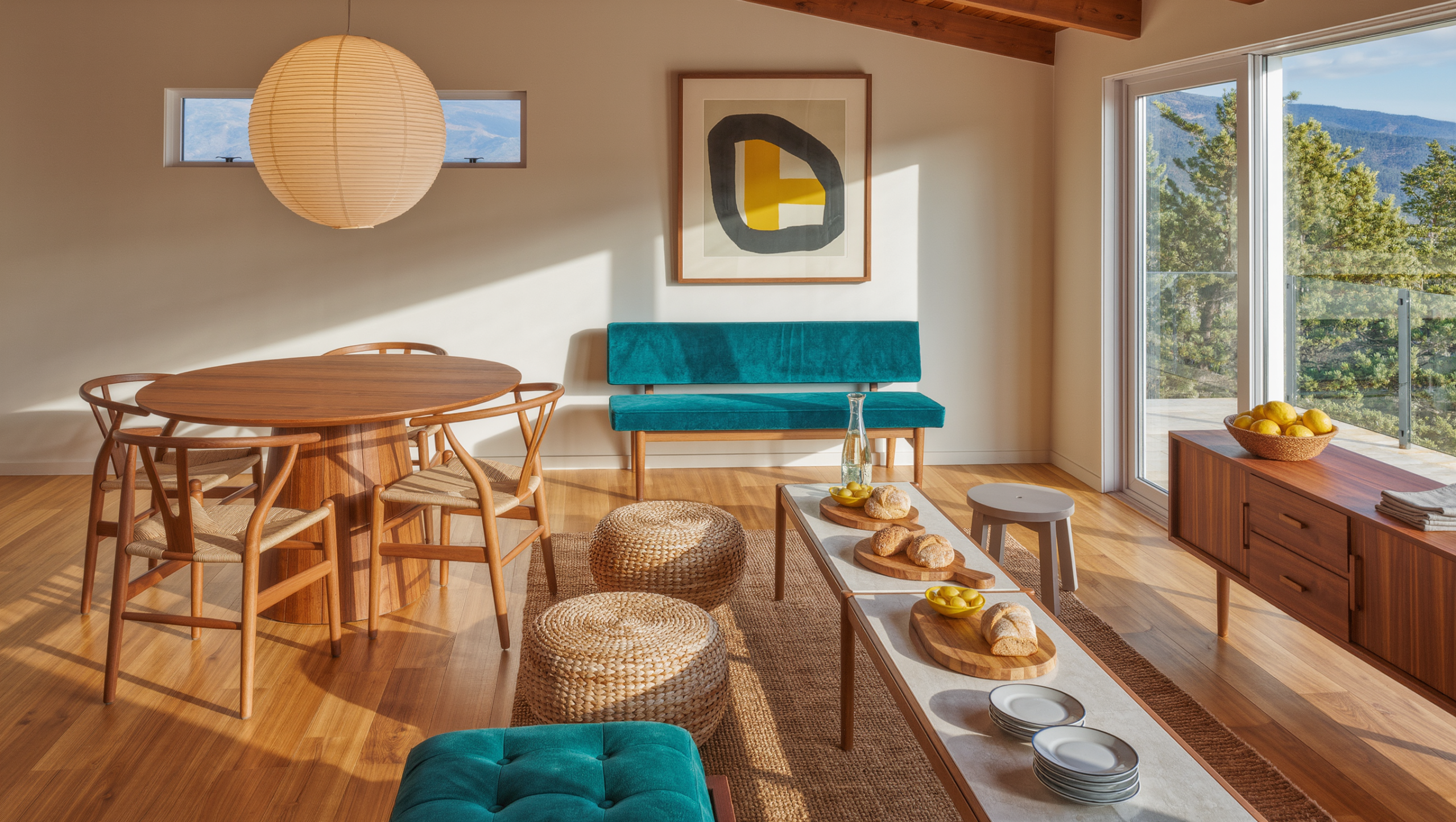
Four dining chairs and eight guests is not an emergency. It is a reminder that permanent furniture should serve ordinary life, while occasional hosting can use a more flexible seating plan.
Buying eight chairs for the few evenings they are all needed can make a small room worse every other day. The better question is how to provide stable, reasonably comfortable temporary seating without turning the home into chair storage.
Design for the normal headcount first
If one, two, or four people use the table most days, size the permanent setup around that reality. Keep enough clearance for daily movement and avoid surrounding the table with empty chairs simply to prove future hospitality.
Occasional guests can be supported through secondary seating that lives useful lives elsewhere in the home.
The room should not spend three hundred days preparing for eight dinners.
Inventory the seats you already own
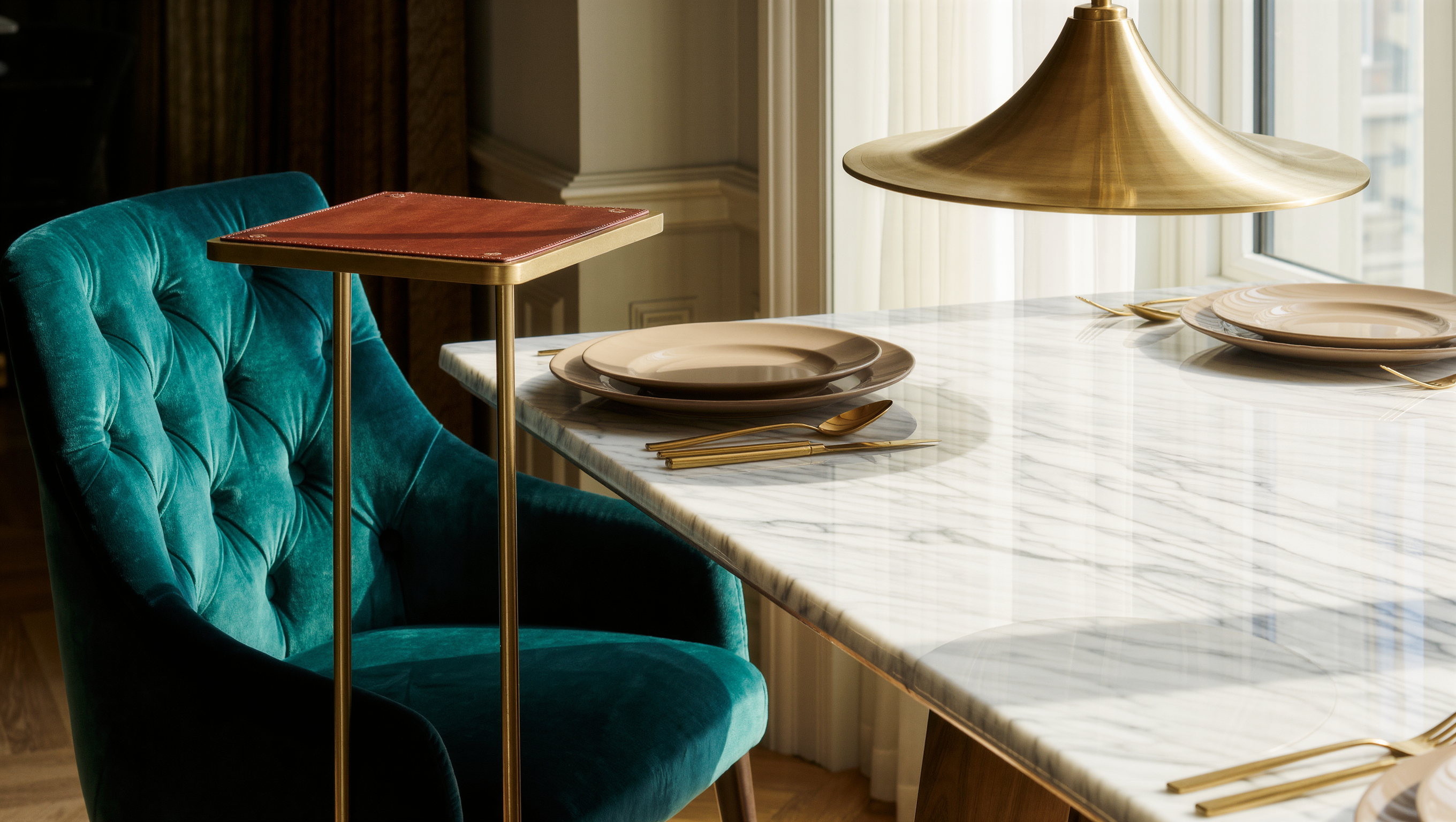
Dining chairs are not the only legitimate seats at a table. Desk chairs, sturdy occasional chairs, a bench, certain stools, or other supportive seating may work temporarily depending on height and comfort.
Test the seat at the dining table before the event. The relationship between seat height and table matters. A chair that feels fine in a corner can be miserable for a meal if the height is wrong.
Borrow from the house before shopping for folding-chair storage.
Use a bench when it solves the right problem
A bench can seat several people and may tuck under a table or serve elsewhere when not dining. It can also be awkward for long meals if people have to coordinate getting in and out.
Use benches where access is simple and the gathering style is relaxed enough to tolerate shared movement.
Stools need a comfort limit
Backless stools can provide flexible short-term seating, especially for casual meals or younger guests, but they may not suit long dinners or everyone in the group.
Keep more supportive chairs for guests who need them. Hosting well includes the body as well as the headcount.
Temporary does not mean punitive.
A mixed set still needs one thing in common
A table does not need eight matching chairs to look coherent. Repeat a material, color family, silhouette relationship, or overall visual weight so the mix feels deliberate.
Alternatively, let the difference be obvious and keep the table, lighting, and setting strong enough to hold the variation.
The host is allowed to have guests without owning a conference-room set.
Protect the pullout clearance
Adding more seats changes the working footprint of the table. Measure the space each occupied chair requires and the route behind it.
An extra chair at the end may block a doorway. Two additional side chairs may reduce passage below a comfortable level.
And the consequence of getting this wrong is not abstract. Once the gap behind a chair goes tight, one person at that table becomes the designated hostage — the guest nobody can walk behind, who stands up every time a plate goes past, who eats in short bursts between other people’s trips to the kitchen. Nobody assigns that seat. It is simply whichever chair ended up nearest the wall once two more were added.
More seating is only useful if people can sit down and everyone else can still move.
Extension Leaves Change the Whole Room
An extendable table can be excellent for occasional capacity, but the larger version needs enough room for chairs and circulation. Test the full dimensions before assuming the mechanism solves the hosting problem.
Store extension leaves where they are realistically accessible and protected.
Use zones outside the table
Not every gathering needs eight people seated around one surface for the entire evening. Drinks, dessert, or conversation can shift to another seating group after the meal.
This reduces pressure on the dining setup and lets secondary seats return to their usual roles.
Borrowing is a legitimate design strategy
If extra seating is needed only a few times a year, borrowing from family, friends, neighbors, or a rental source may be more sensible than permanent ownership.
Check dimensions and stability beforehand. Place the borrowed chairs where the arrangement wants them, instead of treating them as an apology.
Plan where temporary seats go afterward
Any chair purchased for occasional use needs a credible home between events. Folding chairs require storage. Stackable chairs require a stack location. A bench needs a second job.
If the answer is “somewhere in the garage until we forget about them,” ownership may not be the best plan.
Four chairs can host eight people the moment the plan stops treating daily furniture and occasional capacity as the same purchase. Every question in this piece is really one question asked in different rooms: who is sitting here on an ordinary night, and where does the rest of it go once the evening is over.
Hospitality is a behavior. It is not a chair count.
Use the Multi-Use Rooms hub for flexible hosting spaces or Furniture Scale Check before expanding the dining footprint.
Same problem, elsewhere in the house
Room notes
Keep the room on the record.
One useful note at a time: what to test, what to ignore, and what changed when the room got another vote.