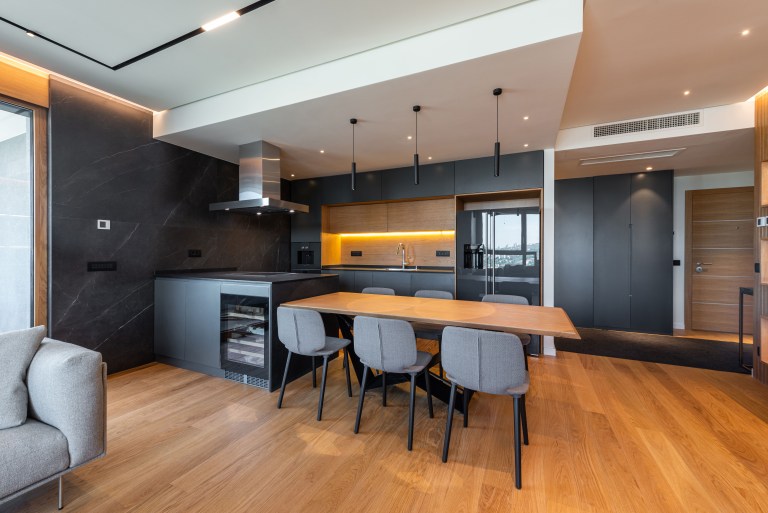
Furniture and Scale
What Furniture Scale Teaches You the Second You Walk In
Furniture scale shapes first impressions through visual weight, proportion, height, spacing, and relationship. Learn how to spot pieces that feel timid, crowded, or disconnected.
On this page
13
Furniture announces scale before anyone measures it.
You walk in and know the sofa is swallowing the wall, the rug is too timid, the lamp is oddly small, or the room is full of little pieces with no adult supervision.
Good scale does not mean everything is proportionally polite. It means the room’s big, medium, small, heavy, light, tall, and low elements feel as if they know one another.
Compare furniture to furniture first
A large sofa works fine if the rug, the art, the table, and the lighting give it credible company. A small chair can look lost beside oversized pieces even when the tape measure says it fits. The floor is not the thing judging it.
Stand in the doorway and compare masses, not measurements. One piece will be pulling more weight than it should, or none at all. That is the one to look at first.
The first read is relational. A sofa is not “too big” in isolation. It is too big for the supporting cast, the route, or the wall it occupies.
Look at visual weight
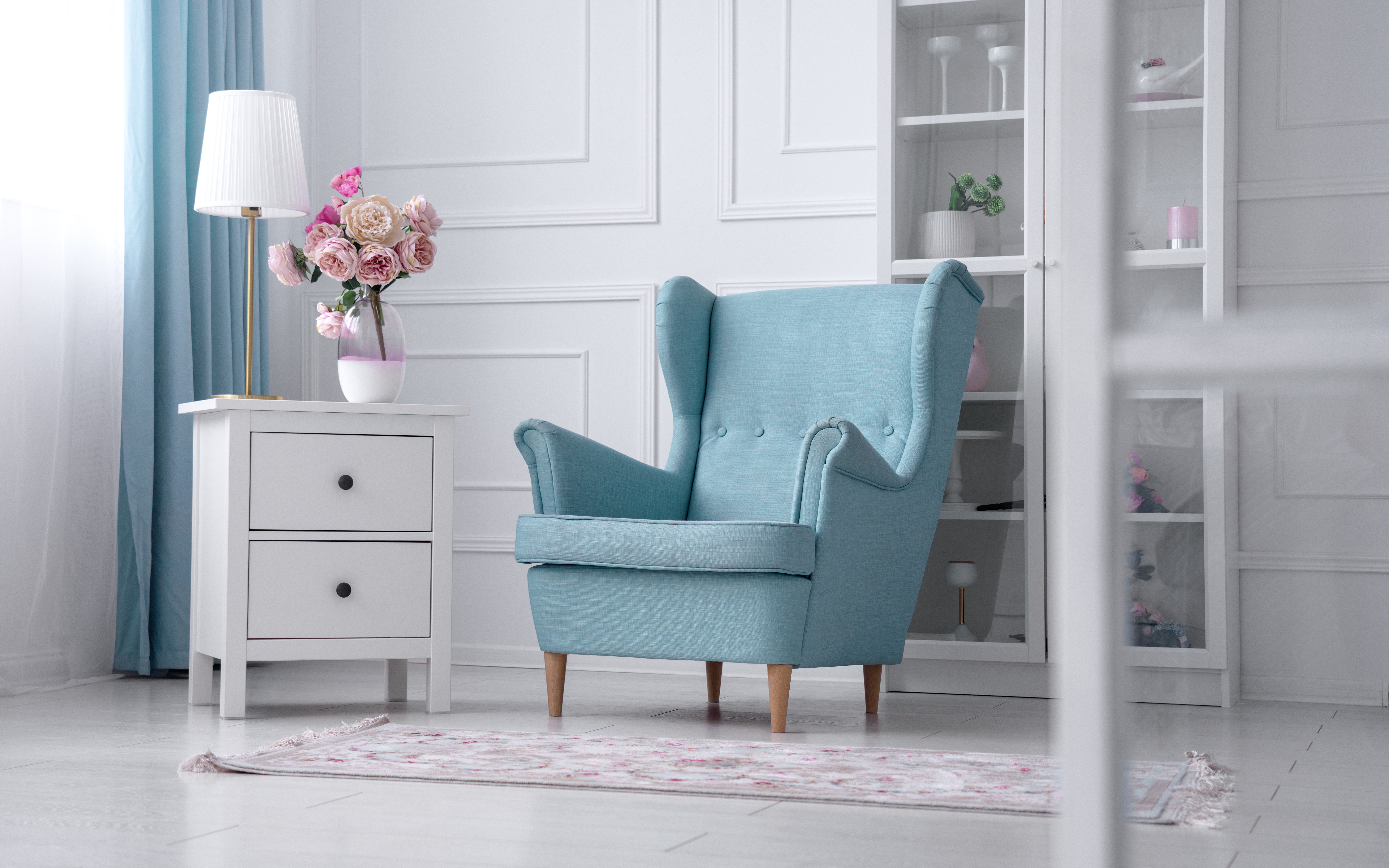
Dark solid furniture reads heavier than an open frame or a lighter material. Put two pieces of nearly identical dimensions in the same room and one of them will dominate. None of that is in the measurements.
Skirts, thick arms, deep color, a closed base, a shiny surface, dense upholstery: all of it adds perceived weight. Open legs, pale color, glass, and a fine frame take it away again. You can change how heavy a room feels without carrying anything out of it.
That means a physically large piece can sometimes feel lighter than a smaller blocky one. Dimensions are only half of scale. The other half is how much visual territory the object claims.
Use the rug as a scale mediator
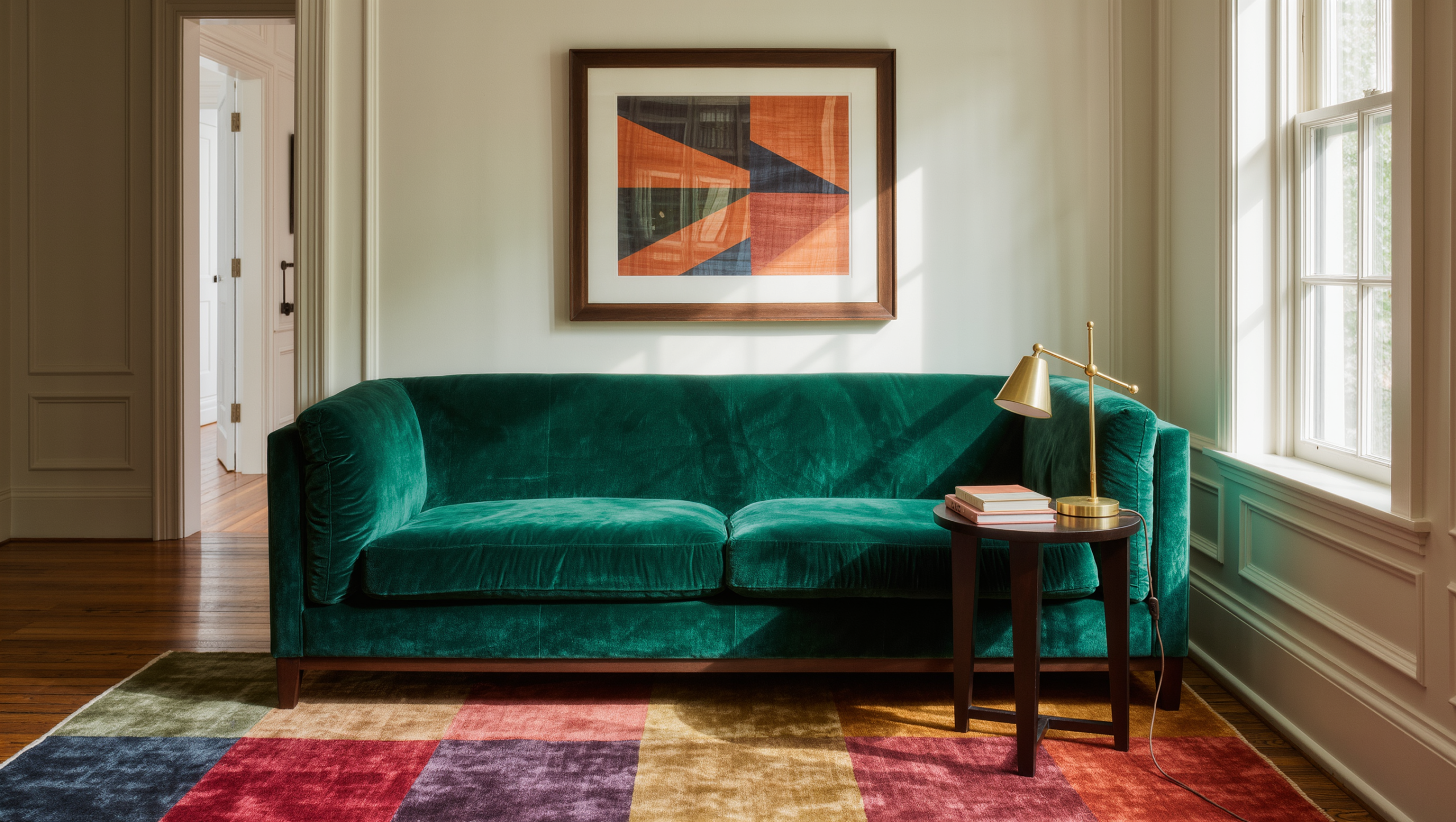
A generous rug gathers large furniture into one group, and the group is what the eye reads. A tiny rug under a substantial sofa does the opposite. It makes the sofa look bigger, because you have handed it a scrap of floor to stand on and nothing else.
Tape out more than one rug size before you buy anything. Look at it from the main doorway, then look at it sitting down in the seats. Those are two different rooms.
The rug has to establish a credible territory for the furniture using it. Covering the whole floor achieves none of that.
Check the skyline
If everything in the room stops at seat height, the room reads squat, and no quantity of good furniture will fix it. What it needs is height. A lamp, art, curtains, shelving, a plant tall enough to count. Not another thing on the floor.
Vary the height on purpose. One tall cabinet or one tall lamp is often the whole fix, provided the low and mid-level pieces are already doing their jobs properly.
A room full of medium-height furniture reads flatter than a room with fewer pieces and one confident vertical move. Medium everywhere is its own kind of empty.
Compare furniture to the architecture
A tiny pendant can disappear under a tall ceiling. A low sofa may look grounded in one room and strangely underpowered beneath towering windows. A narrow console can feel elegant on a small wall and anxious on a twelve-foot span.
Measure against the doors, the windows, the fireplace opening, the ceiling, the length of the wall. Those references were there first and they are not moving. Furniture should answer the architecture, not merely fit inside it.
Protect enough open floor
Scale has nothing to do with filling every available inch. Leave the route clear and leave some floor empty, because a major piece cannot register without something around it to register against.
One large sofa often feels calmer than a scatter of small chairs, because it cuts the number of edges the eye has to stop at and leaves more floor showing around the group.
The point is not “small room, small furniture.” The point is the relationship between mass and remaining space.
Use art to correct furniture imbalance
Small art over a large sofa makes both of them look wrong, and the sofa takes most of the blame unfairly. One larger work, or a tightly disciplined group, gives the wall enough presence to answer what is sitting underneath it.
Mock up art scale with paper before framing or buying. A few minutes with kraft paper can prevent a wall from spending years looking like it is waiting for the rest of the artwork to arrive.
Watch table relationships
Coffee and side tables have to look like they belong beside the seating and still be reachable from it without standing up. A delicate table vanishes next to a massive sofa. A blocky one flattens a light open chair.
Pick the shape and the visual weight for what the table has to do and what it has to sit beside. The table should belong to the seating group, not look like it wandered in from a smaller room.
Lighting has scale too
A tiny lamp leaves a large sideboard looking unfinished. A huge shade crowds a narrow bedside table into apologizing for itself. And a chandelier can be enormous and still read as light, provided the frame is open enough to see through.
Judge a fixture as an object with the switch off. It is contributing height, mass, and silhouette all day long. The light is the evening shift.
Use Lighting when the room feels visually underpowered after dark.
Repeated small pieces can create accidental clutter
Several little tables, chairs, lamps, baskets, and artworks will all technically fit. Together they make the room feel smaller than it is, because every one of them is another edge for the eye to stop at on the way across.
Try swapping a cluster of small pieces for one larger element that does the same job. A single storage cabinet quiets a wall currently covered in small units. And one large artwork gives a room more air than a gallery of undersized ones ever will.
The route is what overscale has to survive
An oversized sofa, artwork, mirror, or light can be the most convincing thing in the room. The whole permission rests on circulation and function surviving it.
Drama turns into a problem the moment the large object blocks access, makes every other piece irrelevant, or quietly requires the household to rearrange its habits around a piece of furniture.
Scale should create authority, not a daily obstacle.
Test before buying
Tape the footprints. Build the height out of paper or cardboard where you need to see it standing up. Generic sizing rules are a starting point and nothing more, because the real room and the real bodies in it are what decide.
Where mobility or access needs matter, usable circulation and stable furniture come first. Visual proportion waits its turn.
Use Furniture Scale Check and Layout and Flow as the practical pair.
Composed before you can explain why
The pieces do not need to match. Their relationships need to look chosen — and when they do, nobody standing in the room can tell you why it works, only that it does.
Measure the physical fit. Then stand back and judge the visual weight. A room needs both forms of evidence, and they do not always agree.
Same problem, elsewhere in the house
Room notes
Keep the room on the record.
One useful note at a time: what to test, what to ignore, and what changed when the room got another vote.