Function and Flow
The Bar Cabinet Should Be Able to Disappear
A bar cabinet can be theatrical when open and quiet when closed. Design the doors, interior lighting, bottle depth, glassware, work surface, ventilation, and hardware so the bar reads like furniture instead of permanent visual clutter.
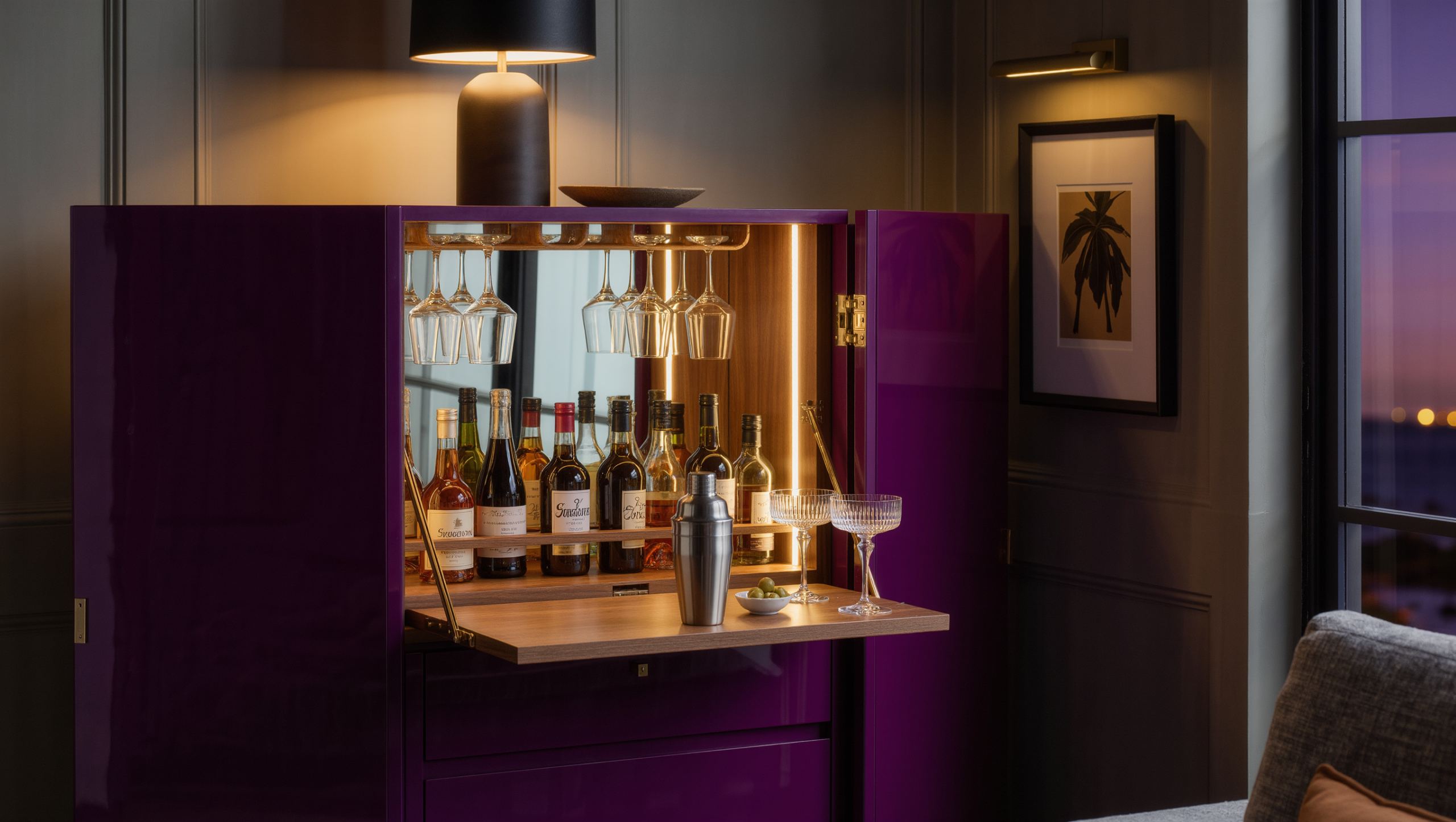
A home bar does not always deserve to be visible before breakfast.
That is the appeal of the bar cabinet: closed, it behaves like furniture or millwork. Open, it reveals glass, light, reflective surfaces, bottles, tools, and enough ceremony to make pouring a drink feel like an occasion.
The trick is making the hidden version as convincing as the revealed one.
Decide what the closed object should look like
The closed cabinet has to be one thing on purpose. Paneling that swallows it whole, a freestanding piece that stands apart, millwork that agrees with the dining room, or one deliberately darker object sitting in the lounge like it knows something. Settle that before anybody starts drawing the glamorous interior, because closed is the state the room spends almost all of its life looking at.
A cabinet with beautiful inside surfaces and awkward exterior proportions will spend most of its life advertising the wrong side.
Doors that can stay open without becoming obstacles
Full-height hinged doors give the best reveal and want the most floor to do it in. Pocket doors vanish completely and charge you internal width for the privilege. Bi-folds project less and bring more hardware, more joints, and more things that need adjusting later. There is no free option here. Whichever one goes in is the one somebody operates every time they want a drink.
Swing the proposed doors open on the plan, then put two people in the room standing where people actually stand, which is directly in front of the interesting thing. If the bar can only operate after everyone clears the area, the reveal is too theatrical for the room.
Real bottles are not shaped like display bottles
Go and measure the tallest bottle you own, the widest decanter, the stemware, and anything powered that has to live in there. Write it down. Decorative shelving looks elegant in photographs because nothing standing on it is an awkward shape. Actual bar equipment is far less cooperative, and the gin that comes in the beautiful square bottle is exactly the one that will not fit.
Adjustable shelving is the cheap insurance here. It stops the cabinet from being permanently designed around the collection you happened to own in the month the cabinetmaker measured it.
Then give it somewhere to set the glass down. A pull-out stone or metal shelf, a durable lower counter, a fold-down front — something. Without it, the drink gets made on the dining table, which was the thing the cabinet was supposed to prevent.
Whatever goes on the working surface has to shrug off water, citrus, alcohol and repeated wiping. The interior is allowed to look jewel-box precious. The working surface is not, because it is going to be wiped several hundred times by somebody holding a damp cloth in one hand and a lime in the other.
Inside, everything is on show
Integrated lighting makes glassware and bottles legible and stops anybody from hunting for the bitters by phone flashlight. Hide the source where you can. And test what a mirrored or glossy back does with those reflections while the millwork can still be changed, because after it is finished you are looking at them forever.
The light has to come on by itself when the doors open, or from a switch within arm’s reach. A cabinet whose lighting requires a decision will be used in the dark, and then it is a cabinet with an expensive interior nobody sees.
Good light is also the reason the unphotogenic half has to live somewhere else. Back stock, napkins, open mixers, bar towels, tools, corkscrews, coasters and cleaning supplies belong in closed drawers or the lower cabinet. The lit shelves are for the objects that can survive being looked at.
Plan ventilation for anything powered
Put a wine cooler, a refrigerator, or an ice maker in there and the manufacturer ventilation and service-clearance requirements stop being suggestions. Heat has to get out. Somebody has to get in to fix it. The sealed jewel box ends exactly where the heat-producing equipment begins, and the equipment wins that argument every time.
Give the cabinet a sober morning version
Close the doors after an evening and look at the room the next morning, in daylight, with nobody in it. The cabinet either still relates to the architecture or it does not. The handles and panel joints either sit quietly or they chatter. And the whole object either belongs to the room or reads as a permanent party prop parked in a space that spends most of its week doing something else entirely.
The best hidden bars have two personalities and neither looks compromised. Open, the cabinet is an event. Closed, it returns the room to itself without leaving the bottles on permanent exhibition.
Same problem, elsewhere in the house
Room notes
Keep the room on the record.
One useful note at a time: what to test, what to ignore, and what changed when the room got another vote.