Function and Flow
The Dry Bar Is Often the Better Bar
A dry bar can deliver storage, serving space, refrigeration, glassware, and visual drama without the plumbing, counter loss, and maintenance of a sink. Decide whether water actually improves the way the bar will be used.
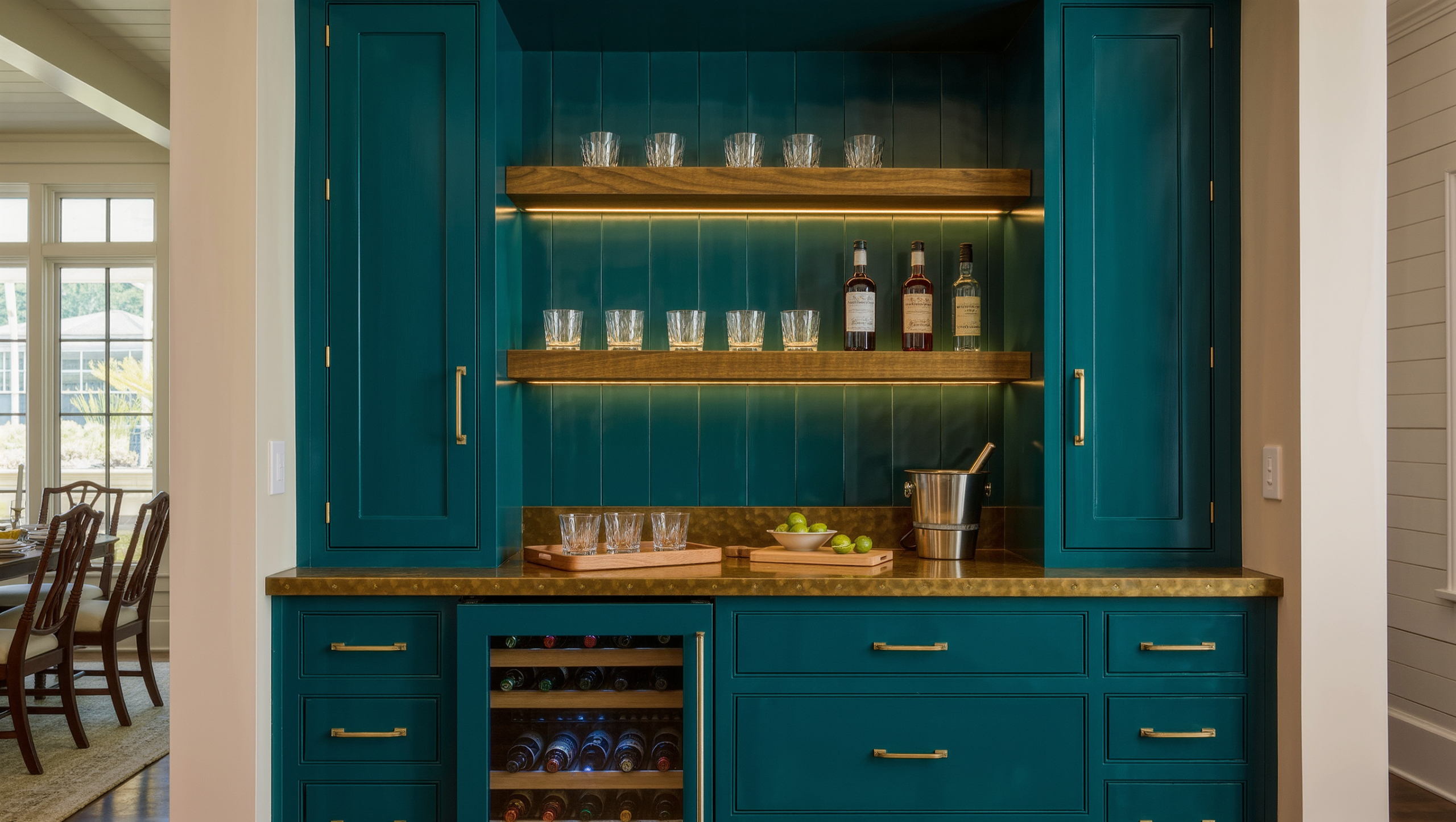
A wet bar sounds more complete because it has plumbing. That does not make it the better bar.
For many homes, a dry bar gives the useful parts—landing surface, bottle storage, glassware, refrigeration, tools, lighting, and a social focal point—without sacrificing counter space to a sink that sits three rooms from its own purpose.
What is a dry bar?
A dry bar is a home bar without a sink or dedicated water supply. It can still include bottle and glassware storage, refrigeration, ice, tools, lighting, a serving counter, and cleanup supplies. A wet bar adds plumbing and a sink. The useful choice depends on how far the bar is from the kitchen, how often drinks need rinsing or prep, and whether the sink earns the counter and cabinet space it consumes.
Distance decides this more than taste does
If the bar stands next to the kitchen, a second small sink duplicates a function already waiting a few steps away. If the bar is in a basement, an upstairs lounge, a theater room or a detached entertaining space, water becomes genuinely valuable, because every rinse and every ice bucket otherwise travels the length of the house and somebody eventually stops making the trip.
The word wet carries a prestige it has not earned. What matters is how far the real water already is, and how often anybody would actually reach for more of it.

Count honestly. Do you make drinks that need frequent rinsing, fresh garnish prep, or tools washed between rounds? Do you entertain often enough that glassware and spills accumulate across an evening? Or is the bar mostly for pouring wine, opening beer, mixing something uncomplicated, and holding the coffee on a Sunday morning?
A sink should be solving a friction you meet repeatedly. Anything less and it is plumbing jewelry, which is the most expensive kind.
Notice what the sink takes away
Even a small basin consumes counter width, undercounter cabinet volume, and visual calm. Faucets create another vertical element. Plumbing creates access requirements. The surrounding surface must tolerate water and cleanup.
In a compact bar, that lost landing space may matter more than the ability to rinse a jigger immediately.
The parts of a wet bar you still have to build
No sink does not mean no mess. A dry bar still produces wet glasses, citrus ends, condensation rings and the towel somebody used on all three. It needs a washable tray, towel storage, a coaster drawer, a bin, and a clear route to the nearest real sink. If there is a refrigerator or ice maker in the base, leave room around it for the water those appliances shed whether anybody planned for it or not.
Cold usually beats plumbing anyway. Chilled mixers, wine, sparkling water, citrus and garnishes remove more trips to the kitchen than a small basin ever will, and when budget or cabinet width forces the choice, that is the comparison worth making: which function saves more walking.
And the missing sink hands you the entire base cabinet. No trap, no supply lines, no access panel, no dead corner wrapped around a bowl. That is drawers for tools, glassware, bottles and linens, or an undercounter refrigerator, in a bar that lives in a living or dining room where everything has to look calm again about four seconds after the doorbell.
Where a dry bar can go that a wet one cannot
A bar cabinet, built-in niche, dining-room wall, library, or lounge can become a dry bar without requiring the room to reorganize around water lines. This makes it easier to locate the bar where people actually gather. (Compare the placement options in Cart, Closet, Niche, Under-Stairs.)
The strongest placement often wins over the most complete equipment list.
If you add water, make it genuinely functional
Use a basin large enough for the tasks you expect. Provide appropriate counter around it. Plan faucet reach, splash, drainage, soap, towel storage, and cabinet access. Confirm plumbing and electrical work with qualified professionals and local requirements where necessary.
A miniature sink squeezed into a corner because the drawings had eight spare inches is not automatically an upgrade.
Let the room decide
A formal dining room bar may benefit from a polished dry cabinet that disappears when closed. A basement entertaining bar may need a sink because the kitchen is an entire floor away. A lounge beside the kitchen may need nothing more than a refrigerated drawer, glassware, and a dramatic back panel.
Nobody has ever walked into a room and admired the plumbing. What people notice is whether there was somewhere to set a glass down, and how long the drink took to arrive. Work out whether water improves either of those. If it does not, stop calling the dry bar the smaller option — it is simply the one that was specified correctly.
Same problem, elsewhere in the house
Room notes
Keep the room on the record.
One useful note at a time: what to test, what to ignore, and what changed when the room got another vote.