Function and Flow
Your Video-Call Background Is Part of the Room
A home-office video background should be designed from the camera's narrow point of view. Use depth, light, controlled objects, and a clean sightline so the room reads as a real room without becoming a permanent studio set.
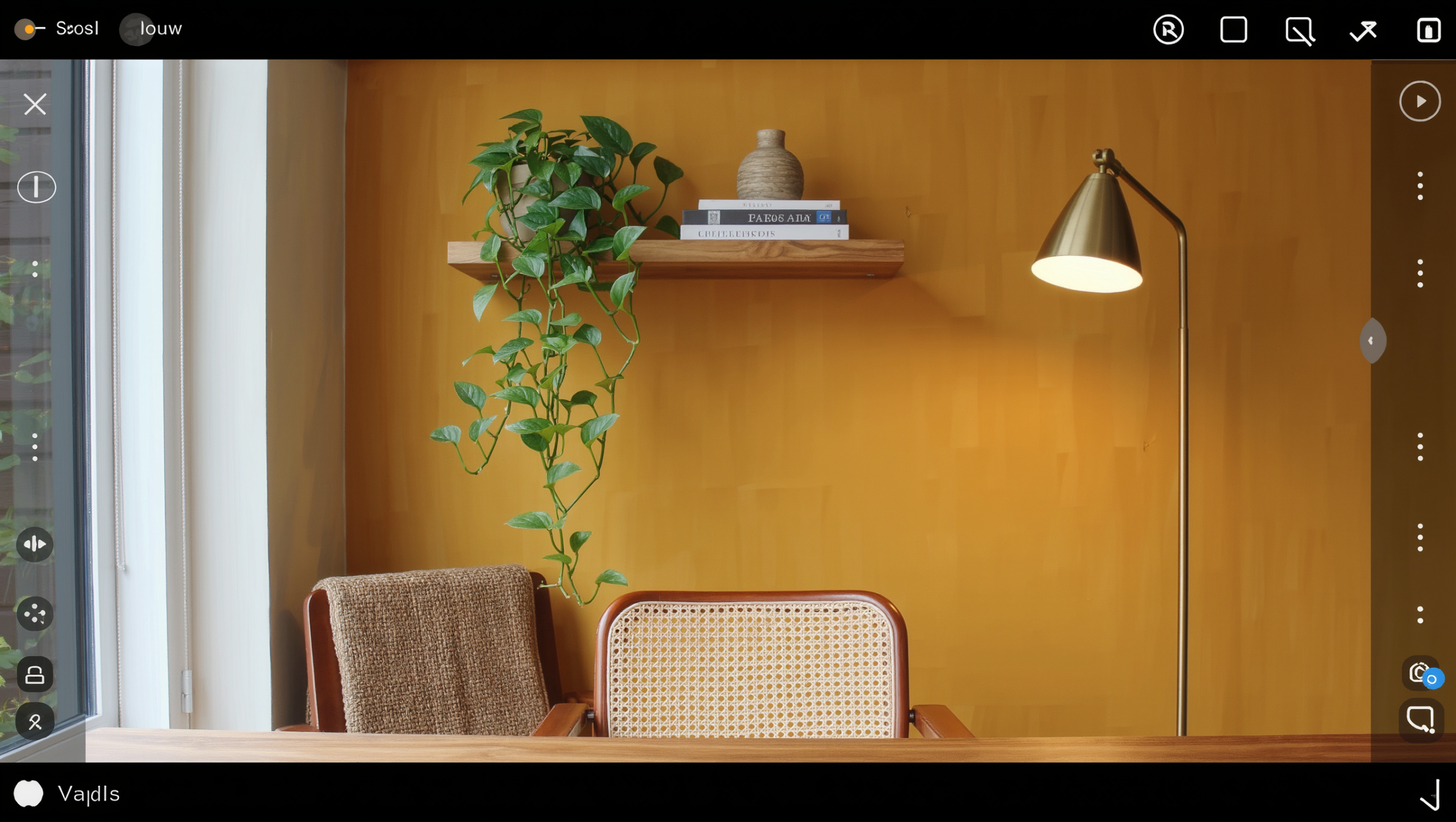
Your video-call background is part of the room, but it should not become the room’s full-time employer.
A good call frame supports the person on screen: useful face light, enough visual interest to give the eye somewhere to rest, minimal distraction, and privacy appropriate to the work. It should also look reasonable when the camera is off.
Nobody needs a miniature television studio built behind the desk. The job is smaller and considerably harder: one honest, controlled view inside a real room, chosen on purpose.
Start with the camera position
Use the actual laptop or camera at the actual working height. What appears behind you? How much wall, ceiling, door, window, clutter, or furniture enters the frame?
Small changes in desk angle can improve the background dramatically without changing the room. Move the camera before buying decor for the wall it currently sees.
Light the face before the background

Strong backlight from a window makes the face too dark. Harsh overhead light creates unflattering shadows. A window or soft source in front of you, or slightly to one side, is usually more useful than either.
Test calls at the hours they actually occur. Daylight moves. A setup that works at ten in the morning may need a lamp by four, and the version of you that appears on a February afternoon is a different person from the one who set the desk up in June. Use Lighting That Flatters Faces and Still Works for Tasks for the larger lighting logic.
Only then start thinking about what is behind you, and keep it a level quieter than instinct suggests. Books, art, plants, lamps and shelves add depth, but too many small objects turn into visual static once compression and blur have had their way with them. One artwork, one lamp, or one disciplined shelf reads far more clearly on camera than a wall full of tiny signals that you are an interesting person. The background is supporting the face. It should not be competing with it for speaking time.
Distance helps more than decoration. A little space between you and the wall behind you creates real visual separation and makes the room look dimensional without any software pretending to do it. But do not compromise circulation to manufacture camera depth. The office still has to function on the days nobody calls, which is most of them.
Everything in frame is being published
Check whiteboards, calendars, mail, family photographs, documents, children’s information, screens, and anything else that may be visible or legible.
Privacy is part of the design brief. A beautiful background that accidentally publishes confidential information is not successful, and modern cameras resolve a calendar at six feet perfectly well.
A door directly behind the chair raises the same problem in motion, and adds distraction to it. If the desk has to face that way, work with the angle, the door position, or a background element that gives the frame more structure.
Do not block the door or a required route with a screen merely to improve calls. Nothing said on a video call has ever been worth an obstructed exit.
One corner is on camera; the rest of the room is not
If shelving appears in the frame, strip out the visual noise and the high-maintenance styling. Keep objects with clear scale and enough negative space to read at a distance through a lens. Books can remain books. They do not need color coordination unless the room genuinely uses that system already, and a rainbow shelf assembled purely for a camera is visible as exactly that.
Everything outside the frame stays yours. Notes, chargers, water, reference materials and equipment do not all have to live behind you. Keep the camera-facing surface restrained and let the working side of the desk be a working desk. A room can look composed on camera without the whole office being conscripted as a set.
And a desk positioned badly for daylight, circulation, body comfort, or storage is not redeemed by an excellent camera view. Calls are one activity among several — rank their frequency and importance against everything else the room has to do, and then let that ranking decide, rather than letting the most recently embarrassing call decide. Use The Desk Should Face the Right Problem for the full placement decision.
People forgive a poor picture and never forgive bad audio
Bare hard rooms sound echoey even when the video is excellent, and people forgive a mediocre picture far more readily than they forgive having to work to hear you. Curtains, rugs, upholstery, books and other soft materials reduce ordinary room reflection. Microphone quality, equipment, and persistent noise may need technical solutions beyond decor. Sound is part of the communication environment, not an accessory to it.
Software blur belongs in the same category: useful, and not a substitute. It reduces distraction and protects privacy, but it should never be the only thing standing between sensitive material and every call you take. Build a reasonable real background first, then apply the effect where it genuinely improves things.
Then check the frame against your actual wardrobe and your actual light. A dark shirt against a dark wall loses separation. Bright daylight changes the exposure. A patterned background fights harder with some clothing than others. The background does not have to flatter every outfit you own, but it does have to stay legible across a normal week.
The camera ranks below everything you live with
When calls end, turn off the face light, contain the visible work materials, and let the room go back to its other identity if it shares one. A good call setup disappears into the room rather than leaving a small production rig standing in the foreground of your evening.
The camera is simply one more way a room gets used now, and it ranks below posture, route, storage, daylight and privacy, all of which you live with continuously. Frame one honest corner. Light the person. Protect the information. Then keep the background calm enough that the conversation stays the reason anyone is looking.
Same problem, elsewhere in the house
Room notes
Keep the room on the record.
One useful note at a time: what to test, what to ignore, and what changed when the room got another vote.