Function and Flow
The Huge Bedroom Needs More Than a Bed—But Not a Second Living Room
A very large bedroom needs hierarchy, not random extra furniture. Keep sleep primary, then add only the dressing, reading, storage, or work zones the room can support cleanly.

A huge bedroom creates the same temptation as a huge living room: empty floor starts demanding furniture. A loveseat appears. Then two chairs. Then a desk. Eventually the bedroom contains a small apartment’s worth of functions and none of them feel especially calm.
The bed should still be the primary event. Everything else has to justify its presence by improving how the room is used.
Give the bed enough visual weight
In a large room, an underscaled bed wall can make the entire space feel unfinished. The problem may not be the mattress size. It may be the composition around it.
A substantial headboard, appropriately scaled nightstands, lighting, art, wall treatment, or a larger rug can give the sleep zone the authority it needs without buying a larger bed simply because the square footage can absorb one.
Keep the area around the bed easy to navigate. Generous clearance is part of what makes a large bedroom feel luxurious in practice rather than merely oversized on paper.
Add one secondary zone before considering a third
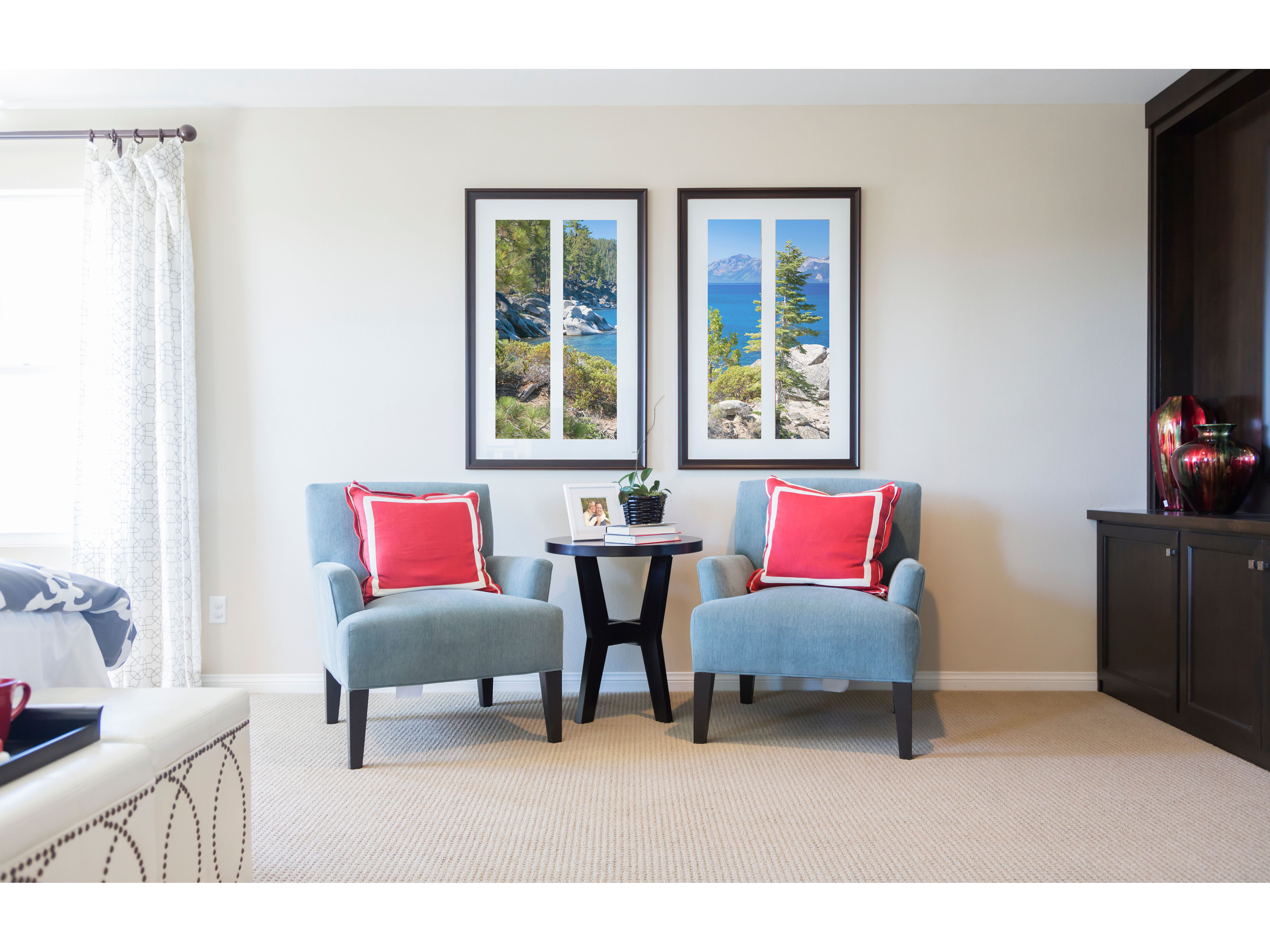
Choose the additional function the room actually needs. A reading chair and lamp may be enough. A dressing bench and mirror may solve the morning routine. A pair of chairs near a view can create a useful private sitting area. A long dresser can anchor an otherwise empty wall while providing real storage.
Build that zone completely before adding another.
If the reading corner needs a floor lamp and side table, give it those. If the dressing area needs a mirror, landing surface, and clear route to the closet, solve that system. A half-finished zone creates more visual emptiness because it looks temporary.
Be suspicious of the bedroom office
A desk is easy to add because it fills space and seems useful. It can also make work visually present every time you are trying to sleep.
If the bedroom is the only available work location, create a defined edge. Face the desk away from the bed when possible. Use a screen, cabinet, curtain, or furniture orientation to reduce the direct view of monitors and paperwork. Give work supplies closed storage so the zone can stop broadcasting after hours.
If you already have another functional office, the bedroom does not need a desk simply to balance a wall.
The floor sets the hierarchy, and the light finishes it
The bed zone may need one large rug rather than several small ones around it. A separate sitting area can have its own rug if the room is truly large enough for the two fields to breathe between them. Do not sprinkle accent rugs through every empty patch. The floor is meant to clarify the hierarchy — primary sleep zone, secondary use, clean paths between them — and six small rugs clarify nothing except that the empty floor made somebody anxious.
Light finishes the job, and large bedrooms are consistently underbuilt here. They need more than bedside lamps and a central fixture. Reading needs focused light. Dressing needs useful illumination near the mirror and storage. A sitting zone should be able to glow on its own without turning the whole room bright.
Keep the evening lighting warm and controllable. A room this large should not require one overhead light to flatten the entire floor plan at once. If it currently does, that one switch is doing more harm to the room than any furniture decision in this piece.
Distance is not the same as belonging
The corners farthest from the bed can hold activities that should not compete with sleep: a reading chair, small table, chaise, wardrobe, or display cabinet. More active functions, including exercise equipment or a work station, deserve extra scrutiny because they change the psychological character of the room rather than merely occupying part of it. A rowing machine twenty feet away is still a rowing machine you can see from the pillow at two in the morning.
Distance helps. Distance alone does not make an unrelated function belong.
The foot of the bed gets the same scrutiny and usually fails it. A bench there is useful when it supports dressing, holds a tray, or gives you somewhere to sit. It is much less convincing when it blocks the main route through the room, or exists solely because large-bedroom photographs seem legally required to include one. Test the open space first. A generous clear foreground is a design outcome in its own right, not the absence of one.
Keep storage from becoming a second wall of furniture
Large bedrooms often accumulate multiple dressers, armoires, chests, and cabinets because the walls can hold them. Before adding storage, identify what it needs to contain.
One substantial piece or a well-designed built-in may create more calm than several unrelated cases around the perimeter. Storage should reduce visual noise, not create a furniture inventory.
Judge the room at night
Turn off the daytime light. Put away the work materials. Sit on the bed and look around.
The useful question from that position is whether the secondary zone can disappear when nobody is using it, and whether the paths to the bathroom, closet and door are still obvious in the dark. A large bedroom fails quietly. Nothing is ever wrong with it; it just never stops being slightly busy, and the household adapts to that rather than fixing it.
Then name whatever is present only because the room was big enough to tolerate it. That list is the actual inventory. Every item on it is costing you something in the one room whose entire job is to let you stop paying attention.
Same problem, elsewhere in the house
Room notes
Keep the room on the record.
One useful note at a time: what to test, what to ignore, and what changed when the room got another vote.