Function and Flow
The Room Feels Cold. Check What the Air Is Doing Above You.
A dramatic high-volume room can be visually warm and physically uncomfortable. Fix the actual comfort system: air movement, glazing, drafts, shade, and occupied-zone heating.
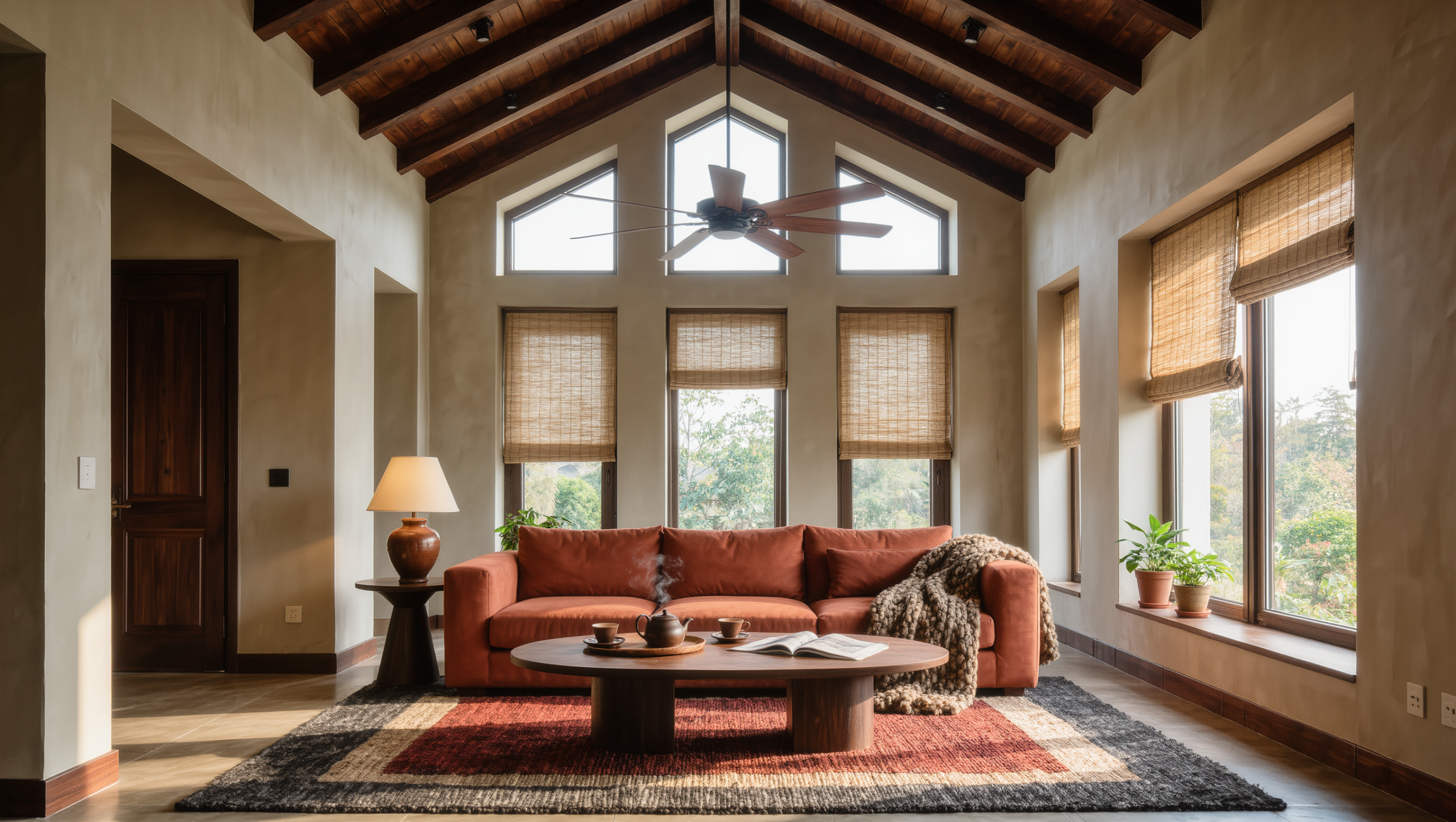
A room can look warm and still feel physically cold.
Before adding another throw, check where the air is moving, where heat is collecting, which surfaces are cold, whether the ceiling is unusually high, and whether the occupied zone sits in a draft or outside the heating pattern.
Thermal comfort is part of room design because people abandon beautiful seats that make their bodies uncomfortable.
Start with the body, not the thermostat number
Which seat feels cold? At what time? Is the sensation at feet, shoulders, face, or the entire room?
Move between seats. A thermostat can report one temperature while different parts of the room feel substantially different because of drafts, radiant cold surfaces, air stratification, or sun.
The location of discomfort is useful evidence.
Air that is moving, and air that cannot

Windows, exterior doors, poorly sealed openings, fireplace conditions, and other building-envelope issues create moving cold air, and moving air at ankle height makes a person uncomfortable at a temperature they would otherwise never notice. Do not permanently block required ventilation or safety systems in an attempt to stop airflow. Persistent drafts or building-envelope problems may require qualified assessment rather than decorative treatment.
The identical complaint often turns out to be the opposite problem: air that cannot move. Furniture, rugs, curtains, and storage block vents and returns, and a sofa sitting over or directly in front of a register changes comfort for the whole seating group while looking like the obvious place for a sofa. Keep system components clear according to the HVAC design and manufacturer guidance. Where airflow seems weak or unbalanced, an HVAC evaluation will tell you more than another afternoon spent moving accessories.
Look up in tall rooms
Warm air rises, and in a double-height room it can pool comfortably up near the ceiling while the people at the bottom sit in the cool layer, wondering why the thermostat insists everything is fine. How much this happens depends on the heating system and the room.
A ceiling fan can help if it runs the right way round. Many have a winter setting: turning slowly so the blades draw air up toward the ceiling, which nudges the warm layer back down the walls without anyone feeling a breeze. Summer mode in January just adds wind chill. Check the fan’s instructions, and if the room is still cold after that, the answer probably lies in the heating design rather than a higher number on the thermostat.
The body is losing heat to the wall, not to the room
Large windows, exterior walls, stone, tile, and poorly insulated surfaces make nearby seating feel colder even when the air temperature reads as acceptable. The body is losing heat to the surface rather than to the room. Moving a chair away from it can resolve the complaint outright, before any building work is contemplated. Curtains, rugs, and upholstered furniture change the sensory experience as well, though none of them substitutes for resolving a serious insulation or moisture problem.
A rug earns its place where the body meets the floor. Cold hard flooring is a continuous drain on comfort in a seating or bedroom zone, and covering it registers immediately. Size the rug to the furniture group and the route rather than to the maximum available floor, and do not block floor vents or create an unsafe transition at the edge.
Window treatments come next, reducing drafts or radiant discomfort in some situations while also handling privacy and atmosphere, which is the better argument for buying them anyway. Keep them clear of heaters, radiators, vents, and other systems according to applicable safety guidance. And heavy curtains should never be used to conceal condensation, leaks, or other window problems that need repair. A closed curtain does not stop water. It only means nobody looks at it for a season.
Move the seat, and test it at the hour it fails
Sometimes the best-looking furniture position is simply the coldest place in the room, and nothing resolves that as quickly or as cheaply as shifting the chair four feet. Move it, live with the change for a week, and see. If comfort improves noticeably, the room has identified a microclimate problem for nothing, and the decision that follows is whether the layout adapts or the building condition deserves the larger fix.
Run that test at the hour the room actually fails. Rooms cool after sunset when the solar gain disappears and the windows turn into cold surfaces, so a daytime walkthrough reports a room nobody has a problem with. The seating and lighting plan should answer to the hours the space is genuinely occupied, which for most rooms are precisely the hours it is coldest.
Do not confuse visual warmth with thermal comfort
Warm colors, wood, wool and low light make a room feel warmer in the head. They do nothing for the feet. A sheepskin draped over a chair in a draft is a very handsome way of admitting the chair is cold.
Bring the visual warmth in after the physical conditions are understood, and let it finish a comfortable room rather than disguise an uncomfortable one.
Check humidity and moisture where relevant
Air that feels cold or clammy may involve humidity, moisture intrusion, or ventilation issues.
Persistent damp, condensation, mold, or unusual indoor air conditions need proper diagnosis.
Do not seal or decorate over evidence.
Check the air before you buy more wool
Drafts, air distribution, stratification in a tall volume, cold surfaces, blocked vents, and the exact position of the seat. That is the list, and a cold-feeling room is almost never asking for another blanket.
Move what can be moved. Escalate the building and HVAC problems to people qualified to deal with them. Then bring in the rugs, the curtains, the upholstery and the atmosphere — to make a room that is already physically comfortable feel warm as well, which is a far easier job than asking wool to do the heating.
Same problem, elsewhere in the house
Room notes
Keep the room on the record.
One useful note at a time: what to test, what to ignore, and what changed when the room got another vote.