Light and Atmosphere
The Echo Is Part of the Room
A large hard-surfaced room can look finished and still sound exhausting. Treat reverberation as a design problem using absorption, furniture, textiles, and smarter zoning.
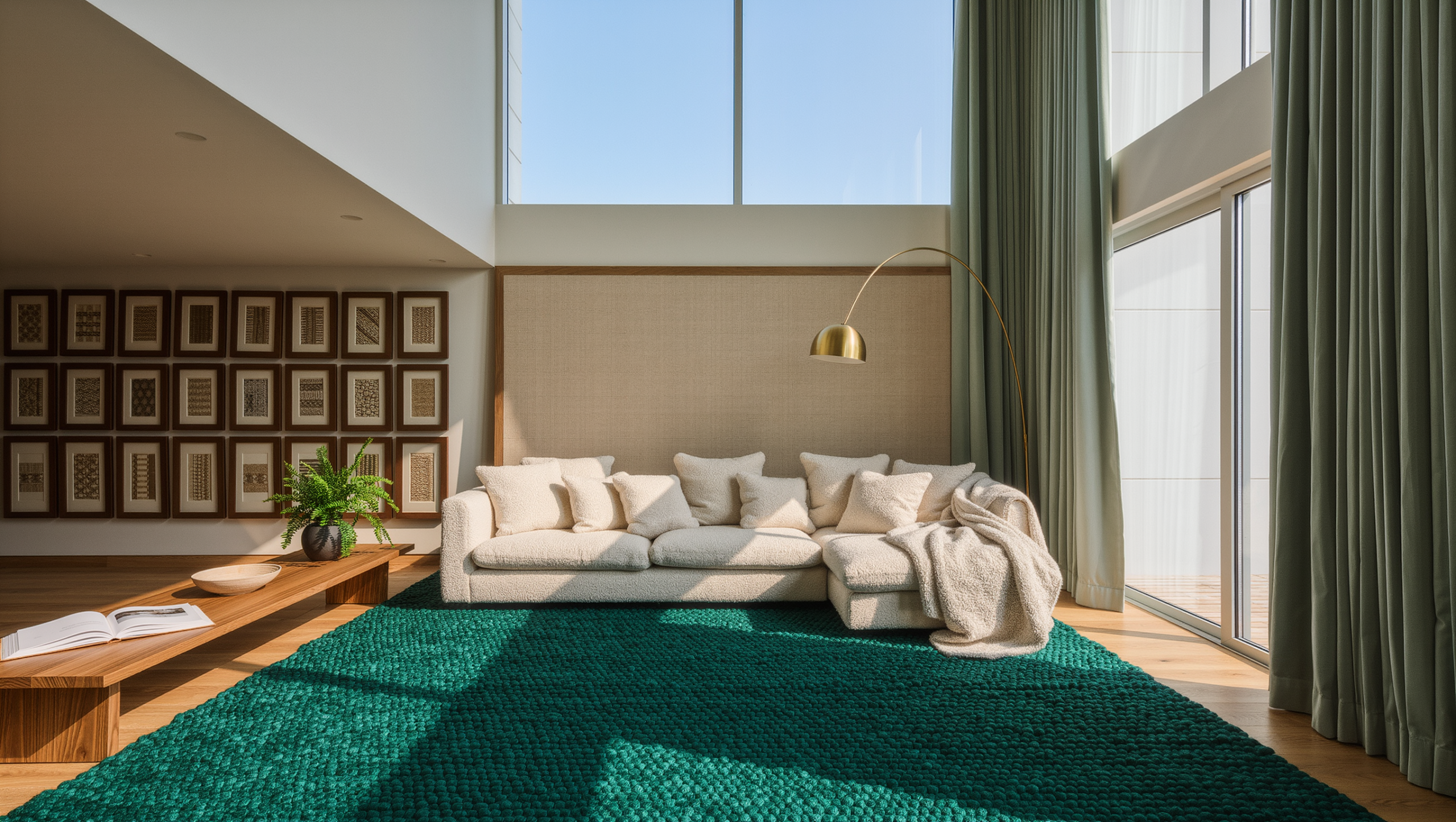
A room can look soft and sound hard.
Somebody always notices before they can name it. Conversations run louder than they need to. The television goes up two notches and stays there. One person quietly stops sitting in the best chair in the room and could not tell you why. Then a guest says the space has wonderful energy, and everyone agrees, slightly too loudly.
Echo is a spatial condition. It belongs in the same diagnosis as glare, scale and circulation — and it is the one most often mistaken for a personality trait of the house.
Clap once, then have a conversation
Stand in the middle of the room and clap hard, once. If the sound comes back at you instead of stopping clean, that is reflection, and it is the cheapest problem here to fix.
Then run the test that actually decides anything. Sit in the main seat and talk to somebody in the second seat at a normal volume for ten minutes. If either of you repeats a sentence, leans in, or creeps upward in volume, you have your answer — and you have it for a specific activity at a specific time of day, which is the only form of this observation worth writing down.
Reflection and transmission are different problems, and only one of them is yours

Reflection is sound bouncing around inside the room. Soft and irregular surfaces work on it. Almost everything below is about reflection.
Transmission is sound arriving through a wall, floor, door or ceiling — the neighbor, the bedroom next door, the laundry. Textiles do close to nothing for it. Mass, sealing and construction do, and that is a building decision rather than a decorating one.
The two get confused constantly because they produce the identical complaint: it is too loud in here. Do not ask a rug to perform soundproofing. It will fail, and you will conclude that acoustics are a racket rather than that you treated the wrong problem.
Distance is free, and it is the first thing to change
Before any purchase: move the seats closer together.
Conversational seating is generally kept within about eight feet, and the reason is not intimacy. Every additional foot between two people is volume somebody has to supply, and volume is energy going into a room that is already handing it back. A seating group strung around the walls of a large room forces everyone to project, all evening, and then gets blamed on the plaster.
This costs nothing, takes four minutes, and in a big hard room it will do more than the first two hundred dollars of textiles.
What softness is actually for
A large rug under the furniture group is the single most useful soft surface in most rooms, because the floor is usually the largest uninterrupted hard plane you own. Size it to the furniture, not to the echo — several small rugs scattered for acoustic reasons look exactly like several small rugs scattered for acoustic reasons.
Full-height curtains are the second, and they are worth more than their acoustic effect alone because they are also doing privacy, glare and atmosphere. Fuller and heavier fabric behaves differently from a thin sheer. Buy them for three jobs, not one.
Then upholstery. Minimal rooms often fail right here. A sculptural chair with an exposed frame is a hard object wearing an expensive haircut. If people gather somewhere, put soft mass there.
Books and irregular objects help too, because a bookcase is no longer one flat plane. But use the books and storage the room already needed. Buying decorative clutter as acoustic treatment is how a room acquires both problems at once.
A tall room will not be fixed from the floor
In a double-height or large-volume space, a rug leaves the walls and the entire ceiling reflecting happily. This is the case where soft furnishings genuinely run out of road, and where purpose-made panels selected and placed for the actual problem start to earn their price.
A few decorative foam shapes stuck up at random will not do it. If the room is for recording, music or a serious home theater, the honest answer is measurement rather than guesswork, and somebody who does this for a living.
If it is the refrigerator, it is not the furniture
HVAC, refrigerators, pumps, laundry equipment and fans produce persistent noise that no amount of textile will meaningfully touch. Listen to the room with the equipment on, then off. If the character of the problem changes, the source is mechanical — fix the source or get appropriate technical help, and stop layering fabric around a compressor.
Open plans have their own version of this. The kitchen, the television, the dinner and the work call are all in one acoustic volume, and acoustic boundaries in a multi-use room can be tested with furniture, curtains and partial edges without ever pretending they are walls. Orient the loud things away from the quiet ones. That is most of it.
Do not upholster the room to death
Acoustic comfort does not require padding every surface, and a room treated as a recording booth reads as one. The combination is what works — floor, curtains, seated mass, irregular objects, and targeted treatment only where the volume demands it. Every one of those should be earning its place for another reason as well.
If the only argument for an object is that it absorbs sound, it is not furniture. It is equipment, and equipment should look like it and be placed properly.
Diagnose it before you soften it
Record a voice memo from the main seat. Then put down one large soft thing you already own — a rug, a curtain, a blanket over a hard surface — and record it again. If the difference is audible on a phone speaker, reflection is genuinely part of your problem and the rest of this page applies. If it is not, you are dealing with transmission or a machine, and no amount of shopping will help.
Start with distance, because it is free. Then the floor, then the windows, then the seats. Get specialized help for isolation and for serious audio performance. That order runs cheapest-first, and the room will tell you where to stop.
Same problem, elsewhere in the house
Room notes
Keep the room on the record.
One useful note at a time: what to test, what to ignore, and what changed when the room got another vote.