Function and Flow
The Laundry Room Gets Better Lighting and a Much Better Attitude
A complete transformation for the hardworking room most homes treat like a punishment: stronger color, useful surfaces, layered light, storage with rhythm, and enough personality to make the folding less insulting.
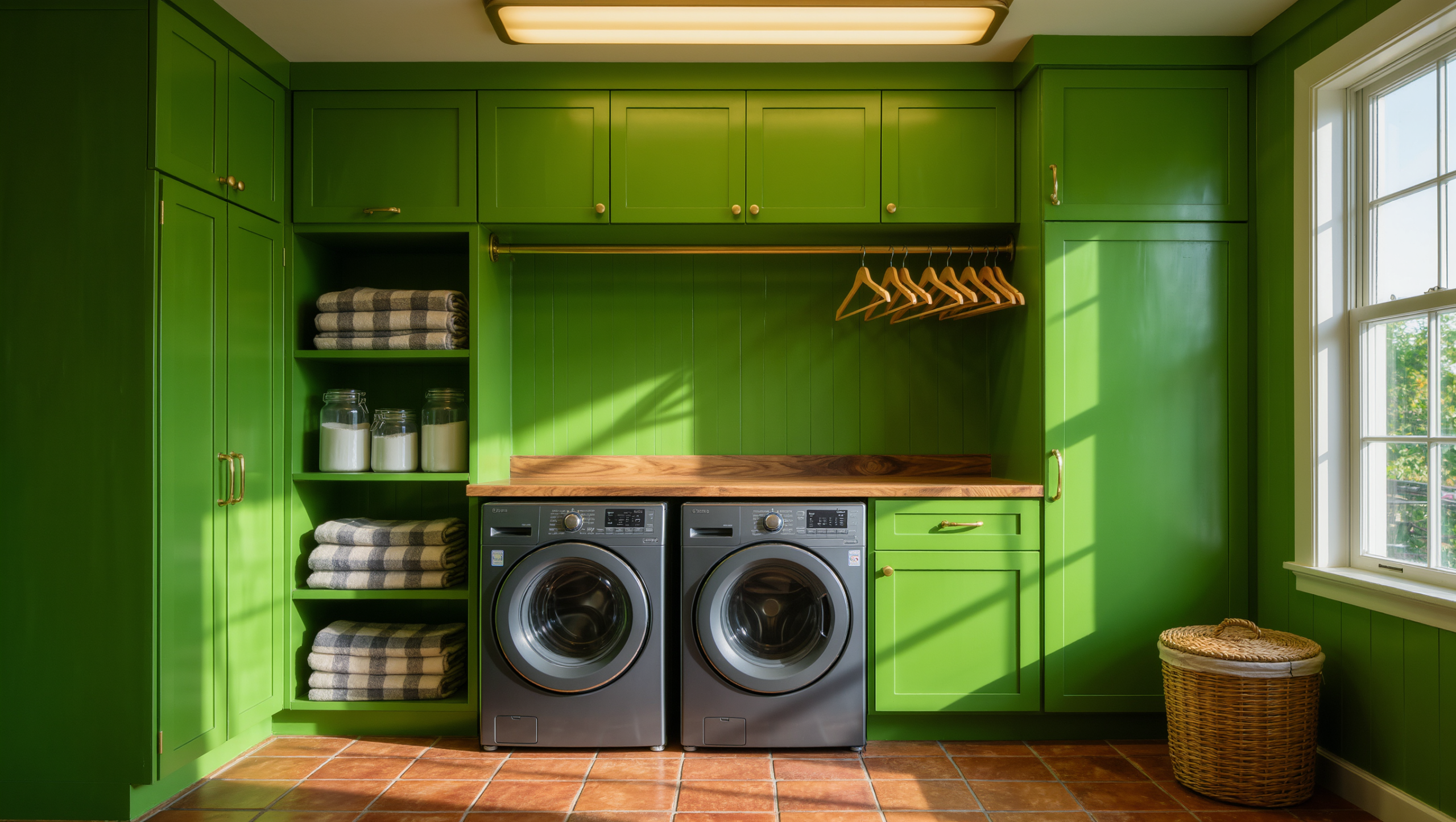
The laundry room is often designed as though the presence of detergent has cancelled every other human need. The machines arrive. A wire shelf appears. One overhead fixture hums with bureaucratic commitment. The room technically functions, which is apparently meant to end the discussion.
It does not end the discussion.
A room used every week deserves more than compliance. It needs a clear working sequence, but it can also have color, material contrast, good light, useful objects, and a point of view. Laundry is labor and it stays labor. What changes is whether it happens in a space that feels like a utility closet with a door problem.
01
Receive, wash, dry, fold, leave
Machines, folding, hanging, and supplies should read as one system.
02
The cabinet wall is architecture
It doesn’t need to be pale or cautious to still be organized.
03
Light the Vertical Plane
The room should look composed from the doorway. Merely illuminated is a low bar.
04
Build a real folding surface
Large enough for a basket and still room to fold.
The labor is still labor. The room simply stops resembling a utility closet with a door problem.
01 Sequence and identity
Start with the work, then give it some nerve
The room has a simple job: receive, sort, wash, dry, fold, hang, and release clothing back into the house. Every design decision should support that sequence. The practical mistake is scattering those actions across whichever empty surfaces remain. The aesthetic mistake is assuming that function requires visual surrender.
Give the room one continuous working band where possible. Machines, folding surface, hanging rail, baskets, and supplies should read as one system rather than five unrelated emergencies, with the rail placed so damp shirts can hang without swinging into a door. Then build atmosphere around that system with color, lighting, and materials that make the room worth standing in.
Treat the cabinet wall as architecture
A strong cabinet wall can organize the room visually and practically. It does not need to be pale, cautious, or anonymous. Deep green, oxblood, smoky blue, mustard, lacquered cream, or a concentrated wallpaper pattern can give the room an identity without interfering with the work.
Use closed storage for bottles, refills, cleaning tools, and the less photogenic necessities of civilized life. Leave one open section for the things that benefit from quick access: daily detergent, a small tray, a basket for loose items, perhaps one object that proves the room was not designed by a committee frightened of joy.
02 Light and surface
Light that helps, a surface worth using
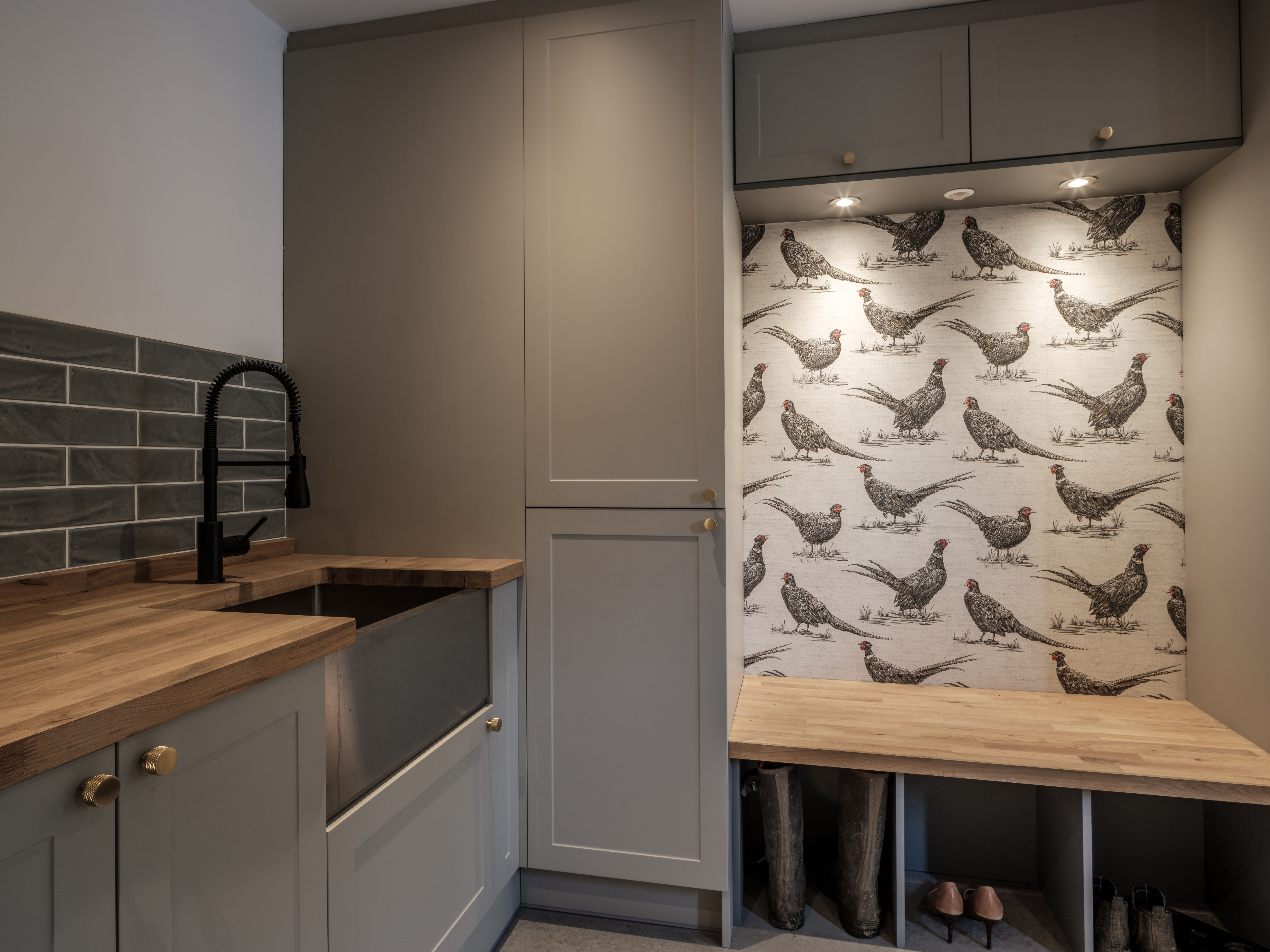
One harsh ceiling fixture turns pale surfaces flat and makes dark clothing difficult to read. Use broad ambient light, direct task light at the folding area, and a softer secondary source if the room is visible from a hallway or kitchen. A compact wall light or shaded pendant can change the mood after the practical work is finished. Light the vertical surfaces and let the floor fend for itself—cabinet faces, wall color, tile, and artwork become part of the atmosphere when they receive light.
A generous counter over front-loading machines can be the defining surface. Wood brings warmth. Stone or tile offers durability and pattern. A darker laminate can look sharp when the edge and surrounding cabinetry are deliberate. The important point is continuity: the surface should be large enough to hold a basket and still leave actual room to fold. If a fixed counter is impossible, consider a wall-mounted folding ledge or a narrow movable table that can leave the room when the job changes.
03 Pattern and objects
Let pattern do some of the labor
Pattern
One dominant event
A striped ceiling or graphic tile can make the room feel complete without requiring many objects.
Baskets
Fit purpose and location
Sized for a real load and parked where the sorting happens, which is rarely the gap nobody else wanted.
Pocket bin
Prevent the archaeology
Coins, receipts, and mysterious screws need a small bin before they colonize the counter.
Objects
Deliberate, not decorative clutter
Framed art behind glass, a vivid tray, a durable rug—things that can survive the room.
Small hardworking rooms can carry pattern beautifully because they are experienced in concentrated visits. The trick is to choose one dominant visual event and let the storage support it—pattern on every surface becomes noise; one memorable plane gives the room confidence.
The verdict
Organized, alive, and holding its own
When the laundry room has a clear sequence, clothing is less likely to stall in baskets, drift into bedrooms, or colonize the nearest chair. When it has atmosphere, the room stops feeling like a place to rush through while mildly resentful.
The transformation is quiet, and it is better than glamour. It gives a repetitive household task a room that is organized, visually alive, and entirely capable of holding its own.
Same problem, elsewhere in the house
Room notes
Keep the room on the record.
One useful note at a time: what to test, what to ignore, and what changed when the room got another vote.