Furniture and Scale
Mahjong Has Entered the Floor Plan
Mahjong rooms and card rooms are surging in design searches, but the useful lesson is bigger than a trend: a good game salon needs table clearance, face-friendly light, comfortable chairs, acoustic softness, and somewhere to put a drink that is not on the game.
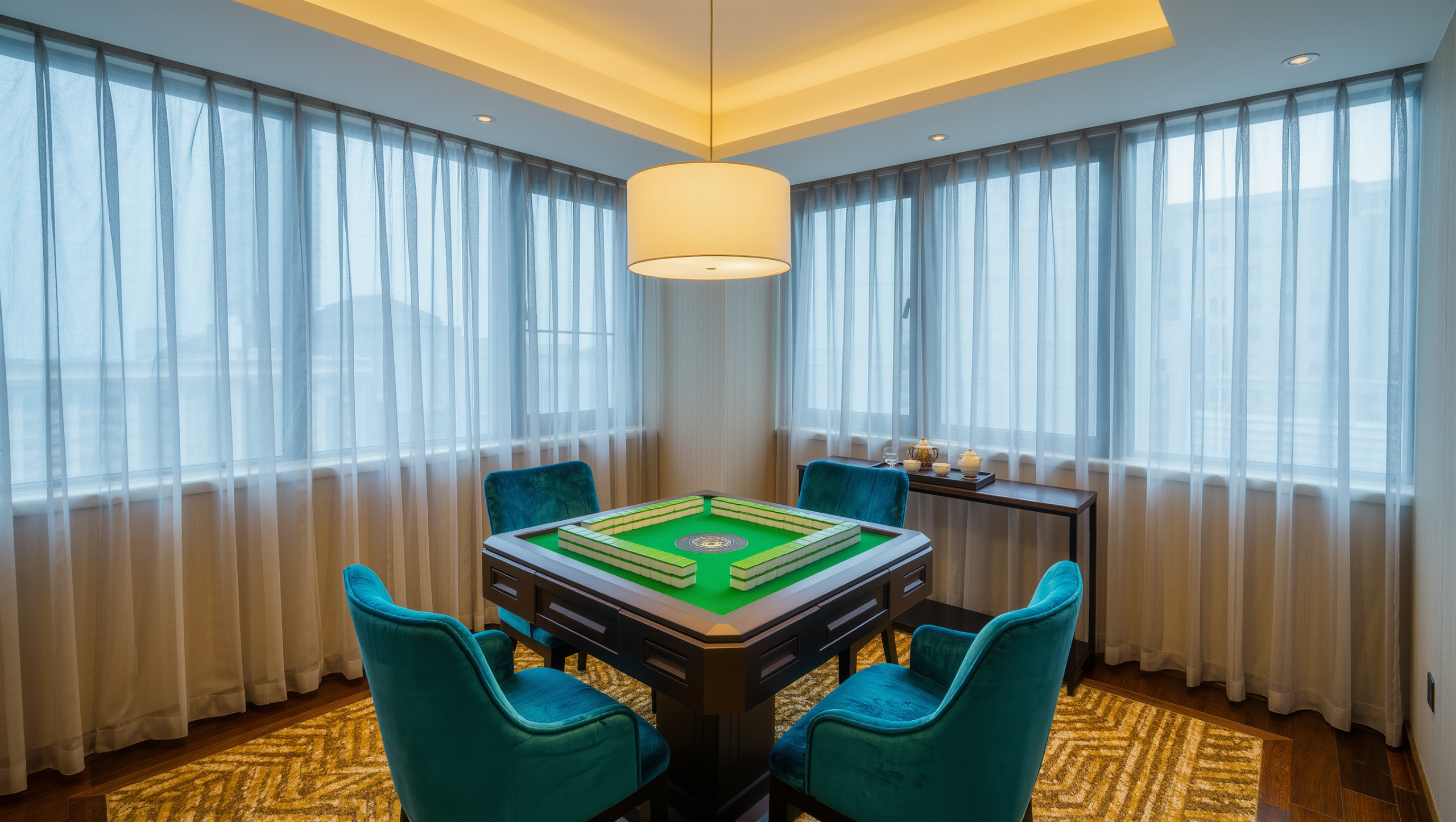
Mahjong has entered the floor plan, and frankly the living room could use the competition.
Houzz’s 2026 search data is unusually loud here: searches for mahjong rooms were nearly twenty times higher year over year, while card rooms rose 129 percent. That is not a subtle preference for a nicer deck box. People are looking for rooms where the activity is face-to-face, repeatable, social, and not organized around a screen.
The mistake would be treating the trend as permission to build a themed game room before checking whether four people can sit down without bruising a knee.
The table is the working surface
Choose the game first, then size the table. Mahjong, cards, board games, puzzles, and casual dining ask different things of the center.
The surface needs enough room for the game, hands, and necessary pieces without forcing drinks into the playing area. It also needs to fit the room with chairs occupied, not tucked neatly beneath it for the photograph.
Pull every chair out. Sit down. Stand up. Walk behind someone. That is the real footprint, and it is reliably larger than the one in the catalog, because the catalog photographs the table empty and a table is never empty when it is working.

Game rooms invite long sitting. A chair that looks sculptural for twelve minutes can become a hostage situation by the second round.
Prioritize seat comfort, back support, and an easy relationship to the table. If the room occasionally needs more seats, add a credible secondary plan rather than shrinking every chair to fit a theoretical crowd.
A useful game salon can feel like a proper room without requiring anybody to suffer for the silhouette. And the chairs are where I would put the money in this room, ahead of the table. A mediocre table with four superb chairs will get used every week. A beautiful table with four sculptural chairs gets admired, played at once, and then everyone suggests the kitchen.
Nobody notices the light or the sound until the third hour
The central surface needs clear, even light. Faces still need to look human. One very bright downlight can make the tiles perfectly visible while flattening everyone around them into a police procedural.
A well-scaled pendant, shaded fixture, or controlled overhead layer can handle the table. Lamps or wall light can soften the perimeter. Test for glare on glossy tiles, cards, lacquer, or glass.
The larger lighting logic in Lighting applies here: task and atmosphere are separate jobs that should cooperate.
Sound is the other thing that only declares itself late. Four people talking, laughing, moving tiles, shuffling cards and dragging chairs across a hard floor can make a small room genuinely punishing, and nobody calls it a design problem. They just stop staying as long. Rugs, curtains, upholstered chairs, wall textiles, books and other soft material will take the hardness out of it. Do not bury the room in acoustic foam unless there is an actual acoustic problem to solve — start with the finishes a good social room wanted anyway.
Everything that keeps the game going sits off the table
Games and wet glasses are natural enemies.
Use side tables, a nearby console, or a shallow drinks ledge so the center stays available for play. If the room hosts often, a small beverage station nearby can reduce trips through the kitchen without turning the game table into a bar.
The article The Coffee Table Is Not Your Only Serving Surface is essentially the same argument wearing a different outfit: distribute the landing points.
Storage belongs in the same conversation, because the friction that kills a game night is not the fourth hour. It is the first four minutes. The best collection in the house is useless if every box lives behind the holiday linens in a hall closet. Keep the games used most often near the table. Closed cabinetry keeps the visual noise down; open shelves make choosing easier and ask much more of the display. Either works. What matters is whether somebody can start playing without reorganizing a room first.
A mahjong room does not need wallpaper covered in tiles
A card room does not need green felt on every available surface either. Themed rooms are a trap, and an expensive one, because a theme commits the room to a single activity at exactly the moment the trend data suggests people want more activities, not fewer.
Think salon instead: a good table, excellent chairs, flattering light, a cabinet, one useful drinks surface, art you would have chosen anyway, and enough atmosphere that people want to stay after the last hand. That room shifts into dinner, puzzles, homework, cards, or a long conversation without anybody dismantling a concept first.
It also scales down, which the themed version cannot. The trend translates perfectly well to one corner of a larger living space — a round or square table near a window, behind a sofa, in a dining nook, at the edge of an open plan where circulation stays clear. What decides it is what the table is equipped with: four decent seats, light, storage within reach, and somewhere to put a drink. That is enough to create a recurring social ritual without giving it a zip code.
And I want to be careful about the register here, because screen-free has picked up a faintly moral tone it has not earned. The point is not that television is a civic failure. Your Living Room Has a Social Life Beyond the Television makes the broader case, and the case is about infrastructure, not virtue.
The screen already has furniture, storage, power, a dedicated wall and the best sightline in the house. Nothing else in most living rooms has any of that. Give a table four good chairs and a light over it and you have not renounced anything. You have simply stopped running a room in which only one activity was ever properly equipped to win.
Trend source line: Houzz’s 2026 U.S. Emerging Summer Trends Report found searches for mahjong rooms nearly 20 times higher year over year, with card rooms up 129%, board game rooms up 45%, and poker rooms up 38%. Source: Houzz.
Same problem, elsewhere in the house
Room notes
Keep the room on the record.
One useful note at a time: what to test, what to ignore, and what changed when the room got another vote.