Outdoor Rooms
The Outdoor Room Move That Still Works After the Guests Leave
Design an outdoor room for ordinary days first, then let it scale for guests with flexible seating, distributed surfaces, weather-ready storage, shade, lighting, and a clear reset.

If the patio only works when twelve people are coming over, you have designed event infrastructure, not an outdoor room.
The strongest outdoor spaces are complete on an ordinary morning and expandable on a busy evening. Daily comfort should be the anchor; guest capacity should arrive in lighter layers that can leave again without the patio looking abandoned.
Build for the smallest recurring use
Start with the way one or two people actually use the space: morning coffee, reading, dinner, gardening, or evening conversation. Make that arrangement excellent.
Give the primary seat real shade, a reachable surface, comfortable light, and a clear route from the house. Do not compromise daily use to preserve an oversized party arrangement.
A patio that feels complete with one occupied chair will usually host better because the core experience is already solved.
Choose one permanent social anchor
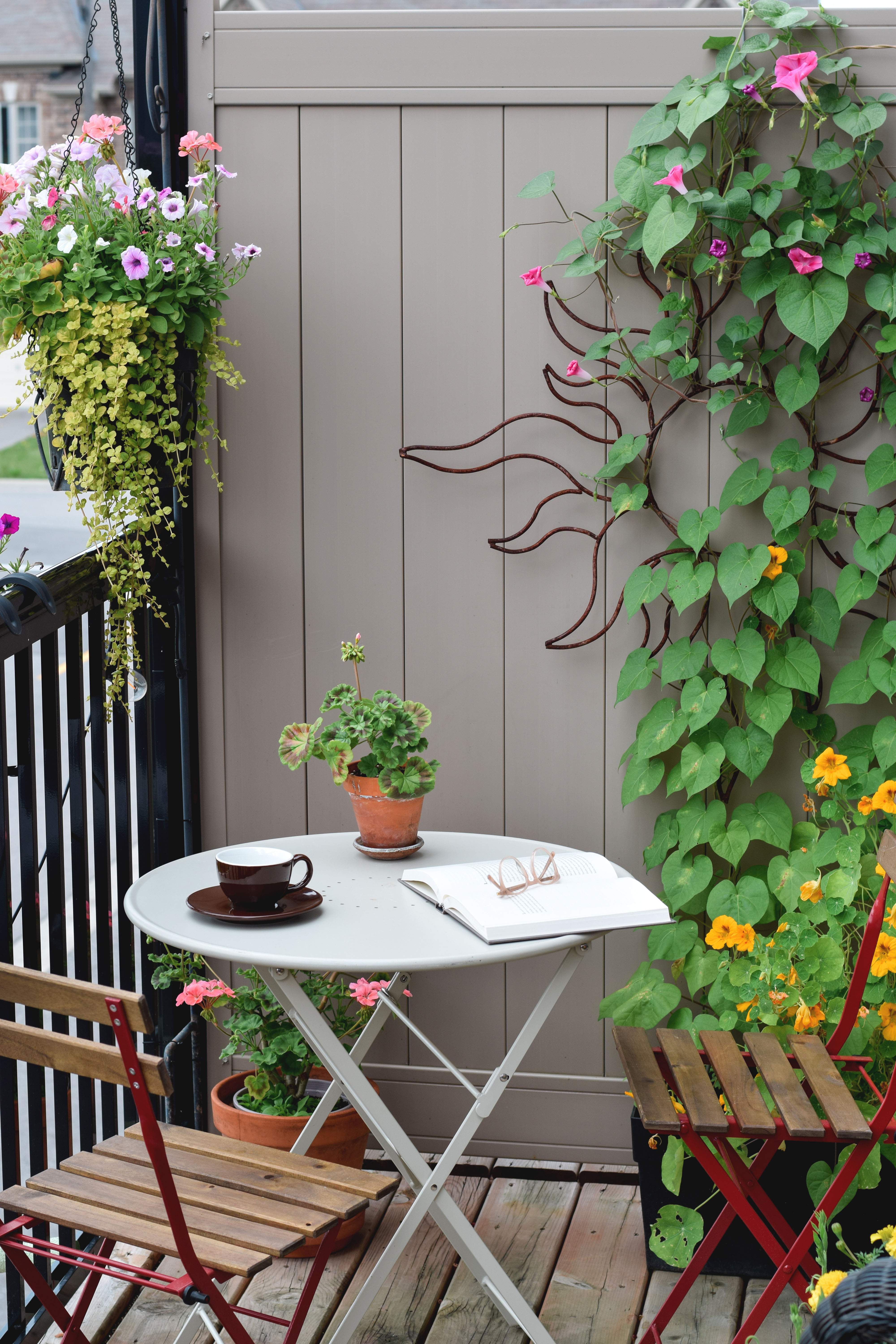
A dining table, lounge pair, built-in bench, or sheltered conversation group can establish the main outdoor job. Everything else can flex around it.
The anchor should match the most frequent use, not the largest possible guest count. If four people eat outside weekly and twelve gather twice a summer, design for four and expand for twelve.
Permanent furniture earns its footprint every day.
Add guest capacity in light layers
Folding chairs, stools, benches, movable side tables, and other flexible pieces can expand seating without dominating ordinary use. Store them where they can be retrieved without a house-wide expedition.
Every temporary seat should be stable and appropriate for the intended guest. Do not rely on decorative stools, planter edges, or furniture that becomes uncomfortable after ten minutes.
The additional layer should feel like hospitality, not emergency improvisation.
Distribute landing surfaces
Guests need places for drinks and plates. Several small surfaces can be more flexible than one huge table that blocks circulation when the party is over.
Movable tables can serve conversation clusters and then return beside the primary chairs afterward. Choose materials and weights that handle wind and weather.
A person should not have to balance a glass on the arm of a chair because the only table is six feet away performing centerpiece duty.
Protect the route from the house
People carrying trays, drinks, jackets, or food need a clear path. Keep the threshold, steps, and main passage free of extra party chairs and decorative containers.
Plan a separate location for coolers, serving equipment, bags, or gifts so the entry does not become temporary storage during the gathering.
Use Outdoor Rooms if the exterior route is competing with seating, shade, or planting.
Plan shade for both scales
A single umbrella may cover two people and fail a group. Know the limits of the system and use properly anchored, compliant structures where larger coverage is needed.
Observe the sun at the actual gathering hour. Evening sun can reach under an overhead structure that works perfectly at midday. A shade plan based on noon photography is a surprisingly effective way to cook guests at six.
Portable shade can be useful for flexible events, but wind and anchoring requirements matter.
Use lighting to expand the room
Light the route and primary table first, then add lower sources around secondary seating. A few separated pools of light can make the yard feel larger without turning it into a floodlit stage.
Give serving surfaces and steps enough practical light. Let decorative or atmospheric lighting support rather than replace that function.
Outdoor-rated equipment and appropriate electrical installation are required where wiring is involved.
Give weather a rapid response
Know where cushions, paper goods, electronics, blankets, and movable decor go if wind or rain arrives. The host should be able to protect important items without abandoning guests for half an hour.
Near-storage is part of the design. A deck box, bench, shed, cabinet, or designated indoor zone can keep the reset short enough that the room remains enjoyable rather than becoming a weather-management hobby.
Food service should not take over the room
For gatherings, identify where food and drinks are served without sacrificing the daily seating anchor. A folding table, cart, or temporary indoor-outdoor station can add capacity and disappear later.
Keep the serving route out of the main conversation cluster. Hospitality works better when people are not repeatedly standing up to let the tray pass.
Design the morning after
Before the gathering, decide what the room should look like the next day. Which furniture remains? Where do extra chairs go? What surface becomes ordinary again? Where do serving pieces return?
This prevents event equipment from becoming semi-permanent because nobody wants to undo the setup.
Make the reset short
Outdoor cushions, games, serving pieces, extra seating, and lighting accessories need a storage plan. The host should not spend an hour restoring the patio after everyone leaves.
Group event-only items together so the outdoor room can return to its daily state in a few moves. If the reset is too complicated, the party layer will slowly become the room.
Daily use is the design
The strongest outdoor room is generous enough for a gathering and still feels complete the next morning when there is only one chair occupied. Daily use is the design. Hosting is the expansion pack.
Same problem, elsewhere in the house
Room notes
Keep the room on the record.
One useful note at a time: what to test, what to ignore, and what changed when the room got another vote.