Outdoor Rooms
Outdoor Rooms That Photograph Well and Live Badly
An outdoor room can look perfect and still fail through glare, wind, weather storage, poor shade, weak lighting, awkward routes, and furniture that is miserable to maintain.

The patio photograph does not show the cushion sprint before a storm.
Outdoor rooms fail differently from indoor ones because sun, wind, rain, temperature, insects, drainage, storage, darkness, and maintenance all join the design review. A chair can be perfectly scaled, beautifully upholstered, and entirely unusable at four in the afternoon.
The real measure is whether the space stays comfortable before, during and after the photograph—including the part where weather turns up and behaves like the most opinionated designer on the project.
Test the seat at the hour you use it
A beautiful chair in full afternoon sun may be uninhabitable. Observe shade, glare, wind, and heat before final placement.
Use the chair for an ordinary stretch of time. Notice whether the surface gets hot, wind funnels through the corner, low sun lands directly in your eyes, or mosquitoes turn dinner into a blood donation.
The useful test is occupancy, not how the chair looks while empty.
Observe the site before assigning a room
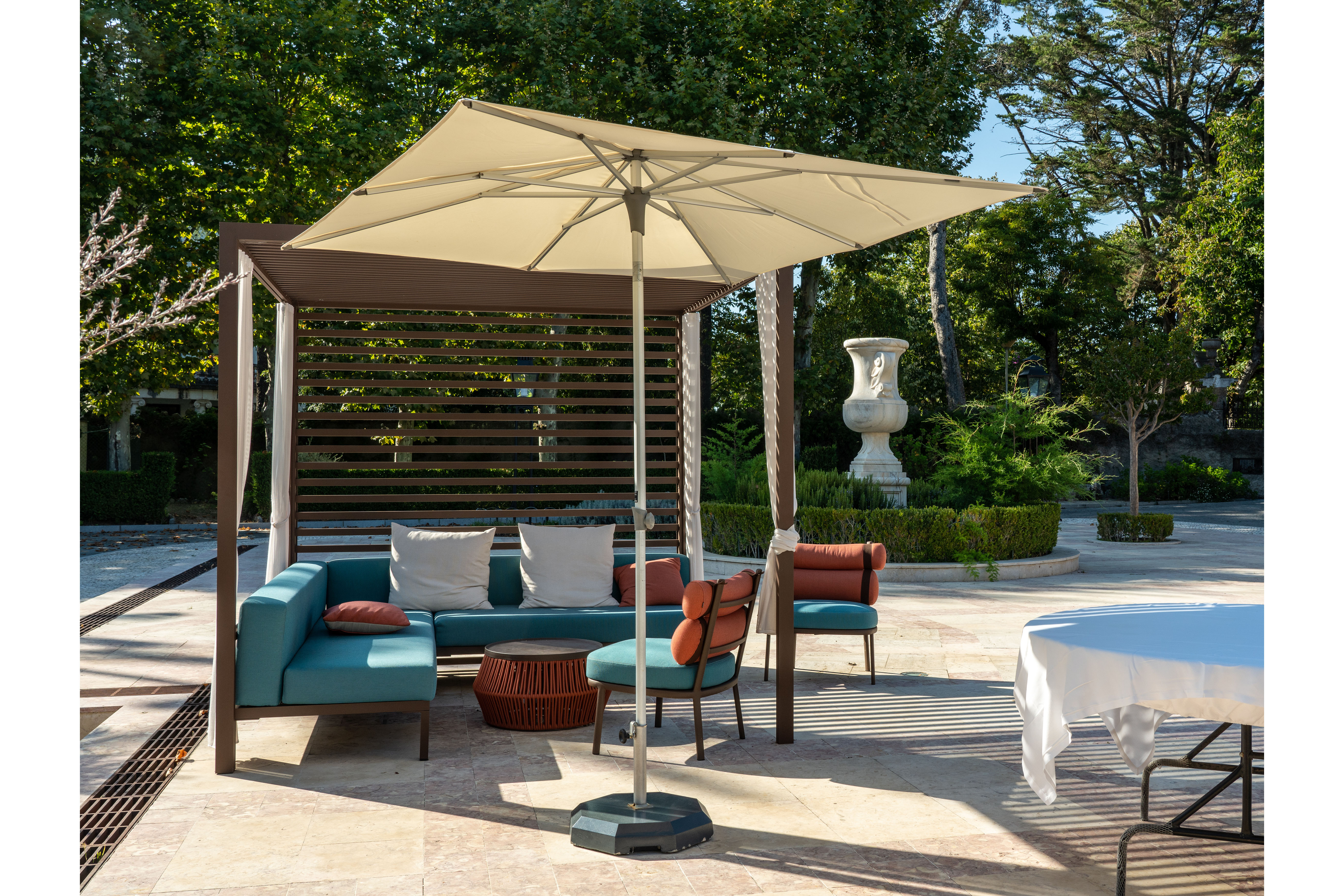
Spend time outside at morning, midday, late afternoon, and after dark. Note where people naturally stop, which routes are already used, where water moves, where wind accelerates, and which edges provide privacy or shelter.
Do not force a dining room onto the sunniest exposed slab simply because it is the largest area. The site may already be telling you where the comfortable room belongs.
Use Outdoor Rooms for the full site-and-use audit.
Count the weather logistics
Where do cushions, throws, games, portable lights, and serving pieces go? If every weather event requires a complicated rescue, the room will be used less.
Storage should be close enough that one person can reset the room without carrying half of it through the house. Near-storage is not a glamorous photograph, which may explain why it is so often missing from glamorous patios.
The better outdoor room plans for the reset before the rain starts.
Walk the route from the house
Carry a tray, open the door, pass occupied chairs, and find the table. Outdoor rooms still need circulation.
Keep thresholds, steps, gates, and required service routes clear. Party furniture and planters should not turn the primary path into an obstacle course.
Pay particular attention to doors that swing outward, sliding-door tracks, level changes, and narrow side passages. A route that feels generous while empty can become difficult once people and furniture occupy it.
Judge furniture by the maintenance it creates
Review cleaning, covers, fading, rust, freeze conditions, drainage, cushion drying, and storage. A material that needs more care than the household will give it is a poor long-term match even if the manufacturer technically calls it outdoor-rated.
Choose cushions, frames, tables, and rugs for the exposure they will actually face rather than for the sheltered conditions of the catalog photograph.
The maintenance cost is part of the product.
Observe water after a storm
Notice where rain collects, drains, splashes, or blows under cover. Check whether furniture feet sit in pooled water, cushions remain damp, or runoff crosses the route.
Do not place vulnerable furniture in a location that repeatedly stays wet. Persistent drainage problems may require site or building solutions rather than more weatherproof accessories.
Decoration does not outrank drainage.
Check wind as a design force
Lightweight chairs, umbrellas, screens, decor, and planters can become unstable in exposed locations. Use appropriate bases, anchoring, storage, or more stable materials.
Wind also changes comfort. It can cool a hot terrace beautifully or make conversation annoying and candles pointless. Observe the recurring direction before building permanent screens or planting a windbreak.
Permanent shade structures and attachments require proper design and local compliance.
Shade has to work when people are actually there
A pergola or umbrella may cast excellent shade at noon and almost none at dinner. Low sun can reach under overhead cover from the side.
Track the sun at the intended use hour. Test temporary shade before investing in permanent structures. The goal is usable comfort when the room has a job.
Privacy changes whether the room gets used
A patio can be physically comfortable and psychologically exposed. Notice sightlines from neighbors, sidewalks, windows, and adjacent rooms.
Use planting, screens, furniture orientation, or partial boundaries to create enough enclosure without turning the yard into a fortress. Privacy works best when it supports the activity rather than simply blocking everything.
Return after sunset
Steps, routes, faces, and useful surfaces need appropriate outdoor lighting. Control glare and light spill.
A few lower light sources can create more atmosphere than one floodlight while still keeping the path readable. Separate route lighting from atmosphere so the safest fixture does not have to become the only mood in the garden.
Use outdoor-rated equipment, and use qualified electrical help where permanent wiring or installation is involved.
Design the daily version first
Keep one or two seats, one reachable surface, and the primary shade or light ready for ordinary use. Additional guest furniture can arrive when needed.
This keeps the patio from looking permanently staged for an event that happens twice a month and makes spontaneous use much more likely.
Make the reset part of the design
After a normal evening, how many steps does it take to put the room away? If cushions travel across the house, lights need individual charging, and every small object has a different storage home, the maintenance burden will eventually change how often the space is used.
Consolidate. Store weather-sensitive items together. Reduce decorative pieces that require rescue. Choose one or two durable objects that can stay out and let the room get through an ordinary windy afternoon unattended.
Design for the living, not the lens
Weather, maintenance, route, storage, privacy and lighting are the design. Treat them as problems to be cropped out of the image and you end up with a patio that is beautifully equipped and mostly empty.
A good photograph is evidence that the space looked good for a moment. A good outdoor room is the one people keep using after the photographer, the guests, and the perfect weather have left.
Same problem, elsewhere in the house
Room notes
Keep the room on the record.
One useful note at a time: what to test, what to ignore, and what changed when the room got another vote.