Room for Drama
Outdoor Rooms
Apply room logic to exposed and transitional exterior spaces.
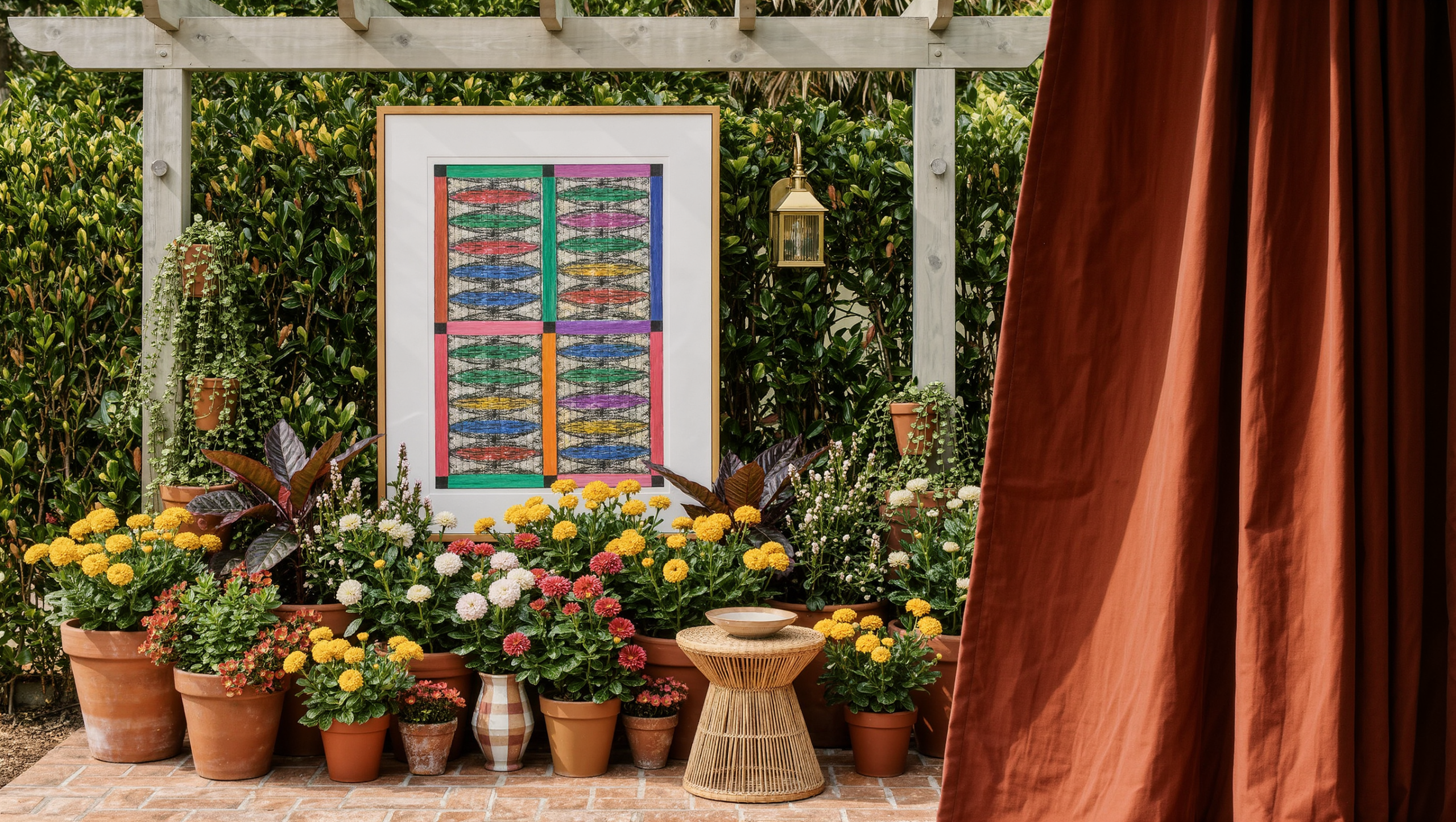
On this page
11
Space Intelligence · The weather has voting rights
Outdoor rooms fail when they are designed as indoor rooms with worse walls. Sun, wind, water, temperature, privacy, drainage, maintenance, access, and seasonal change are the design conditions. Treat them as inconveniences to design around and the patio ends up with four good chairs and nobody in them.
A patio, balcony, porch, side yard, or open patch of ground becomes a room when it has enough boundary, shelter, comfort, and purpose to earn occupancy. Furniture alone does not confer room status.
Start with the reason to stay
Outdoor space becomes useful when there is a specific activity worth staying for: eating, reading, talking, cooking, gardening, working, watching children, sitting in evening light, or simply getting out of the house without leaving home.
Name the primary use before choosing furniture. A dining space needs different shade, surface, circulation, and lighting from a reading corner. A social lounge needs enough seating relationship to support conversation rather than chairs distributed around the perimeter like witnesses.
The yard is not one function simply because it is outside.
Observe sun before buying shade
Watch where direct sun lands through the day and across the season that matters. Note when the intended seating area becomes uncomfortable, where reflected heat accumulates, and which parts of the site are naturally usable.
A shade solution placed for the photograph may fail during the hour people actually sit outside.
Test umbrellas or temporary shade before committing to permanent structures. The sun’s route is more persuasive than the patio plan.
Wind changes comfort and placement
Wind affects temperature, conversation, candles, textiles, plants, umbrellas, and lightweight furniture. A beautiful corner can be practically unusable if it sits in a recurring wind path.
Use existing walls, hedges, screens, level changes, or planting to understand where protection already exists. Temporary screens or movable planters can test whether a more defined boundary improves comfort.
Do not build a permanent wind solution from one unusually calm afternoon.
Boundaries create the feeling of a room
Outdoor rooms need edges, though those edges can be partial. A wall, fence, hedge, screen, row of planters, change in paving, rug, pergola, canopy, or furniture orientation can define territory.
Nobody needs a fortress. The goal is enough structure that the activity feels located rather than scattered across the yard.
A boundary should also respect circulation, views, drainage, and maintenance. The successful edge tells the room where it is without turning the outside into a bunker.
Overhead planes matter more than people think
Indoors, ceilings create scale automatically. Outdoors, the sky can make a seating group feel exposed even when the floor area is correct.
Tree canopy, umbrellas, pergolas, awnings, shade sails, or other overhead elements can create a more human-sized volume. They affect sun, rain, light, and psychological enclosure.
Any permanent or structural overhead work may involve engineering, permitting, wind-load, attachment, or code considerations. That crosses into professional territory. Test the need before designing beyond your expertise.
Protect the route from house to room
An outdoor room can be lovely and still go unused if reaching it requires carrying food across wet grass, navigating a narrow side passage, or moving furniture out of the way.
Trace the route with the objects people actually carry. Plates, drinks, cushions, gardening tools, toys, or laptops change the experience.
Access is part of comfort. A destination that is annoying to reach becomes occasional no matter how good the chairs are.
Choose furniture for body, exposure, and upkeep
Outdoor furniture has to support the intended posture and survive the conditions the site actually delivers. Consider seat comfort, heat retention, water, wind, weight, cleaning, storage, fading, and the willingness to cover or move things.
The best outdoor sofa is the one the household still uses after the first season of maintenance reality, and it is rarely the one that photographs most like an indoor sofa. Deep white cushions look glorious in May and spend August in a storage bin, waiting for a dry afternoon nobody is going to schedule.
Comfort includes what happens after rain.
Lighting should support the evening route
Outdoor lighting needs to make steps, entries, cooking, dining, and circulation legible while preserving atmosphere. One bright floodlight can technically illuminate the yard and still destroy every reason to sit in it.
Layer lower, localized sources where practical and safe. Use light to identify thresholds and gathering zones.
Anything involving new wiring, exterior electrical work, or permanent installation belongs with a qualified professional. The design brief can define the experience; electrical execution needs proper expertise.
Storage and reset determine whether the room stays usable
Cushions, serving items, tools, covers, toys, and seasonal objects need realistic homes. If resetting the outdoor room requires carrying everything through the house after every use, the system will eventually degrade.
Decide what can remain outside, what needs protection, and how quickly the setup can recover after weather or use.
Outdoor rooms are maintained more aggressively by climate. The reset plan is part of the design.
Drainage, grade, and structure are stop conditions
Water problems, unstable grade, retaining conditions, structural attachments, significant paving changes, gas, electrical work, and other construction-sensitive issues should not be solved through decorative guesswork.
Observe where water goes and where the ground changes, but bring in the appropriate qualified professional when the solution crosses into building, drainage, electrical, or safety work.
Atmosphere is not an excuse to improvise infrastructure.
The outdoor-room audit
- Primary use: What makes people want to stay here?
- Sun: When is the area comfortable or exposed?
- Wind: Where does recurring air movement help or hurt?
- Boundary: What defines the room without blocking access or view?
- Overhead plane: Does the space need shade or a stronger sense of enclosure?
- Route: Can people reach the area easily while carrying what the activity requires?
- Reset: What needs storage, protection, cleaning, or seasonal change?
The weather gets a vote. The plan should count it before the credit card does.
Continue with Created Outdoor Rooms when enclosure has to be built deliberately, or Awkward Outdoor Spaces when the site itself is fighting the proposed use.
Outside, as rooms
Ninety-seven pieces on ground, edges, cover and after dark.
The anatomy is above. These are the yards, balconies and porches it was drawn from.
 Awkward SpacesUnder the Deck Is a Room. You’ve Been Storing a Lawnmower In It.
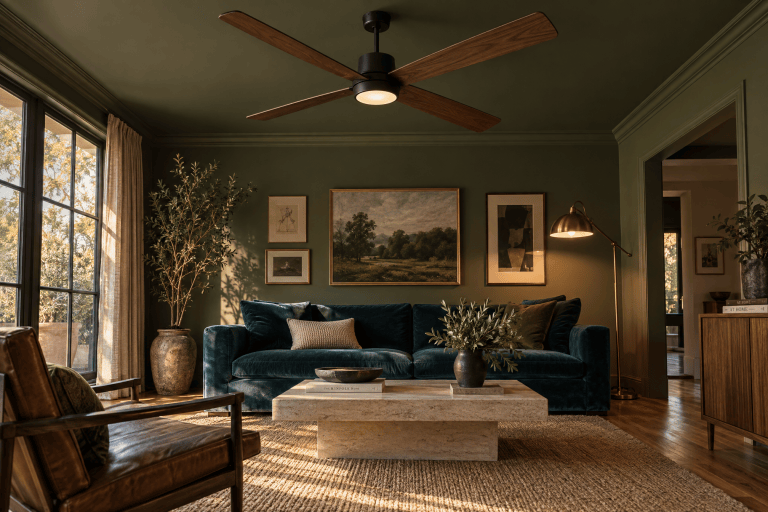 Function and FlowThe Ceiling Fan Can Stay
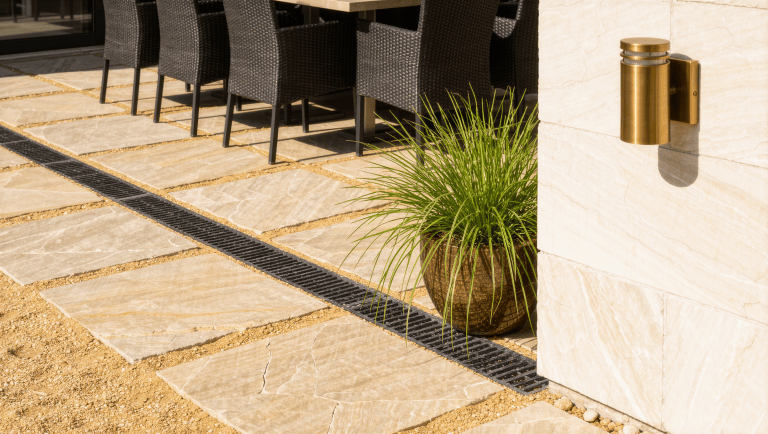 Function and FlowThe Driveway Is the Biggest Room You Refuse to Use
 Function and FlowThe Hell Strip Is the Most-Seen, Least-Designed Land You Own
 PracticeThe Brief Is Where the Room Meets Reality
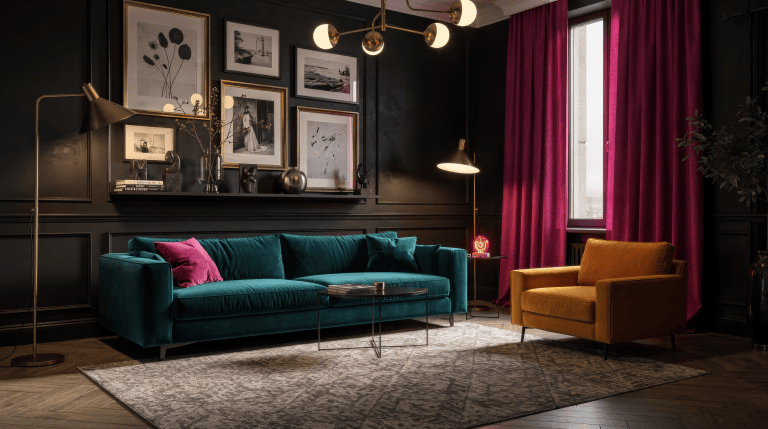 Light and AtmosphereThe Day You Realize You’re Probably a Maximalist
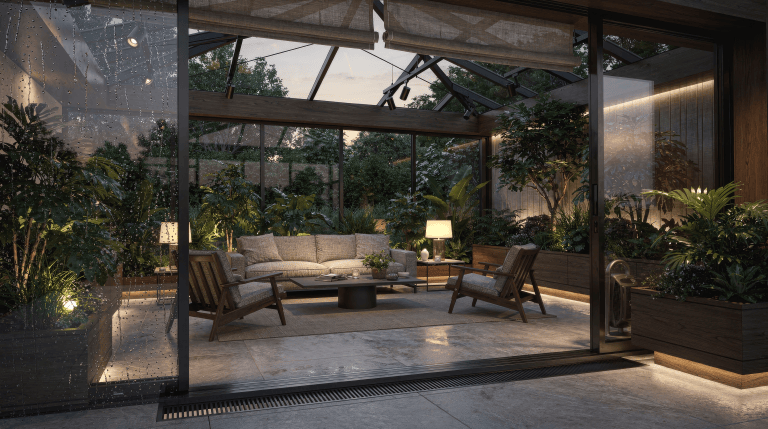 Light and AtmosphereThe Conservatory Has Its Own Weather
 Light and AtmospherePortable Lamps Are Finally Solving the Places Wiring Forgot
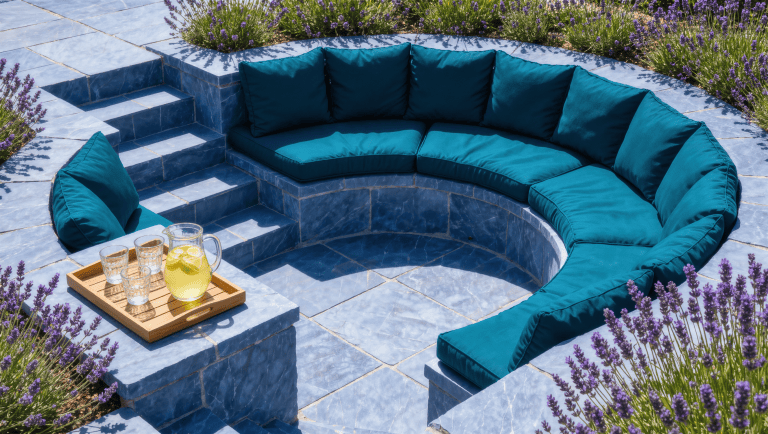 Function and FlowThe Outdoor Conversation Pit Has to Work Before the Fire Is Lit