Awkward Spaces
Vertical Storage in Awkward Architecture: Knee Walls, Eaves, Above Doors, and Closet Ceilings
A short knee wall can become fitted storage, display, or a low-use zone without making the room feel like cabinetry ate the architecture. Start with access, depth, and what the sloped ceiling actually allows.

On this page
10
Awkward architecture is often accused of wasting storage when the real problem is that ordinary cabinets do not understand sloped ceilings, knee walls, narrow overhead bands, and deep upper volume.
The answer is to match storage frequency, weight, reach and access to the geometry the room already has.
Give the difficult volume the objects that can tolerate difficult access, and leave daily life at a human height. Reverse those two and you have built a wall of boxes the household has to negotiate with every morning.
Start with the inventory, not the cavity
Measure what genuinely needs storing before designing around an empty volume. Seasonal linens, luggage, archived papers, spare bedding, rarely used equipment, and backup supplies will tolerate completely different access from shoes, coats, tools, or anything reached for every morning. A strange cavity is not automatically useful storage. It becomes useful the moment a real category fits its depth, its height, its weight limit, and its retrieval schedule.
Most households already own a pile of things no standard closet handles well. Long rolls of wrapping paper. A folding table. Spare table leaves. Skis. Suitcases inside suitcases. Seasonal textiles. Odd equipment with no natural shelf anywhere. Those are precisely the categories that suit difficult geometry, and moving them there releases the good storage for ordinary life. Daily categories crammed into awkward volume while the awkward categories occupy the best closet is the arrangement almost every house arrives at by accident.
Knee walls are storage wearing drywall
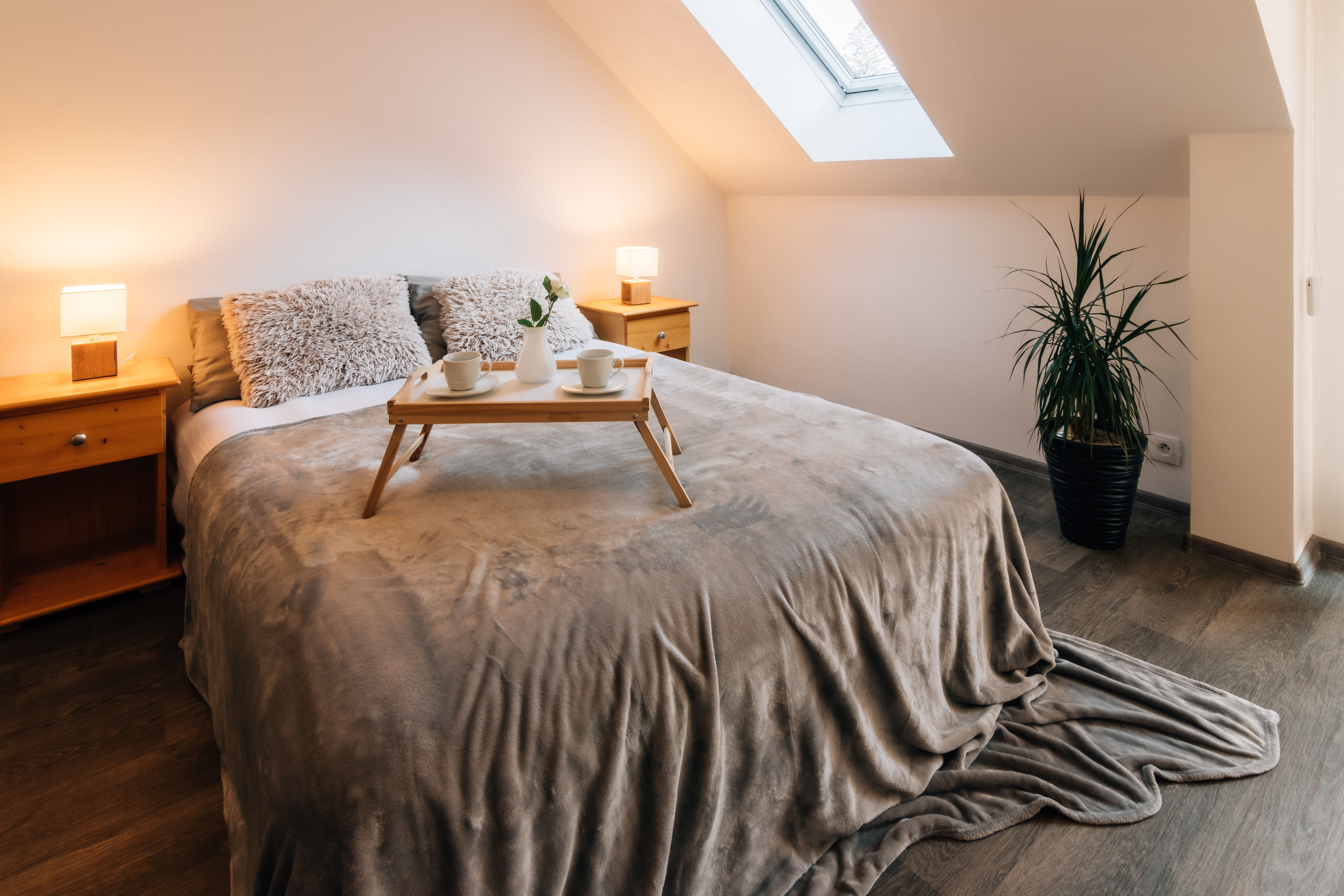
Low attic walls and sloped-roof edges can conceal long horizontal volume. The useful question is how to bring that volume toward the person without requiring crawling into it.
Drawers, pull-outs, low doors, or removable bins can work better than deep fixed shelves because the contents come forward. Keep the heaviest and most frequently used objects closest to the opening.
Before opening or altering a knee wall, verify structure, insulation, ventilation, wiring, plumbing, and other building conditions. The void may already be performing more than one job. Eaves and knee walls intersect insulation, ventilation paths, roof conditions, and exterior walls, and built-ins can conceal damp, restrict airflow, or block service access when the plan is drawn around the cabinetry rather than around the building. Persistent condensation, leaks, mold, or any building-performance question requires qualified assessment before joinery covers the evidence.
That sequence matters more than it sounds. I would give up an entire bank of drawers before I would build a fixed front across an access panel. The drawers are recoverable. The panel is the thing somebody needs at eleven at night in February.
Eaves need a height map
Measure the usable height at several points instead of recording one maximum dimension. The floor area may be generous while the accessible volume narrows rapidly.
Low zones can hold flat or infrequent items. Taller zones can take hanging storage, shelves, or drawers where the body can operate them comfortably.
Let the roofline assign the categories. Do not make every compartment identical just because cabinetry software prefers rectangles.
Before any of that, work out which part of the eaves is usable volume and which is insulation, ventilation or structure. The attic eaves piece starts there, and designs the access from the room outward.
High storage takes the slow-moving inventory
The strip above a door will hold books, display, seasonal objects, or closed storage where structure, height, and safe access allow it. It should never hold something retrieved every morning. Keep the projection shallow enough that the doorway still feels comfortable to walk through, use secure mounting appropriate to the load and the wall construction, and avoid heavy objects anywhere a fall would create a serious hazard. Done properly, above-door storage reads as architecture. Done as an afterthought, it reads as a shelf balanced over a walkway, and everybody passing underneath registers it.
Closet ceilings behave the same way. The upper portion of a tall closet is right for luggage, seasonal bedding, and archive boxes, and wrong for anything that means fetching a step stool to find a sweater. Keep the eye-to-waist band for the categories used most, and bound the upper zone clearly. An unbounded one becomes a vertical landfill where objects disappear for four years because nobody is willing to climb for them.
Bring deep storage toward the user
Depth is only valuable when the contents remain retrievable. Pull-out trays, drawers, rolling bins, accessible boxes, or shelves with limited depth can keep a cavity from becoming an archive.
Do not stack several layers front-to-back if accessing the rear requires dismantling the front. The volume may technically hold more while the room functionally stores less.
The face of it, which is what you live with
Slopes, doors, drawer lines, and irregular openings throw off a great deal of visual information before anything has been stored in them. A small number of calm fronts quiets that better than exposing every shelf. Keep open niches for books, art, and objects worth looking at — display belongs where the shape of the room is already doing something interesting — and put the mixed practical inventory behind doors.
Count the hardware next. Several small doors under a slope can produce more handles than wall, at which point the storage stops reading as joinery and starts reading as a puzzle. Integrated pulls, fewer and larger fronts, or one restrained hardware language will settle it. Choose handles for grip and reach as well as appearance, though. The most invisible pull in the room is not sophisticated if opening it requires fingernails and patience.
Keep heavy objects low
Luggage, equipment, large boxes, and dense archives can be awkward to lift from overhead storage. Put heavy items at safer retrieval heights and reserve upper zones for lighter objects.
Where accessibility, balance, strength, or mobility needs matter, design the storage around the actual user rather than assuming a ladder or stool will always be reasonable.
Mock the operating footprint
Tape the doors or drawer fronts on the floor and wall. Imagine them open. Stand where the user must stand. Check nearby beds, chairs, doors, and routes.
A low drawer can be excellent storage and impossible to open because the bed occupies the exact kneeling position required to use it.
The opening mechanism is part of the room plan.
Leave some cavities alone
Not every void should become storage. Access panels, insulation zones, structural conditions, difficult reach, or a visually cleaner room may justify leaving space unused.
Storage is not a contest to maximize cubic inches. The room only benefits from volume it can use safely and repeatedly.
Reach should follow frequency
That is the entire rule, and every section above is one version of it. Access gets easier as frequency rises. Daily life stays low and within arm’s reach; the seasonal and archival categories take the strange upper volume and the crawl. Respect the structure, bring deep contents forward, keep heavy things low, and stop treating every roof cavity as unpaid square footage.
For the broader room diagnosis, continue with Awkward Interior Spaces and Storage and Working Zones.
Same problem, elsewhere in the house
Room notes
Keep the room on the record.
One useful note at a time: what to test, what to ignore, and what changed when the room got another vote.