Outdoor Rooms
Patio Islands Can Break Up Hardscape Without Breaking the Room
Use planted patio islands to soften large hardscape, create zones, frame views, absorb water, and add shade or seasonal structure without wrecking circulation.

A large patio can fail for the same reason a large empty room fails: all the floor is technically usable, but none of it knows what to become.
Patio islands—planted beds cut into or placed within hardscape—can interrupt an oversized paved field, create intimacy, frame views, absorb water, and give outdoor zones something softer than furniture to organize around.
Start with the problem the island should solve
A planting island can soften too much hardscape, separate dining from lounging, frame a view, create shade, slow runoff, hide a utility edge, or give a large patio a focal point.
Choose the job first. An island without a job is simply a planting bed in the way.
Protect circulation before cutting the paving
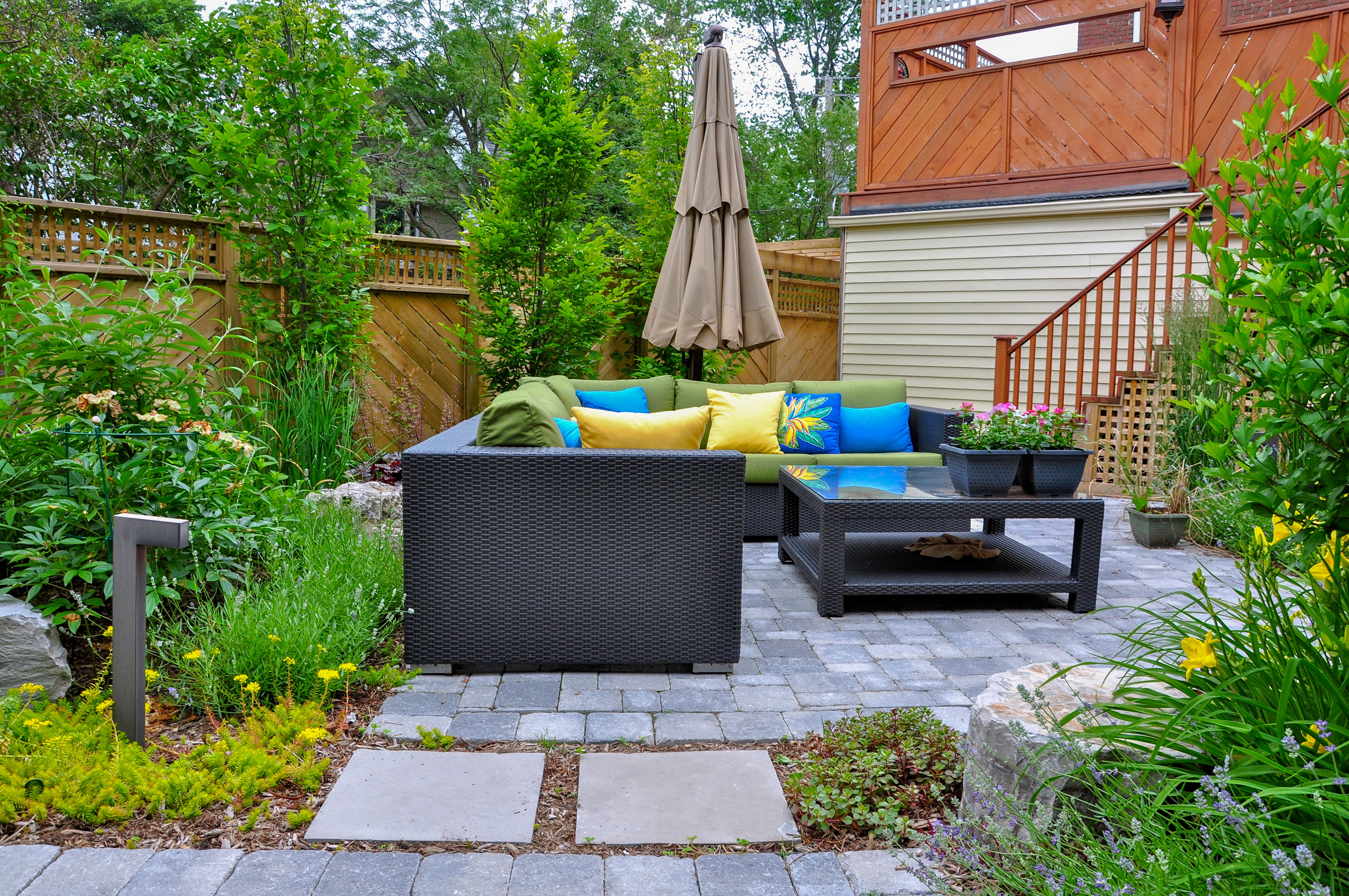
Map the main routes between house, seating, kitchen, garden, pool, gate, and storage. The island should redirect movement gently, not create narrow pinch points.
Test the plan with occupied chairs and people carrying trays or tools.
A soft boundary still has to be a boundary
A planted island separates two areas without a wall, which is the entire appeal. Put one between dining and lounge, beside a quiet retreat, or alongside an outdoor kitchen, and the two uses stop bleeding into each other. Keep enough visual connection that the patio still reads as one composed room rather than two patios that fell out.
For any of that to work, the bed needs one plant with authority: a small tree, a multi-stem shrub, a tall mass of grass, a strong evergreen form. Build the lower layers around it. A bed filled with six things of equal weight divides nothing. It puts a low green rectangle on the floor and hopes.
Think about mature canopy and roots
Planting inside hardscape creates tighter relationships between roots, paving, furniture, utilities, and drainage. Check mature size, root behavior, irrigation, and clearance before selecting trees or large shrubs.
Where roots, structural slabs, utilities, or drainage systems may conflict, use qualified landscape or construction guidance.
Use planting to improve the view from indoors
Patio islands can frame the exterior view through doors and windows. A tree or layered bed can break up a broad field of paving and give the interior room a more interesting foreground.
Stand inside before finalizing placement. The best outdoor focal point may be chosen from the sofa rather than the patio.
Water arrives whether it was invited or not
An island can receive and slow water when grading, soil and overflow routes are designed for it. Ignore drainage and the same bed becomes the low spot that stays wet, which is a different plant list and a considerably worse one. Do not direct water toward foundations or create saturated planting pockets without understanding the site.
Leave room, too, for whoever has to look after it. Pruning, weeding, mulching, watering and replacing plants should not involve crawling behind furniture. An island narrow enough that every plant immediately overhangs the paving has turned sweeping the patio into a monthly job, and the household registers that long before it registers the composition. Choose species that match the maintenance the house can actually sustain, not the maintenance it intends to sustain in April.
Where the island meets the paving
That junction is where the whole idea either succeeds or looks accidental: a crisp cut edge, a stone curb, metal edging, a gravel transition, a softer planted spill. Pick the condition that suits the architecture and the maintenance. If there are several islands, repeat the detail so they read as one system rather than a run of separate decisions taken in different years by different people.
After dark, one low fixture or uplight can make the structural plant register and hold the bed’s shape. Lighting every plant as its own illuminated specimen does the opposite and flattens the group into a row of exhibits. Exterior electrical work needs weather-rated equipment and qualified installation where required.
Know when not to add one
Small patios, narrow circulation zones, highly flexible event spaces, or patios already rich in planting may not benefit from another fixed element.
In those cases, a large container group or movable planter may create similar softness with less commitment.
There is one question this sort of planning tends to skip, and it happens to be the expensive one: what does the island look like in ten years, when the small tree is no longer small and its roots have developed opinions about the paving? A bed cut into hardscape is much harder to undo than a bed cut into lawn. Choose the plant for the size it will reach rather than the size it arrives in, because the cost of being wrong here is a contractor lifting stone.
See Outside and Space Intelligence for related work on outdoor zoning and spatial structure.
The whole point of a patio island is to turn an anonymous paved field into a sequence of places. Greener is a side effect. If the paving is no easier to read once the island is in, you have bought a planter and dug up a patio to stand it on.
Same problem, elsewhere in the house
Room notes
Keep the room on the record.
One useful note at a time: what to test, what to ignore, and what changed when the room got another vote.