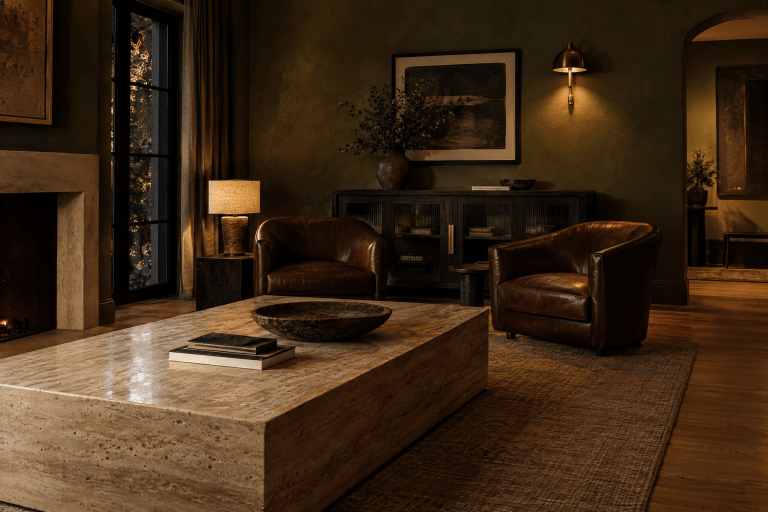
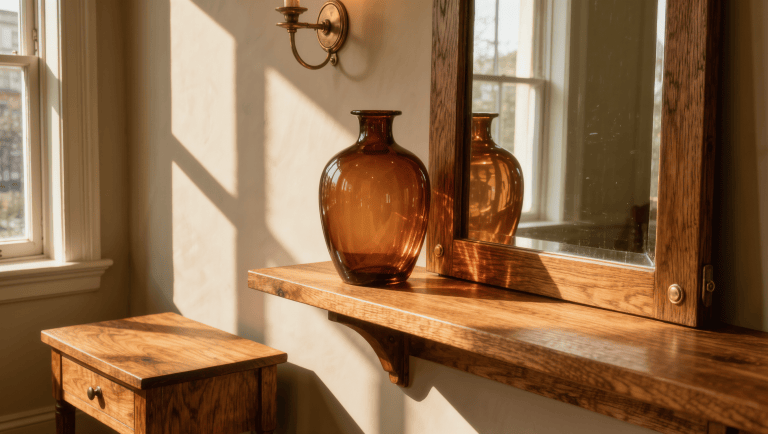
Light and Atmosphere
Texture Without Sacrificing the Security Deposit
Build renter-friendly texture with fabric, woven materials, wood, lighting, and removable layers—without risking walls, finishes, or the security deposit.

On this page
7
Texture is one of the loudest 2026 design stories, which is funny because good texture usually does its best work without announcing itself. Houzz search data has sandstone up 257%, linen wallpaper up 104%, seagrass wallpaper up 94%, Venetian plaster up 94%, limewash up 53%, and wainscoting up 32%.
That is a lot of enthusiasm for surfaces with depth, age, shadow, and touch. It is also a list full of things a renter may not be allowed to apply to anything the landlord technically owns. Fine. I am not convinced the wall deserves all the attention anyway.
Start with shadow, not shopping
A room feels flat when every surface returns light the same way. Smooth wall. Smooth laminate. Smooth sofa. Smooth coffee table. Then someone throws a nubby pillow on the couch and expects an architectural miracle. That is not enough texture. That is one pillow doing unpaid labor.
Look for larger changes in how light moves across the room. A woven shade, pleated lampshade, boucle chair, slatted screen, linen curtain, rough ceramic lamp, carved wood table, substantial basket, or heavily woven rug can create enough shadow and variation that plain walls stop reading as unfinished.
And none of it registers under the wrong light, which is why I put this here instead of at the end where it usually gets filed. Front-light a textured surface evenly and half the point disappears. Side light, low lamps, shaded light, and grazing light are what reveal ridges, folds, grain and irregularity. A room with real texture in it should change as the day moves. That change is the thing you are actually buying.
If the room still feels flat once the material arrives, look at the light before spending anything else. Lighting is often the missing accomplice, and it is usually cheaper than the boucle.
Put texture where people actually experience it
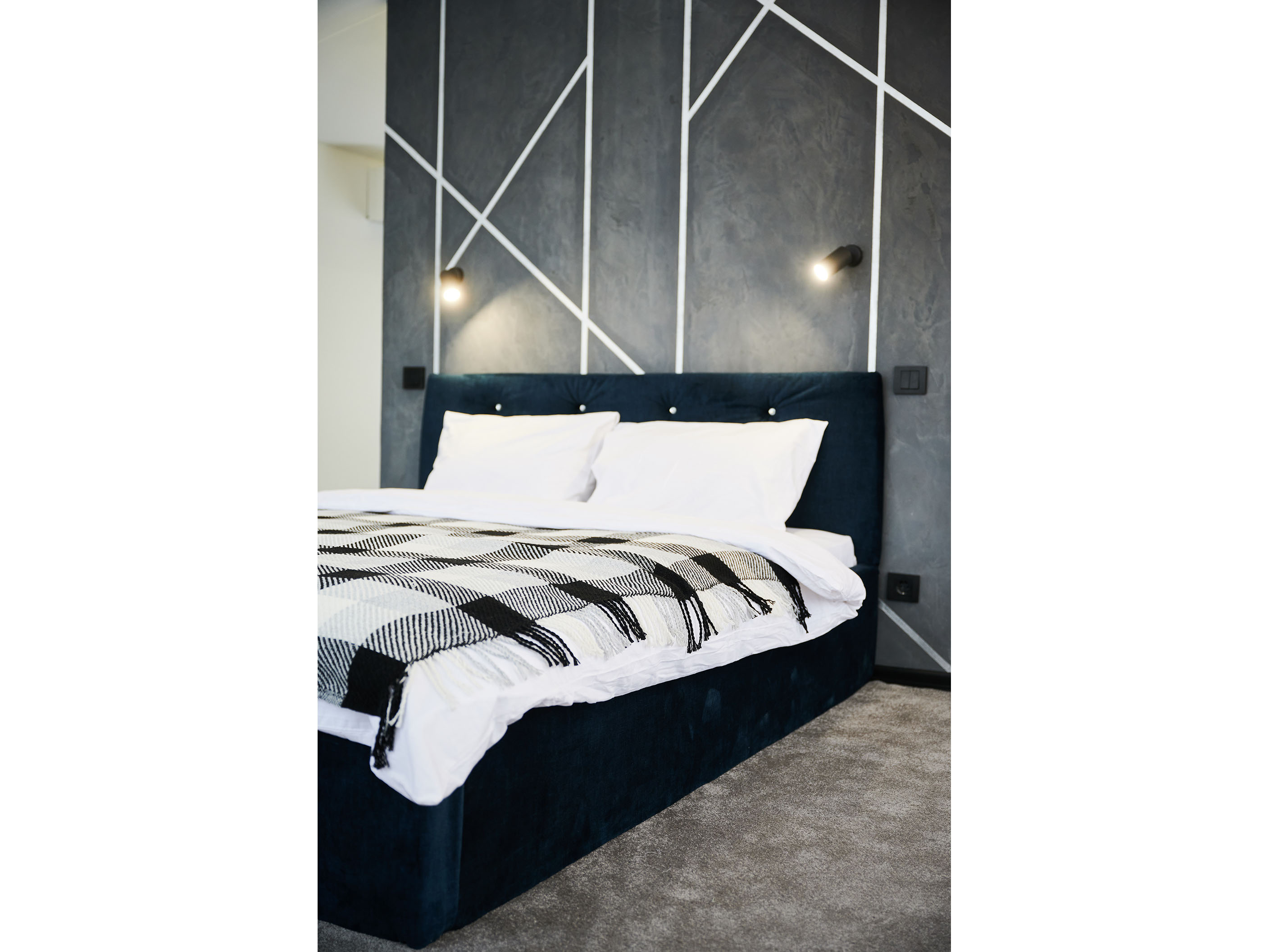
I care much more about where the body meets the room than whether a shelf has the correct number of artisanal objects. Texture belongs underfoot, behind the back, at the hand, around the window, beside the bed, and along the route where evening light catches it.
A deeply woven rug matters more than a tiny decorative knot on a shelf. Heavy curtains can add visual weight, acoustical softness, and movement. An upholstered headboard turns a blank rental wall into a large tactile plane without asking the drywall for permission.
The wall can stay exactly where it is
If you want the effect of linen wallpaper or plaster without changing the wall, build a removable layer in front of it. Framed textile panels, a large tapestry that actually belongs with the room, a freestanding screen wrapped in fabric, tall woven panels, or art with real material presence can all do the job.
The trick is scale. A little macrame object floating in the middle of a forty-square-foot wall is not a textural strategy. Give the material enough area to register from across the room or let it go.
Natural material does not require a fake rustic accent wall
Wood, rattan, cane, wool, linen, stone, ceramic, paper, and metal can all bring irregularity and depth. They do not need to arrive as a coordinated natural package. One dark wood cabinet beside a paper lamp and a thick wool rug is often more interesting than a room full of matching pale rattan trying very hard to look relaxed.
Let materials disagree a little. Smooth brass beside rough clay. Glossy lacquer beside linen. Dark wood beside a chalky neutral textile. I like a room better when the materials have something to say to one another instead of all reading from the same script.
Removable wall products still need a trial period
Peel-and-stick wallpaper, adhesive panels, and temporary molding can absolutely change a rental. They can also lift paint, tear drywall paper, leave residue, or behave differently on an older finish than they did in a product demo.
Check the lease. Check the product instructions. Test the actual surface discreetly. Document what was there before you started. The word removable describes an intended behavior, not a blood oath between the adhesive and your security deposit. The Renter-Safe Transformation Ladder covers the escalation logic in more detail.
Do not confuse texture with clutter
A room can be tactile and still breathe. In fact, texture usually reads better when there is enough open space around it. If every chair has three pillows, every table has four baskets, and every wall has a woven object, the eye stops reading material and starts reading inventory.
Choose two or three large surfaces to carry the tactile load and let everything else stay quiet enough that those choices read as choices. A room can hold a great deal, but only once something in it has been designated as the thing you are meant to look at.
Keep this trend off the landlord’s drywall
A good woven shade can move. A carved cabinet can move. Curtains can be altered. Rugs can change rooms. Lamps can follow you for years. Even a framed textile panel can become art somewhere else.
The wall finishes are the part I would be careful with. Limewash and Venetian plaster are climbing because they are the surface of this particular moment, and a moment-specific finish applied to something you do not own is the one move in this category that can cost money on the way out. Material on a chair ages. Material on somebody else’s drywall gets assessed. Put the tactile spending where it can leave with you, and the walls never have to be part of the conversation at all.
Source note: Houzz’s May 2026 U.S. search report showed strong year-over-year growth for tactile materials and finishes, including sandstone, linen wallpaper, seagrass wallpaper, Venetian plaster, limewash, terracotta flooring, and wainscoting. Houzz, 2026 U.S. Emerging Summer Trends Report.
Same problem, elsewhere in the house
Room notes
Keep the room on the record.
One useful note at a time: what to test, what to ignore, and what changed when the room got another vote.