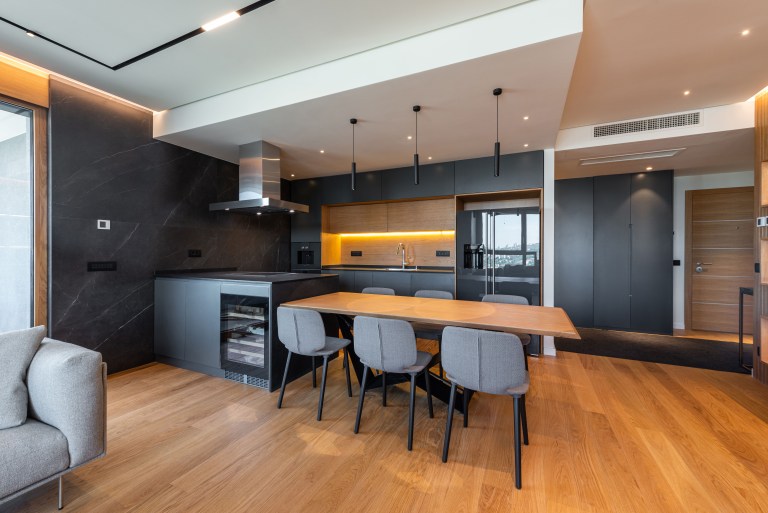
 Awkward Spaces
Your Old Floor Is Allowed to Be Crooked
Uneven floors change furniture, rugs and sightlines, but they do not automatically require a renovation campaign. Work with the character before trying to erase it.
The Index
458 arguments about rooms. Say which one is yours.
This used to be thirty-nine pages of newest-first, which is a filing cabinet with better photography. Same library, lights on. Name the room, say what it is doing wrong, and tell it how far you are willing to go — that last one matters most, because a great deal of this archive costs nothing to try.
Nothing carries all of those at once — which is useful information about the room, not a mistake you made. Drop the last thing you added and the grid comes back.
Awkward Spaces
Your Old Floor Is Allowed to Be Crooked
Uneven floors change furniture, rugs and sightlines, but they do not automatically require a renovation campaign. Work with the character before trying to erase it.
 Function and Flow
Decide Where the Phones Sleep Before the Cords Decide for You
Charging clutter is a location problem before it is a product problem. Give phones, watches, headphones and tablets one or two believable homes based on how the household…
 Furniture and Scale
Bedside Tables Do Not Have to Be Twins
Two sleepers can need two completely different bedside setups. Symmetry is optional; proportion, reach and a shared visual language are not.
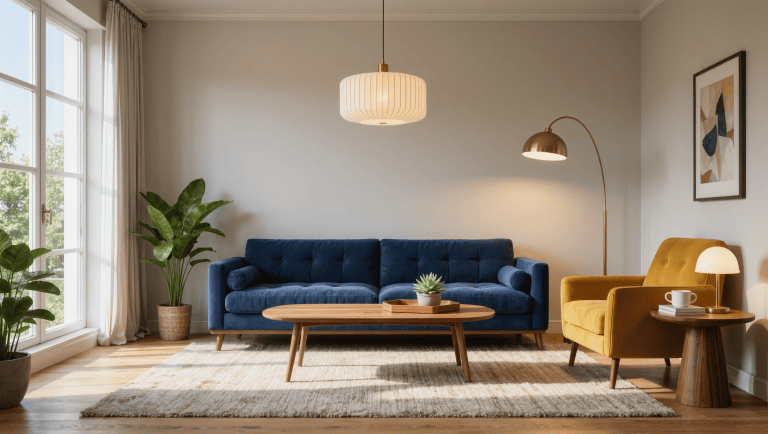 Light and Atmosphere
Your Overhead Light Is Doing Too Much
One ceiling fixture cannot read, flatter faces, guide circulation, support cleanup, and create atmosphere at the same time. Split the jobs before you buy another light.
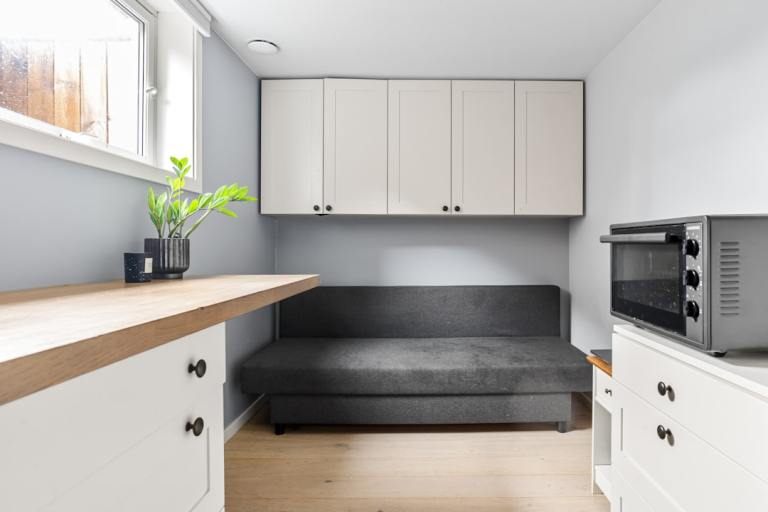 Awkward Spaces
The Space Under the Stairs Wants a Secret Life
Under-stair space is not free square footage. It is a sloping little jurisdiction with changing headroom, awkward access, and just enough drama to make a good idea genuin…
 Function and Flow
The Room Is Clean. Why Does It Still Look Busy?
Visual noise is not the same as clutter. A room can be tidy and still feel restless because too many small edges, finishes and objects are competing at once.
 Furniture and Scale
The Guest Room Has Most of the Year Off. Give It a Second Job.
A guest room can serve everyday life without making visitors sleep inside an office supply closet. Choose one secondary job and make it disappear gracefully.
 Light and Atmosphere
Stop Adding Decor. Repeat Something.
When a room has no personality, more accessories can make the problem louder. Repetition gives color, material and shape enough authority to become a point of view.
 Awkward Spaces
The Front Door Opens Straight Into the Living Room. Now What.
No foyer is not a decorating failure. Borrow a small piece of the living room for arrival without building a fake hallway or letting the front door run the whole room.
 Awkward Spaces
The Ledge Above the Cabinets Is Collecting Grease, Not Ideas
That awkward gap above kitchen cabinets is not automatically display space. Decide whether it earns cleaning, lighting, enclosure, or the luxury of being left completely…
 Function and Flow
Toy Storage Is a Return Trip, Not a Basket
Toy storage fails when it only answers where things can fit. The useful question is whether a child can find the thing, use it, and put it back without rebuilding the roo…
 Awkward Spaces
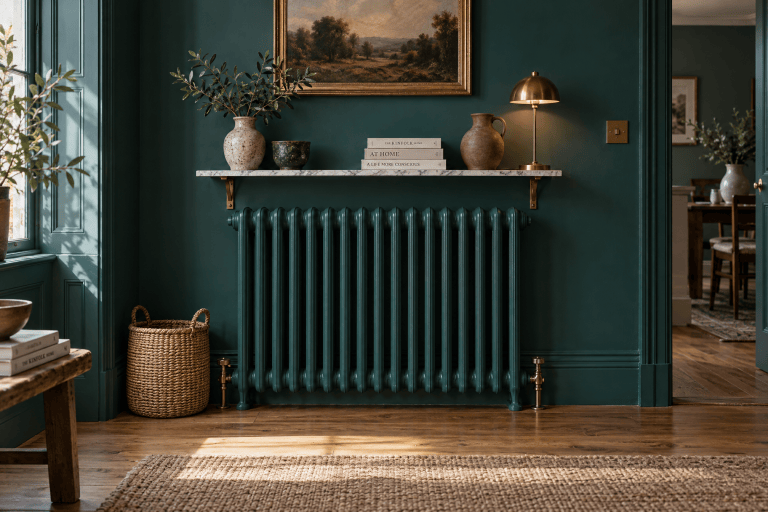
The Radiator Is Furniture, Whether You Like It or Not
Radiators, vents and heat registers are fixed objects with clearance, airflow and comfort consequences. Stop planning the room as if they disappear when the sofa arrives.
 Function and Flow
The Cat Tree Is Already Furniture
Pet furniture occupies floor space, sightlines and daily routines just like every other object in the room. Treat it as part of the plan instead of a beige afterthought i…
 Light and Atmosphere
Quiet, Without Turning the Room Into a Conference Booth
A room can sound hard and exhausting long before it needs specialist acoustic work. Start with the surfaces and objects that make the room good to live in anyway.
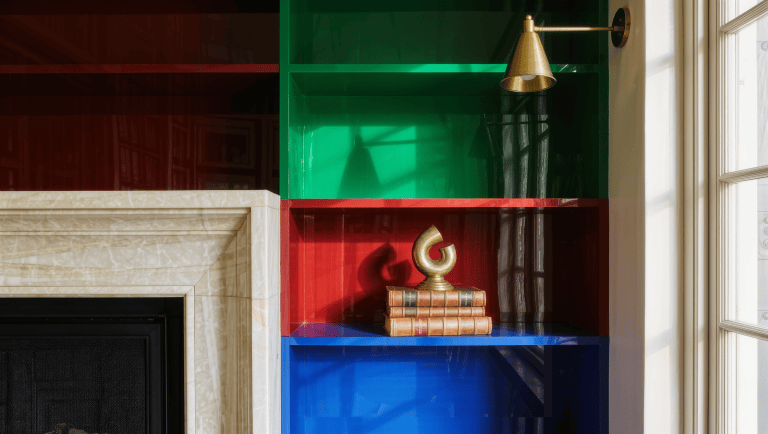 Function and Flow
The Nursery That Has to Become an Office in Five Years
A nursery does not need to be beige to have a future. Build the permanent parts for the next room too, then let color, art and furniture carry the chapter you are in now.
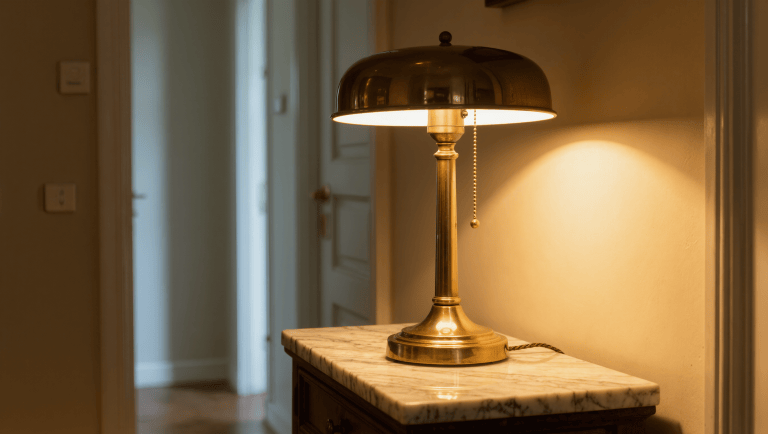 Function and Flow
Your Floor Lamp Cord Is Trying to Redesign the Room
A beautiful lamp in the wrong electrical reality can pin furniture to a wall, create a trip hazard, or turn every evening into cable management. Plan the light and the co…
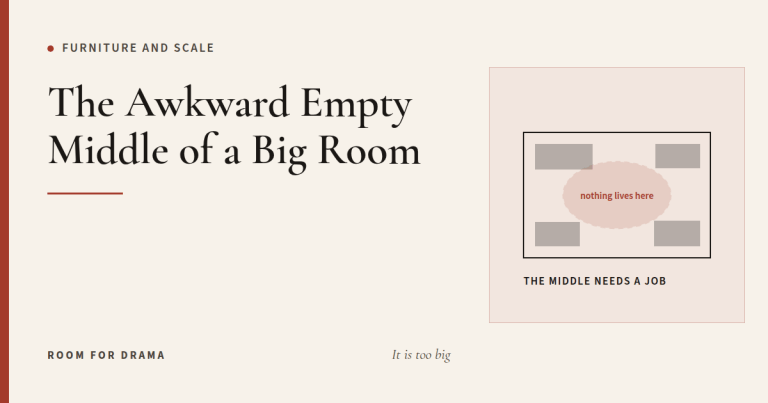 Furniture and Scale
The Awkward Empty Middle of a Big Room
Large rooms are often diagnosed by their islands—seating here, dining there. The more useful problem is what happens in the empty distance between them.
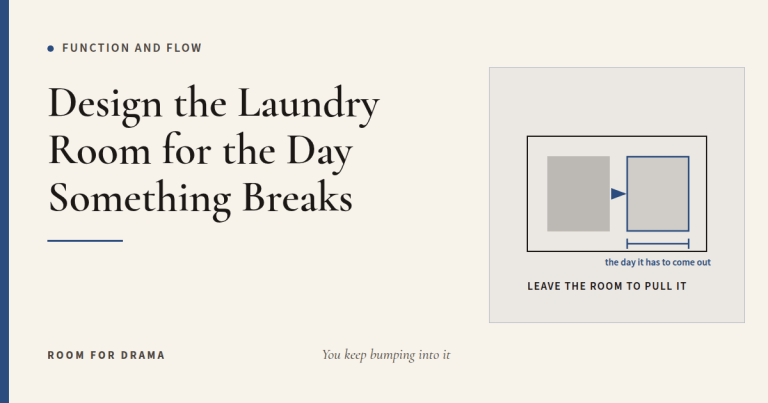 Function and Flow
Design the Laundry Room for the Day Something Breaks
Utility rooms have to be lived in and serviced. Keep access, shutoffs, appliance work zones and maintenance paths visible before adding storage or finishes.
 Function and Flow
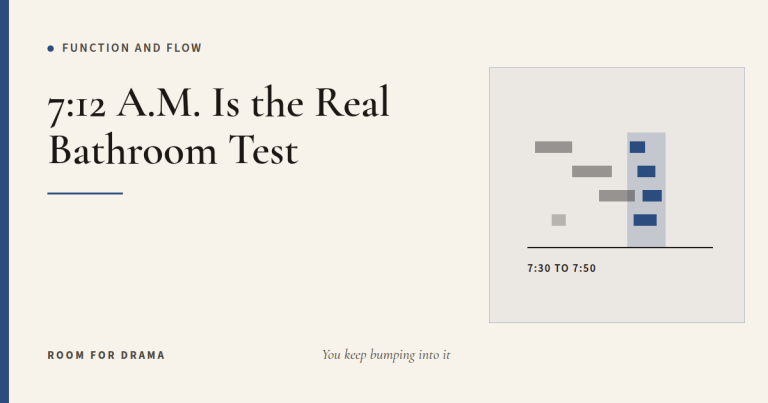
7:12 A.M. Is the Real Bathroom Test
A bathroom can look calm at noon and fail every morning. Read the occupied room: doors, wet handoffs, counter space, towels, laundry and two people arriving at once.
 Function and Flow
Before You Buy Another Speaker, Move the Chair
Before replacing speakers or policing the volume, read the room: distance, hard surfaces, competing jobs and where sound is being asked to stop.
 Function and Flow
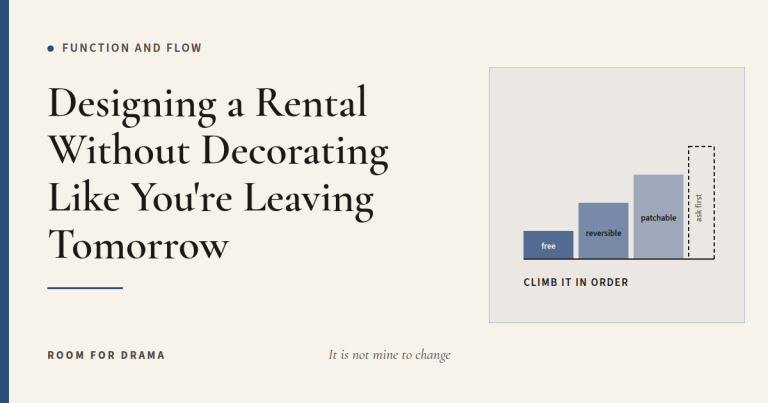
Designing a Rental Without Decorating Like You’re Leaving Tomorrow
Rental constraints belong in the design brief. Separate what can move, what can be reversed, what needs permission and what will cost you again at move-out.
 Function and Flow
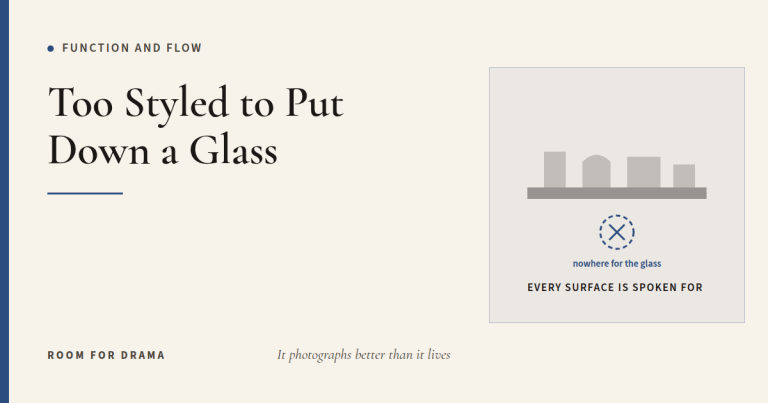
Too Styled to Put Down a Glass
A room can photograph as complete and still fail everyday life. Test what happens when one surface is allowed to be useful again.
 Materials, Color & Finish
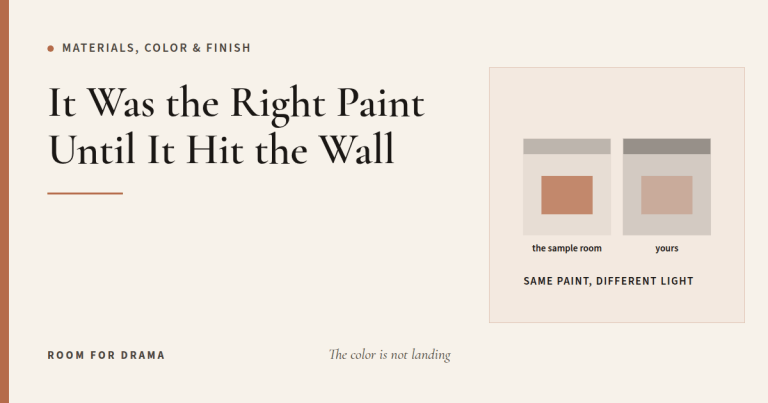
It Was the Right Paint Until It Hit the Wall
A paint chip can be accurate and still fail the room. Fixed finishes, reflected light, adjacent colour and scale all change what the wall actually does.
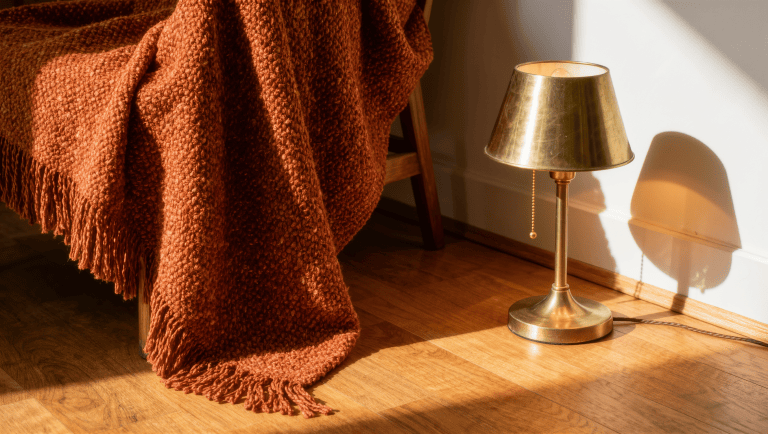 Function and Flow
Make the Rental Look Deliberate Before You Decorate It
A rental can feel personal without pretending you own the walls. Start with layout, repetition and movable structure before spending money on temporary tricks.
 Awkward Spaces
Under the Deck Is a Room. You’ve Been Storing a Lawnmower In It.
A raised deck can create one of the best covered outdoor rooms in the yard—after drainage, headroom, darkness, structure and the route through it stop being treated as so…
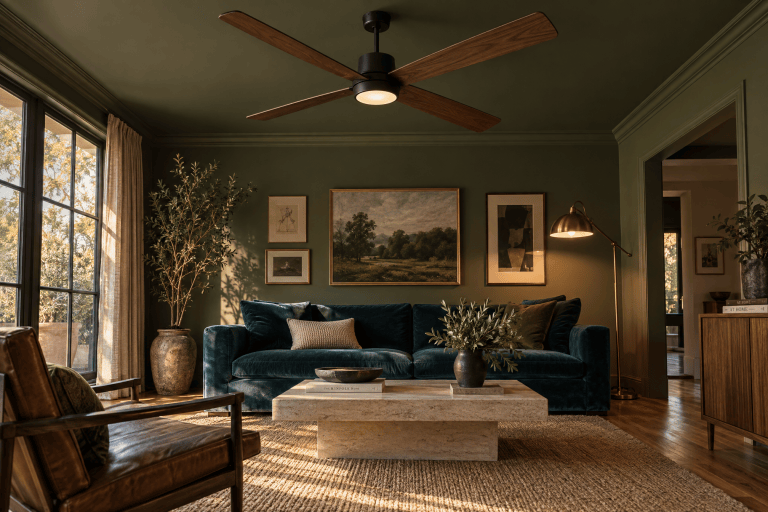 Function and Flow
The Ceiling Fan Can Stay
A ceiling fan is not an aesthetic defeat. If it materially improves comfort, design around the useful thing instead of replacing it with a beautiful fixture nobody turns…
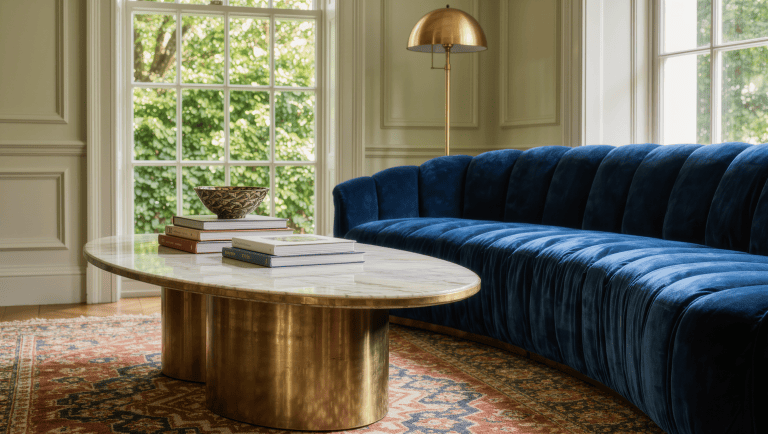 Function and Flow
The Dining Table Fits. Dinner Still Doesn’t.
A dining table can fit the room and still ruin dinner once chairs pull out, people arrive and platters need somewhere to travel. Design the occupied table, not the empty…
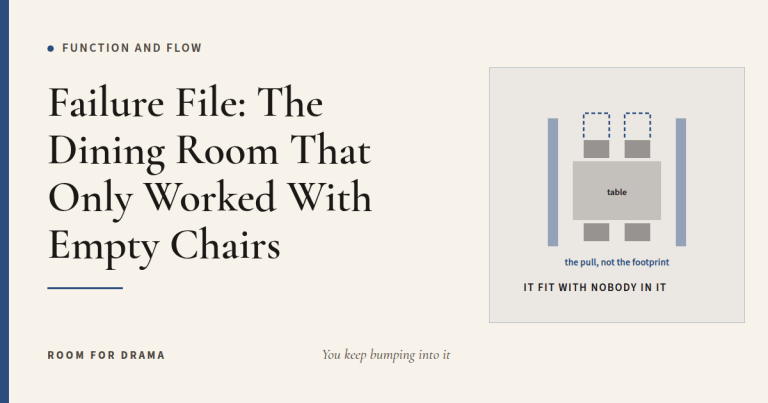 Function and Flow
Failure File: The Dining Room That Only Worked With Empty Chairs
A dining room can fit perfectly on plan and fail the moment people sit down. This Failure File follows the difference between furniture footprint, operating footprint, se…
 Function and Flow
The Photograph Cannot Hear the Room
Sensory design is not mood-board language. Acoustics, tactile contact, smell, airflow, temperature, glare and evening behavior affect whether a room is actually comfortab…
 Function and Flow
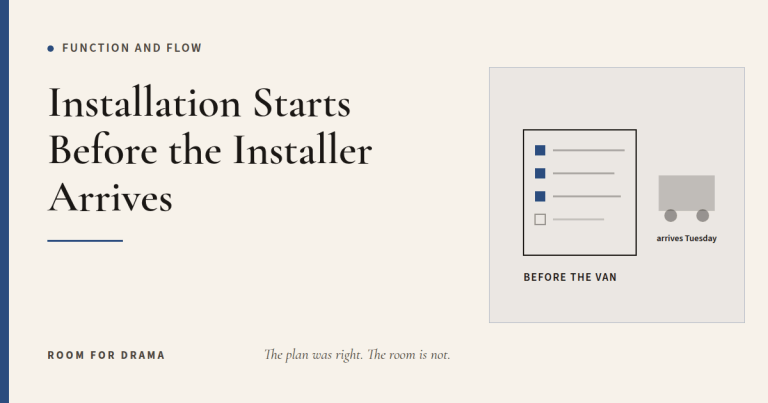
Installation Starts Before the Installer Arrives
A clean install depends on preflight: verified dimensions, substrate and mounting conditions, access, power, protection, sequence, trade responsibilities, unresolved ques…
 Function and Flow
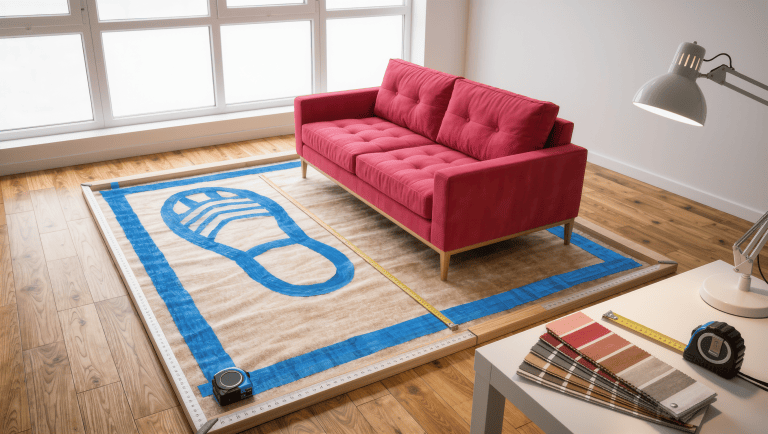
Prove the Expensive Assumption Cheaply
Before an irreversible purchase, fabrication or install, find the cheapest credible experiment that could prove the governing assumption wrong. Tape, mockups, temporary l…
 Function and Flow
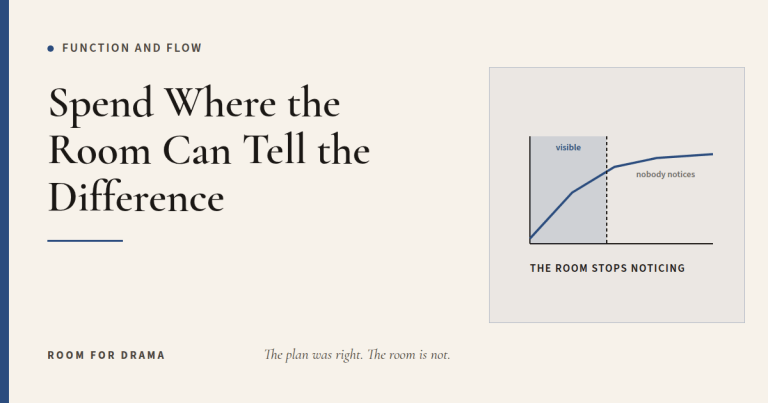
Spend Where the Room Can Tell the Difference
A better budget separates money that changes room performance from money that changes finish level, label or novelty. Spend against the governing problem, not against the…
 Materials, Color & Finish
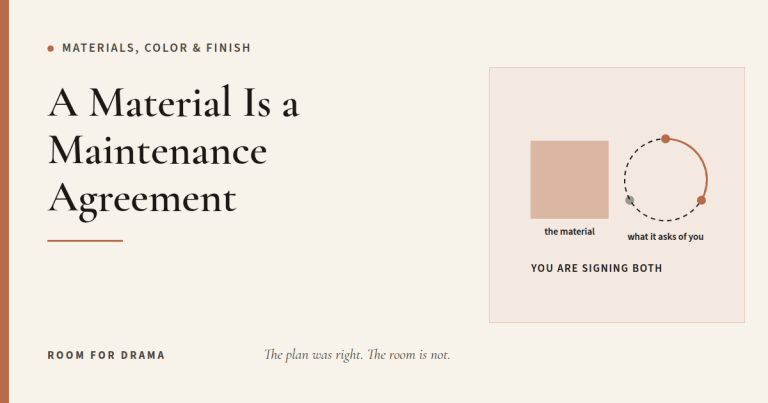
A Material Is a Maintenance Agreement
Material selection is not finished at color and texture. Stain, abrasion, fading, humidity, water, heat, pets, children, cleaning chemistry, repairability and acceptable…
 Light and Atmosphere
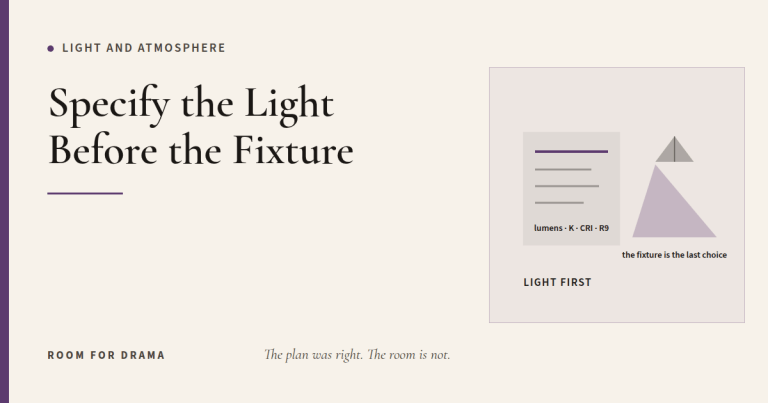
Specify the Light Before the Fixture
A lighting schedule should preserve source, beam, output, glare, color appearance, dimming, control and daylight behavior—not just the decorative fixture somebody chose f…
 Function and Flow
Design for Changing Bodies Without Pretending Every Home Is an ADA Project
Adaptable residential design is not the same thing as declaring a private room ADA compliant. Start with circulation, reach, controls, glare, contrast, hearing, fatigue a…
 Function and Flow
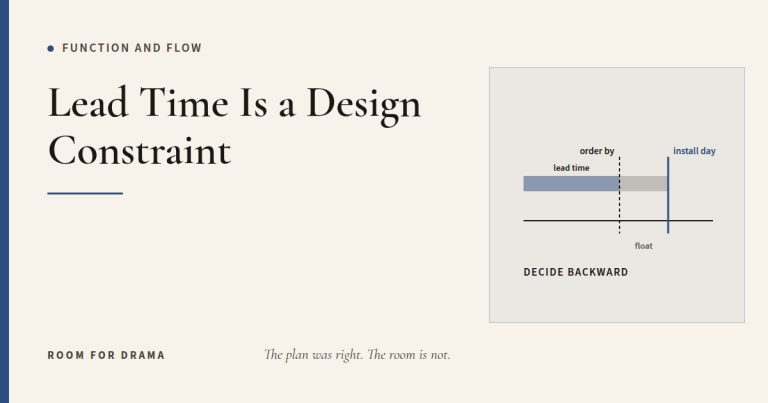
Lead Time Is a Design Constraint, Not a Shipping Detail
Procurement starts affecting the design long before an item ships. Lead times, backorders, substitutions, receiving, damage, returns and installer sequencing all belong i…
 Materials, Color & Finish
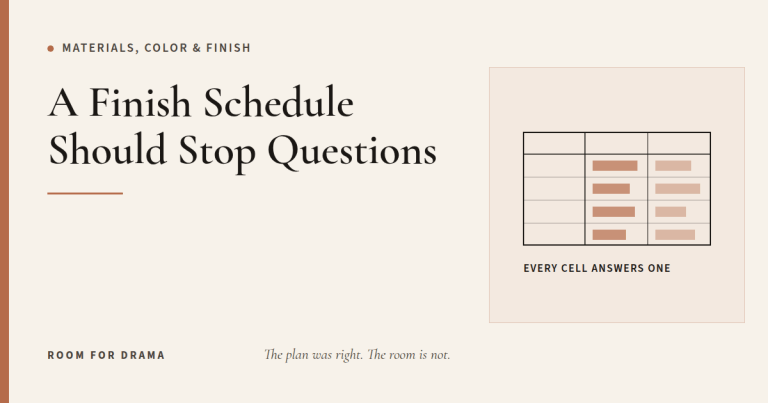
A Finish Schedule Should Stop Questions, Not Move Them Downstream
A finish schedule is useful when it preserves the exact conditions that matter to the room—location, substrate, sheen, edge, transition, maintenance, sample status and wh…
 Function and Flow
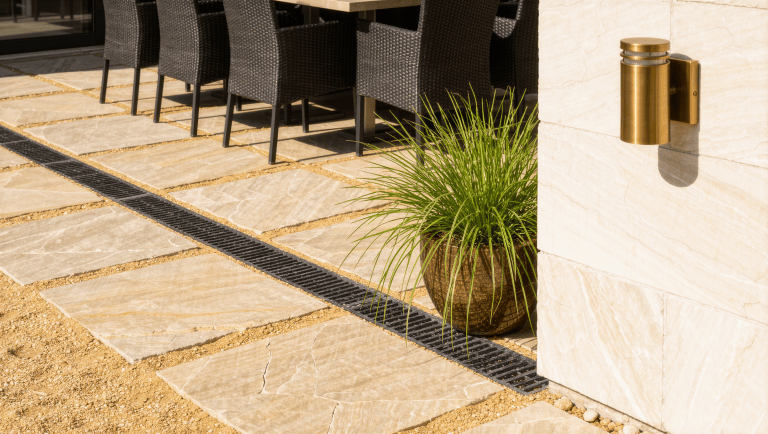
The Driveway Is the Biggest Room You Refuse to Use
A driveway can become a very good temporary outdoor room without pretending to be a patio. Plan the cars, slope, shade, lighting, seating and morning reset first.
 Light and Atmosphere
A Blank Wall Is Allowed to Stay Blank
A blank wall is not an emergency. Before covering it with twelve small frames, decide whether the room needs art, scale, texture—or simply somewhere for the eye to rest.
 Function and Flow
The Clothes Are Not Dirty. They Are Not Clean Either.
The bedroom chair is not a moral failure. It is evidence that the room has no place for clothes that are worn, usable again, and currently homeless.
 Function and Flow
The Bonus Room Over the Garage Is a Great Idea at the Wrong Temperature
A finished room over the garage is often blamed on furniture when the real problem is temperature, air movement, access or the building envelope. Diagnose those first.
 Light and Atmosphere
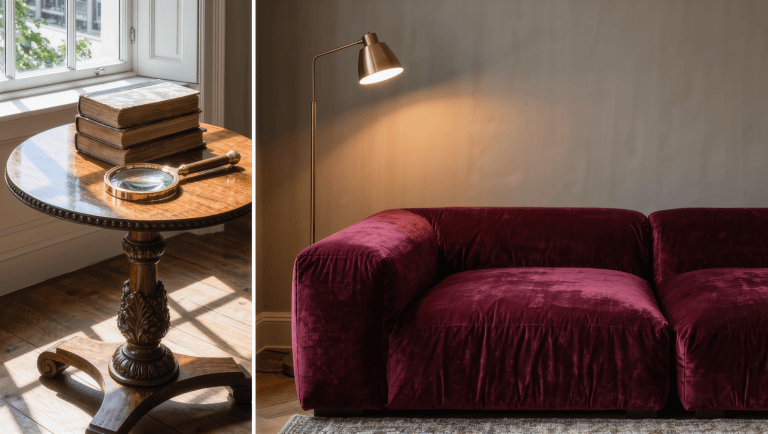
One House Can Have More Than One Mood
Whole-house cohesion does not require one palette copied from room to room. Let the house change mood while repeating enough material, color and light to make the transit…
 Awkward Spaces
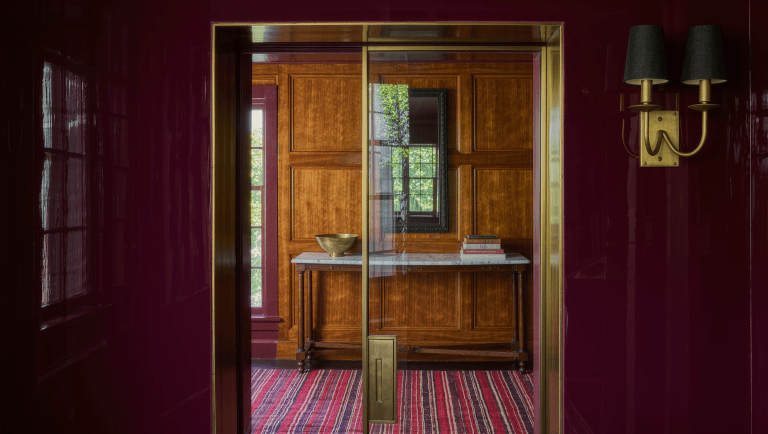
Your Bathroom Door May Be the Bulkiest Thing in the Room
In a small bathroom, the door swing can steal more usable space than the vanity. Read the moving footprint before buying another storage piece.
 Practice
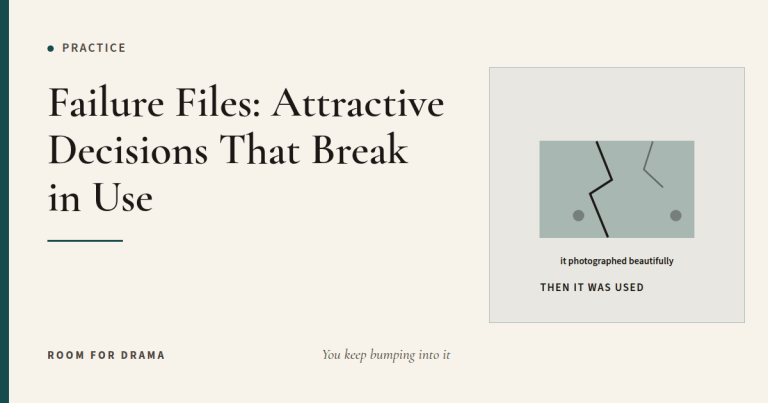
Failure Files: Attractive Decisions That Break in Use
Failure Files are explicit hypothetical or evidence-based room problems that trace where an attractive decision breaks: circulation, clearance, glare, maintenance, sourci…
 Practice
Receiving Is Where the Specification Meets the Carton
Delivery is an evidence event. Record who receives, what was expected, what actually arrived, visible damage, concealed issues, claim windows and whether the item is fit…
 Practice
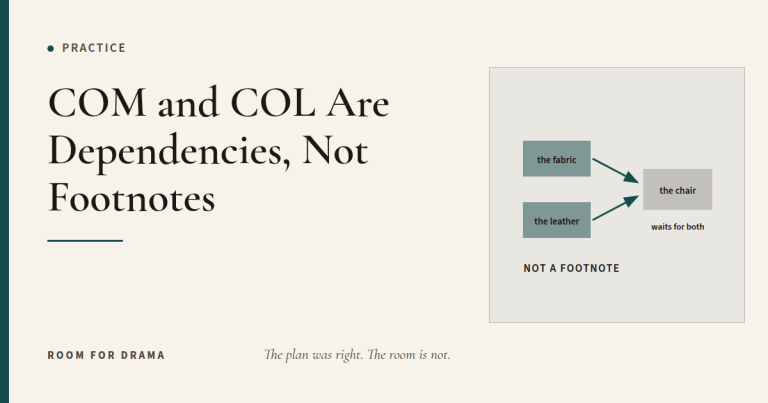
COM and COL Are Dependencies, Not Footnotes
Customer's Own Material and Customer's Own Leather can change yardage, lead time, warranty, freight, cutting, approval and production release. Keep those dependencies att…
 Practice
A Substitute Reopens the Decision
A substitution is not a naming change. Compare it against the performance, dimensions, material, clearance, maintenance, interfaces and design reason that made the origin…
 Practice
Verify Before the Installer Has to Guess
Installation problems often begin as unanswered design questions. Record the field condition, design intent, governing dimension, stop condition and owner before a trade…
 Practice
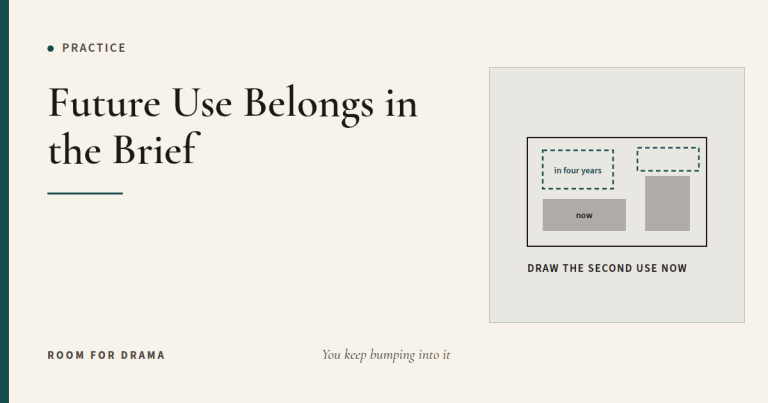
Future Use Belongs in the Brief
Adaptable rooms start before a compliance checklist. Put changing movement, reach, vision, hearing, controls, glare, fatigue and household needs into the brief while ther…
 Practice
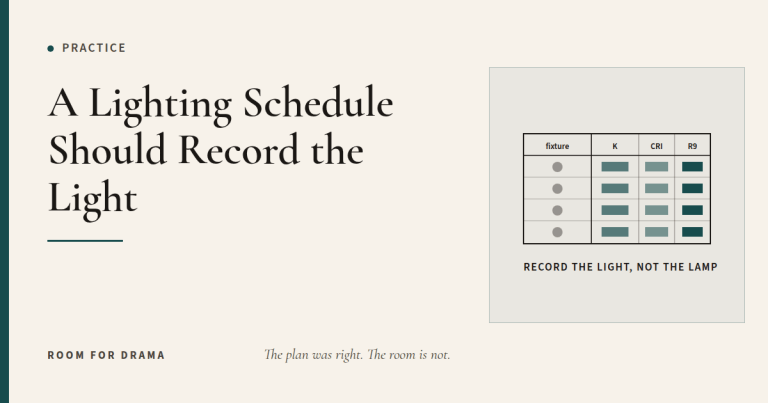
A Lighting Schedule Should Record the Light
A fixture schedule can identify the object and still forget the lighting decision. Record source, output, beam, glare, color appearance, controls, daylight interaction an…
 Practice
A Material Sample Needs a Failure Question
A sample is useful when it is asked to fail in the way the room might fail: stain, glare, fading, edge damage, cleaning, heat, water, abrasion or an awkward transition.
 Practice
Lead Time Has a Clock
A lead time without its source and start condition is decorative certainty. Record when the clock starts, what evidence supports it, and which design decision the date ca…
 Practice
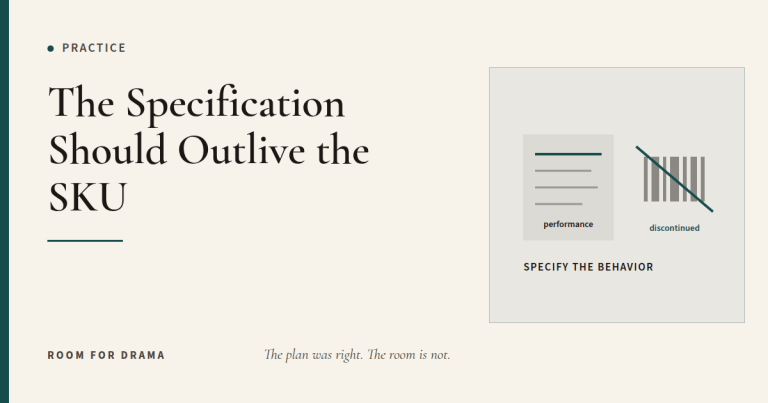
The Specification Should Outlive the SKU
A specification earns its keep when the named product disappears. Record the performance, material, dimensions, clearance, maintenance and design reason that a substitute…
 Function and Flow
The Hell Strip Is the Most-Seen, Least-Designed Land You Own
The strip between sidewalk and street is not a tiny front yard. It is a hard-working public edge with heat, utilities, snow, sightlines and foot traffic to solve before t…
 Function and Flow
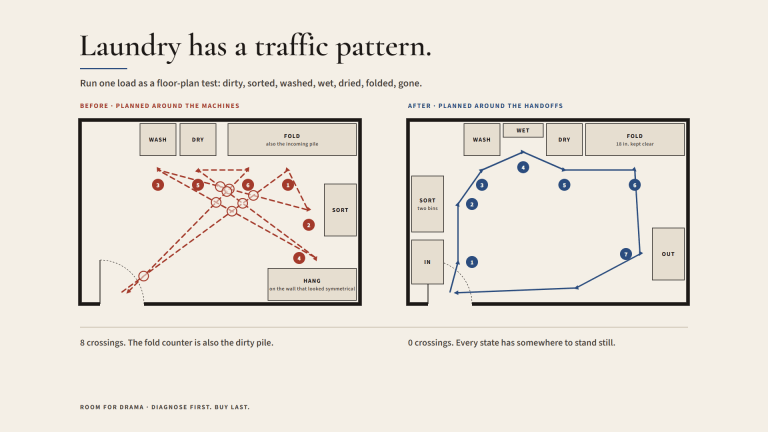
Laundry Has a Traffic Pattern. Design for It.
A laundry room works when dirty, wet, clean, folded and hanging clothes stop crossing each other. The useful plan follows the handoffs, not the cabinet catalog.
 Practice
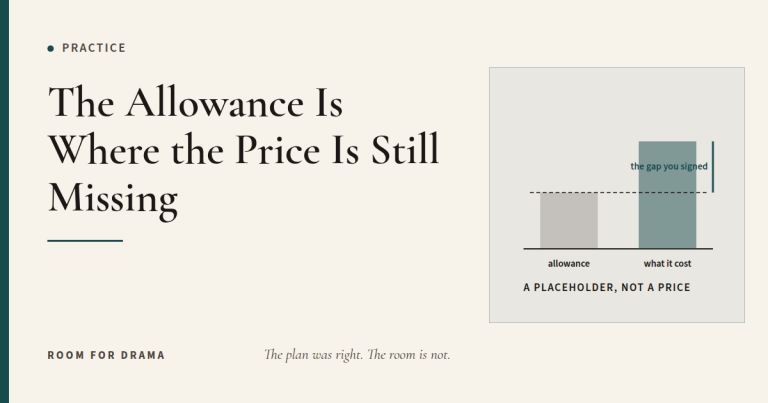
The Allowance Is Where the Price Is Still Missing
Allowances, quotes, estimates and purchased costs can sit in the same budget without pretending they carry the same certainty.
 Practice
Selected Still Hasn’t Been Ordered
Sourcing status should say what is actually known: selected, quoted, ordered, confirmed, shipped, received and installed are different facts.
 Practice
Punch Is Evidence
Punch is more useful when it records how the installed room differs from the approved condition, which issues affect use, and what needs to be rechecked after ordinary li…
 Practice
The Handoff Is Part of the Design
If a contractor, fabricator or installer has to guess which dimensions, interfaces or finish conditions matter, the design record is not finished yet.
 Practice
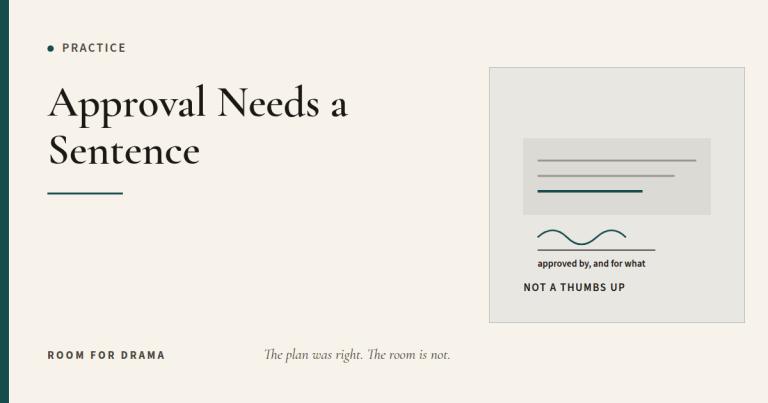
Approval Needs a Sentence
A useful approval record says what was accepted, what changed, what remains conditional, and what assumption the decision depends on.
 Practice
FF&E Is a Decision Record Before It Becomes a Shopping List
Furniture, fixtures and equipment records work harder when they preserve dimensions, performance, finish, maintenance and substitution logic instead of only product names…
 Practice
Keep the Rejected Option
A defensible design decision needs a memory of the credible options that lost, the tradeoffs they exposed, and the reason the selected path won.
 Practice
The Brief Is Where the Room Meets Reality
A useful room brief does more than collect preferences. It keeps requirements, constraints, contradictions and decision criteria visible before the project gets expensive…
 Practice
The Field Survey Should Answer a Question
A field survey earns its keep when every photograph and dimension answers a design question. Measure the condition that governs the decision, then stop.
 Awkward Spaces
The Mirror Wall Is Reflecting the 1980s Back at You
A full mirrored wall is not automatically something to rip out. First decide what the reflection is doing to light, scale, clutter and the room’s focal point—then cover,…
 Function and Flow
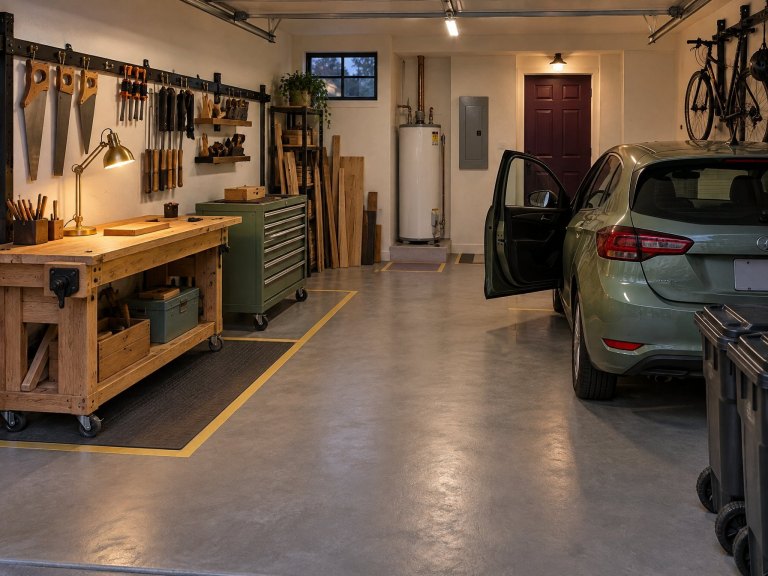
The Garage Can Be a Second Room and Still Keep the Car
The width of a garage is already spoken for by the car and the doors you have to open beside it. The depth and the height are not, and that is where the second room actua…
 Awkward Spaces
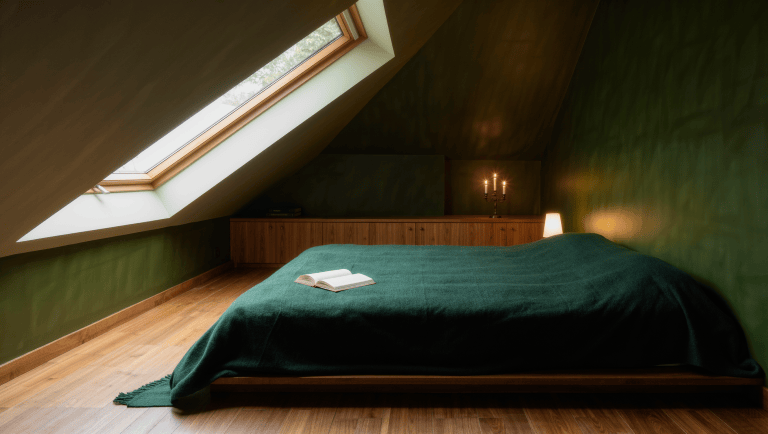
The Attic Has a Standing-Height Problem
Two chalk lines decide whether an attic can be a bedroom or only a very good cupboard: the height at which the floor stops counting, and the height that has to cover at l…
 Awkward Spaces
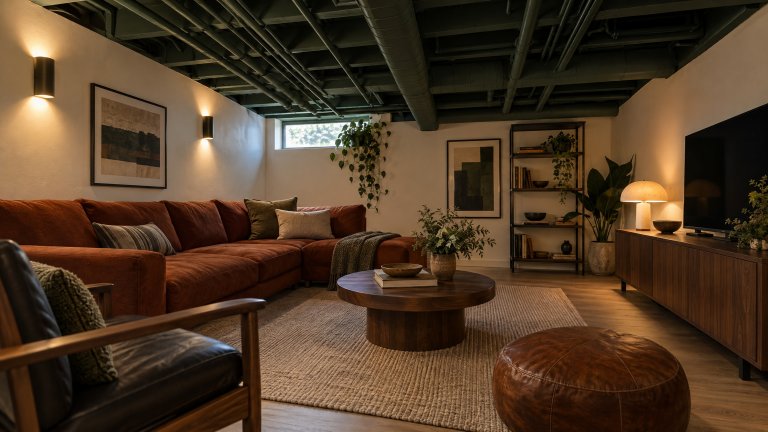
Seven Feet Is Running This Basement
Habitable rooms want about seven feet of ceiling, and a basement usually starts with barely more than that. Four ordinary decisions — a dropped ceiling, a subfloor, a pad…
 Materials, Color & Finish
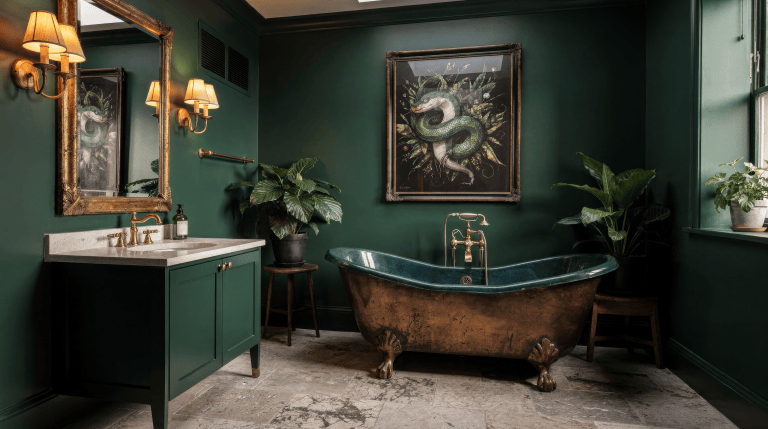
The Powder Room Is the Only Room You Can Afford to Be Reckless In
No shower means no steam, and no steam means the materials that fail in every other bathroom are fine here. Add forty square feet of wall and the expensive thing costs al…
 Function and Flow
A Bathroom With No Window Is Not a Dark Room. It Is a Wet One.
The problem with an internal bathroom is not that it lacks daylight. It is that the moisture has nowhere to go, and almost every visible failure in the room — peeling pai…
 Function and Flow
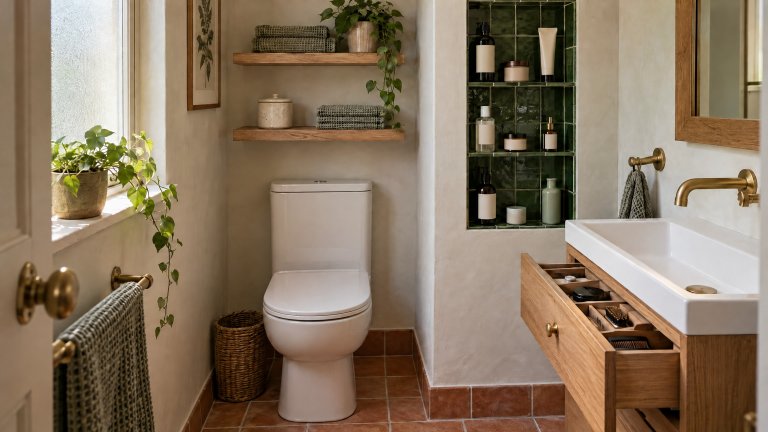
The Bathroom Has Nowhere to Put Anything, and That Was a Decision
Bathrooms are the only rooms routinely built with no storage at all. The fix is not a bigger vanity — it is finding the shallow depths, the dead wall between the studs, a…
 Function and Flow
Nine Things You Can Change in a Rented Bathroom and Take With You
A rented bathroom is not a bathroom you cannot improve. It is a bathroom where every improvement has to come off the wall again, which turns out to be a useful design con…
 Function and Flow
The Bathroom Light Is Behind You, Which Is Why You Look Like That
Almost every bathroom is lit by one fixture in the ceiling, which casts every shadow downward onto the face standing at the mirror. The fix is a light beside the mirror,…
 Function and Flow
The Kitchen Found Another Room in a Drawer
A storage-and-space-intelligence reading of a compact kitchen where layered cabinetry, open pantry shelves, a protected worktop, and one pull-out table make the room work…
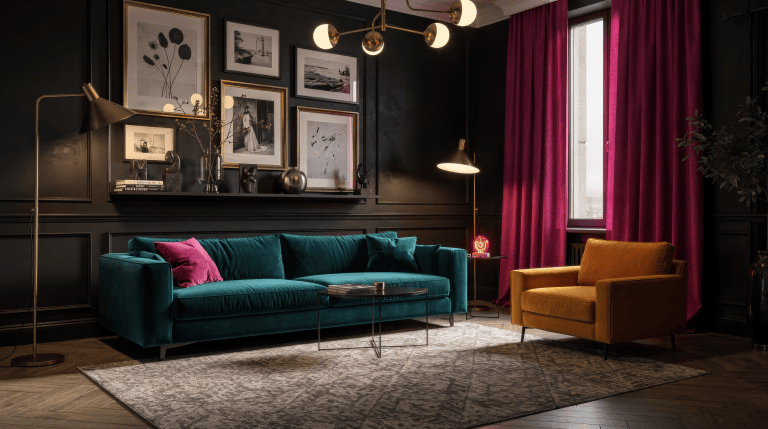 Light and Atmosphere
The Day You Realize You’re Probably a Maximalist
After a lifetime of being called a little “extra,” Room for Drama makes the evidence difficult to ignore: perhaps maximalism is not too much, but a love of color, texture…
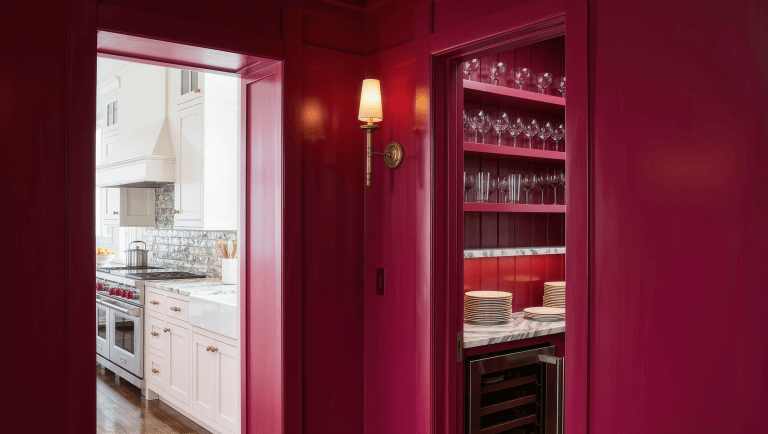 Function and Flow
A Pantry Has to Survive Tuesday
A full design-intelligence guide to open pantry storage: visibility, decanting, baskets, shelf depth, inventory, backstock, grocery arrival, maintenance, accessibility, a…
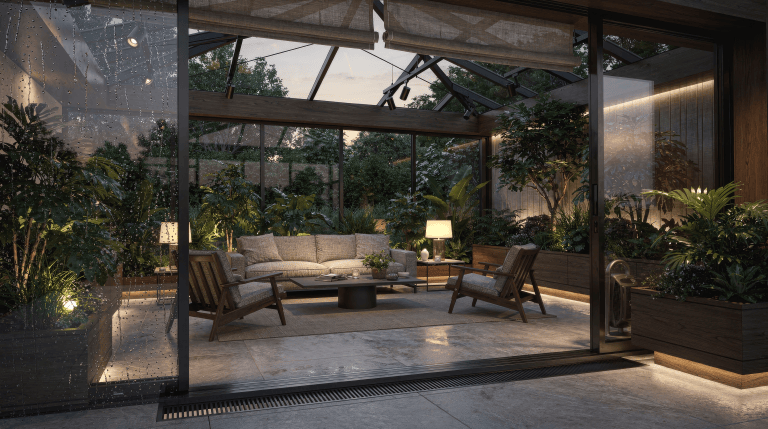 Light and Atmosphere
The Conservatory Has Its Own Weather
A full design-intelligence guide to glass-wrapped living rooms: daylight, glare, shade, seasonal comfort, condensation, plant architecture, furniture exposure, maintenanc…
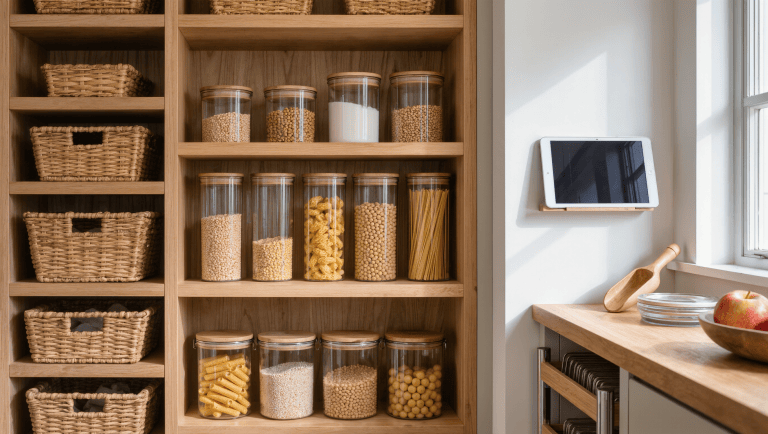 Function and Flow
Labels Before AI, Please
Smart storage is adding inventory systems, sensors, charging, lifts, and automation. Start with the friction technology can genuinely remove before turning a cabinet into…
 Awkward Spaces
Under the Stairs Has More Than One Future
Overlooked-space storage is trending, but under-stair space only works when depth, headroom, access, and the thing being stored actually agree with one another.
 Function and Flow
The Drop Zone Is Becoming Part of the Architecture
Entry storage is moving beyond a row of hooks. The 2026 version integrates bags, shoes, charging, mail, pet gear, and daily reset into one deliberate arrival zone.
 Function and Flow
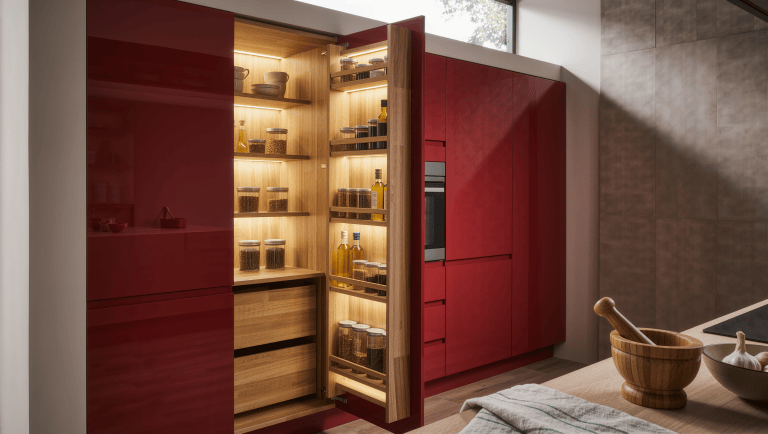
Deep Cabinets Need Their Own Light
Interior cabinet lighting is becoming part of smarter storage. Use it where depth, darkness, and visibility are real problems—not as decoration inside every drawer.
 Function and Flow
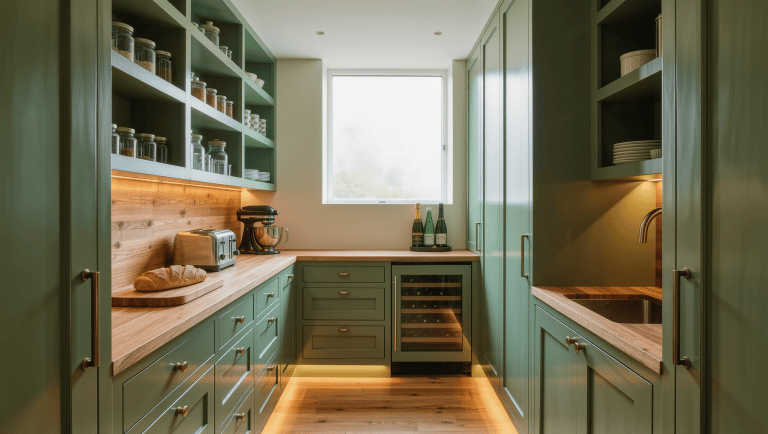
The Pantry Is Turning Into a Service Room—and That Can Be Useful
Specialty pantry and prep zones are a major 2026 kitchen signal. The useful version handles storage, appliances, drinks, and cleanup without creating a second kitchen nob…
 Function and Flow
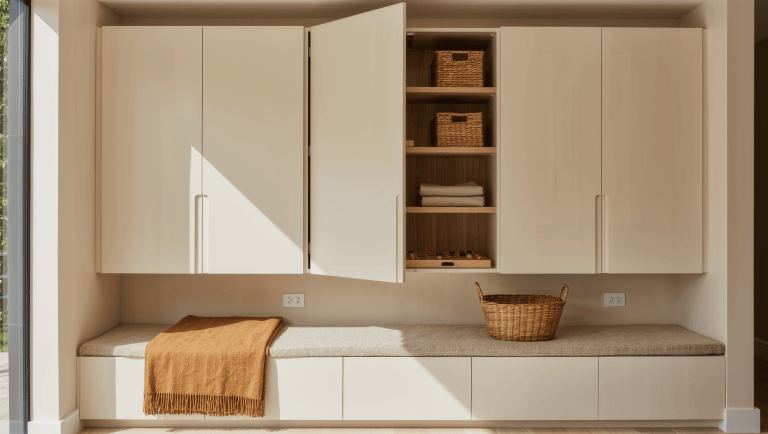
Hidden Storage Is Better When You Can Still Find Your Stuff
Integrated storage is surging in 2026, from concealed cabinets to hydraulic lifts and paneled appliances. The trick is hiding visual noise without hiding daily life from…
 Light and Atmosphere
Portable Lamps Are Finally Solving the Places Wiring Forgot
Rechargeable lamps are one of 2026’s most useful lighting trends because they can put low, warm light exactly where outlets and hardwiring failed to cooperate.
 Light and Atmosphere
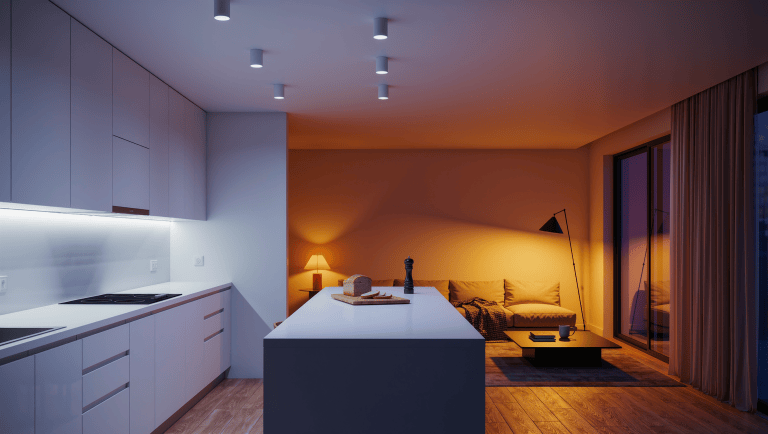
Let the House Change Color Temperature With the Day
Warm, dimmable and tunable lighting is moving from luxury language into practical room planning. Use it to support different times of day without turning the house into a…
 Light and Atmosphere
Sculptural Lighting Should Still Know How to Light the Room
Statement fixtures are everywhere in 2026, but a light can be sculpture without becoming an expensive object that leaves the room functionally dim.
 Light and Atmosphere
One Ceiling Light Is How the Room Ends Up Interrogated
Layered lighting is one of 2026’s clearest design shifts. Here is how to build ambient, task, and accent light around the way a room actually gets used instead of asking…
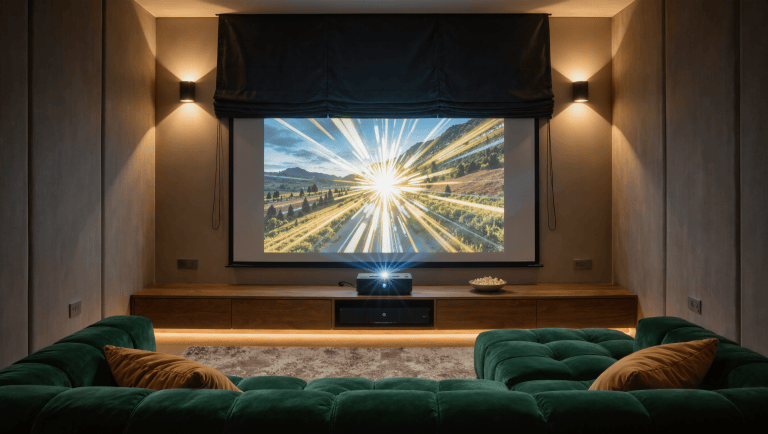 Multi-Use Rooms
A Giant Screen Is a Lot of Roommate for a Small Media Room
Projectors and ultra-short-throw systems are making large-format viewing possible without dedicating an entire wall to a television. The tradeoff is real: light control,…
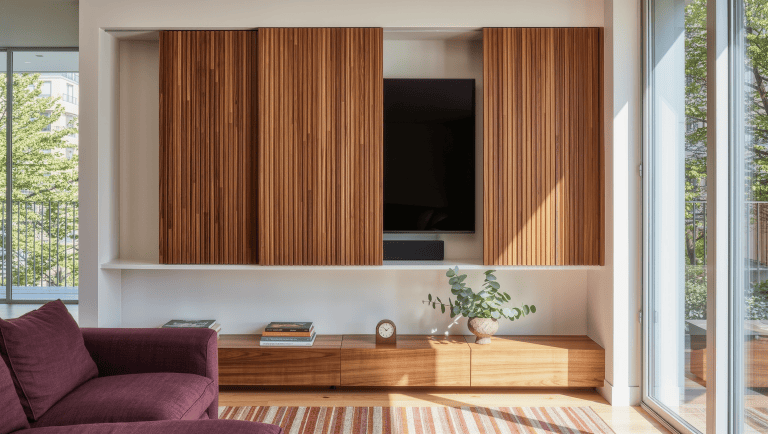 Function and Flow
Do We Really Need to Decorate Around a Permanent Black Rectangle?
TV concealment is getting more sophisticated, from art screens and dark walls to sliding panels and cabinetry. The right solution is the one the household will actually u…
 Function and Flow
The Media Wall Is Getting Quieter
The 2026 media wall is moving away from stacked gadgets and decorative slat overload toward integrated storage, lighter visual weight, concealed wiring, and a screen that…
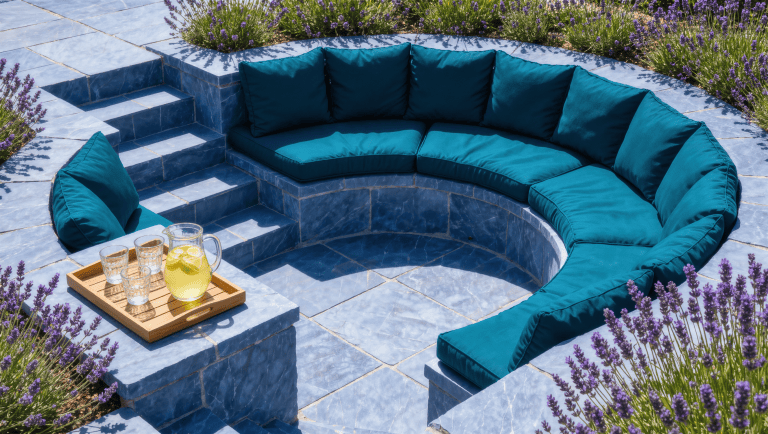 Function and Flow
The Outdoor Conversation Pit Has to Work Before the Fire Is Lit
Outdoor conversation pits are returning in both sunken and non-sunken forms. The successful version starts with access, drainage, wind, seating distance, side surfaces, a…
 Function and Flow
The Swivel Chair Is Doing Actual Floor-Plan Work
Swivel seating is useful when one chair genuinely needs to serve two centers—conversation and television, window and fireplace, game table and lounge. The trick is giving…
 Furniture and Scale
Mahjong Has Entered the Floor Plan
Mahjong rooms and card rooms are surging in design searches, but the useful lesson is bigger than a trend: a good game salon needs table clearance, face-friendly light, c…
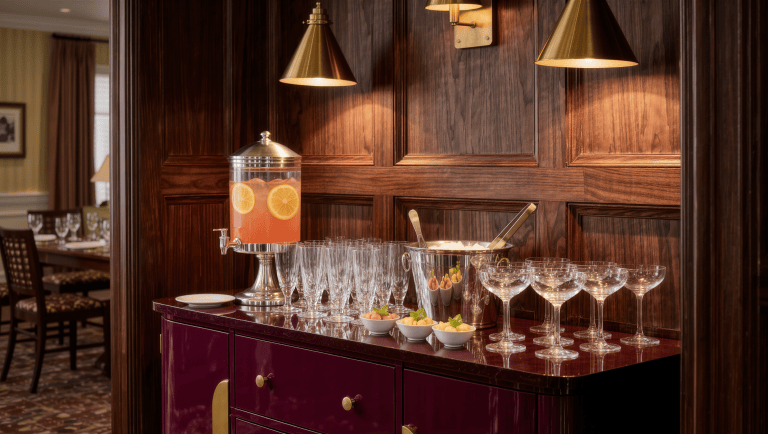 Function and Flow
The Drink Station Became Part of the Party
Interactive drink stations are moving beyond the parked bar cart. The useful version gives guests a small amount of agency while protecting traffic, ice, glassware, clean…
 Function and Flow
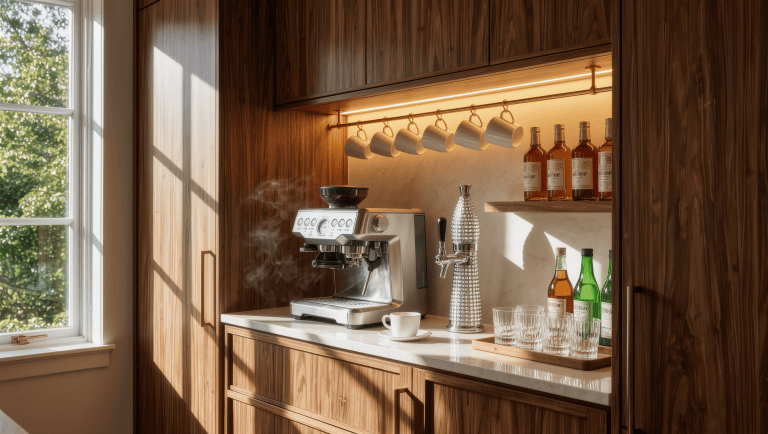
Your Home Bar Has a Morning Shift Now
The all-day beverage station is replacing the bar that only wakes up for cocktails. Coffee, sparkling water, zero-proof drinks, and evening pours can share space—if the w…
 Light and Atmosphere
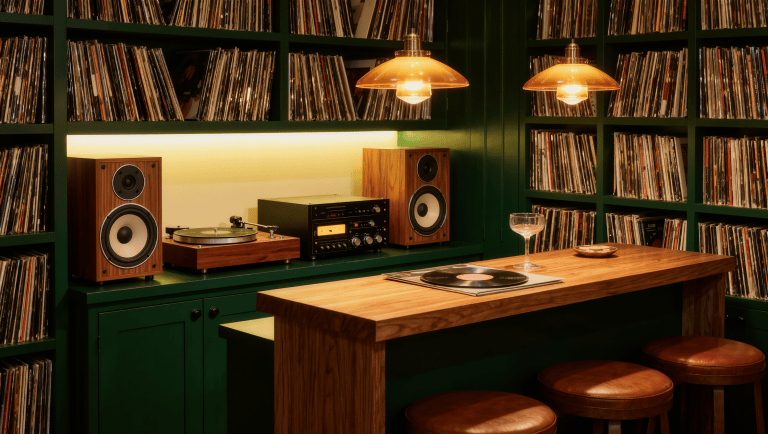
The Listening Bar Is What Happens When the Speakers Get Equal Billing
A listening bar is not a wet bar with a turntable dropped on top. The room has to balance sound, seating, glass, light, storage, and drink service so music remains the ma…
 Function and Flow
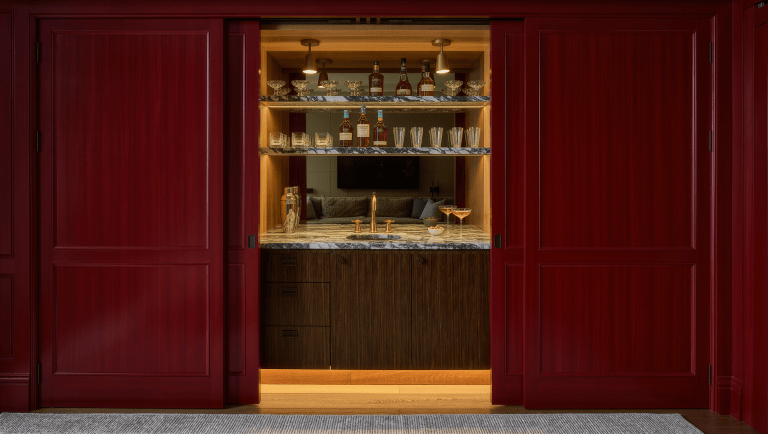
The Hidden Wet Bar Is a Cabinet Until 6 P.M.
The best hidden wet bars disappear into the room when closed and earn the reveal when open. Concealment only works if doors, plumbing, traffic, storage, and daily life ha…
 Function and Flow
The Daybed Is Back Because Sofas Keep Blocking the Room
The daybed is a 2026 living-room status piece with an actual job: low, open-backed seating can divide a large room, connect two conversation zones, and keep sightlines in…
 Function and Flow
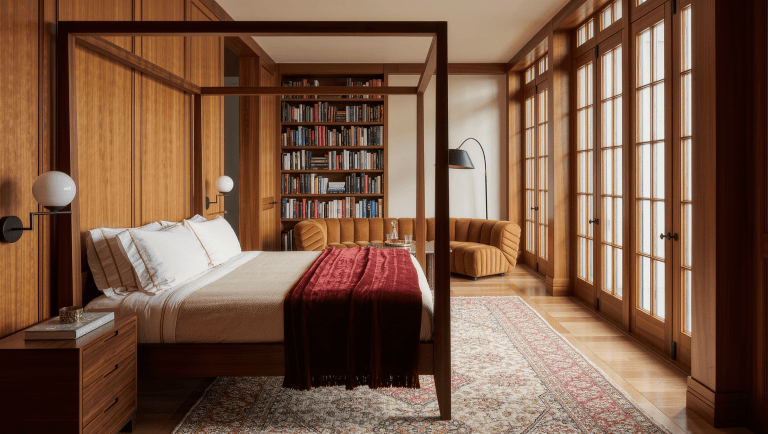
The Huge Bedroom Needs a Second Room Without Another Wall
Oversized primary bedrooms are shifting toward suite-style living in 2026. Give the extra square footage a real lounge, dressing, or quiet function instead of filling it…
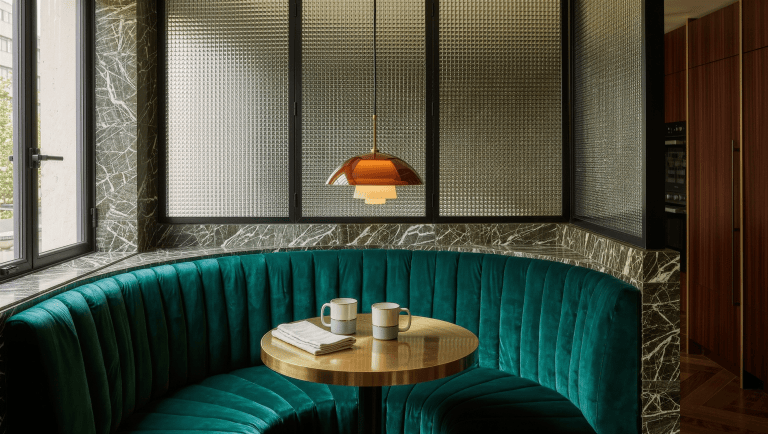 Function and Flow
The Kitchen Needs a Border More Than It Needs a Bigger Island
In a large kitchen-living room, the island should define work, hosting, and circulation—not keep growing until it becomes a continent. Use furniture-like edges, banquette…
 Function and Flow
A Movable Wall Should Disappear When You Do Not Need It
Operable and pocketing partitions are the grown-up version of flexible room splitting: divide a large room when privacy or acoustics matter, then clear the floor and give…
 Function and Flow
One Giant Sofa Cannot Do the Floor Plan’s Job
Multiple seating groups are one of 2026’s strongest large-living-room moves: create different scales of conversation instead of making every chair report to one enormous…
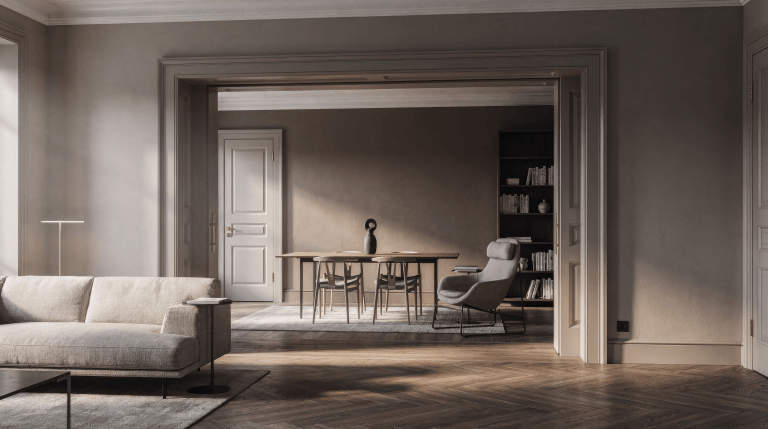 Function and Flow
Before You Turn That Wider Doorway Into an Arch
Wide cased openings, portals, partial walls, and framed thresholds can divide large rooms without closing them off. The shape should come from the architecture—not from a…
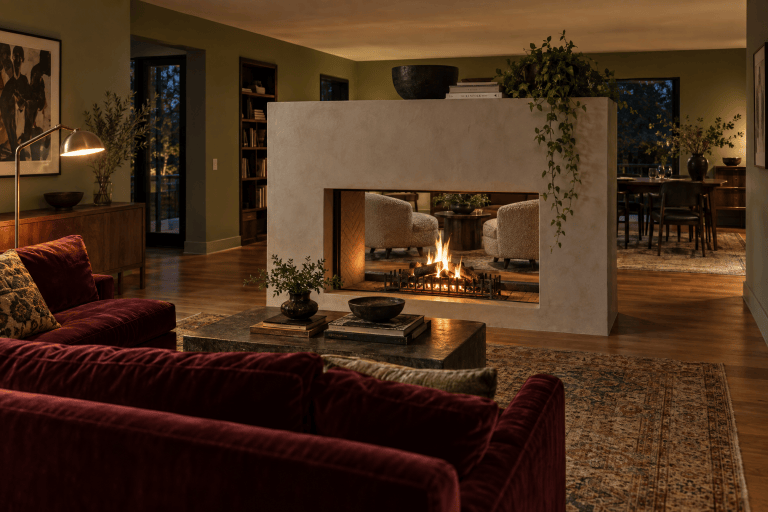 Function and Flow
The Fireplace Can Split the Room Without Killing the Conversation
A double-sided fireplace can give a large open room a real center and two distinct sides without closing either one off—but the hearth has to be planned as architecture,…
 Function and Flow
Glass Walls Are for People Who Want Privacy and Refuse to Lose the Light
Interior glass partitions are surging with broken-plan living because they can define a large room without sacrificing daylight or sightlines—but privacy, glare, sound, a…
 Function and Flow
Curtains Have Left the Window and Started Rearranging the House
Space-shaping drapes and portières are one of 2026’s smartest room-splitting moves: flexible privacy, softer acoustics, and actual drama without committing to another wal…
 Function and Flow
Zone the Room by Noise, Light, and Nerve
Sensory zoning organizes a large room by how loud, bright, social, focused, or restorative each area should feel—because two spaces can look separate and still behave lik…
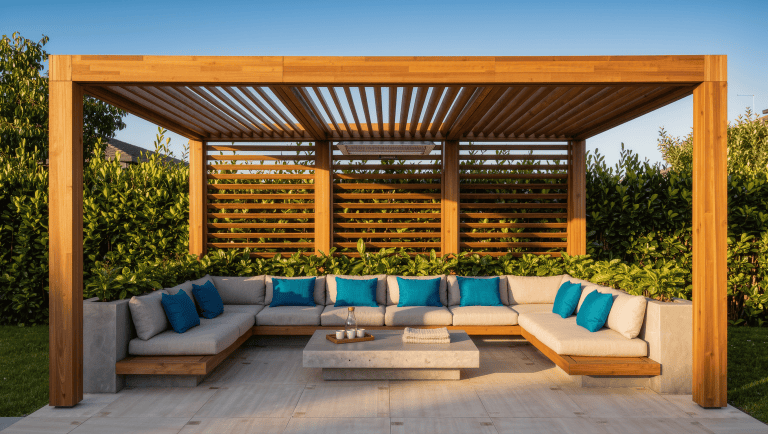 Function and Flow
Premium Outdoor Comfort Is a System, Not a Shopping List
Outdoor comfort is a system: seating, shade, heat, light, surfaces, sound, storage, and circulation have to work together before any feature feels premium.
 Function and Flow
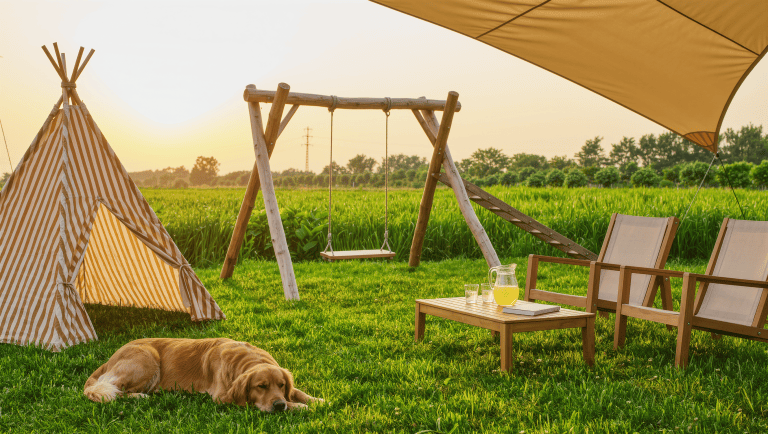
Family-Friendly Without Letting Plastic Win
A family backyard should work for children, adults, pets, play, quiet, and changing routines without surrendering the whole landscape to one age or one activity.
 Light and Atmosphere
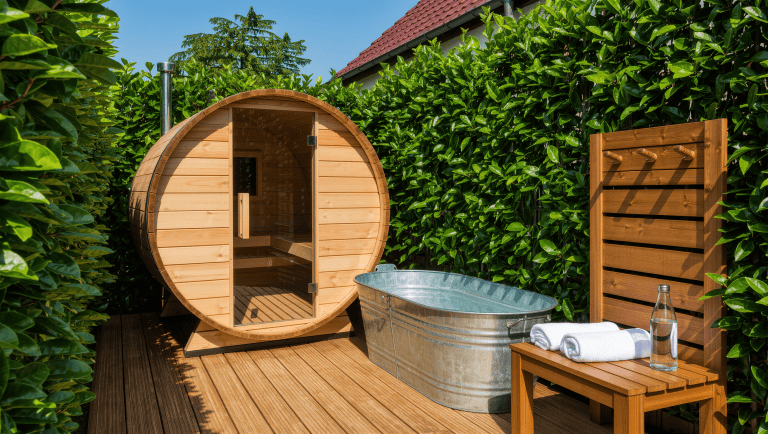
The Backyard Spa Needs a Reason to Exist After the Cold-Plunge Trend Moves On
A backyard wellness space should support a ritual you will actually repeat, with privacy, climate, maintenance, and infrastructure handled before the equipment becomes th…
 Furniture and Scale
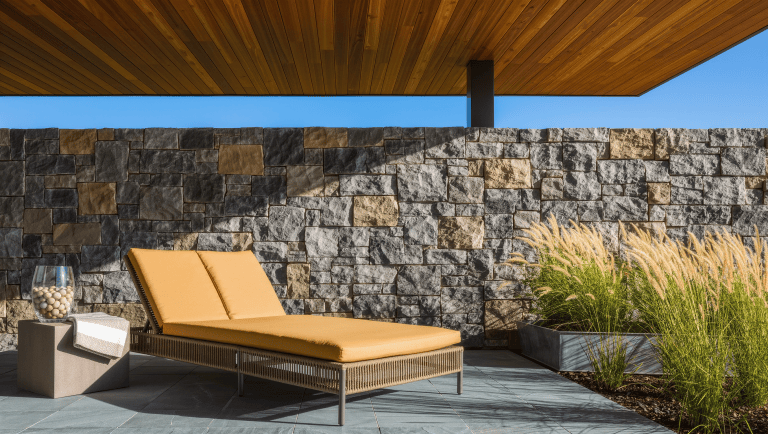
Texture Outdoors Should Survive Being Outdoors
Outdoor texture should add depth through stone, wood, planting, metal, weave, and fabric without creating a maintenance job disguised as atmosphere.
 Function and Flow
Curves Belong Outside Because People Do Not Walk in Graph Paper
Curved paths, seating, and planting can improve outdoor movement and atmosphere when the geometry follows real bodies and real routes.
 Function and Flow
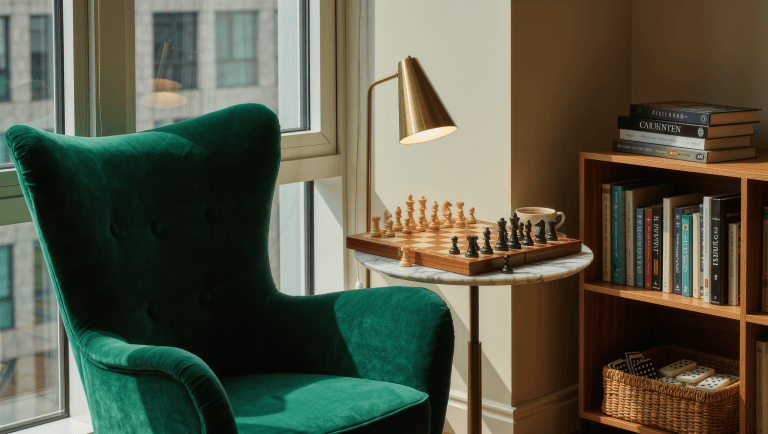
The Analog Room Trend Fits in One Corner.
Build a screen-free analog corner for reading, cards, games, or conversation with the right seat, surface, light, storage, and a small amount of space.
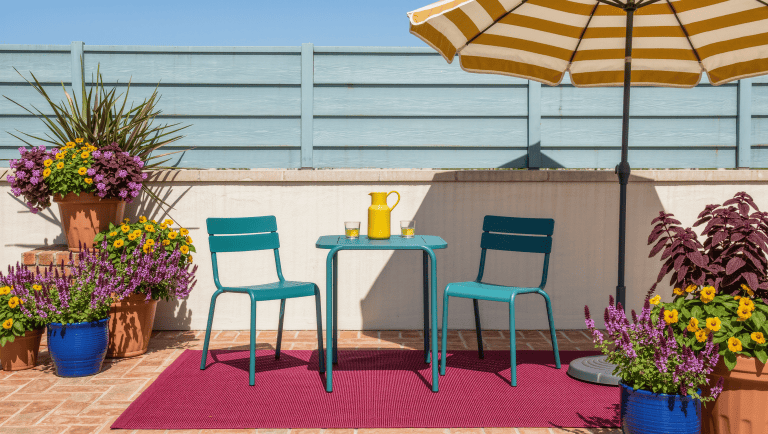 Light and Atmosphere
The Beige Patio Has Had a Very Long Run
Outdoor color is getting richer in 2026. Build the palette around real light, planting, weather, and a few confident moves instead of defaulting to beige.
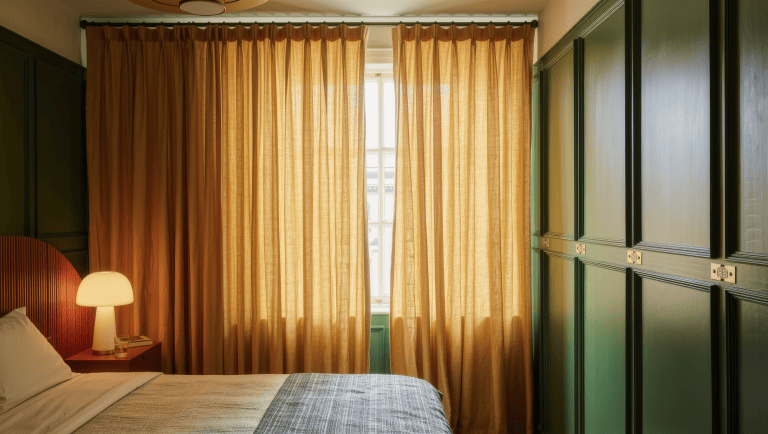 Function and Flow
Fake the Architecture, Not the Damage.
Create renter-friendly architectural detail with curtains, molding, wallpaper, panels, and hardware—while planning permission, stability, and removal.
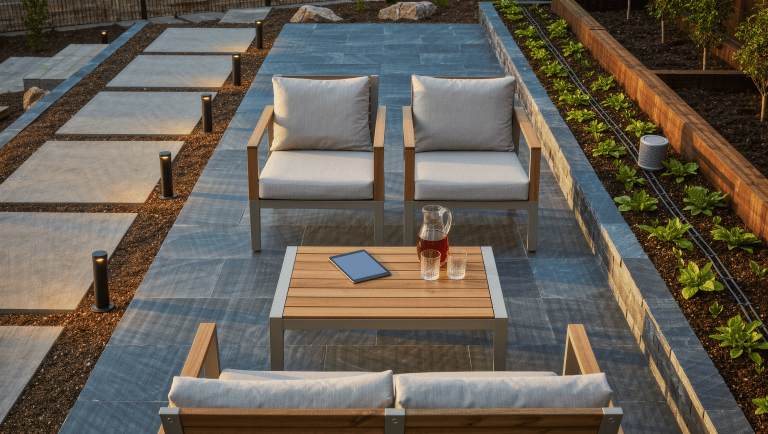 Function and Flow
Your Smart Backyard Should Not Need a Help Desk
Smart outdoor technology should remove friction from lighting, irrigation, power, audio, and comfort—not turn the backyard into another support queue.
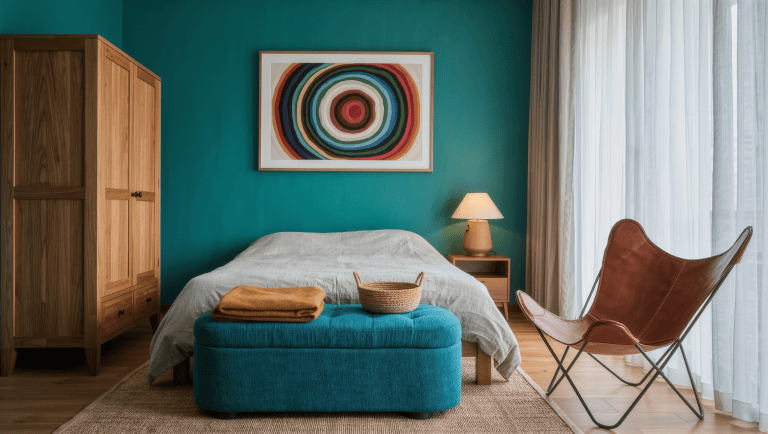 Function and Flow
Sustainable Luxury for Renters Is Mostly About Not Buying the Same Thing Twice.
Sustainable luxury for renters means portable, repairable, adaptable pieces worth keeping—less disposable makeover, more design that survives a move.
 Function and Flow
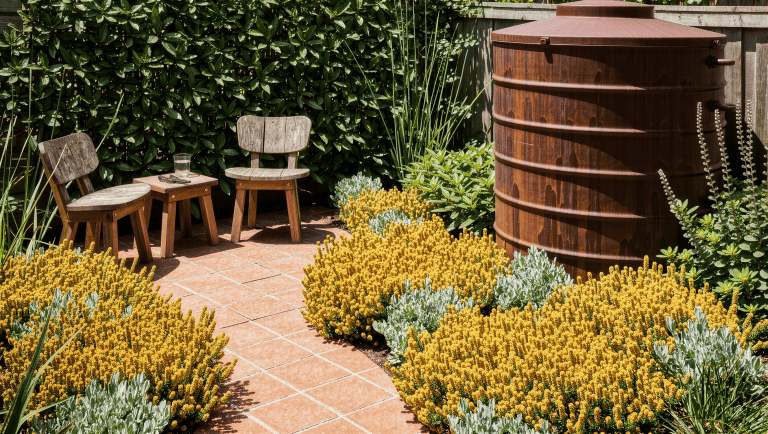
Sustainable Outdoor Design Needs Better Answers Than Gravel and Bamboo
Sustainable outdoor design is a systems problem: water, shade, soil, materials, maintenance, durability, and human use all have to work together.
 Light and Atmosphere
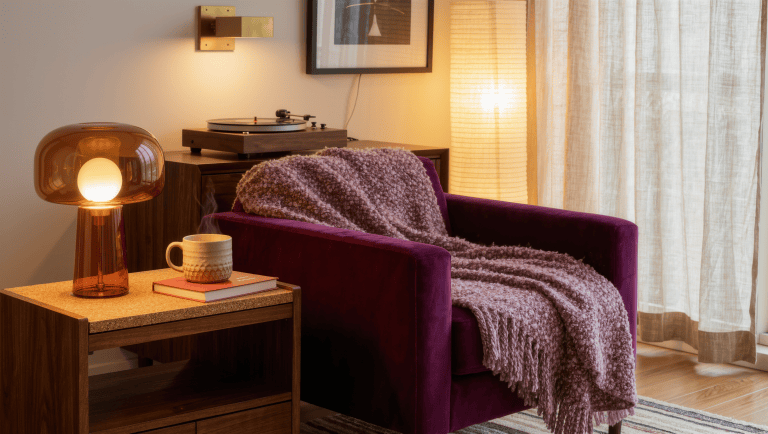
Your Rental Should Feel Different at 9 P.M. Than It Does at 9 A.M.
Use sensory design in a rental through layered light, acoustics, texture, temperature, and restrained scent so the room changes with the day.
 Function and Flow
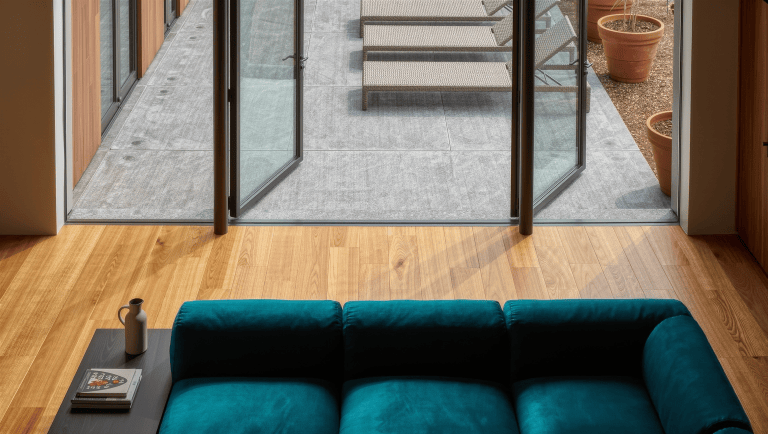
Indoor-Outdoor Flow Lives in the Handoffs
Indoor-outdoor flow comes from sightlines, function, material relationships, and atmosphere—not making the patio impersonate the living room.
 Function and Flow
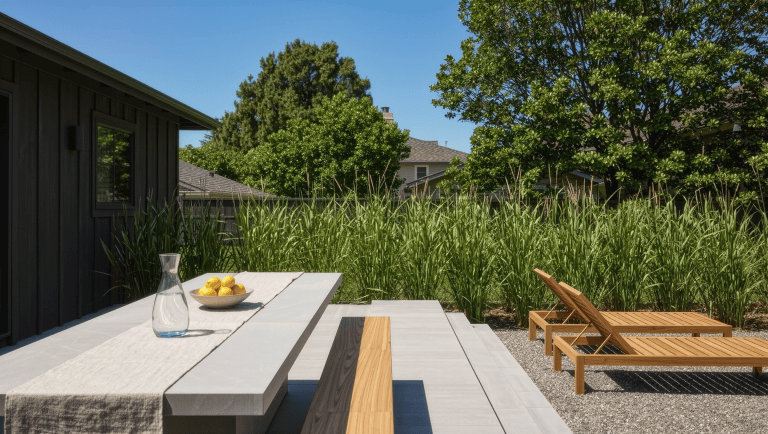
Your Backyard Has Enough Zones. Fix the Handoffs.
A multifunctional backyard works when the spaces can change jobs without turning the yard into a collection of unrelated little rooms.
 Function and Flow
A Rental Kitchen Can Have Color Before Move-Out
Add warmer 2026 kitchen color to a rental with hardware, rugs, lighting, art, and furniture before considering paint or adhesive surface changes.
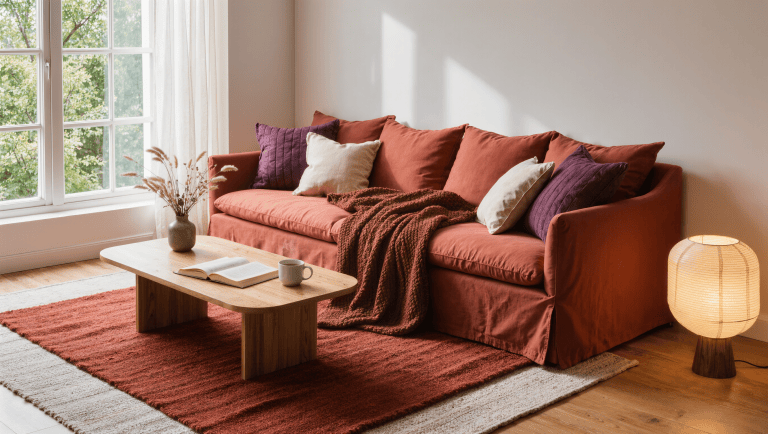 Function and Flow
Layered Comfort Is the 2026 Answer to the Empty Beige Rental.
Layered comfort brings texture, useful softness, varied light, and lived-in character to rentals—without requiring permanent architectural changes.
 Light and Atmosphere
Vintage Lighting Is Doing More Than the Ceiling Ever Did.
Use vintage lamps, sconces, torchères, and distinctive shades to give a rental layered light and character without surrendering the room to hardwiring.
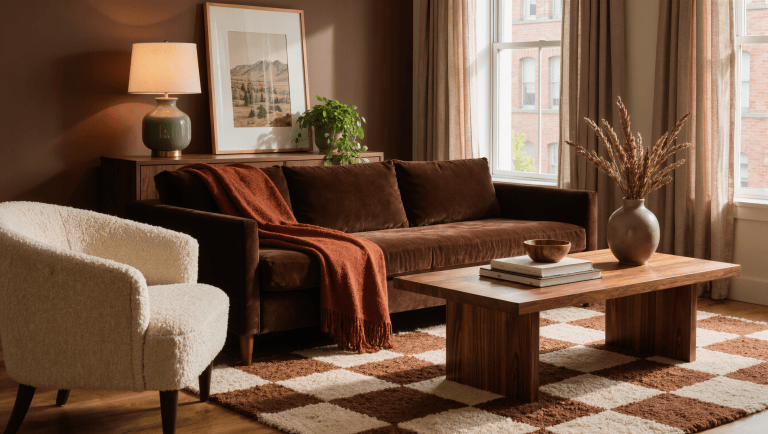 Light and Atmosphere
Chocolate Brown Is Back. Beige Can Stop Pretending It Has a Personality.
Use chocolate brown, rust, mushroom, sage, taupe, and cream to warm up a rental through furniture, textiles, lighting, and portable finishes.
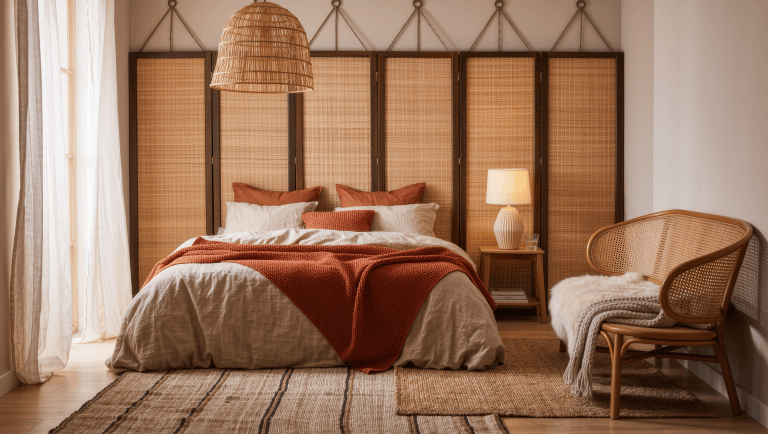 Light and Atmosphere
Texture Without Sacrificing the Security Deposit
Build renter-friendly texture with fabric, woven materials, wood, lighting, and removable layers—without risking walls, finishes, or the security deposit.
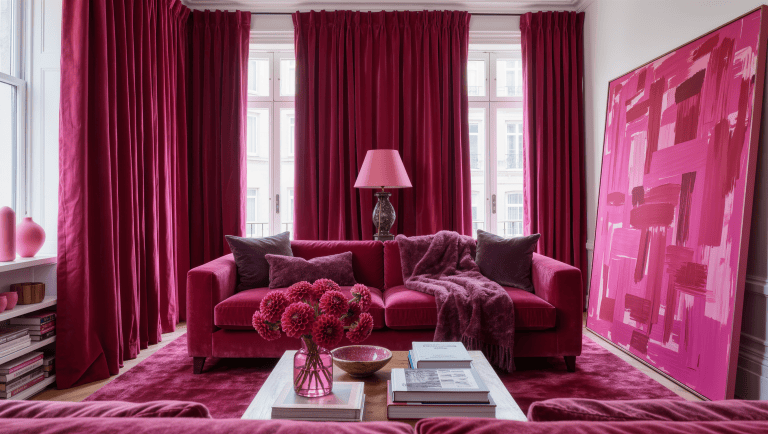 Light and Atmosphere
Color Drenching Without the Rental Paint Emergency
Renter-friendly color drenching: build an immersive 2026 palette with curtains, rugs, art, lighting, and portable color before you touch the walls.
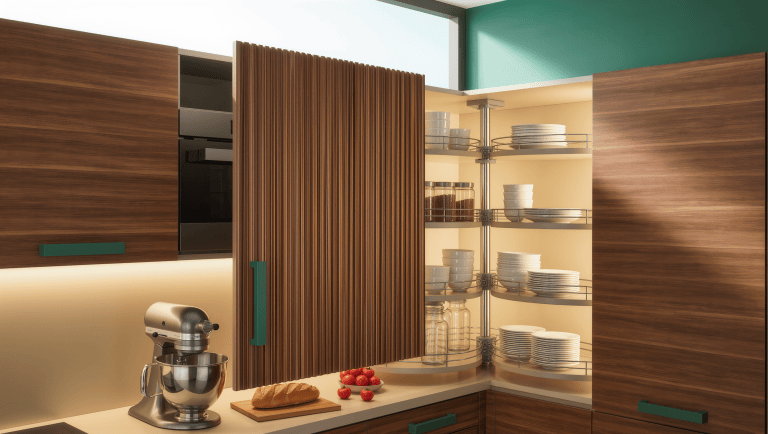 Function and Flow
The Cabinet Is Starting to Move, and I Have Questions
Rotating cabinets and sliding panels can solve real access problems—if the mechanism removes friction instead of becoming another household job.
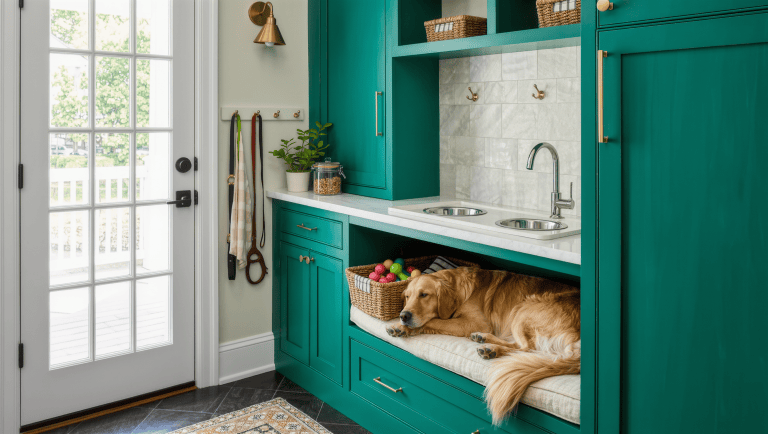 Awkward Spaces
Pet-Friendly Design Starts With a Better Landing Zone
Pet-friendly design should follow the animal's real routine: sleep, food, cleanup, storage, durable materials, and an easy route in and out.
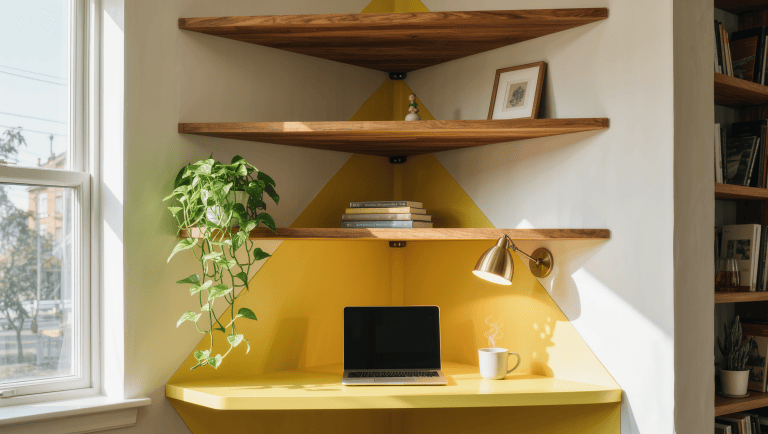 Awkward Spaces
Corner Shelves Without the Vertical Junk Drawer
Corner shelves can rescue an awkward wall junction without stealing floor space. They still need restraint, real load support, and an actual reason to exist.
 Function and Flow
The Long, Narrow Bedroom Needs a Spine
A long, narrow bedroom needs one strong furniture line and one clear route. The room should feel intentional, not evenly obstructed.
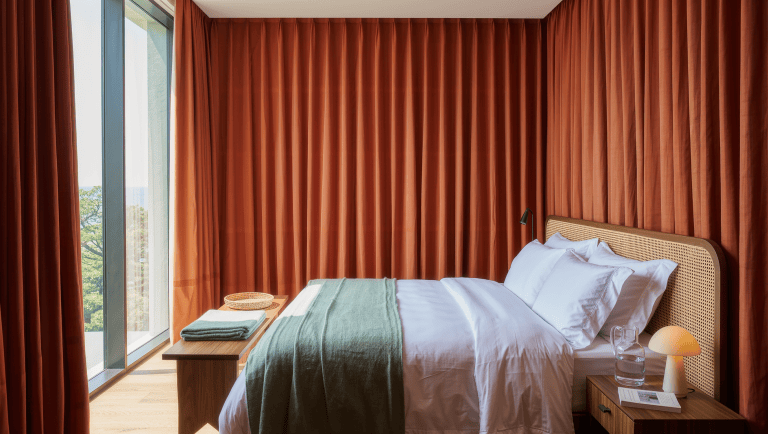 Function and Flow
An Off-Center Window Is Mostly a Furniture Problem
An off-center bedroom window is not a defect to disguise. Use the bed, lighting, curtains, and circulation to make the asymmetry look invited.
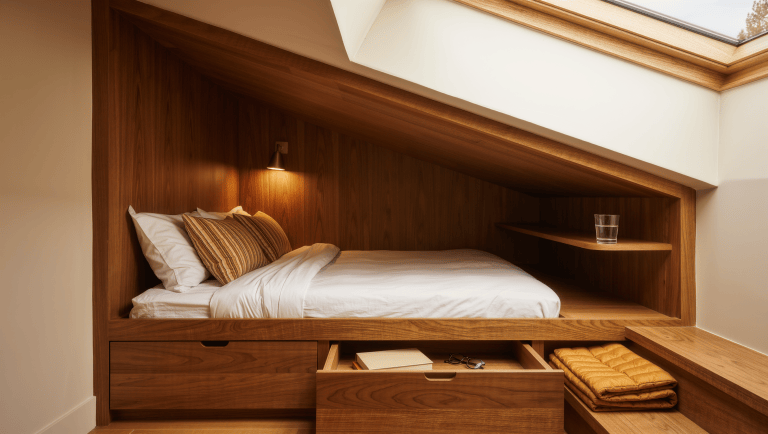 Furniture and Scale
Built-In Beds Are Back. Small Bedrooms Can Handle It.
Built-in beds can turn awkward bedroom geometry into architecture—if access, storage, light, ventilation, and normal human behavior survive the idea.
 Light and Atmosphere
The Reading Nook Is Back—and It Wants Some Quiet
A reading nook is not a chair staged near books. It needs real comfort, useful light, a little enclosure, and enough personality to pull you in.
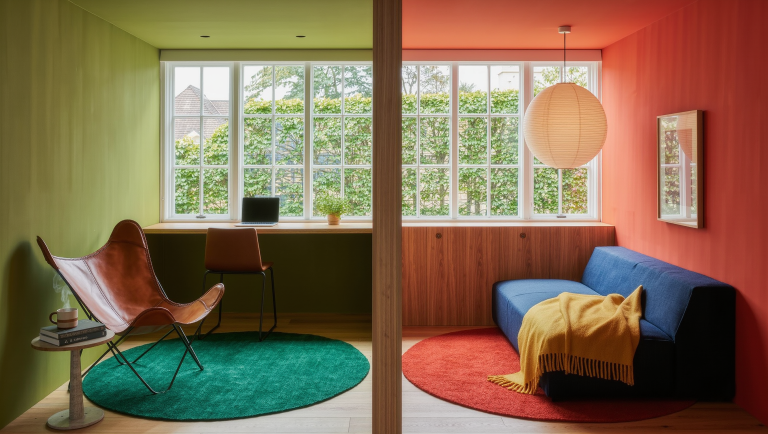 Function and Flow
Micro-Zones Are What Open Plans Were Missing
Micro-zones make open rooms work harder without rebuilding the house. Give each pocket a real job without turning the floor plan into tiny departments.
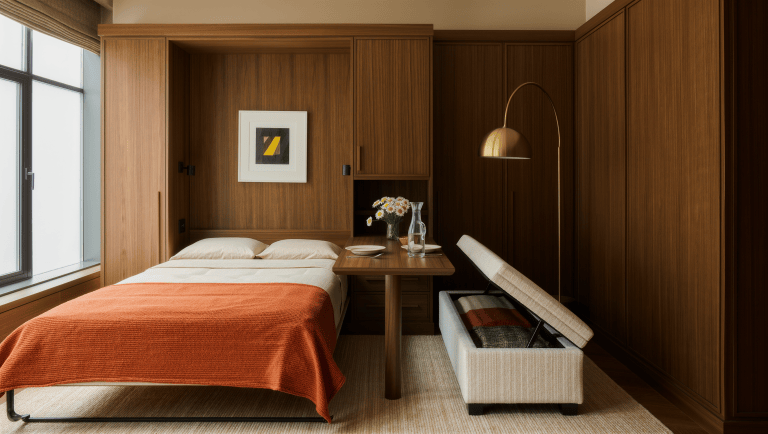 Furniture and Scale
Convertible Furniture Finally Looks Like Furniture
Convertible furniture is finally getting more useful and less tragic. The second function still has to earn the hardware, floor space, and daily inconvenience.
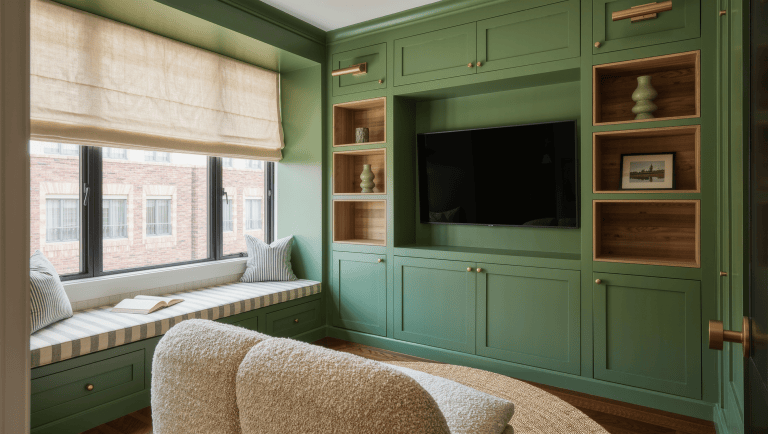 Function and Flow
The Built-In Wall Is Replacing the Furniture Pile
One built-in wall can absorb storage, display, seating, media, and everyday mess without turning a small room into a furniture holding pen.
 Furniture and Scale
Dimorestudio: Cinematic Without the Costume
Dimorestudio is useful to study because its cinematic interiors are built from historical roots, contemporary interruption, light, color, patina, and controlled tension r…
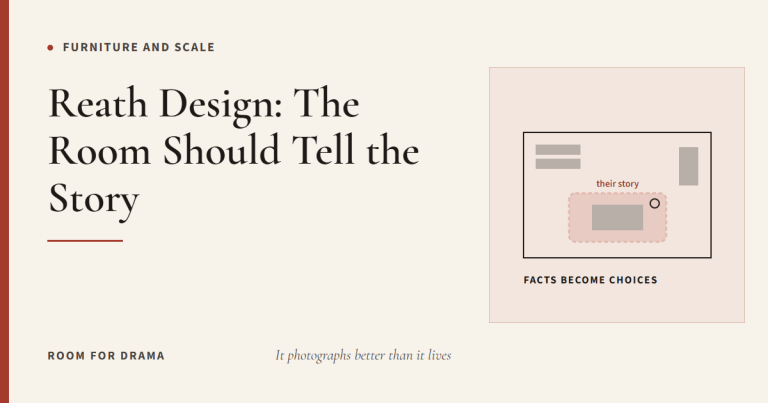 Furniture and Scale
Reath Design: The Room Should Tell the Story of the People in It
Reath Design is useful to study because narrative becomes practical: inhabitants, place, artifacts, color, pattern, and multiple time periods actively shape the room inst…
 Function and Flow
Commune Design: Context Is a Better Starting Point Than a Trend
Commune Design is useful to study because its projects begin with context, architecture, program, material, collaboration, and craft instead of importing a repeatable hou…
 Furniture and Scale
Young Huh: A Sense of Place Beats a Perfectly Consistent Style
Young Huh is useful to study because her rooms build specificity from architecture, place, cultural reference, collections, and client life instead of relying on one repe…
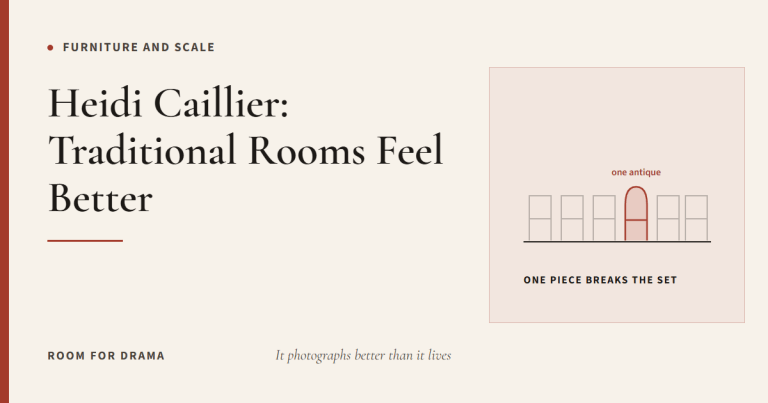 Furniture and Scale
Heidi Caillier: Traditional Rooms Feel Better When They Stop Behaving Perfectly
Heidi Caillier is useful to study because her traditional rooms gain authority from real age, patina, pattern hierarchy, low light, intimacy, and deliberate imperfection…
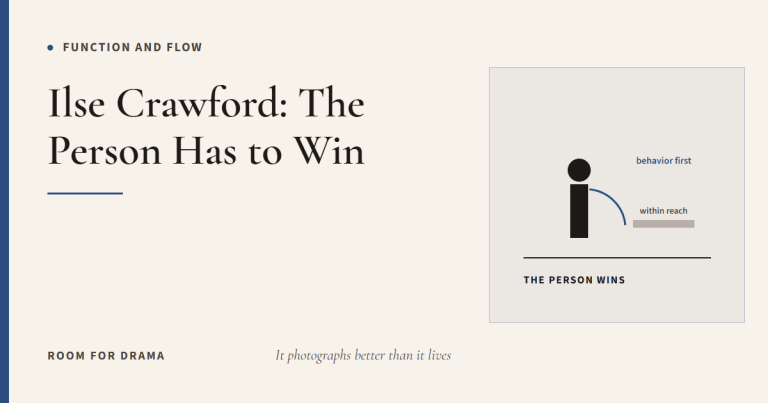 Function and Flow
Ilse Crawford: The Person Has to Win
Ilse Crawford is useful to study because human-centered design is not a look. It begins with behavior, comfort, light, sound, touch, social use, and measurable daily cons…
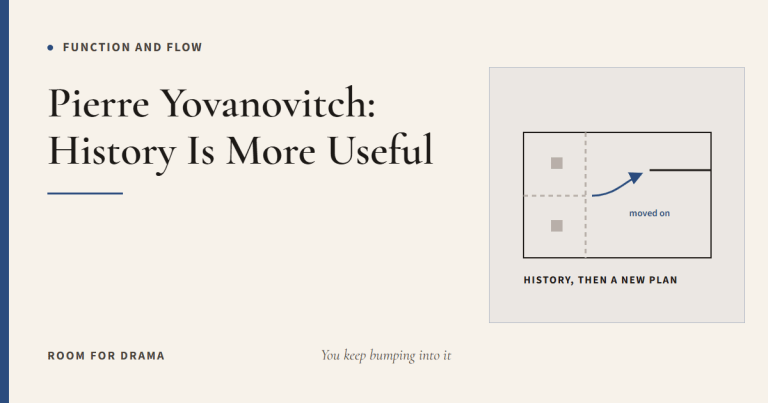 Function and Flow
Pierre Yovanovitch: History Is More Useful When the Floor Plan Moves On
Pierre Yovanovitch is useful to study because his work separates historic character from obsolete function, allowing old architecture and contemporary life to coexist wit…
 Function and Flow
Martin Brudnizki: Theatrical Rooms Still Have to Serve the Guest
Martin Brudnizki is useful to study because his theatrical hospitality interiors keep context, hierarchy, lighting, function, and circulation underneath the spectacle.
 Function and Flow
Roman and Williams: Light and Craft Can Make a Room Feel Older Than the Renovation
Roman and Williams is useful to study because its rooms feel built before styled: architecture, substantial materials, light, furniture, and craft carry the atmosphere at…
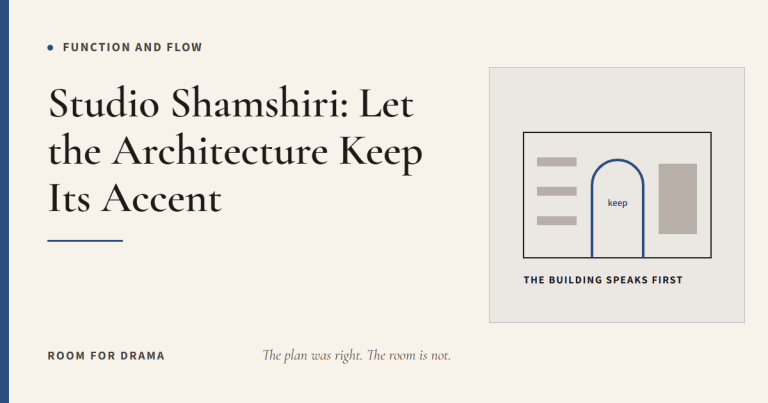 Function and Flow
Studio Shamshiri: Let the Architecture Keep Its Accent
Studio Shamshiri is useful to study because its rooms separate architectural character from inherited inconvenience, allowing old and new to coexist without fake continui…
 Furniture and Scale
Jake Arnold: Atmosphere Is Built From More Than Brown Paint
Jake Arnold is useful to study because atmosphere in his work comes from material depth, furniture scale, shadow, localized light, age, and comfort—not simply a brown pal…
 Furniture and Scale
Brigette Romanek: Eclectic Rooms Work When They Still Feel Like Home
Brigette Romanek is useful to study because her eclectic rooms stay coherent through emotional temperature, comfort, architecture, art, scale, and disciplined surprise.
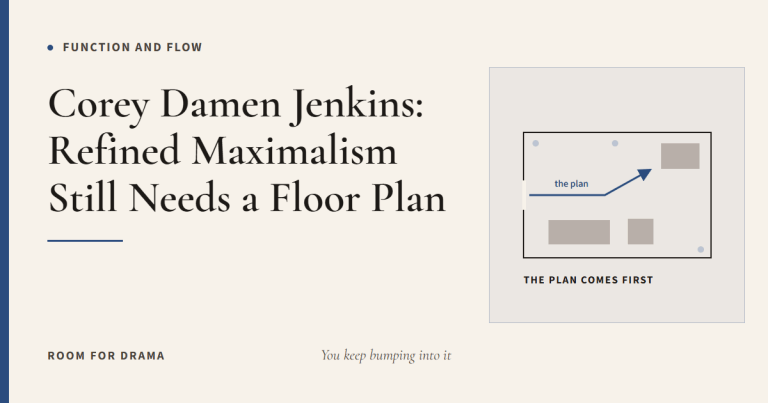 Function and Flow
Corey Damen Jenkins: Refined Maximalism Still Needs a Floor Plan
Corey Damen Jenkins is useful to study because his maximalism is supported by a disciplined skeleton: architecture, layout, repetition, scale, tailoring, and editing.
 Light and Atmosphere
Sheila Bridges: Personality Gets Stronger When It Knows What It Means
Sheila Bridges is useful to study because her expressive rooms attach color, pattern, art, history, and humor to meaning. Specificity gives bold design its authority.
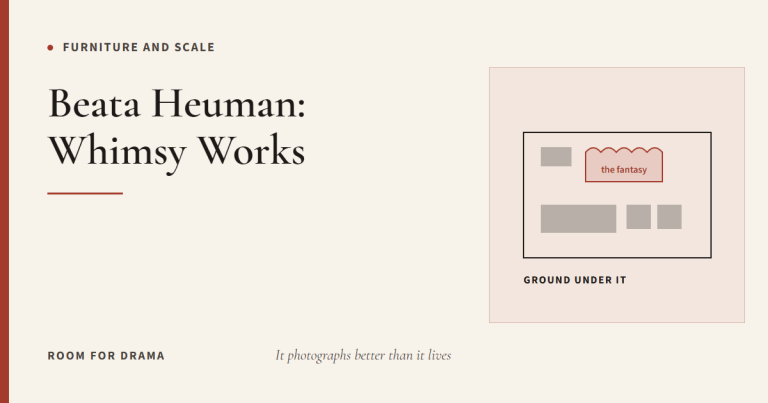 Furniture and Scale
Beata Heuman: Whimsy Works When the Room Still Has Ground Under It
Beata Heuman is useful to study because her whimsical interiors stay grounded in setting, contrast, hierarchy, function, and one or two highly specific moves rather than…
 Furniture and Scale
Rose Uniacke: Restraint Can Be More Dramatic Than Filling the Room
Rose Uniacke is useful to study because her quiet rooms prove that drama is not density: proportion, patina, light, material contrast, and active empty space can carry th…
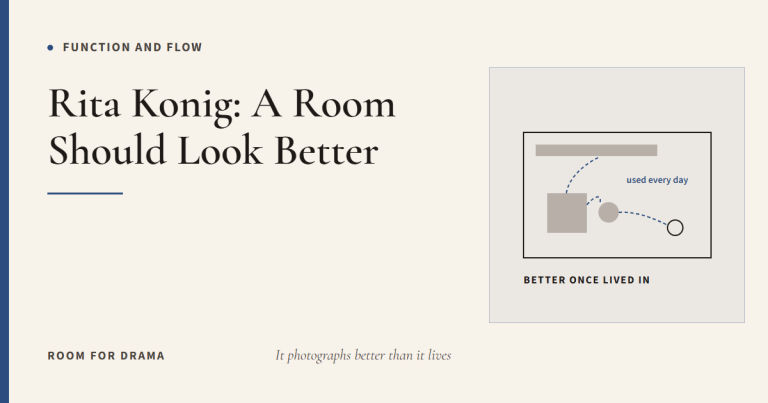 Function and Flow
Rita Konig: A Room Should Look Better After People Start Living in It
Rita Konig is worth studying because her rooms become more convincing in use: practical relationships, collected objects, comfort, pattern, and enough looseness for life…
 Furniture and Scale
Kit Kemp: Pattern Is Better When Comfort Wins the Argument
Kit Kemp is useful to study not because she gives permission to add more, but because her layered rooms keep comfort, hierarchy, craft, and hospitality visible through al…
 Light and Atmosphere
India Mahdavi: Color Is More Interesting When It Has a Reason
India Mahdavi is useful to study because color in her work is spatial: it answers a question, occupies meaningful area, works with light and shape, and changes how the ro…
 Furniture and Scale
Kelly Wearstler: Drama Works Better When the Room Has Discipline
Kelly Wearstler is useful to study because bold rooms work when scale, negative space, material contrast, furniture silhouette, and circulation create discipline undernea…
 Function and Flow
The Home Office Is Drowning in Paper Because the Storage Is Too Far Away
Paper clutter is often a distance problem. Put incoming, active, reference, scanning, shredding, and filing zones where the work actually happens so the desk stops becomi…
 Function and Flow
Your Video-Call Background Is Part of the Room
A home-office video background should be designed from the camera's narrow point of view. Use depth, light, controlled objects, and a clean sightline so the room reads as…
 Function and Flow
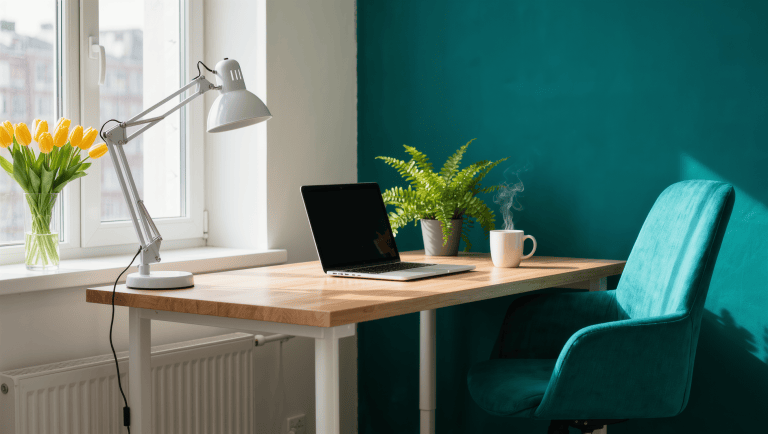
The Desk Should Face the Right Problem
Desk direction affects glare, distraction, privacy, camera views, door awareness, and circulation. Choose the orientation by the work problem you need to solve instead of…
 Function and Flow
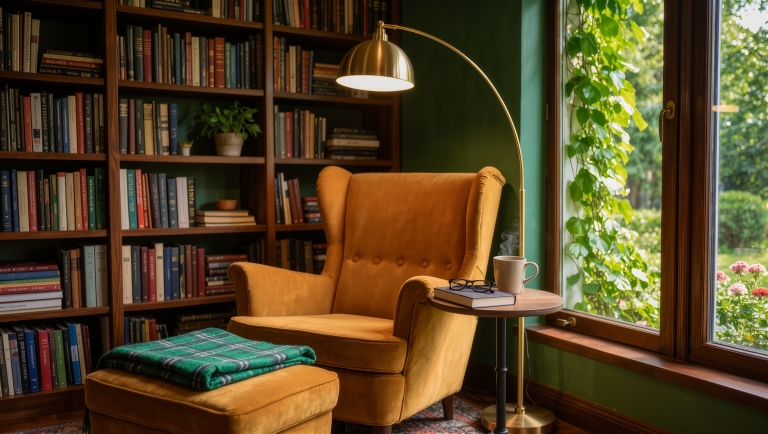
A Reading Chair Needs an Ecosystem
A reading chair becomes a real zone only when the light, side surface, view, circulation, and book storage support the behavior. Design the whole micro-environment instea…
 Function and Flow
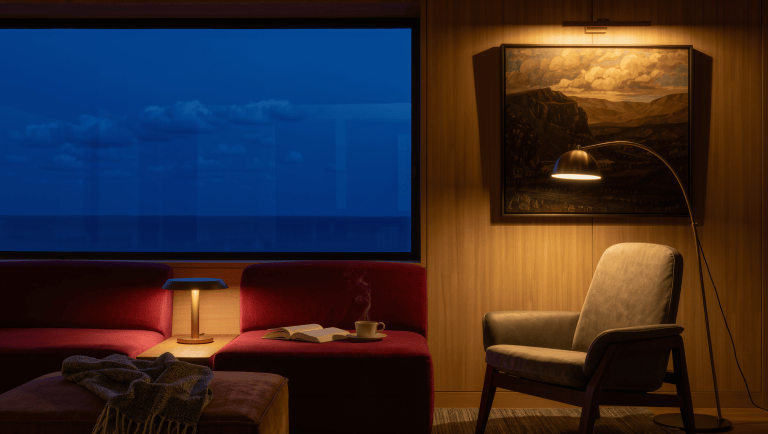
The Lounge Has No Night Mode
A lounge that works only in daylight is unfinished. Build an evening lighting hierarchy with low, warm, directional sources that support faces, reading, movement, and atm…
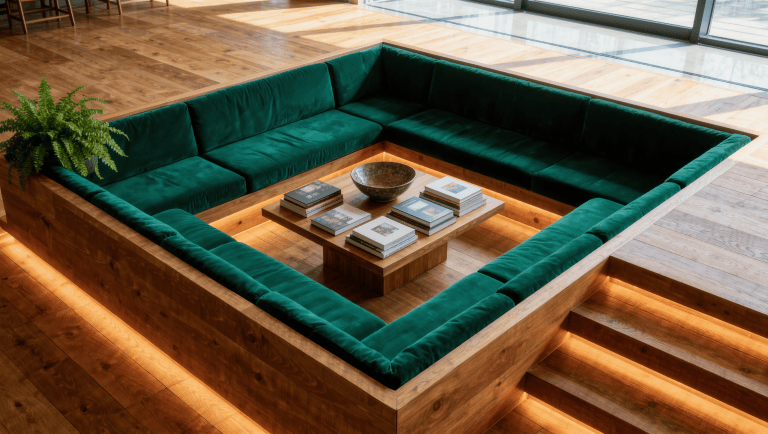 Function and Flow
The Sunken Lounge Is Back. The Step Is Part of the Design.
A sunken lounge can create intimacy and drama, but the level change has to work as circulation, seating, lighting, and architecture—not a surprise step around a fashionab…
 Function and Flow
The Lounge Is Too Open to Feel Like a Place
An open lounge can feel exposed even when the furniture is beautiful. Create intimacy with orientation, lighting, ceiling cues, low boundaries, and controlled sightlines…
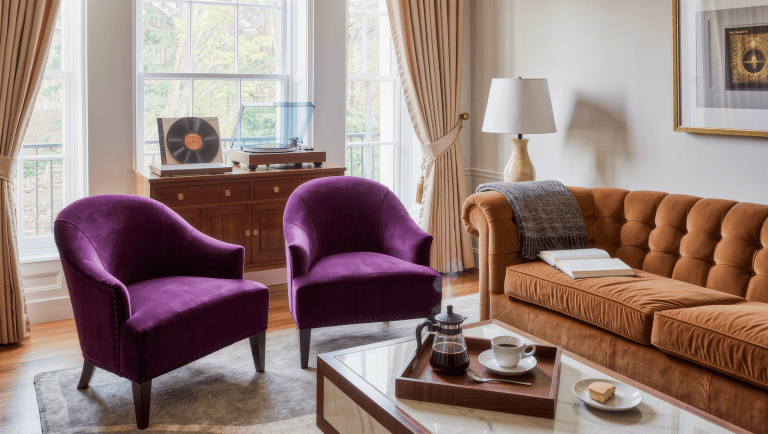 Function and Flow
Give the Formal Living Room a Tuesday
A formal living room should earn its square footage on ordinary days. Give it a believable daily role—reading, quiet conversation, music, coffee, or flexible hosting—with…
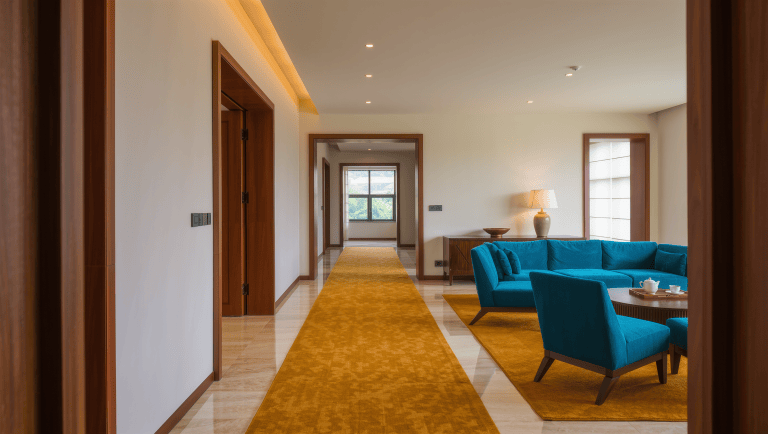 Awkward Spaces
Too Many Doors? Give the Room a Traffic Spine.
A large room with too many doors can feel impossible to furnish because movement cuts through every arrangement. Establish a primary traffic spine, then build furniture z…
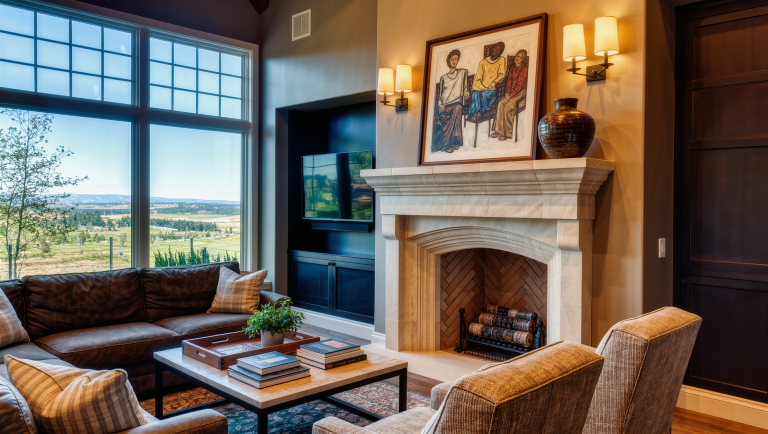 Awkward Spaces
The Fireplace, the View, and the TV Are Fighting
A large room can have several strong focal points, but the furniture should not split the difference badly. Choose a primary focus by use, then let views, fire, art, and…
 Awkward Spaces
Keep the Loft. Add Privacy Anyway.
A loft can keep its light and volume while gaining useful privacy. Separate visual, acoustic, and sleep needs first, then choose screens, shelving, glass, curtains, or re…
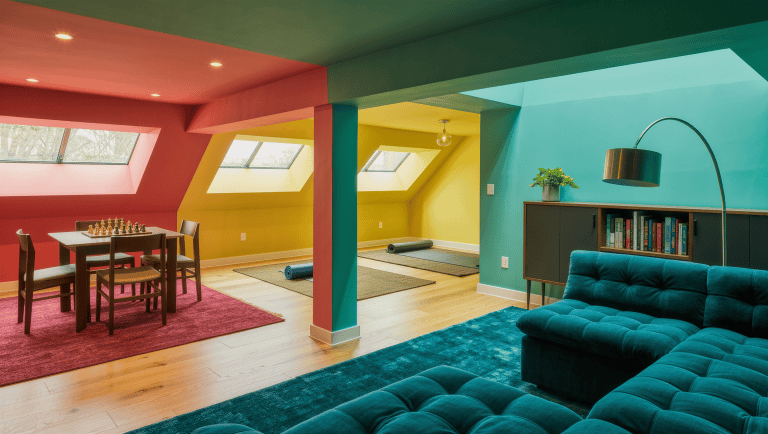 Function and Flow
The Basement Is Too Big to Be One Rec Room
A large basement works better as several coordinated zones than one vague rec room. Use columns, lighting, floor treatment, acoustics, and circulation to give each activi…
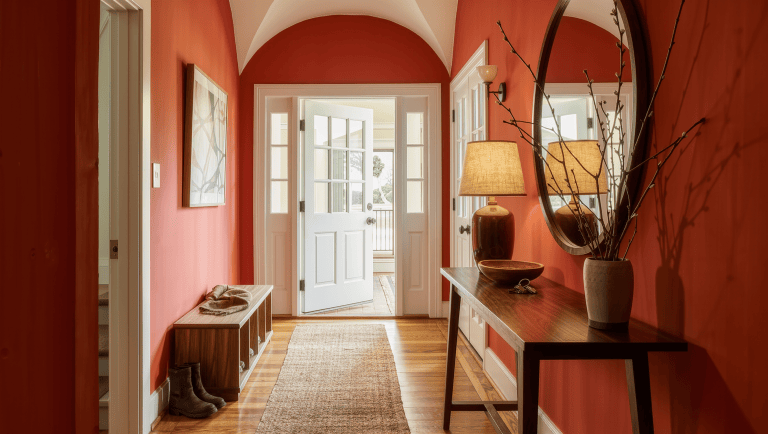 Awkward Spaces
The Grand Entry Is Starting to Look Like a Hotel Lobby
A large entry hall needs a clear arrival sequence, useful landing zone, strong sightline, and generous circulation—not furniture added simply because the foyer can hold i…
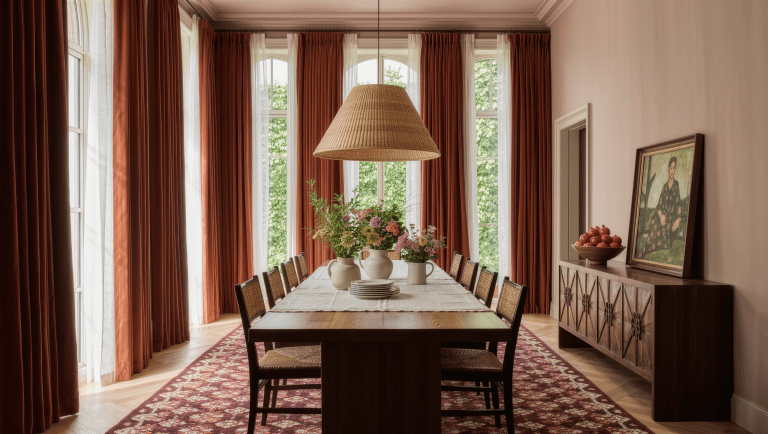 Furniture and Scale
Your Giant Dining Room Looks Like a Restaurant After Closing
A large dining room needs stronger scale, warmer light, acoustic softness, and a clear hosting plan so the table feels occupied instead of stranded in empty square footag…
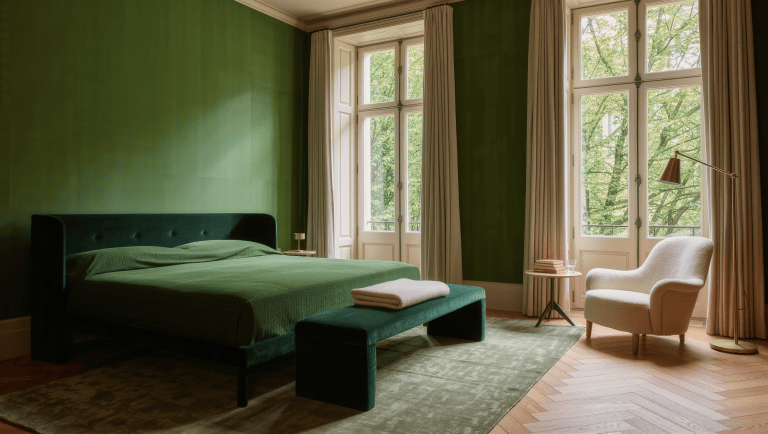 Function and Flow
The Huge Bedroom Needs More Than a Bed—But Not a Second Living Room
A very large bedroom needs hierarchy, not random extra furniture. Keep sleep primary, then add only the dressing, reading, storage, or work zones the room can support cle…
 Light and Atmosphere
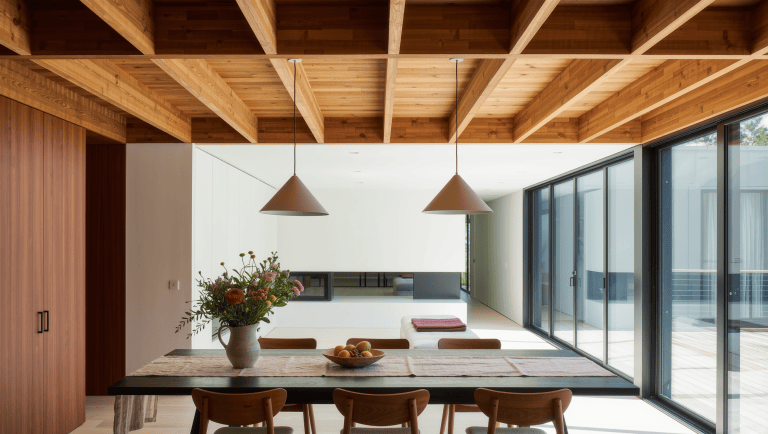
The Ceiling Can Divide a Room Before a Wall Ever Does
In a large open room, the ceiling can define dining, living, work, or entry zones using beams, finish changes, lighting, and lowered visual planes without blocking the fl…
 Awkward Spaces
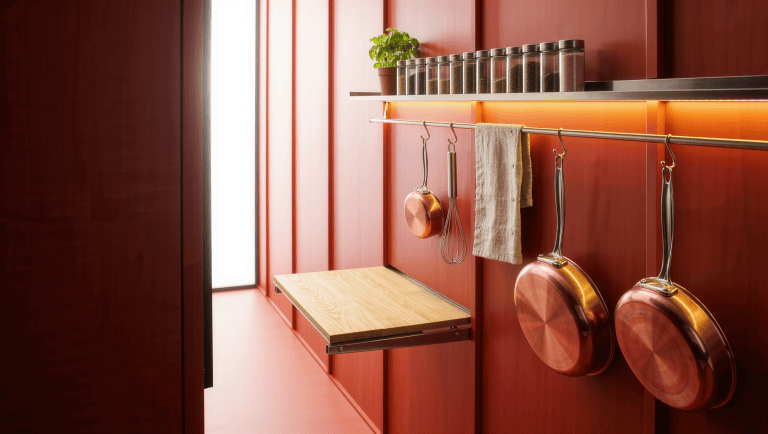
The Skinny Kitchen Wall Can Do More Than Hold a Calendar
A narrow kitchen wall can support shallow storage, rails, a folding work surface, art, or a compact household station without turning circulation into an obstacle course.…
 Awkward Spaces
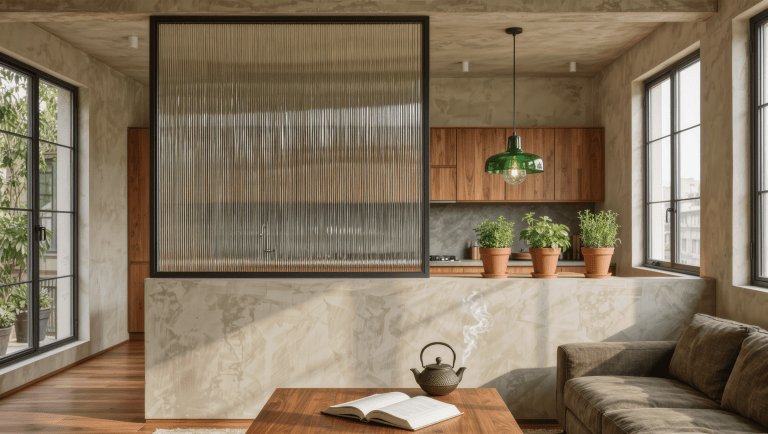
Open Plan Has Gone Too Far. Give It a Half Wall.
When a huge open plan needs more privacy or structure, a half wall, glazed partition, or partial enclosure can restore boundaries while preserving light and connection.
 Awkward Spaces
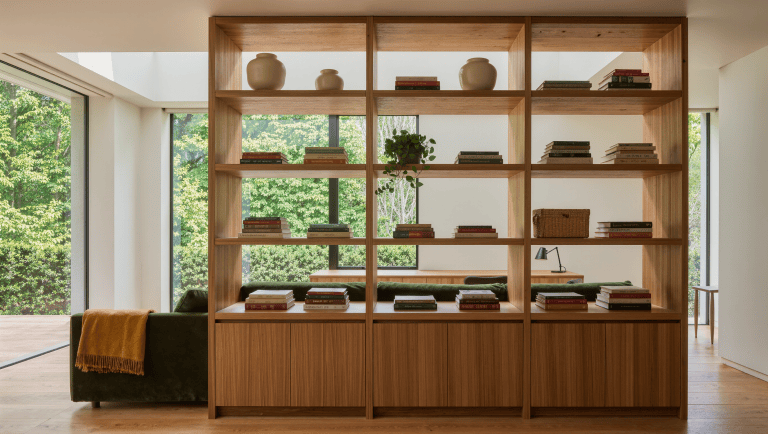
Make the Room Divider Earn the Floor Space
A divider in a large room should solve more than one problem. Use shelving, storage, screens, consoles, or furniture backs to create separation without wasting light or c…
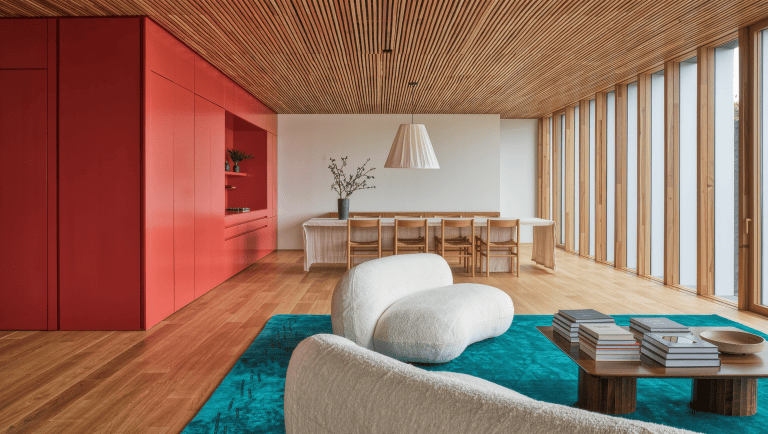 Function and Flow
Split the Room Without Building a Wall
A large open room can gain clear boundaries without permanent walls. Use furniture orientation, rugs, ceiling treatment, lighting, and material changes to make each zone…
 Awkward Spaces
Hallway Intelligence: Dead Ends, Wide Halls, and the Space Between Doors
A wide hallway can support seating, storage, books, art, or a pause point without becoming an obstacle course. Start with the circulation lane, then give the excess width…
 Awkward Spaces
The Wall Above the Toilet Has Other Career Options
The vertical space above a toilet can hold closed storage, art, lighting, or nothing at all. Plan around reach, cleaning, moisture, visual weight, and the room's actual s…
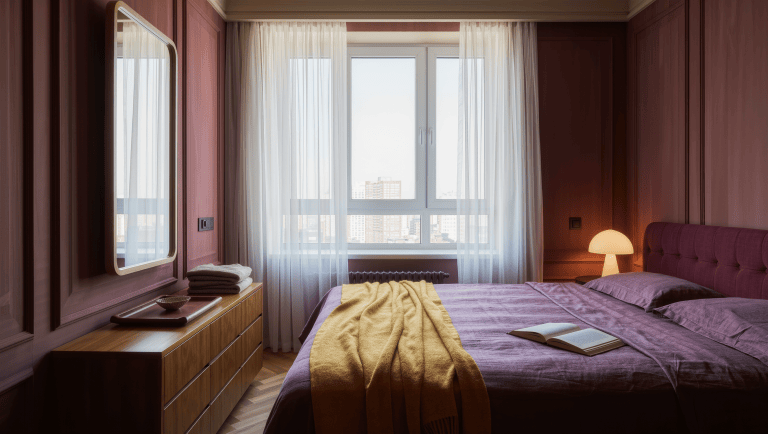 Awkward Spaces
The End of the Bed Has More Jobs Than a Bench
The foot of the bed can hold storage, dressing space, a narrow desk, circulation, or nothing at all. Choose by clearance and daily routine instead of automatically adding…
 Function and Flow
The Room Feels Cold. Check What the Air Is Doing Above You.
A dramatic high-volume room can be visually warm and physically uncomfortable. Fix the actual comfort system: air movement, glazing, drafts, shade, and occupied-zone heat…
 Light and Atmosphere
The Echo Is Part of the Room
A large hard-surfaced room can look finished and still sound exhausting. Treat reverberation as a design problem using absorption, furniture, textiles, and smarter zoning…
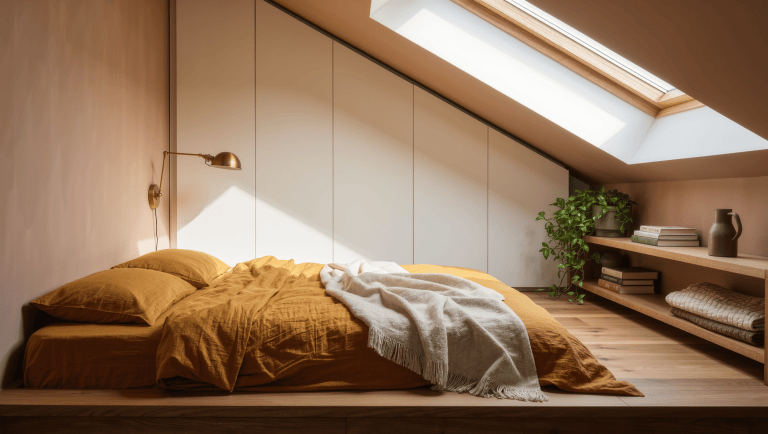 Awkward Spaces
The Sloped Ceiling Needs Furniture That Stops Fighting It
Sloped ceilings work best when low functions move to the perimeter and standing functions move inward. Use furniture height, circulation, lighting, and visual lines to le…
 Furniture and Scale
Tall Ceilings Need a Lower Horizon
Soaring ceilings can be dramatic and still make a room feel emotionally remote. Lower the visual horizon with furniture, lighting, textiles, and correctly scaled wall ele…
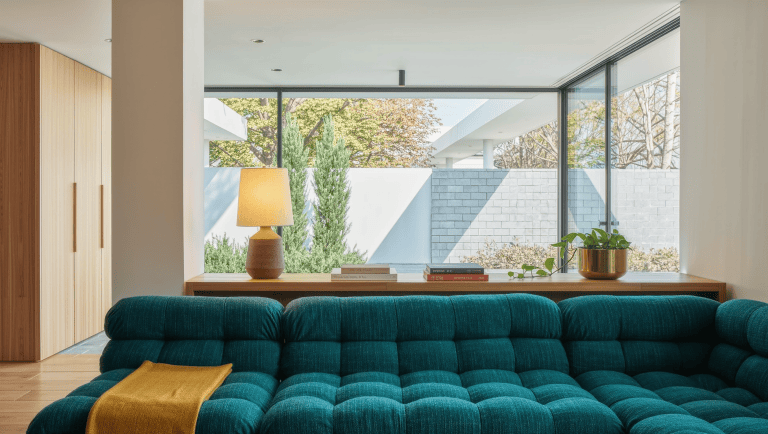 Awkward Spaces
There Is a Room Behind the Sofa
The gap behind a sofa can carry lighting, shallow storage, a console, plants, or circulation—but only if the room actually benefits from a second layer. Measure the route…
 Awkward Spaces
Window Architecture: Bays, Walls of Glass, and the Best Light in the House
A bay window can be more than a plant shelf or a chair parking space. Use the light, projection, sill height, heating, and view to decide whether it should become seating…
 Awkward Spaces
The Big Room Needs a Map Before It Needs More Furniture
A huge room usually needs clearer paths, anchors, and zones before it needs another chair. Map the spatial system first, then furnish what actually has a job.
 Awkward Spaces
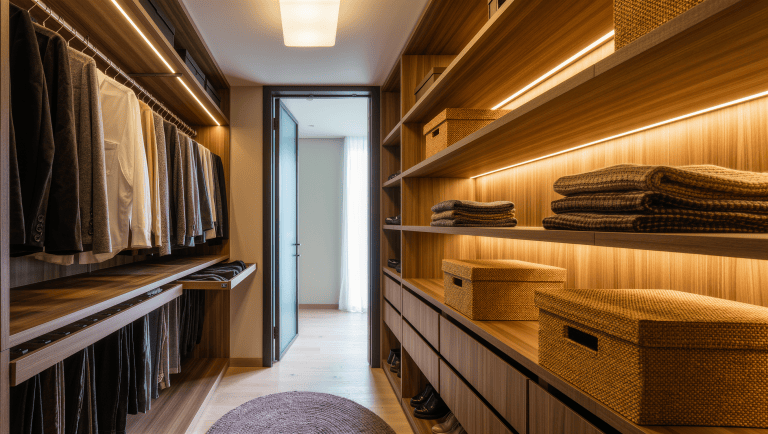
That Deep Closet Is a Room With Terrible Access
Deep closets waste space when storage is designed like a shallow closet with extra darkness behind it. Rework depth around reach, visibility, pull-outs, turning space, an…
 Awkward Spaces
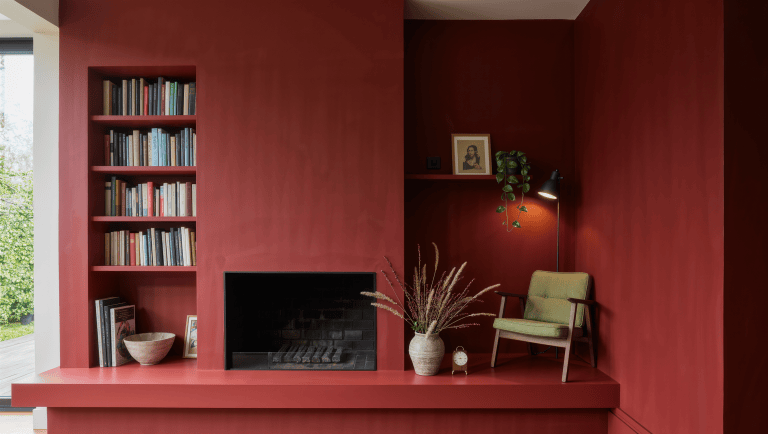
Architectural Interruptions: Chimney Breasts, Recesses, and Columns Need a Supporting Cast
The alcoves beside a chimney breast are not automatically bookcases. Use their depth, symmetry, light, and room function to decide whether they should hold storage, seati…
 Awkward Spaces
Vertical Storage in Awkward Architecture: Knee Walls, Eaves, Above Doors, and Closet Ceilings
A short knee wall can become fitted storage, display, or a low-use zone without making the room feel like cabinetry ate the architecture. Start with access, depth, and wh…
 Outdoor Rooms
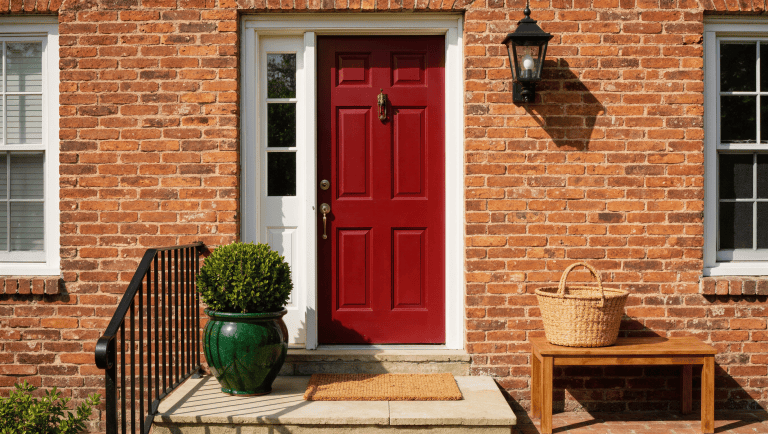
The Front Stoop Deserves a Better Entrance
Make a front stoop a complete arrival through a visible address, safe route, usable landing, weather handling, layered light, restrained planting, and enough room to gree…
 Outdoor Rooms
Container Choreography: Stop Lining Up Pots Like Suspects
Compose container gardens through fewer larger vessels, clear scale hierarchy, repeated materials, compatible plants, working drainage, and enough open space to keep the…
 Outdoor Rooms
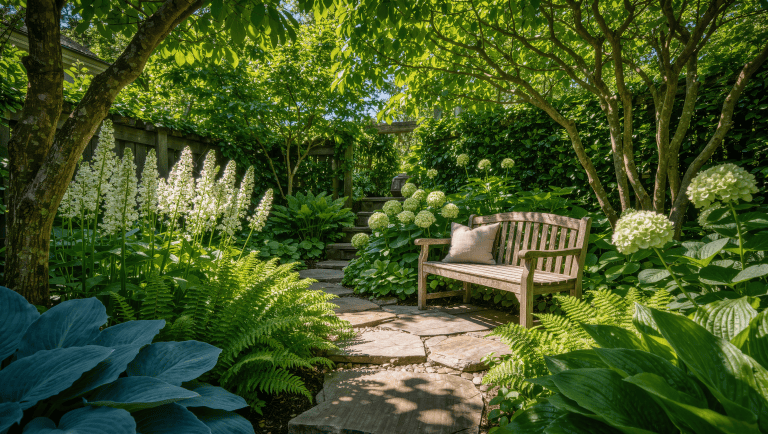
Shade Can Carry a Garden
Treat shade as a positive garden condition through measured light, layered foliage, pale notes, stable paths, moisture-aware planting, and an evening identity that does n…
 Outdoor Rooms
Flowers With a Job: Cutting, Pollinating, Edible, and Seasonal Planting
Build a cutting garden as a small production system with harvest goals, succession, access, conditioning space, useful stem roles, and enough structure to still read as a…
 Outdoor Rooms
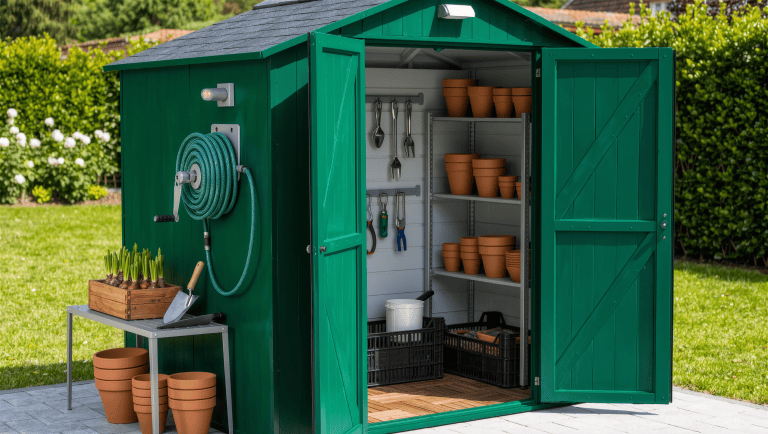
The Shed, Hose, and Storage Problem: Make Outdoor Utility Behave
Turn a neglected shed into useful garden architecture through repair, clear zones, safe storage, task lighting, weather control, and one restrained visual gesture.
 Outdoor Rooms
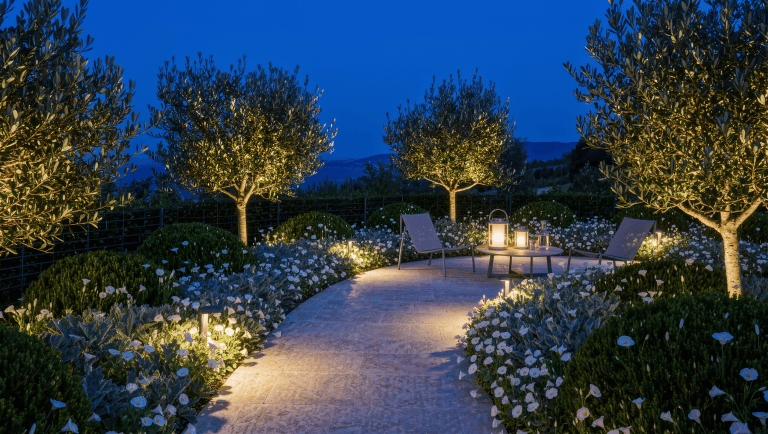
The Night Garden Is Where the Plot Thickens
Design a night garden through legible routes, silhouette, pale and reflective material, controlled fragrance, warm gathering points, and darkness preserved where it adds…
 Outdoor Rooms
The Backyard Needs Destinations, Not More Lawn
Replace undifferentiated lawn with a sequence of outdoor destinations connected by clear routes, sightlines, shade, lighting, service, storage, and uses the household wil…
 Outdoor Rooms
Rescue the Side Yard From Corridor Duty
Turn a narrow side yard into a real passage through clear width, stable drainage, useful light, vertical planting, assigned storage, and one destination worth walking tow…
 Outdoor Rooms
This Balcony Has No Interest in Acting Small
Make a small balcony behave like a complete outdoor room through clear circulation, deliberate scale, exposure-aware planting, compact furniture, concealed maintenance, a…
 Outdoor Rooms
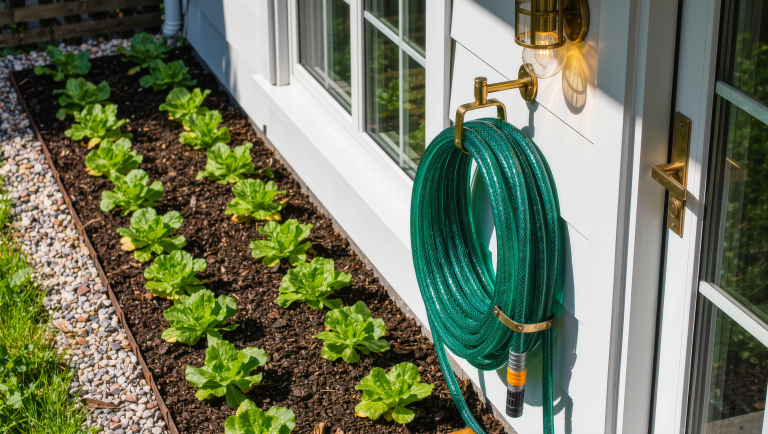
Low-Maintenance Landscaping Is Mostly a Design Problem
Low-maintenance landscaping is mostly geometry, access, and honesty about Saturday. Stop buying faster tools for a yard designed to make ordinary chores harder.
 Outdoor Rooms
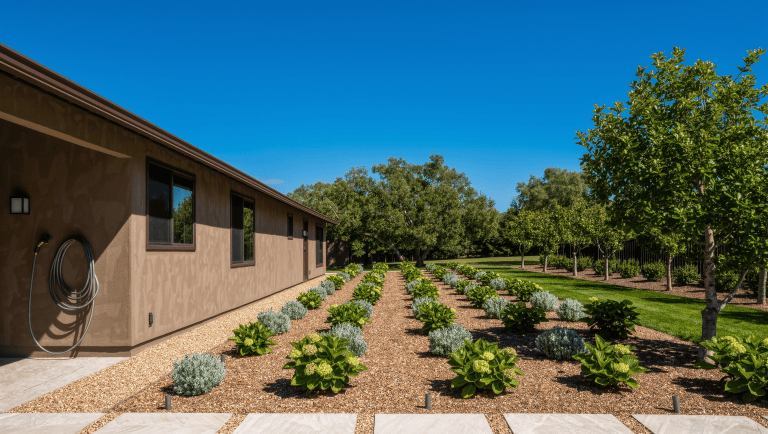
Firewise Landscaping Is a Spatial Strategy, Not a Plant List
Reduce landscape wildfire vulnerability by managing fuels, spacing vegetation, maintaining access, choosing site-appropriate plants, and following local defensible-space…
 Outdoor Rooms
Rainwater Harvesting Should Start With Where the Water Goes
Use rain barrels, cisterns, rain chains, downspout routing, and overflow planning to make roof water useful without creating foundation, mosquito, ice, or maintenance pro…
 Outdoor Rooms
A Meadow Lawn Needs Edges, Paths, and a Maintenance Plan
Replace low-value turf with a meadow or wildflower lawn by planning establishment, paths, seasonal mowing, invasive control, neighborhood edges, and how the space will st…
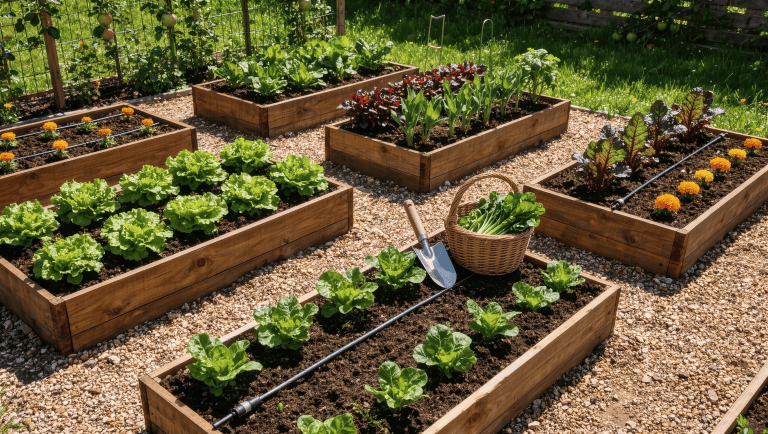 Outdoor Rooms
Raised Beds Should Organize the Landscape
Use raised garden beds as part of the landscape plan by solving placement, access, irrigation, soil depth, pathways, materials, harvest, and off-season structure before f…
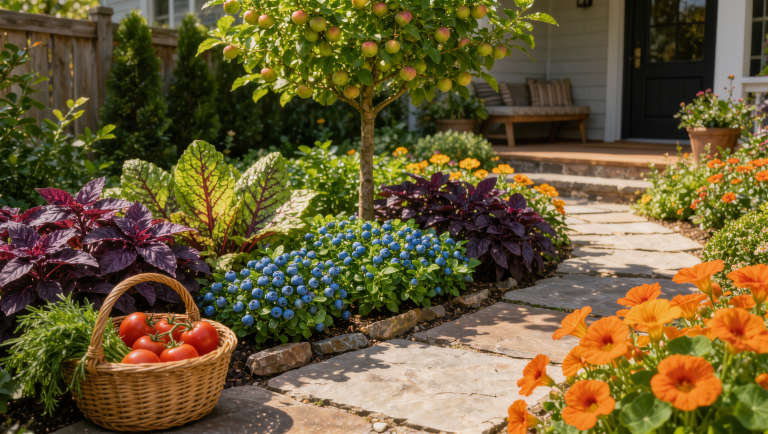 Outdoor Rooms
Edible Landscaping Should Still Look Like Landscaping
Blend fruit trees, berries, herbs, vegetables, and edible flowers into the landscape by planning structure, access, harvest, irrigation, wildlife pressure, and seasonal g…
 Outdoor Rooms
A Pollinator Garden Needs More Than Flowers
Design a pollinator garden as functioning habitat with bloom succession, host plants, nesting opportunities, water, reduced pesticide pressure, and a clear relationship t…
 Outdoor Rooms
A Rain Garden Should Solve Water Before It Tries to Look Natural
Use rain gardens, swales, and dry-creek strategies to slow and absorb runoff while protecting foundations, paths, utilities, overflow routes, and the rest of the landscap…
 Outdoor Rooms
A Clover Lawn Is an Option, Not a Moral Upgrade
Decide whether clover, microclover, a clover-grass mix, or another lawn alternative actually fits your climate, traffic, pets, pollinators, maintenance, and neighborhood…
 Outdoor Rooms
Xeriscaping Is a Water Strategy, Not a Gravel Aesthetic
Design a water-wise landscape by matching plants to site conditions, reducing unnecessary turf, grouping irrigation needs, protecting soil, and planning for shade and sea…
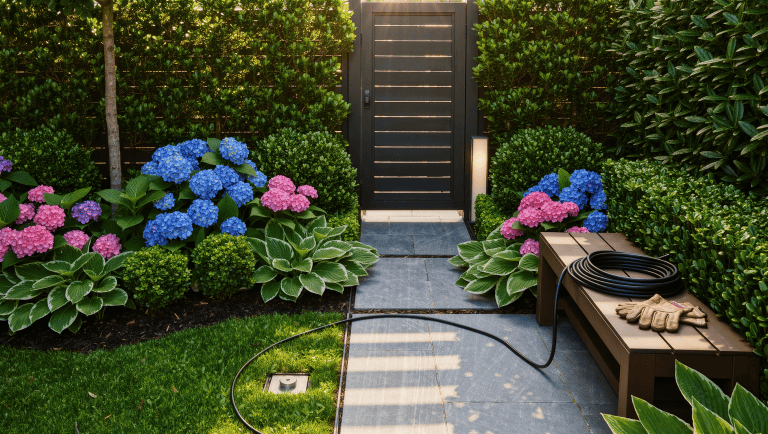 Function and Flow
Irrigation Should Disappear Into the Garden
Plan irrigation around plant zones, water pressure, maintenance, seasonal shutdown, visible hardware, and the way people move through and use the landscape.
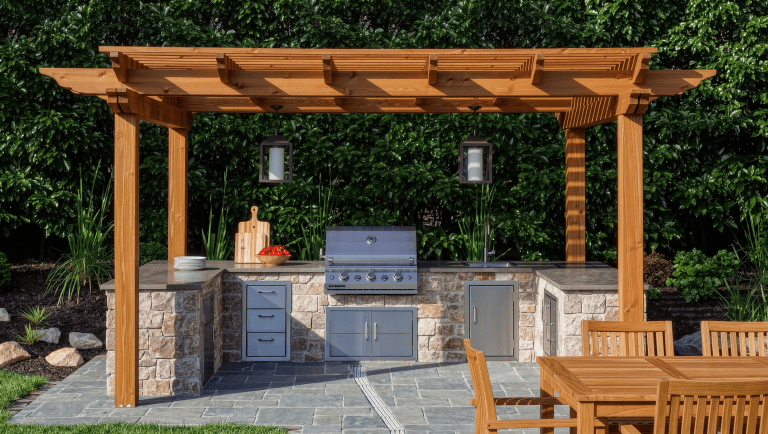 Function and Flow
The Outdoor Kitchen Needs a Floor Plan Before It Needs Appliances
Plan an outdoor kitchen around circulation, landing space, storage, shade, utilities, weather, seating, cleanup, and service routes before choosing appliances.
 Outdoor Rooms
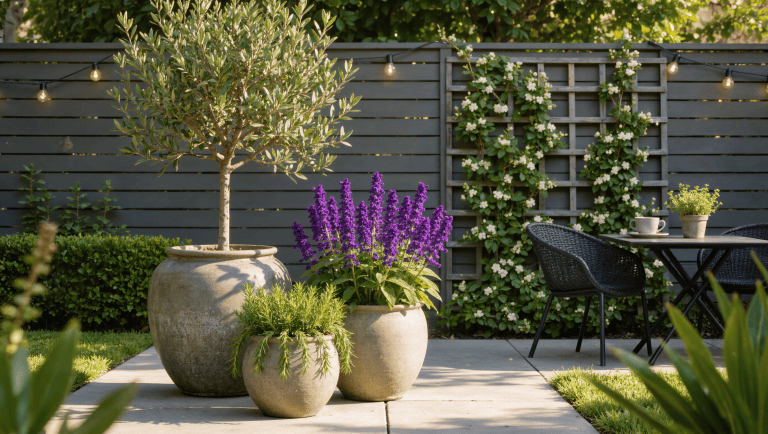
A Small Patio Garden Needs Layers, Not More Pots
Build a small patio garden with layered heights, fewer larger containers, useful circulation, seasonal structure, and planting chosen for real light and maintenance.
 Outdoor Rooms
Native Landscaping Without the Wild-Mess Excuse
Design a native landscape around structure, mature size, bloom sequence, water needs, habitat value, maintenance, and the way the yard is actually used.
 Function and Flow
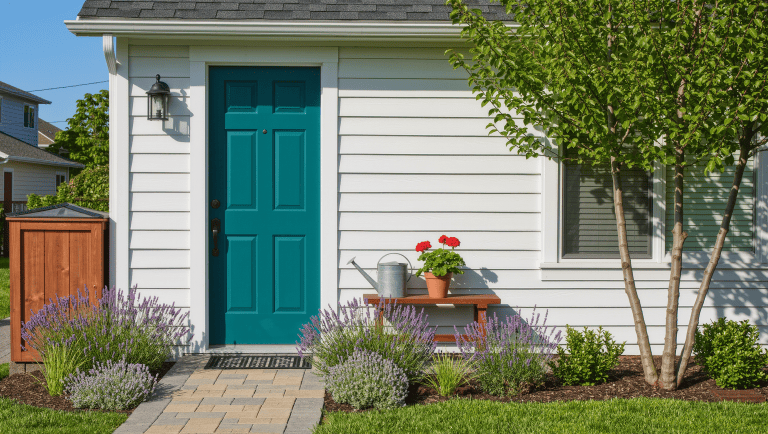
The Small Front Yard Has to Do More Than Behave
Design a small front yard around arrival, privacy, planting, storage, seasonal structure, and curb appeal without sacrificing the route to the door.
 Function and Flow
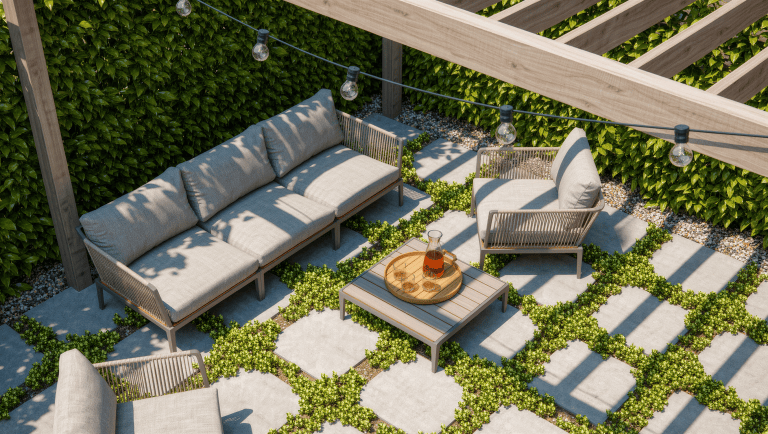
A Permeable Patio Should Still Feel Like a Room
Plan a permeable patio that manages water without sacrificing furniture stability, circulation, comfort, maintenance, or the visual coherence of an outdoor room.
 Materials, Color & Finish
The Cottage Patio Needs Structure Before It Gets Charming
Create a cottage-style patio with layered planting, weathered materials, useful seating, paths, boundaries, and seasonal interest instead of relying on decorative nostalg…
 Materials, Color & Finish
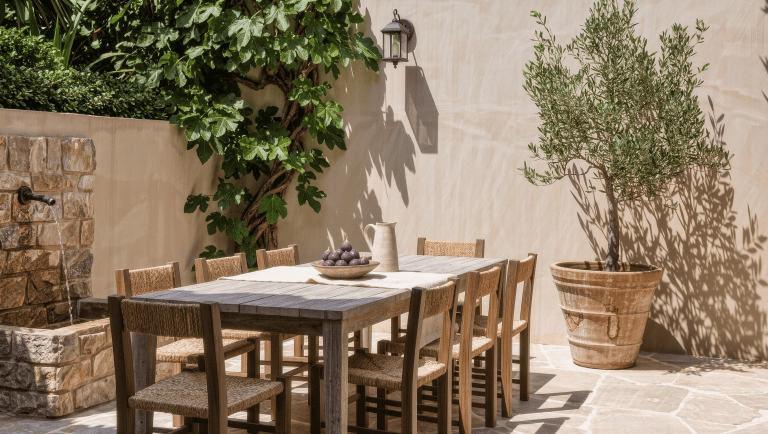
European Courtyard Design Without the Theme-Park Effect
Build a French- or Italian-inspired courtyard through proportion, paving, planting, shade, furniture, water, and enclosure without turning the space into a costume set.
 Function and Flow
Use AI and 3D Room Planners as a Test, Not a Design Oracle
Use AI interior-design images and 3D room planners to test layouts, scale, color direction, and alternatives while verifying dimensions, circulation, materials, lighting,…
 Furniture and Scale
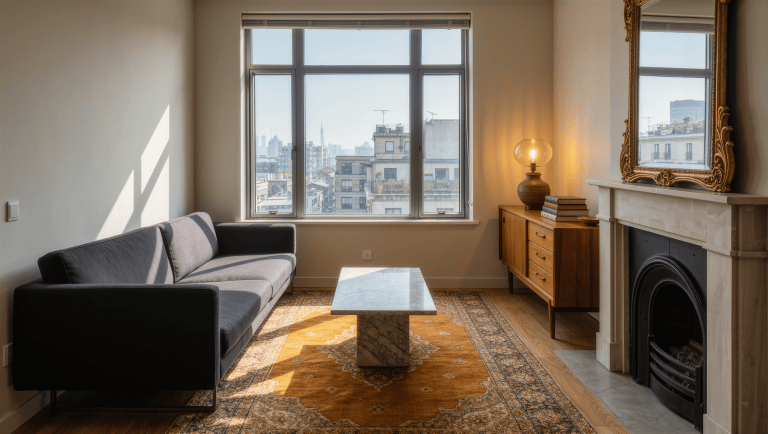
Collected, Not Themed: How to Mix Vintage Pieces Into a Modern Room
Mix vintage and modern furniture by balancing scale, function, finish, repetition, repair quality, and negative space so old pieces add history without turning the room i…
 Function and Flow
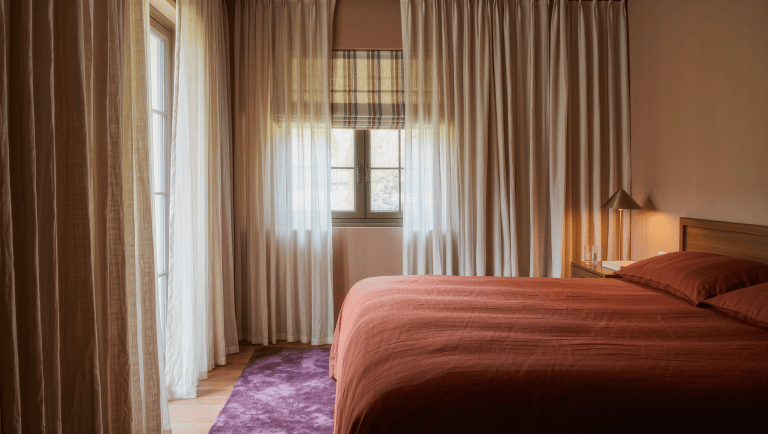
Window Treatments Are Architecture You Can Change
Use curtains, Roman shades, blinds, and layered window treatments to control light, privacy, proportion, acoustics, temperature, and the visual height of a room—not just…
 Function and Flow
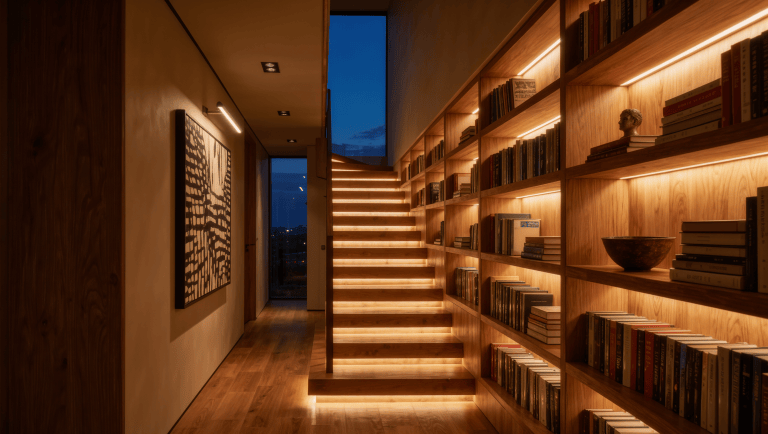
Low-Voltage Lighting Is the Quiet Infrastructure Behind Better Atmosphere
Use low-voltage accent lighting to add controlled layers at shelves, niches, stairs, cabinets, art, and outdoor thresholds while keeping transformers, glare, maintenance,…
 Function and Flow
Repurposed Materials Without the Salvage-Yard Costume
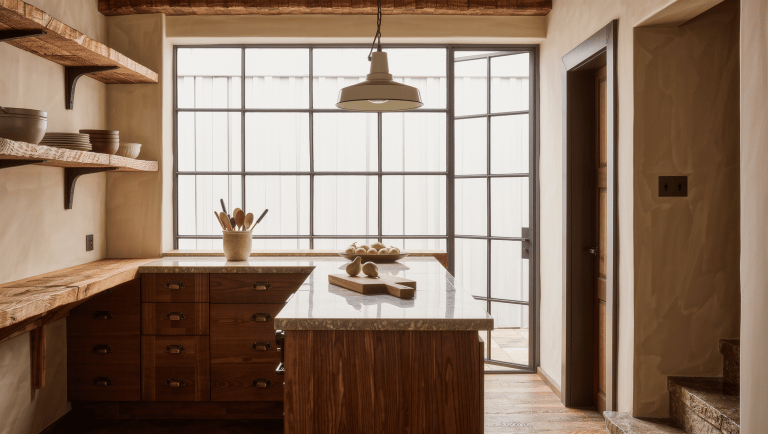
Use reclaimed wood, vintage hardware, reused stone, architectural salvage, and repurposed furniture where the material improves function, texture, history, or durability—…
 Light and Atmosphere
Pattern Sandwiching Without the Visual Hangover
Layer wallpaper, painted trim, ceilings, wainscoting, and patterned textiles with a clear hierarchy so one hero pattern leads and at least one surface stays quiet instead…
 Function and Flow
Soft Geometry: When a Room Needs Fewer Hard Stops
Use curves, arches, rounded furniture, scalloped details, and softer transitions where they improve circulation, sightlines, comfort, or visual rhythm—not simply because…
 Light and Atmosphere
Biophilic Design Without Turning the Room Into a Greenhouse
Use biophilic design through daylight, views, natural materials, ventilation, seasonal change, organic forms, and selective planting instead of filling every surface with…
 Function and Flow
A Wellness Room Should Change What You Actually Do There
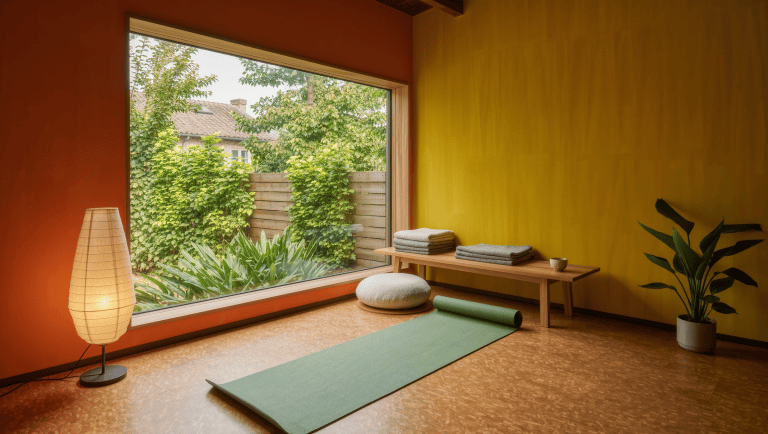
Create a wellness room around the behavior you want to support—rest, stretching, meditation, recovery, reading, or quiet—using light, sound, storage, comfort, and a low-f…
 Function and Flow
The Hobby Room Is Back. Make It Earn the Square Footage.
Design a hobby room for the activity itself—not a themed backdrop—with the right table, storage, lighting, sound control, seating, reset system, and room to change over t…
 Function and Flow
The Empty Path Through the Room Is Part of the Design
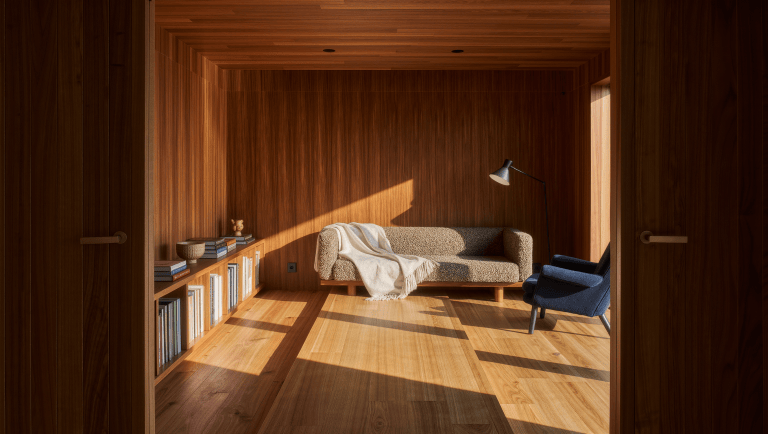
In a small room, the unfurnished route is not wasted space. It is what lets the furniture, storage, light, and people function without constant negotiation.
 Multi-Use Rooms
Small Multi-Use Rooms Need Acoustic Boundaries Too
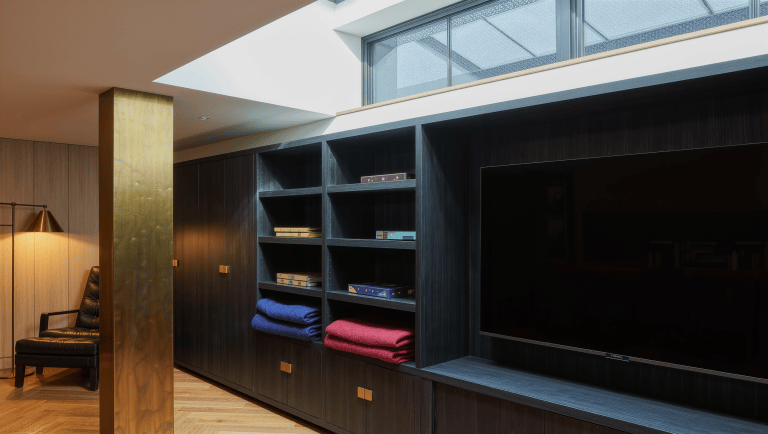
Visual zoning is only half the problem in a compact home. Use soft absorption, furniture placement, doors, gaps, and task scheduling to keep work, sleep, television, and…
 Function and Flow
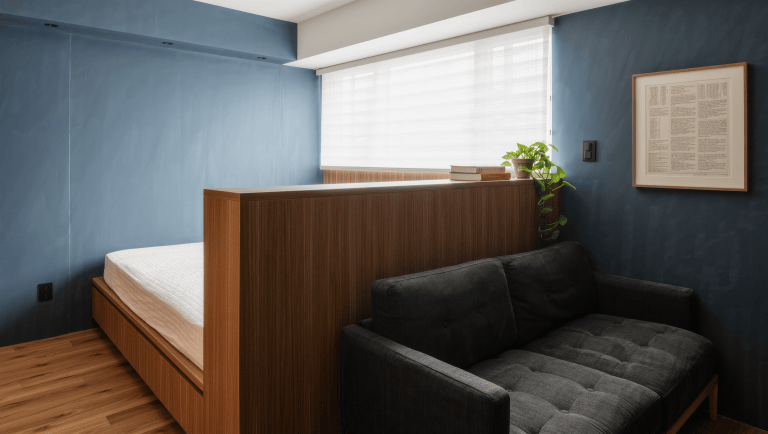
A Half-Height Divider Can Do More Than a Full Wall
Small rooms often need separation without losing daylight or sightlines. A half-height divider can hold storage, define a zone, or support furniture while keeping the upp…
 Function and Flow
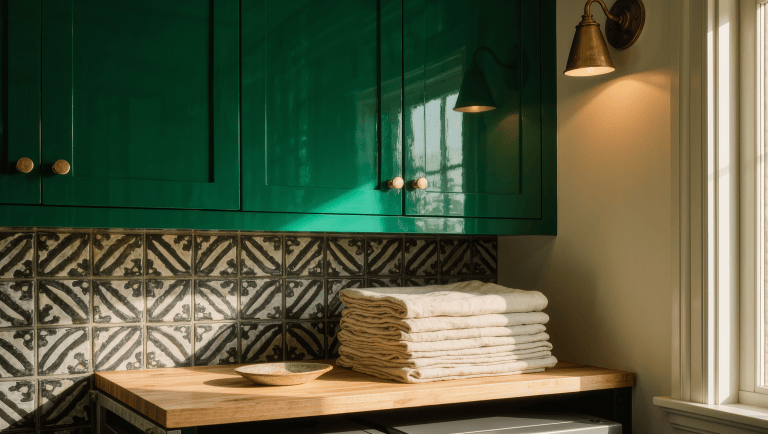
Build One Utility Wall and Stop Scattering the Household
A small home often feels cluttered because household support functions are scattered. Consolidate charging, mail, cleaning tools, bags, keys, and backup supplies into one…
 Awkward Spaces
Low Ceilings and Sloped Eaves Need Low Furniture and Better Nerve
A sloped ceiling is not a defect to hide. Use the full-height zone for standing tasks and the low edge for storage, lounging, sleeping, or display so the architecture doe…
 Awkward Spaces
The Small Room With Four Doors Needs a Center, Not Another Wall
Rooms with too many doorways lose usable perimeter. Instead of forcing furniture onto broken walls, organize the center and protect the paths between openings.
 Furniture and Scale
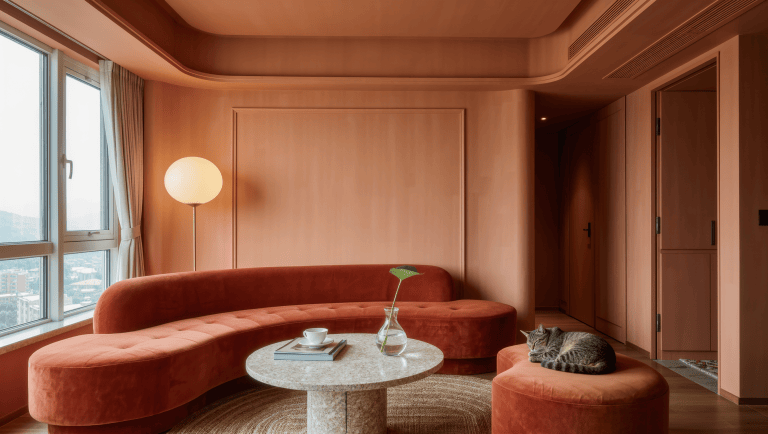
Rounded Furniture Is Better Traffic Engineering
Curved and rounded furniture can soften tight circulation and reduce collision points in compact rooms. Use the shape where bodies actually turn, not as a decorative them…
 Materials, Color & Finish
Stop Chopping the Small Home Into Twelve Different Finishes
A small home can handle bold materials, but too many abrupt finish changes fragment the plan. Use continuity strategically so rooms relate without becoming bland.
 Light and Atmosphere
Your Tiny Room Has No Business Sacrificing a Table to a Lamp
In a compact room, lighting should not consume every nightstand, desk corner, and side table. Move the right light source to the wall, ceiling, shelf, or furniture itself…
 Multi-Use Rooms
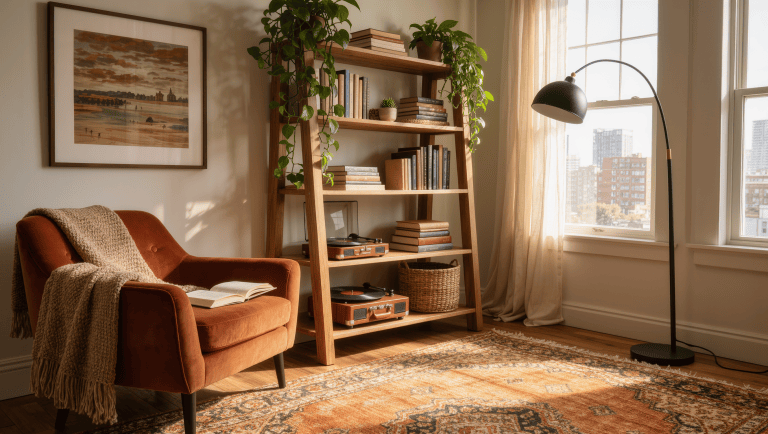
The Rental Is Small. Leave the Drill Out of It.
Renters can improve a small home without pretending it is permanent. Use freestanding zones, reversible lighting, movable storage, and furniture that survives the next ad…
 Function and Flow
Store Up High, Live Down Low: The Two-Level Storage Rule
Vertical storage works best when the room has two systems: an easy-reach daily zone and a higher archive zone for things that do not deserve prime real estate.
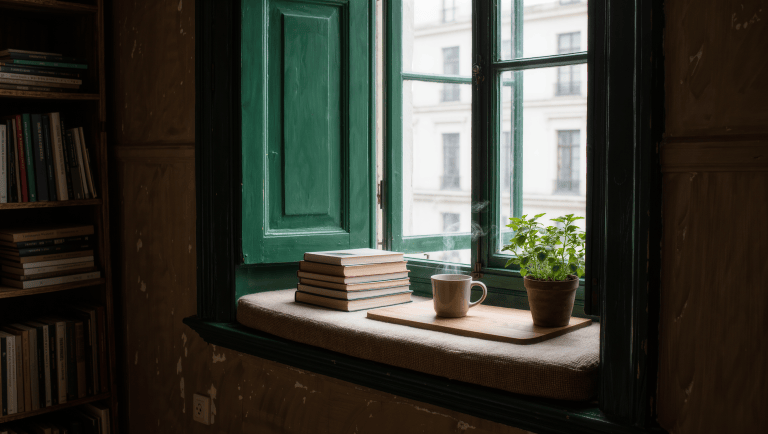 Awkward Spaces
The Window Sill Has Been Wasting Its Potential
A deep window can become a desk, reading perch, shelf, or storage edge—but only if the intervention preserves daylight, ventilation, safe access, and the actual window op…
 Furniture and Scale
Put the Furniture on the Wall and Give the Floor Back
Wall-mounted desks, nightstands, consoles, and storage can release floor area and simplify circulation. The trick is choosing the pieces that genuinely benefit from float…
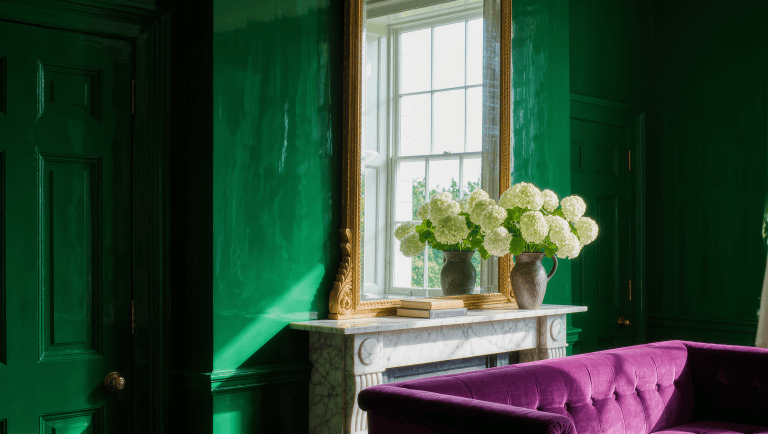 Light and Atmosphere
A Mirror Should Borrow Light, Not Multiply the Mess
Mirrors can extend light and depth in a small room, but placement matters more than size. Reflect the useful view, not the clutter, glare, or television.
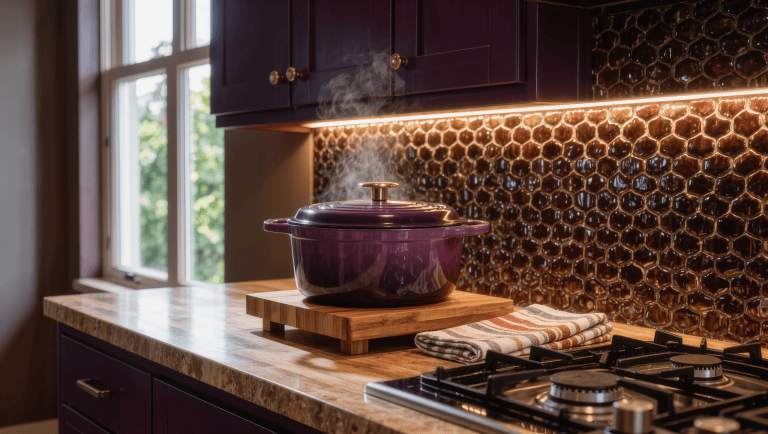 Function and Flow
Tiny Kitchens Fail at Landing Space Before They Fail at Storage
A tiny kitchen can hold plenty and still be miserable to use. The missing ingredient is often landing space beside the refrigerator, sink, oven, and everyday appliances.
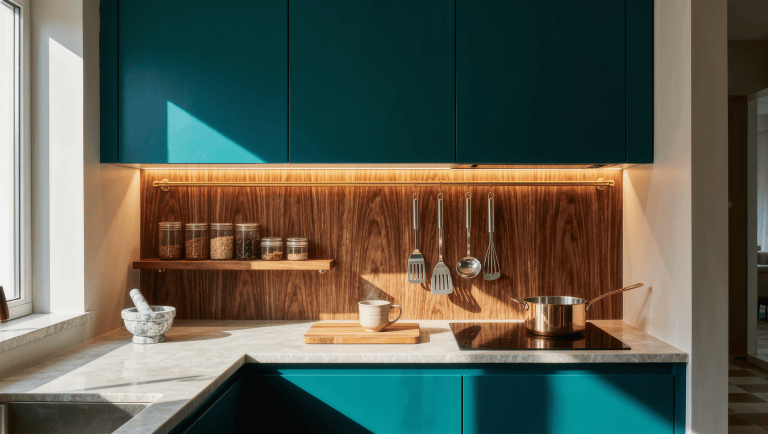 Function and Flow
The Small Kitchen Needs a Working Wall, Not More Counter Clutter
A compact kitchen gets more useful when storage, tools, lighting, and daily ingredients are organized vertically without turning the backsplash into a hardware store.
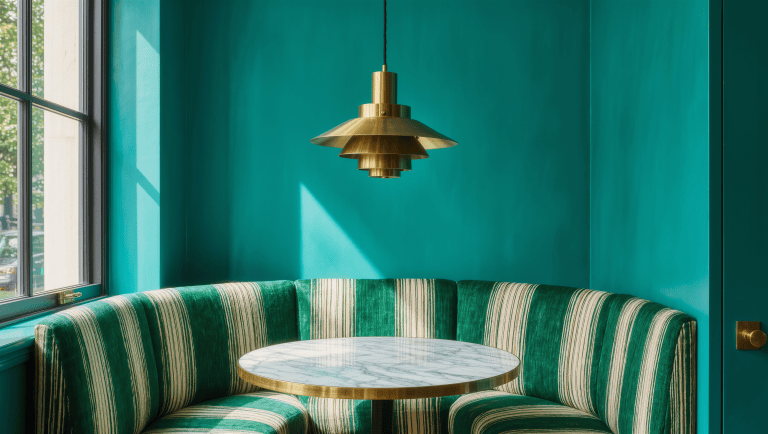 Furniture and Scale
A Banquette Can Save the Dining Nook—Until It Traps Everyone
Banquettes can recover wall space and add storage, but only when the table, access, seat depth, and daily traffic actually work together. Here is how to tell whether one…
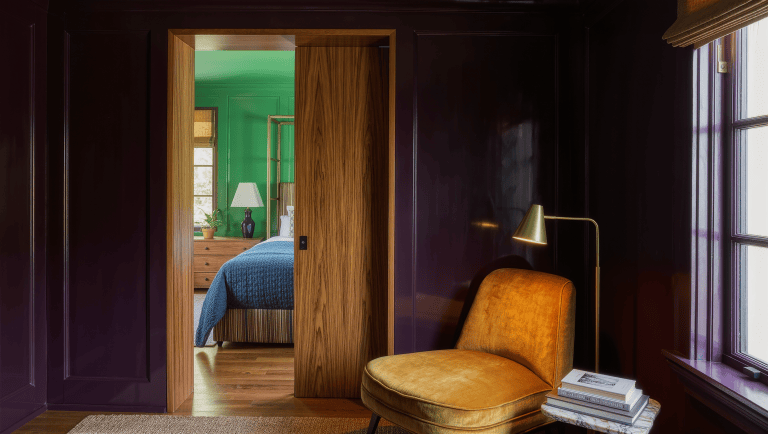 Function and Flow
The Door Swing Is Eating Your Small Room
In a tight room, the door can consume more usable floor than the furniture. Diagnose the swing first, then decide whether a pocket, sliding, or rehung door actually impro…
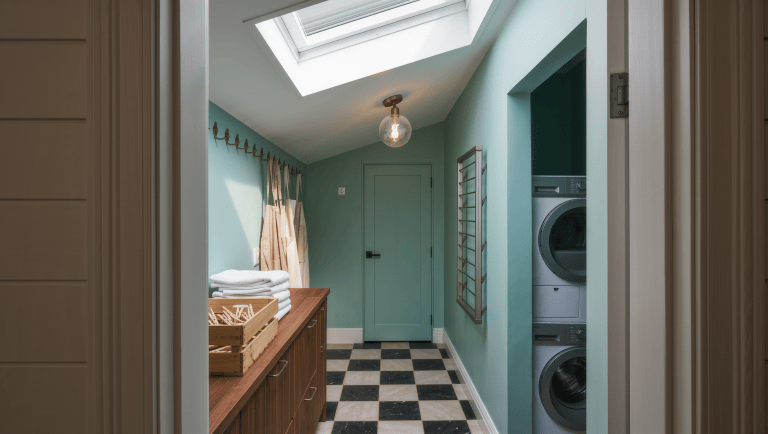 Awkward Spaces
The Laundry Pass-Through Can Become a Working Utility Zone
A laundry passage can do more than hold machines and baskets. Use shallow storage, folding surfaces, hanging zones, lighting, and disciplined circulation to turn a transi…
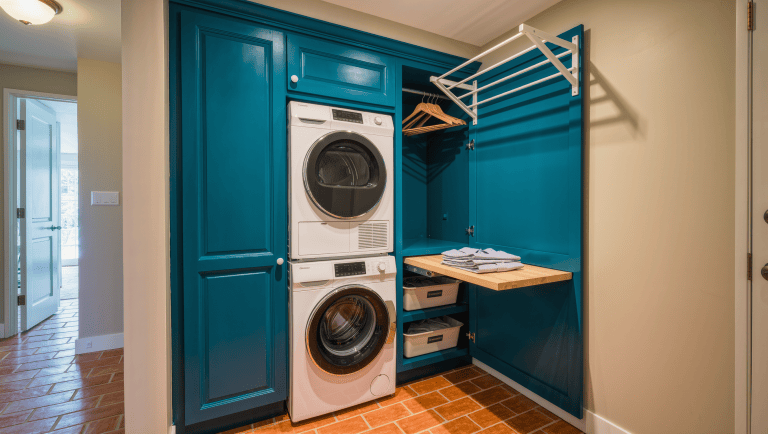 Function and Flow
The Laundry Closet Needs a Workflow, Not a Stack of Appliances
A laundry closet is not successful because the washer and dryer fit. It needs a place for detergent, sorting, hanging, folding, ventilation, access, and the inevitable we…
 Function and Flow
The Small Bathroom Gets Bigger When the Floor Comes Back
Floating fixtures can make a compact bathroom easier to read and clean, but the real gain comes from protecting clear floor, door movement, storage access, and usable lig…
 Materials, Color & Finish
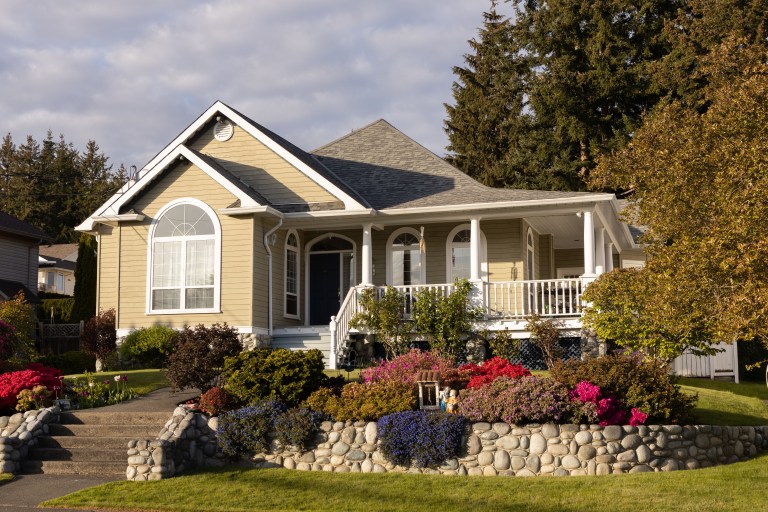
The Shrubs Are Doing More Work Than the Siding
I cannot afford to replace the siding I dislike. Planting changed how much of the front of the house it gets to dominate — and that is real design work, not a workaround.
 Light and Atmosphere
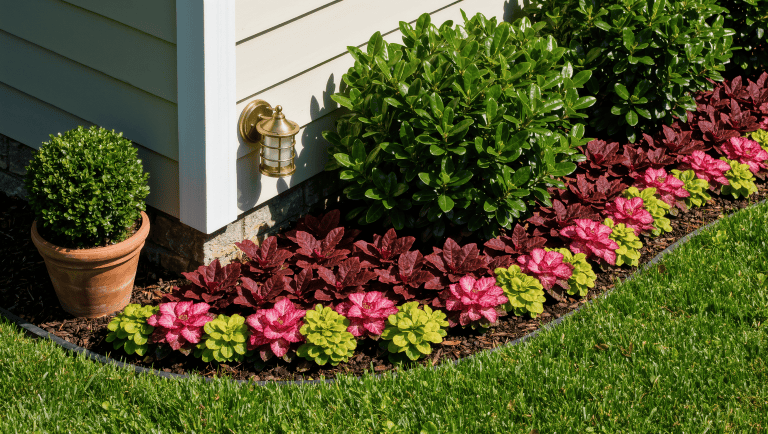
The Flowers Outside Are Part of the Room Too
A week every year putting flowers back into the outside of the house. In Montana the growing season is short enough that I am not interested in a subtle result.
 Light and Atmosphere
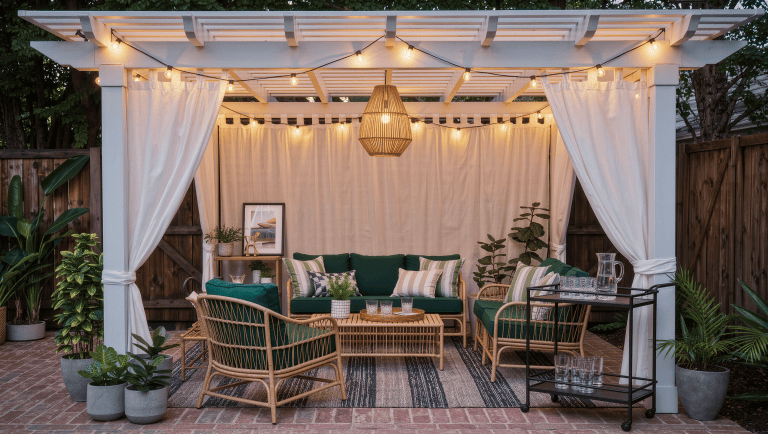
A Pergola Is Not an Outdoor Room Until It Starts Acting Like One
Putting furniture under a pergola does not make it an outdoor room. Ours did not become one until I started treating it like part of the house — curtains, blinds, art, li…
 Light and Atmosphere
Fresh Flowers Are the Cheapest Way I Know to Wake Up a Room
Ten or twenty dollars at the grocery store, a few good vases, and ten minutes with a pair of scissors. No florist required, and no filler pretending to be an arrangement.
 Function and Flow
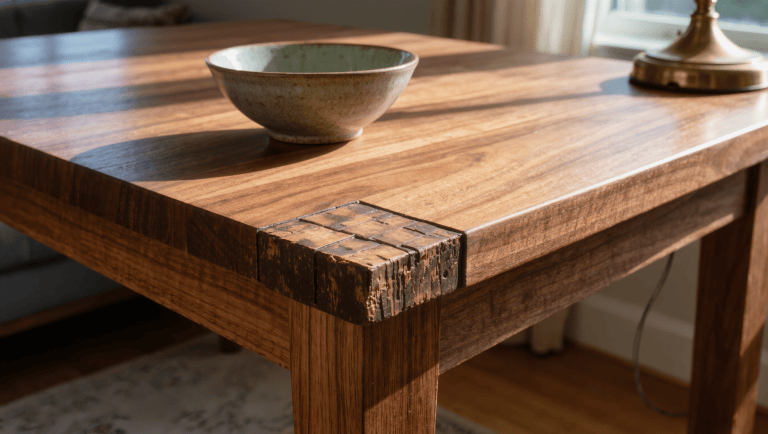
Tiny Changes That Make a House Feel Better
You do not have to repaint the house or start a renovation. The changes that matter most are often embarrassingly small — here are the ones that actually move a room.
 Function and Flow
How to Make a House Feel Lived-In Without Letting It Get Fussy
There is a point where a room stops feeling finished and starts feeling managed. Here is where that line sits, and how to stay on the right side of it.
 Light and Atmosphere
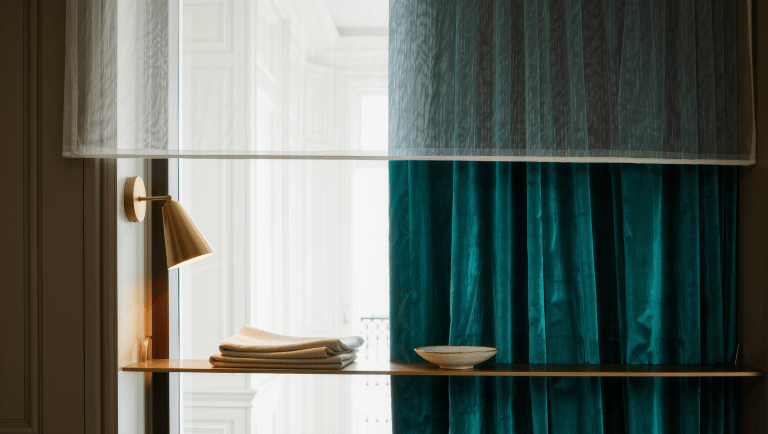
My House Changes With the Seasons. The Plan Should Too.
I change the house with the seasons — not with token decorations, but with enough lighting, texture, and accumulated good pieces that it genuinely reads differently in Fe…
 Light and Atmosphere
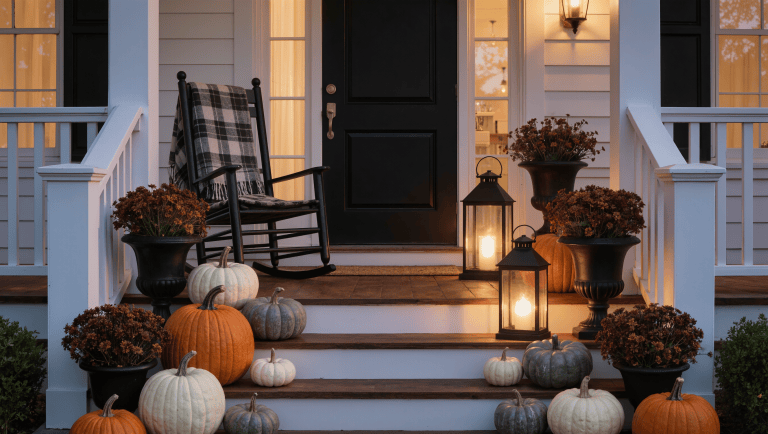
Halloween Without Cheap Haunted-Yard Energy
I do not decorate for fall in September. I decorate for Halloween, and there is a difference — three pumpkins on the porch is not a seasonal position.
 Light and Atmosphere
Christmas Sparkle After You Stop Needing a Rigid Color Scheme
I used to have a Christmas color scheme. Purple and silver, very committed. Here is what replaced it, and why the room still holds together without one.
 Awkward Spaces
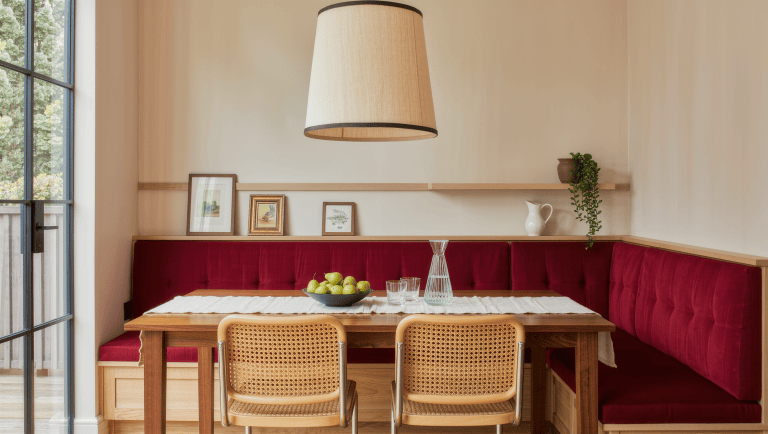
The Wall Behind the Dining Table Can Carry More of the Room
The wall behind a dining table can support shallow storage, a banquette, art, lighting, or serving space. Use chair pullback, circulation, and hosting patterns to decide…
 Awkward Spaces
The Door-Swing Dead Zone Can Still Earn Its Keep
The floor behind an opening door is not useless, but it cannot behave like normal furniture territory. Use shallow wall storage, hooks, lighting, or protected negative sp…
 Awkward Spaces
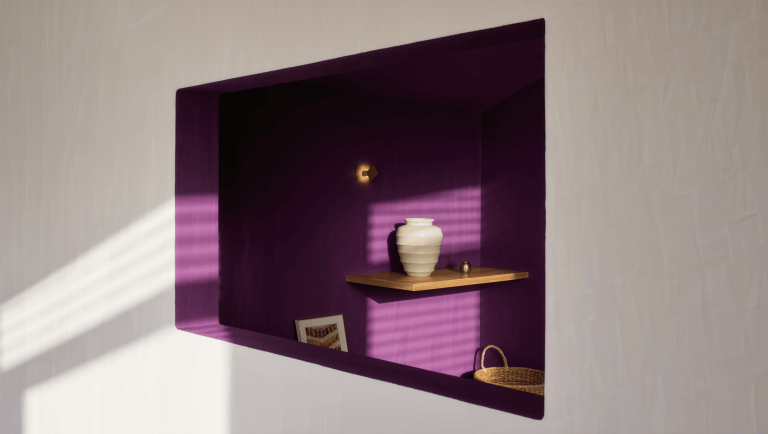
The Awkward Recess Needs a Frame, Not Filler
A shallow or oddly proportioned wall recess can become display, storage, seating, color, or deliberate negative space. Define its edges and purpose before trying to fill…
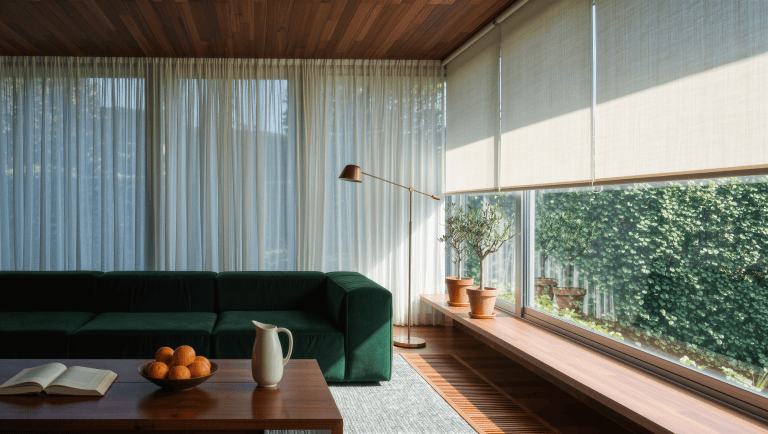 Function and Flow
The Window Wall Is Beautiful Until You Try to Live With It
Huge windows can dominate a large room with glare, heat, drafts, and awkward furniture placement. Design the layout and treatments around how the glass behaves all day.
 Awkward Spaces
The Column in the Middle of the Room Needs an Alibi
A structural column can become a zoning device, lighting anchor, display surface, or quiet architectural element. The goal is not to disguise it at any cost, but to make…
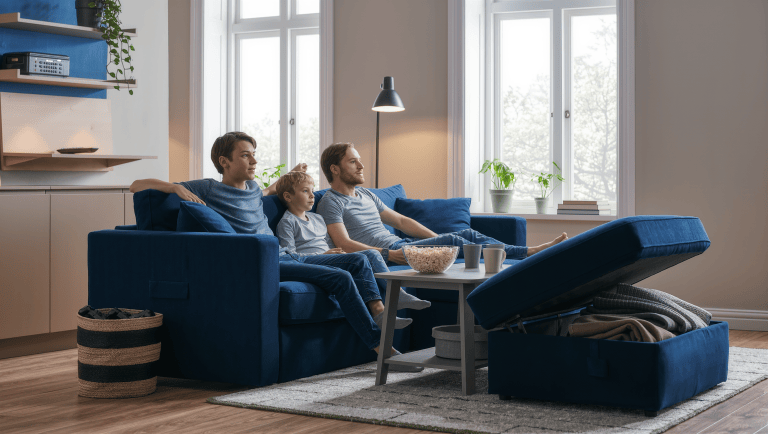 Function and Flow
The Family Lounge Needs to Recover After Movie Night
A family lounge should handle blankets, remotes, snacks, game controllers, extra seating, and movie-night sprawl without looking permanently mid-event. Design the recover…
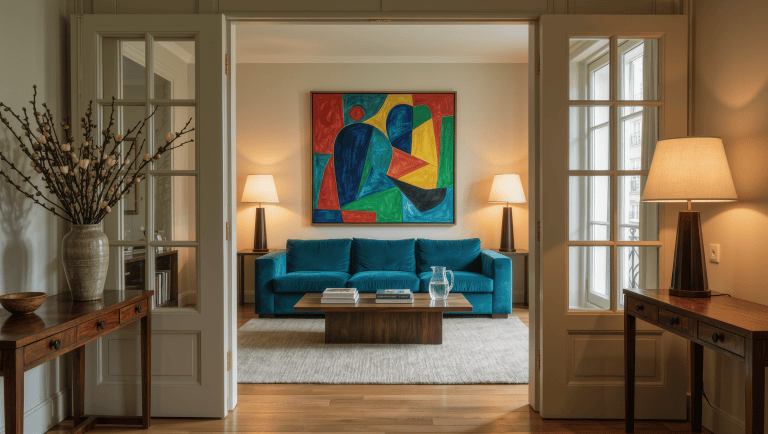 Function and Flow
The Living Room Needs an Arrival View, Not a Furniture Pileup
The first view into a living room should explain the room before it reveals every piece of furniture. Design the entry sightline around one strong composition, clear circ…
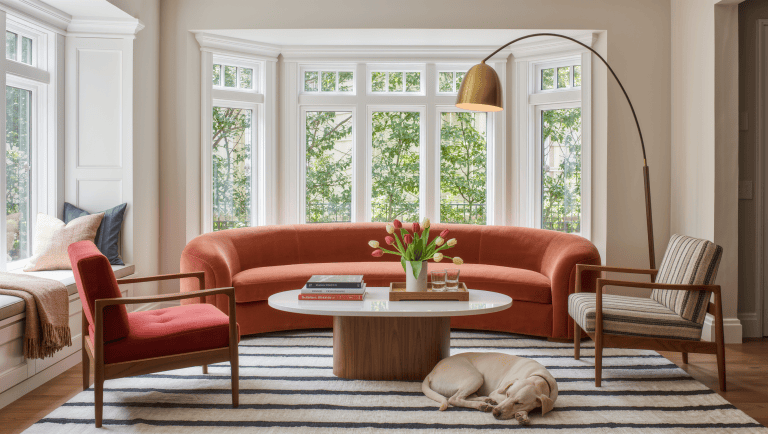 Function and Flow
The Living Room Is Over-Seated for the Life You Actually Live
More seats do not automatically make a living room more hospitable. Audit who actually uses the room, how often guests arrive, and which seats block circulation so the la…
 Awkward Spaces
The Closet Ceiling Is Storage You Forgot to Measure
The high zone above a closet rod can hold seasonal and infrequent items efficiently—if shelf depth, visibility, step access, and container size are planned instead of sim…
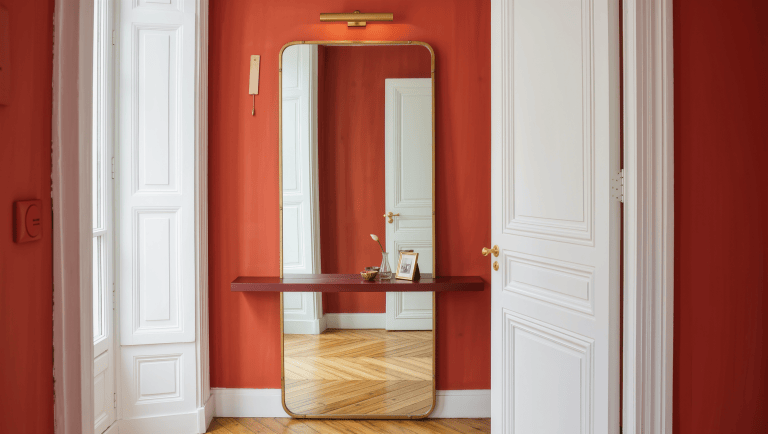 Awkward Spaces
The Space Between Two Doors Needs a Plan, Not a Tiny Table
A narrow wall trapped between two doorways can carry art, lighting, a mirror, shallow storage, or a small functional station—but only after both door swings and traffic p…
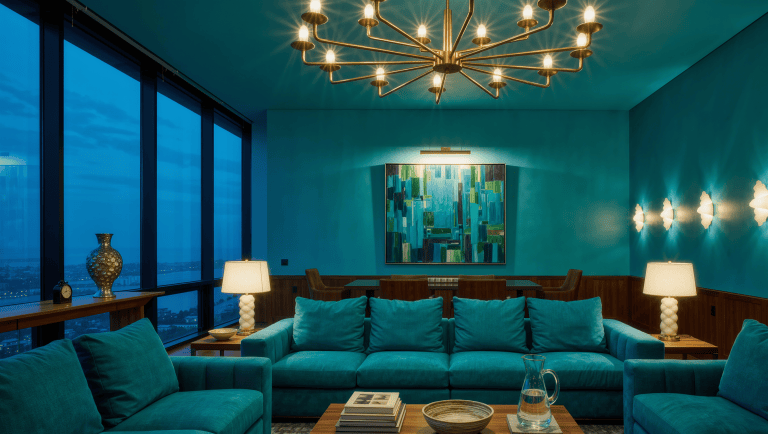 Function and Flow
A Chandelier Cannot Carry 900 Square Feet by Itself
Large rooms need several layers of light tied to actual uses. One dramatic fixture can anchor the ceiling, but it cannot make every seat, wall, and path work after dark.
 Awkward Spaces
The Attic Eaves Can Store More Than Holiday Decorations
Attic eaves can become useful low storage, but only after you separate accessible volume from insulation, ventilation, structure, and awkward crawl space. Design the room…
 Furniture and Scale
Please Stop Building a Rug Archipelago
Several small rugs can make a huge room feel chopped into unrelated islands. Use rug scale and placement to define zones without fragmenting the floor plan.
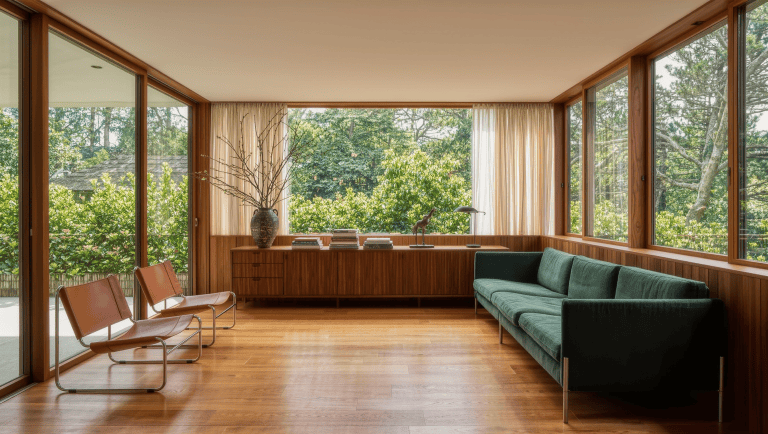 Function and Flow
The Empty Middle Is Allowed to Stay Empty
Not every open patch of floor in a large room is a design problem. Some of it is circulation, visual relief, or the space that makes the rest of the room work.
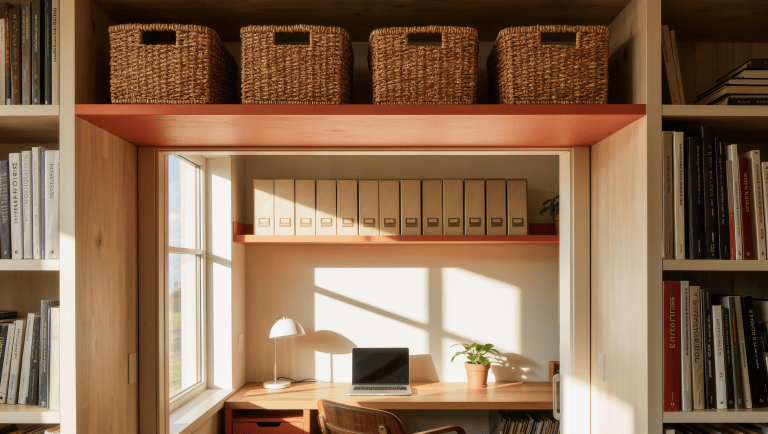 Awkward Spaces
Above the Door Is Real Storage, but It Has to Look Intentional
Over-door storage can recover useful vertical space in small rooms, but only when it aligns with the architecture and holds the right things. Use it for light, infrequent…
 Function and Flow
Stop Decorating the Perimeter. The Room Has a Center.
Pushing every sofa, chair, and cabinet to the walls can make a large room feel colder and less useful. Floating furniture creates edges, intimacy, and better flow.
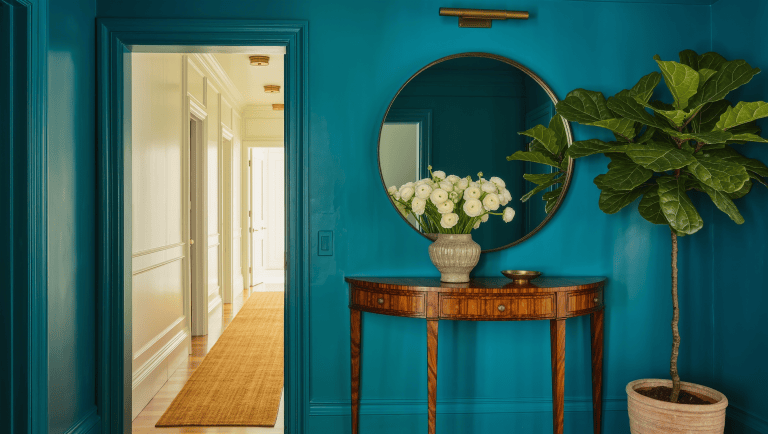 Awkward Spaces
The Dead-End Hallway Needs a Destination
A hallway that ends in a blank wall feels longer and more accidental than it is. Give the sightline a destination without blocking circulation or turning the end wall int…
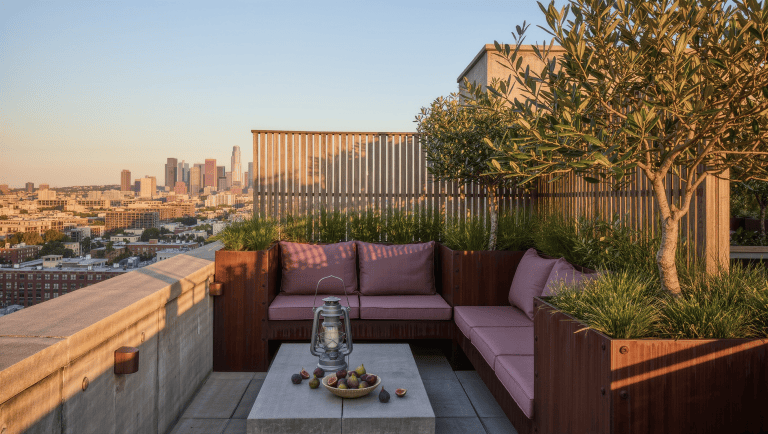 Outdoor Rooms
The Rooftop Garden Needs Windproof Glamour
Build rooftop glamour from verified structure, wind, heat, drainage, secure objects, exposure-aware planting, shade, lighting, and a guest count the roof can actually sup…
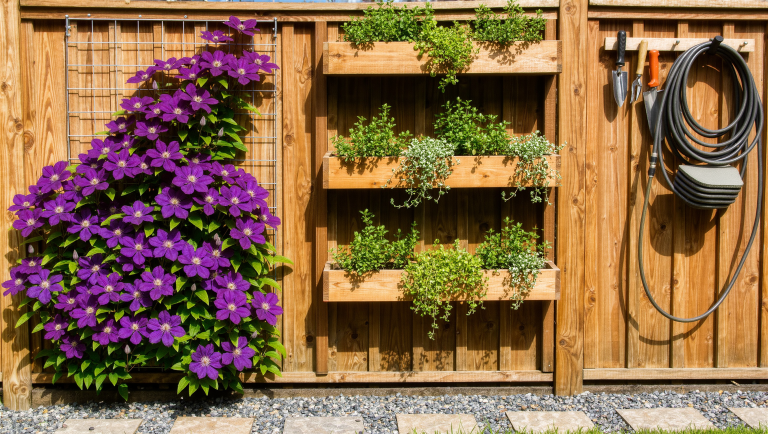 Outdoor Rooms
The Fence Is Free Vertical Real Estate
Use a fence as vertical garden architecture through structure, controlled planting, useful privacy, lighting, storage, and maintenance access that does not disappear behi…
 Outdoor Rooms
One Ridiculous Flower Move Can Save the Entire Yard
Save a yard with one deliberate floral act by choosing the highest-value view, matching scale to architecture, concentrating budget and color, engineering the installatio…
 Outdoor Rooms
Seasonal Flower Explosions for People Who Refuse a Permanent Commitment
Create seasonal flower explosions without permanent garden obligations by concentrating bulbs, annuals, containers, or temporary climbers in one high-impact zone with a p…
 Outdoor Rooms
Under the Tree Is a Room, Not a Dead Zone
Turn the space beneath a mature tree into a usable outdoor room without treating the root area like empty construction space. Start with tree condition, light-touch circu…
 Outdoor Rooms
Hide the Hose, Keep the Magic
Make garden water infrastructure disappear into the plan through well-placed taps, complete hose storage, protected routes, sensible irrigation, drainage, and visible mai…
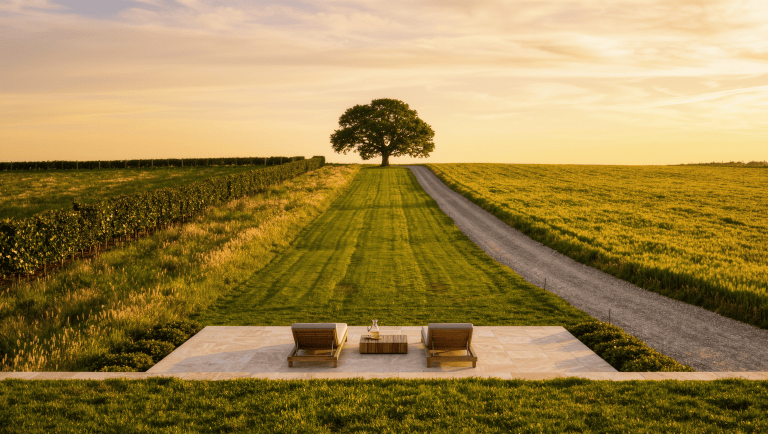 Outdoor Rooms
This Yard Has Main-Character Acreage
Give a large yard hierarchy through long views, daily and destination rooms, service routes, maintenance zones, restrained planting, and enough open land that the propert…
 Outdoor Rooms
Plant the Path Like It Has Somewhere Important to Go
Plant a path as a designed journey with clear width, layered edges, visible turns, seasonal sequence, night legibility, and a destination that justifies the walk.
 Outdoor Rooms
Patio Islands Can Break Up Hardscape Without Breaking the Room
Use planted patio islands to soften large hardscape, create zones, frame views, absorb water, and add shade or seasonal structure without wrecking circulation.
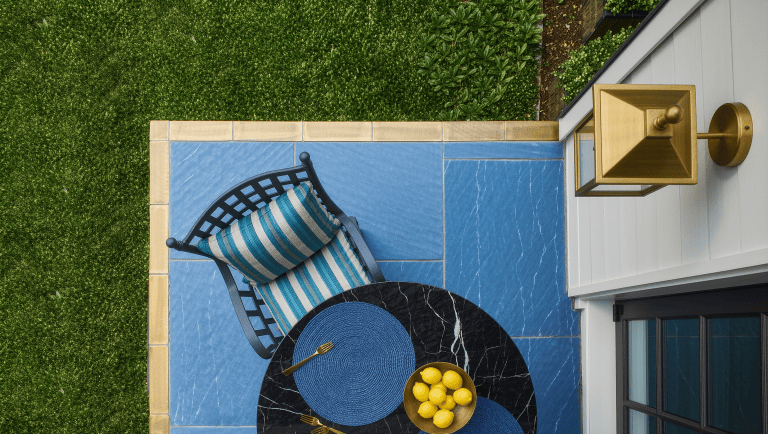 Function and Flow
A Small Backyard Needs a Floor Plan Before It Needs Furniture
Plan a small backyard like a compact floor plan: protect circulation, size activities at their occupied footprint, keep one flexible area, and give permanent space to the…
 Function and Flow
The Home Office Needs a Closing Scene
A home office should make it easy to stop working. Build a visible end-of-day reset with cable control, closed storage, a clear desk baseline, device parking, and lightin…
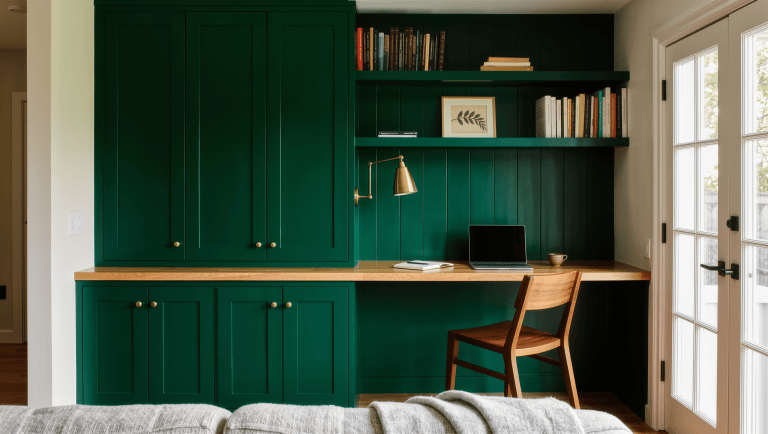 Function and Flow
One Work Wall Can Be Enough Office
A compact work wall can replace a full room when it combines desk surface, task lighting, power, closed storage, files, and visual closure in one disciplined elevation in…
 Function and Flow
The Office Chair Is Designing More of the Room Than You Think
The office chair is moving furniture: it needs pullback, swivel, foot space, access to storage, and a clear route away from the desk. Plan its full operating footprint be…
 Function and Flow
The Back Bar Is Where the Drama Belongs
The back wall of a home bar can carry color, stone, mirror, metal, tile, shelving, and light because the working counter needs to stay practical. Concentrate visual drama…
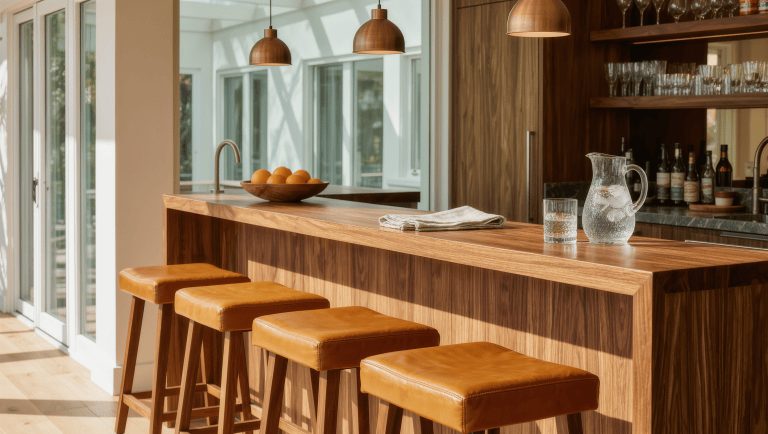 Function and Flow
The Bar Stool Is a Clearance Problem Before It Is a Style Choice
Bar stools have to fit the counter height, knee space, traffic lane, foot support, and actual body before they fit the room's style. Measure the operating zone before buy…
 Function and Flow
Home Bar Lighting Should Make Glass Look Good and Labels Legible
Home bar lighting has two jobs: create atmosphere and support the work. Layer shelf light, task light, reflected glow, and room light so bottles sparkle without turning t…
 Function and Flow
The Bar Cabinet Should Be Able to Disappear
A bar cabinet can be theatrical when open and quiet when closed. Design the doors, interior lighting, bottle depth, glassware, work surface, ventilation, and hardware so…
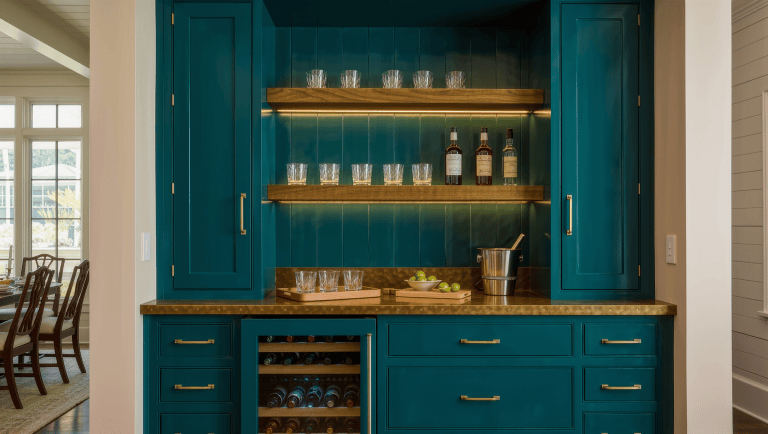 Function and Flow
The Dry Bar Is Often the Better Bar
A dry bar can deliver storage, serving space, refrigeration, glassware, and visual drama without the plumbing, counter loss, and maintenance of a sink. Decide whether wat…
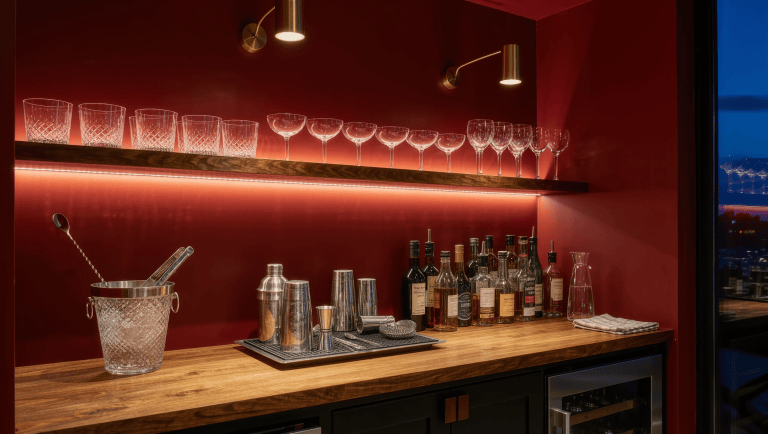 Function and Flow
A Home Bar Needs a Workflow, Not a Bottle Collection
A useful home bar is organized around the sequence of making and serving drinks: glassware, ice, tools, bottles, water, waste, and cleanup. Design the workflow before the…
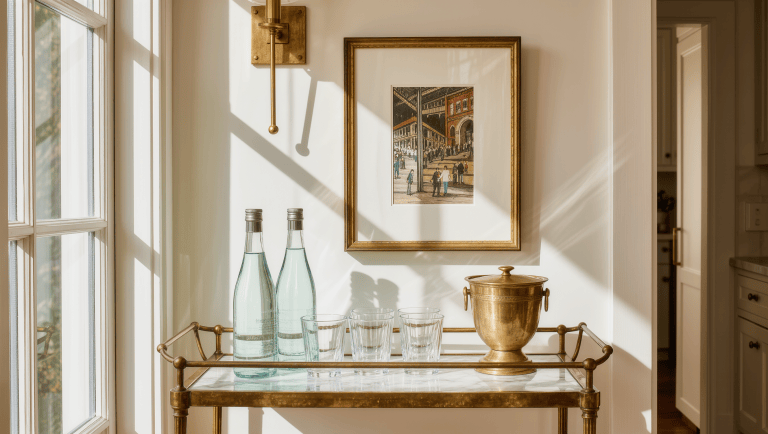 Function and Flow
Get the Drinks Out of the Kitchen
When every guest pours in the cook’s three feet, the kitchen is doing two jobs and both of them poorly. Move the bar without rewriting the whole lounge.
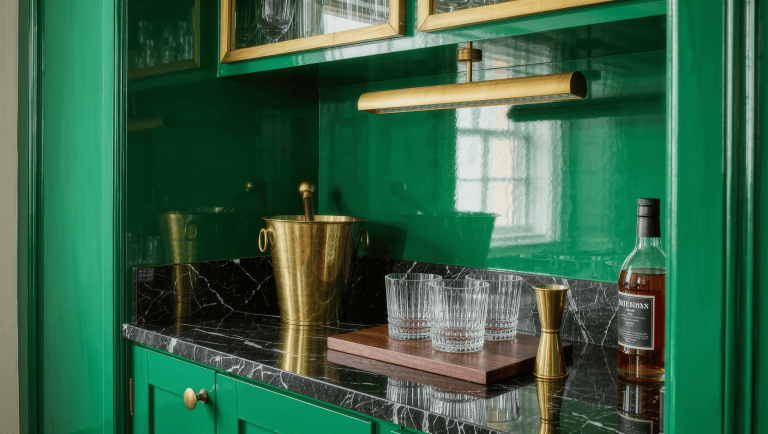 Awkward Spaces
Cart, Closet, Niche, Under-Stairs: Four Bar Architectures
Four practical home-bar architectures—cart, closet, niche, and under-stairs—compared by circulation, storage, light, service, and everyday use.
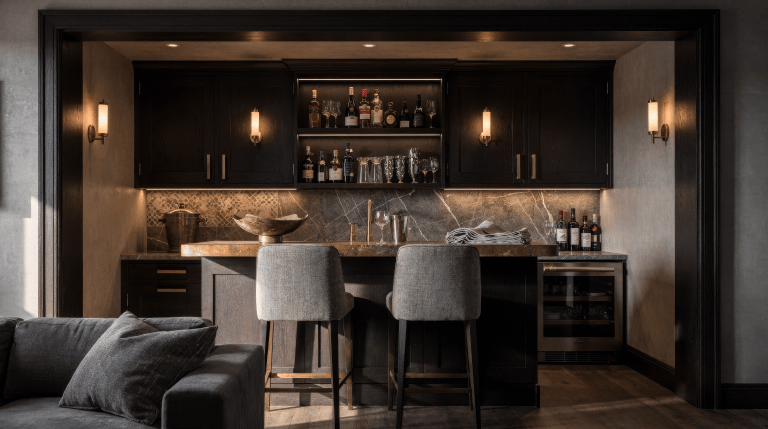 Awkward Spaces
The Home Bar as a Room
A home bar earns the name when it has a pour surface, an edge, light, and a social sequence — not when bottles appear on a sideboard.
 Awkward Spaces
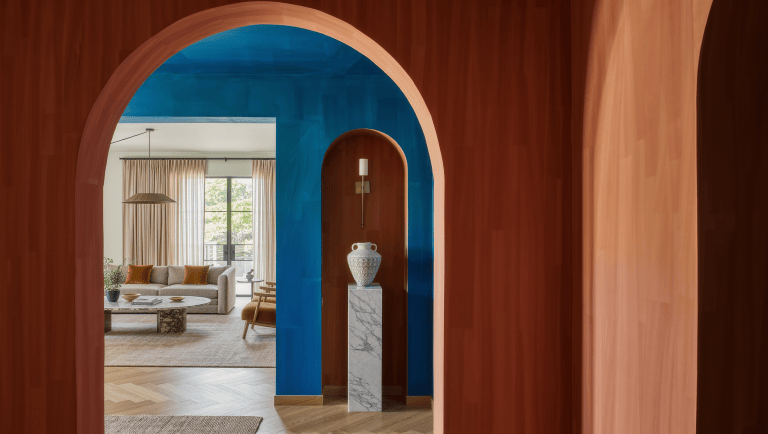
 Need One Strong Idea, Not Five Small Apologies
Solve an awkward room by identifying the geometry or function causing friction, then use one decisive layout, storage, color, or furniture move instead of many small deco…
 Awkward Spaces
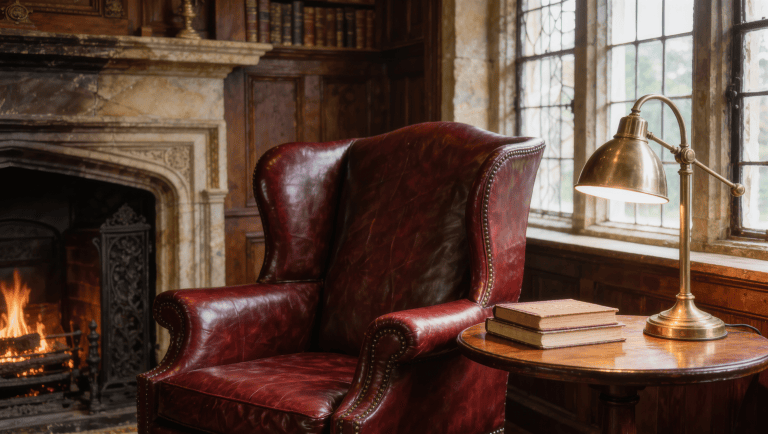
The Off-Center Fireplace Is Not a Mistake. Your Layout Is Just Panicking.
Fix an off-center fireplace layout by deciding whether it is the visual lead, balancing mass instead of symmetry, and arranging seating around real use rather than forcin…
 Awkward Spaces
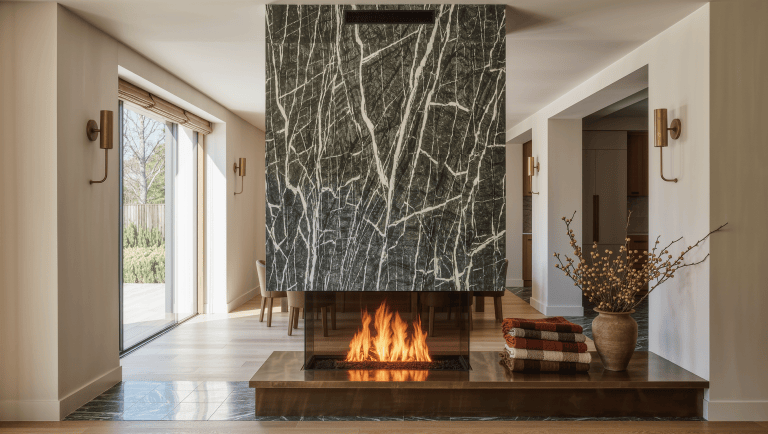
Your Pass-Through Room Is Allowed to Be More Than a Hallway
Design a pass-through living room or connecting space around circulation without surrendering the whole room to traffic. Use furniture edges, lighting, rugs, and one stro…
Awkward Spaces
The Long, Narrow Living Room That Refuses to Be a Bowling Alley
A practical layout guide for long, narrow living rooms: control the main route, create a convincing seating center, use width strategically, and stop lining every wall wi…
 Awkward Spaces
The Awkward Corner Decision Tree
A corner receives random decor because its actual spatial role is unclear.
 Materials, Color & Finish
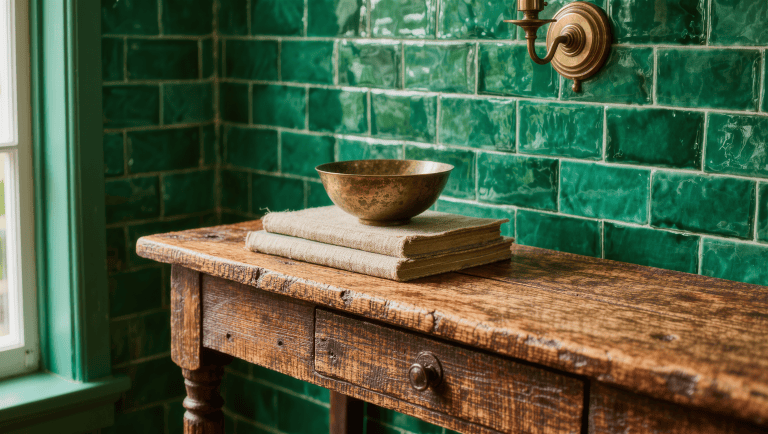
Material Transitions That Make a Space Feel Finished
Make flooring, tile, wood, paint, stone, metal, and textile transitions resolve by aligning edges, controlling contrast, repeating details, and resolving the joint itself…
 Materials, Color & Finish
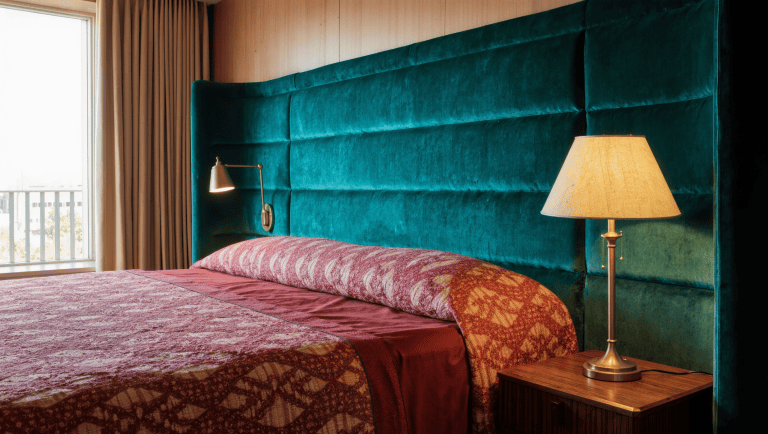
The Bedroom Begins With One Enormous Textile
Build a bedroom around one oversized textile—rug, curtain, canopy, quilt, or wall hanging—then let color, scale, lighting, and quieter supporting pieces follow its lead.
 Materials, Color & Finish
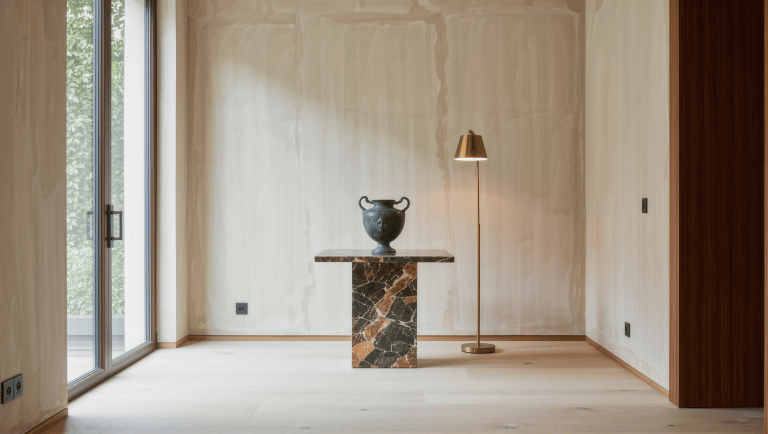
A Room Built From Texture, Not Beige
Atmosphere does not require a timid neutral palette. This full-length material story shows how plaster, velvet, glazed tile, brushed metal, wood grain, woven fiber, and c…
 Materials, Color & Finish
A Ceiling With Nerve Can Rebalance the Entire Room
Use a bold ceiling to rebalance a room with color, pattern, gloss, wood, or texture—after checking height, light, architecture, and the practical demands of the surface.
 Small Interiors
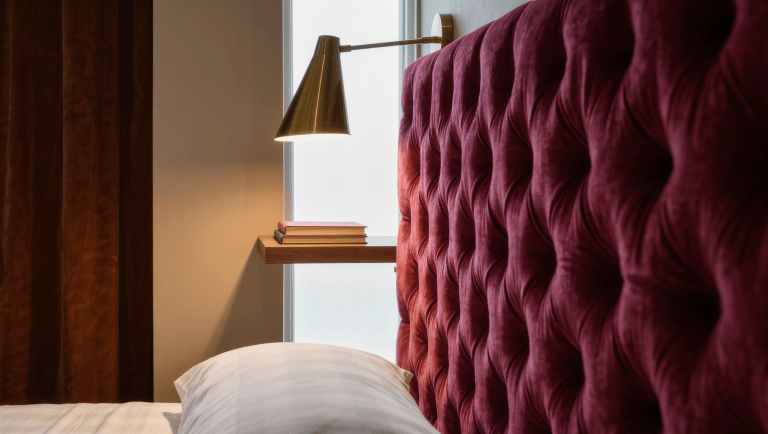
 Without the Pinterest Hangover
Use inspiration without copying a staged small room. Translate the useful principle—scale, storage, light, color, or layout—into the actual constraints and routines of yo…
 Small Interiors
Small Rooms Need One Strong Idea, Not Five Small Ones
Give a small room one decisive design move—color, scale, art, lighting, material, or layout—then edit secondary choices so the space feels confident rather than busy.
 Awkward Spaces
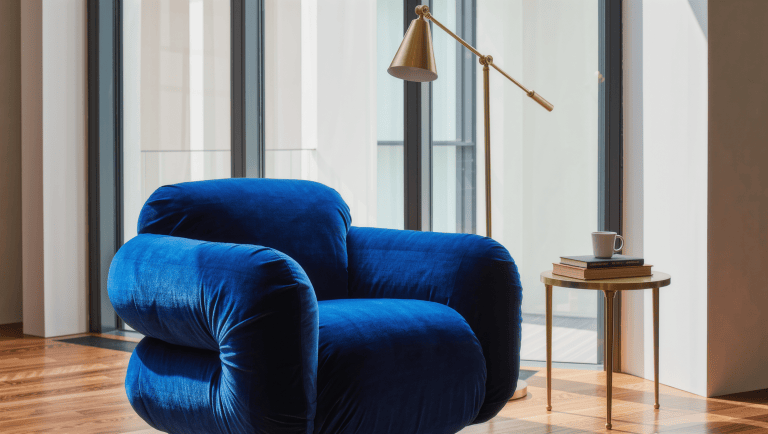
The Stair Landing Becomes a Room Between Rooms
Turn a stair landing into a purposeful room-between-rooms with a compact activity, clear circulation, controlled lighting, and furniture that respects stairs, railings, a…
 Small Interiors
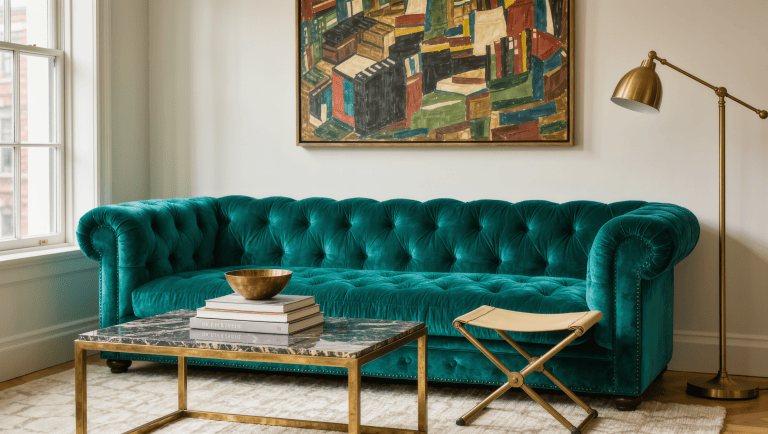
Small Spaces, Full Personality: Stop Asking the Room to Disappear
Small rooms do not need to be visually erased. Use scale, bold color, one strong idea, vertical space, layered light, and disciplined storage to make compact interiors fe…
 Awkward Spaces
The Hallway Becomes a Gallery You Actually Walk Through
Turn a hallway into a real gallery by planning the viewing rhythm, frame relationships, lighting, wall protection, and clear circulation instead of filling every inch wit…
 Small Interiors
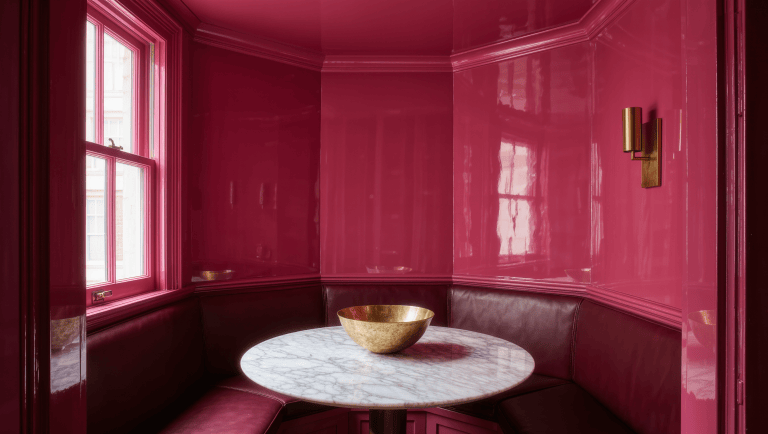
The Tiny Room That Decided to Be Electric
A small room does not need to whisper. This full-length guide shows how saturated color, deliberate pattern, plants, reflective surfaces, and concentrated light can give…
 Small Interiors
Turn the Narrow Entryway Into the Best 12 Feet in the House
Design a narrow entryway around arrival, storage, lighting, mirrors, hooks, and a protected walking line so the first 12 feet handle a real arrival without becoming a cor…
 Small Interiors
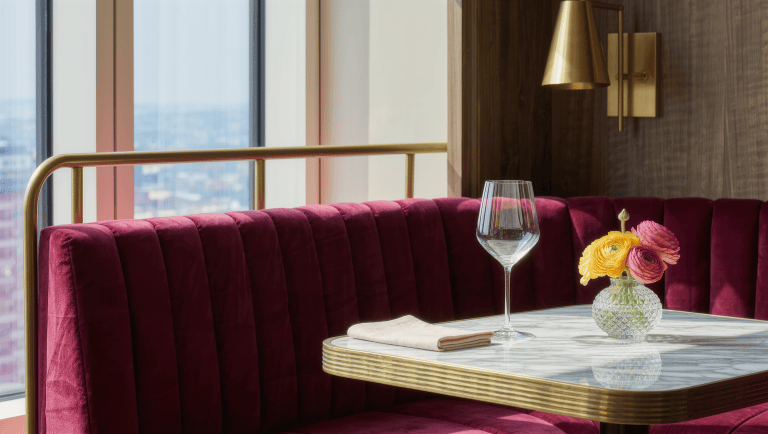
Give That Tiny Dining Corner the Confidence of a Great Restaurant
Turn a tiny dining nook into a real destination with one strong seating idea, flattering light, durable surfaces, one committed color, and space-smart circulation.
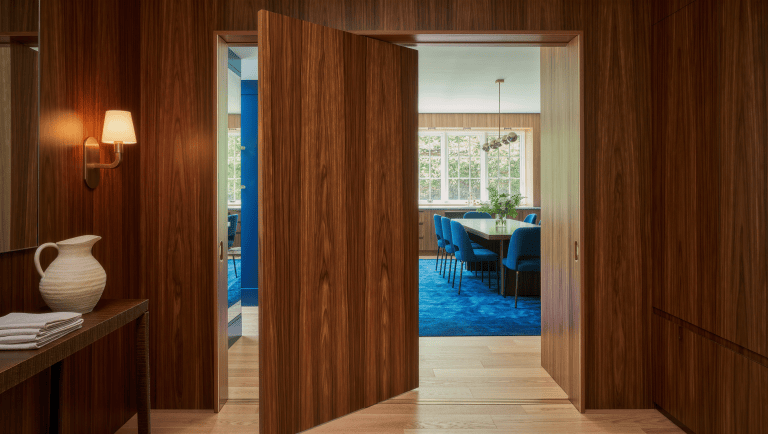 Small Interiors
Tiny Bedroom Storage Without the Plastic-Bin Energy
Add storage to a small bedroom by using vertical space, under-bed volume, bedside furniture, closet access, and closed containment without turning the room into a visible…
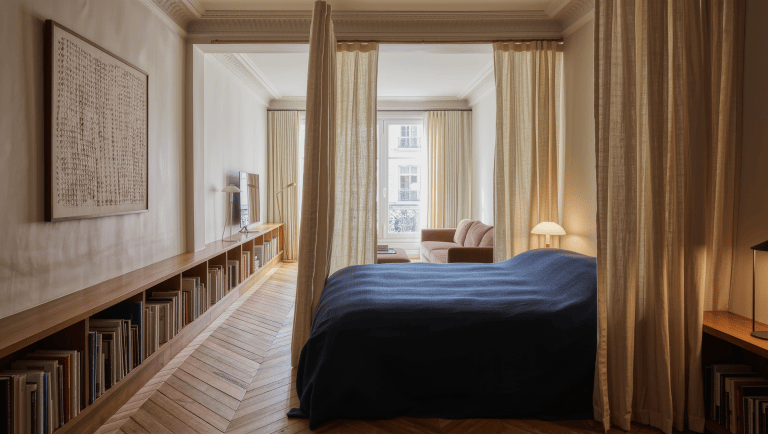 Small Interiors
This Studio Apartment Is Getting a Bedroom—No Wall Required
Create a bedroom zone in a studio apartment without building a wall by controlling sightlines, using furniture and curtains as edges, layering light, and protecting a cle…
 Awkward Spaces
The Beauty of an Empty Corner: When Not to Fill It
An empty corner can be the pause that makes a room work. Learn when to leave space open and when a corner genuinely needs seating, storage, light, art, or plants.
 Small Interiors
The Tiny-Room Mistakes That Quietly Ruin Daily Life
The worst small-room problems are ordinary and repeatable: blocked paths, stranded storage, competing focal points, and layouts that never reset. Diagnose the friction be…
 Multi-Use Rooms
Before You Repurpose a Room, Decide What Must Stay
Before changing a room’s purpose, identify the architecture, access, storage, utilities, light, and future flexibility worth preserving so the new use works without unnec…
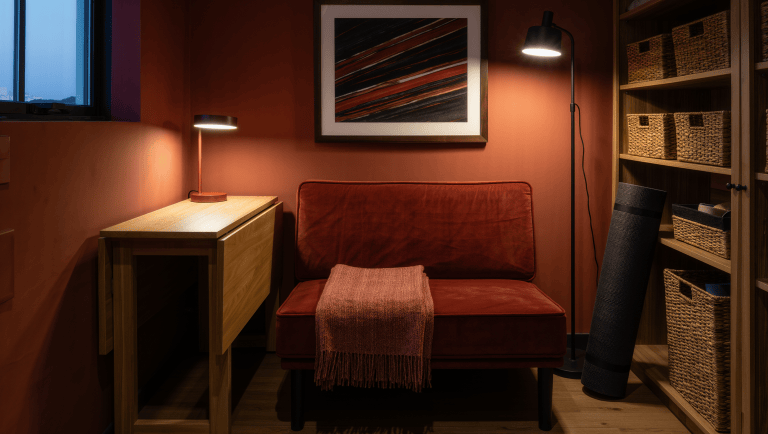 Multi-Use Rooms
 Without the Furniture Transformer Show
Make a multi-use room flexible with ordinary furniture, easy mode changes, clear storage, parking places, and layered lighting instead of complicated transforming pieces.
 Multi-Use Rooms
The Great Room Learns to Hold More Than One Conversation
A large open room becomes several distinct places through furniture islands, lighting territories, partial boundaries, repeated materials, and enough negative space to ke…
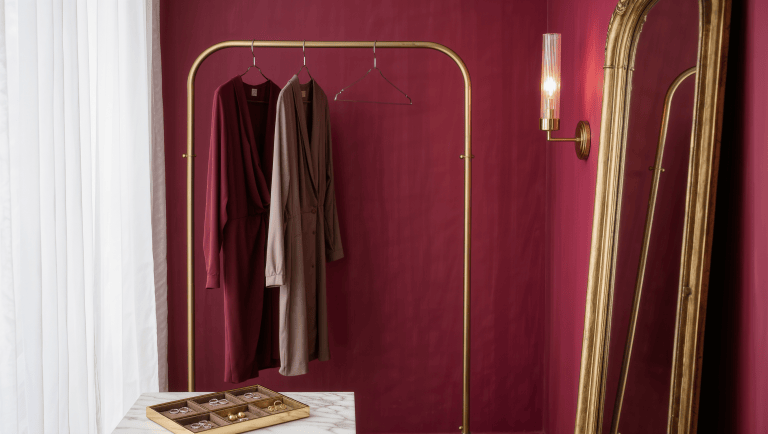 Multi-Use Rooms
The Closet Becomes a Dressing Room With an Actual Point of View
Turn a closet into a dressing room with a clear dressing sequence, flattering light, a real landing surface, accessible storage, and one decisive aesthetic move.
 Multi-Use Rooms
Rooms With a New Life: How to Reassign a Room Without Losing the Plot
Reimagine rooms whose original purpose no longer fits by identifying the life that happens now, testing a reversible new use, and keeping architecture, safety, storage, a…
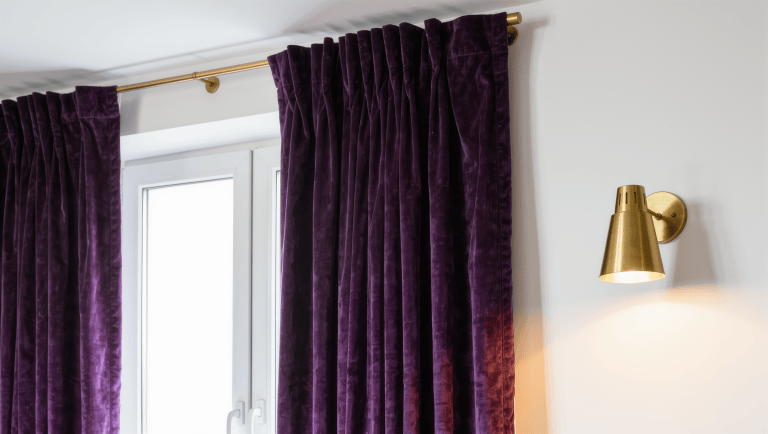 Multi-Use Rooms
One Curtain, Three Rooms: The Soft Boundary That Changes Everything
Use a full-height curtain as architecture: divide an open room, conceal work, soften sound, control light, and create a dramatic transformation without building a wall.
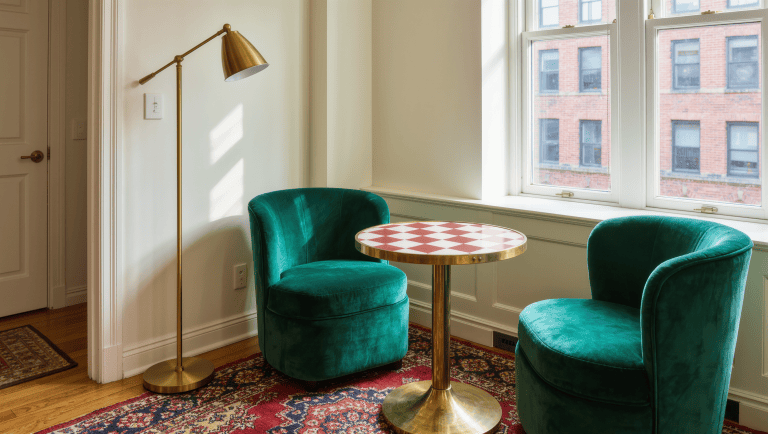 Multi-Use Rooms
The Formal Dining Room Gets a Second Shift
A complete transformation plan for turning an underused formal dining room into a library, work salon, supper room, or hybrid space without erasing its elegance.
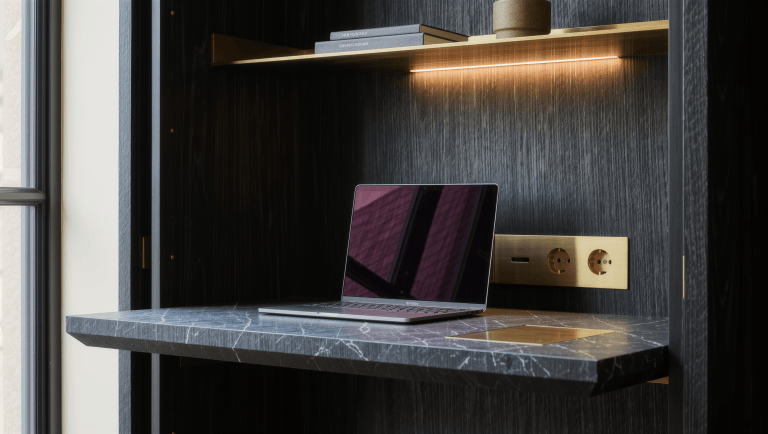 Multi-Use Rooms
Build a Bedroom Corner That Works by Day and Disappears by Night
Create a bedroom work corner that functions during the day and visually shuts down at night with a contained footprint, task lighting, closed storage, cable control, and…
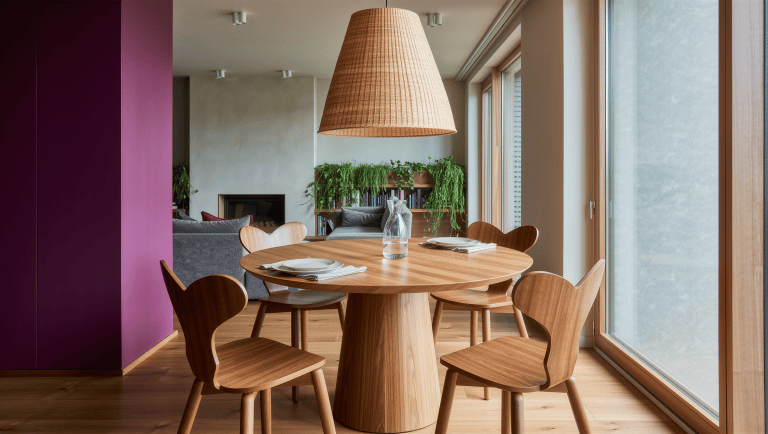 Multi-Use Rooms
Yes, Your Living Room Can Fit a Dining Area Without Becoming a Furniture Warehouse
Fit a dining area into a living room by protecting the main route, choosing one visual center for each use, sizing furniture by clearance, and letting lighting define mod…
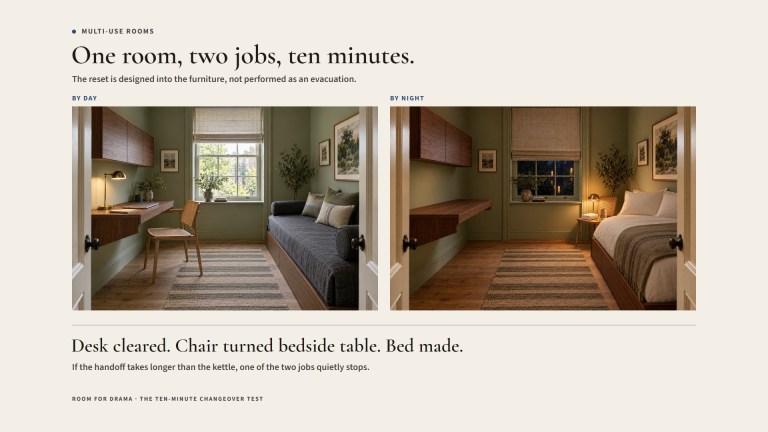 Multi-Use Rooms
The Guest Room Office That Can Change Personalities in Ten Minutes
Create a guest room office that changes modes quickly: control the work footprint, protect sleep comfort, hide cables and paperwork, and make the reset possible in ten mi…
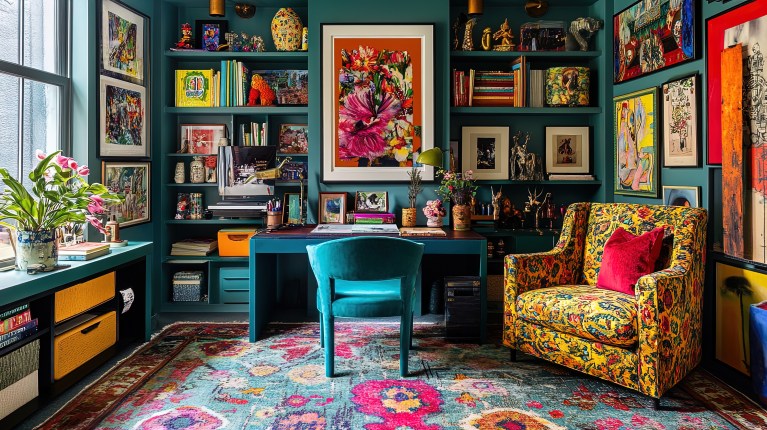 Multi-Use Rooms
The Home Office Still Belongs to the Job You Left
A room can continue enforcing the schedule, hierarchy, and visual language of a job that no longer exists. Use a room-life mismatch inventory before buying a new desk or…
 Multi-Use Rooms
The Guest Room Became the Place Where Decisions Went to Wait
A guest room can become storage for postponed decisions long before it becomes visibly unusable. This piece separates clutter from avoidance and gives the room one revers…
 Multi-Use Rooms
The Party Is Over. Can the Room Recover in Ten Minutes?
A hosting system is incomplete if the room cannot return to daily life.
 Multi-Use Rooms
Your Coffee Table Is Off Duty. Find Another Landing Place.
Small rooms host better when surfaces are placed where hands naturally need them.
 Multi-Use Rooms
Small-Space Hosting Without Furniture Tetris
A good hosting layout is a temporary operating plan, not a maximal seating count.
 Furniture and Scale
When Small-Space Furniture Steals the Room for the Wrong Reason
Small-space furniture can fail when it is too timid, too multifunctional, or uncomfortable. Choose fewer pieces with real scale, clear jobs, and enough comfort to deserve…
 Furniture and Scale
The Living Room Has Too Many Centers
A living room with too many focal points feels undecided. Learn how to choose a primary center, support secondary views, and make furniture, lighting, and circulation wor…
 Furniture and Scale
Objects That Change the Room: Nothing Sits There Without a Job
Choose objects for the job they perform—light, storage, reach, softness, memory, sound, or visual balance—so accessories strengthen the room instead of becoming decorativ…
 Furniture and Scale
A Flat Room Needs a Better Skyline
A flat room needs height variation. Use lighting, plants, art, curtains, shelving, furniture backs, and negative space to build a stronger visual skyline without clutter.
 Furniture and Scale
That Giant Sofa Can Stay. The Rest of the Room Just Needs Better Nerves.
An oversized sofa can work in a small living room when the layout gives it authority, reduces competing furniture, protects circulation, and balances its visual weight.
 Furniture and Scale
Your Small Living Room Rug Is Probably Too Small. There, We Said It.
A too-small rug can fragment a compact living room. Learn how to test rug size, furniture connection, circulation, pattern, and maintenance before you buy.
 Furniture and Scale
The Ceremonial Dining Table Can Retire
A dining table can become an identity prop, storage surface, and maintenance burden long after regular hosting stops. Decide what job the object actually has now.
 Furniture and Scale
Open vs. Closed Storage: A Seven-Day Observation Tracker
Use a storage-exposure matrix and seven-day tracker to decide what should stay open, become hybrid, move behind doors, or leave the room.
 Furniture and Scale
The Empty-Surface Trial
Clear one overworked surface for seven days, track what returns, and let the room reveal the missing route before another basket enters the witness stand.
 Furniture and Scale
The Seven-Day Sofa Position Test
The sofa's current location is inherited habit rather than tested performance.
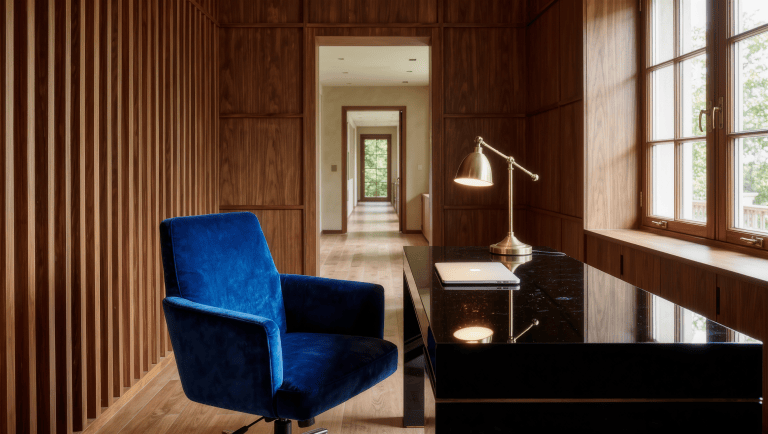 Furniture and Scale
Furniture Scale and Clearance: A Field Guide Without Fake Universal Rules
Readers need measurement logic without misleading one-size-fits-all design rules.
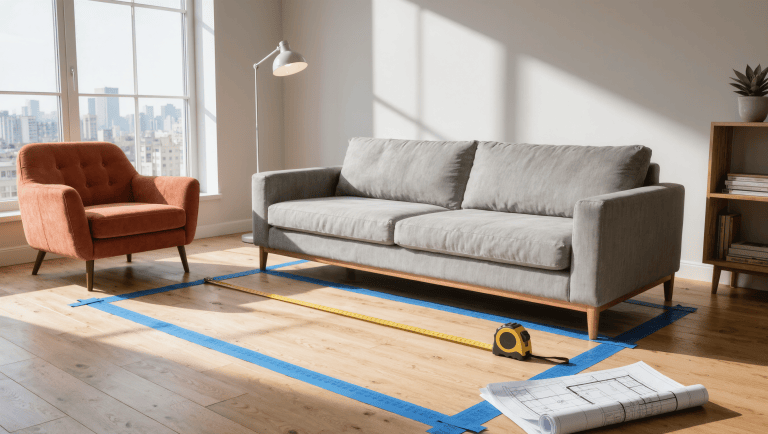 Furniture and Scale
The Do Not Buy Yet Measurement Sheet: Test Fit, Delivery and Flow Before You Buy
A pre-purchase furniture measurement checklist for testing destination fit, delivery, operating clearance, circulation, maintenance and daily use before money leaves your…
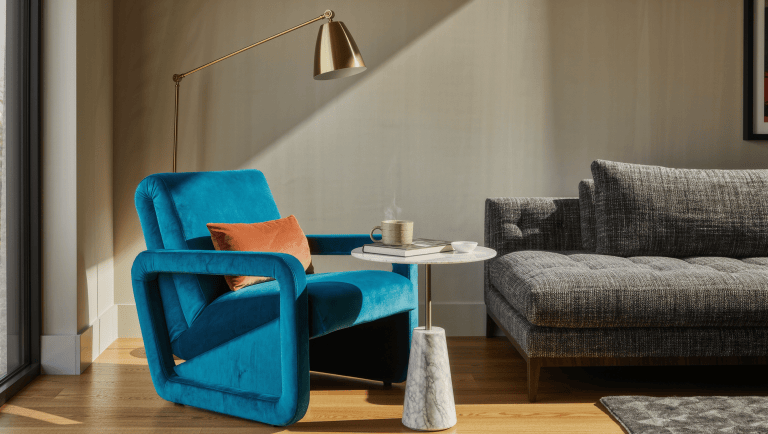 Furniture and Scale
The Accent Chair Has No Alibi
An accent chair should earn its footprint through comfort, orientation, flexibility, or visual balance. Use this test before keeping a chair that only fills a corner.
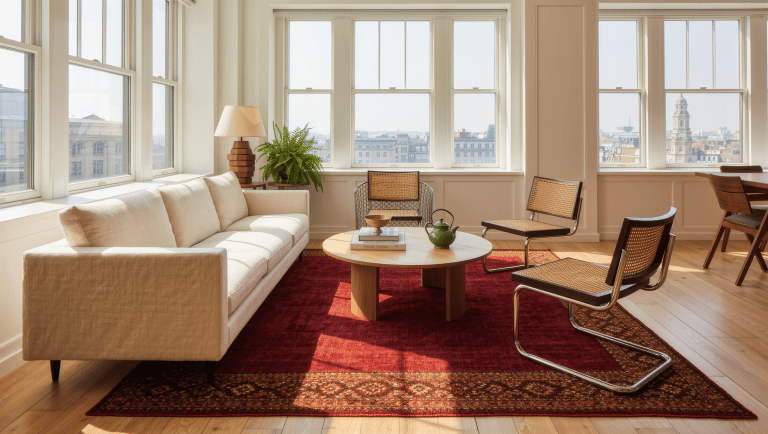 Furniture and Scale
The Rug Is Drawing the Floor Plan
A rug is treated as decoration even though it defines grouping, scale, and circulation.
 Furniture and Scale
Objects with a Job: The Side Table Test
Use the side table test to decide whether an object deserves floor space: it should improve reach, light, storage, or composition without obstructing circulation.
 Furniture and Scale
Four Chairs, Eight Guests, No Panic
Host eight people with four dining chairs by using flexible seating, a tighter menu, distributed surfaces, and a room plan that values comfort over matching furniture.
 Furniture and Scale
Your Shelves Are Displaying the Maintenance Burden
Open storage turns every stored object into part of the room’s visual system.
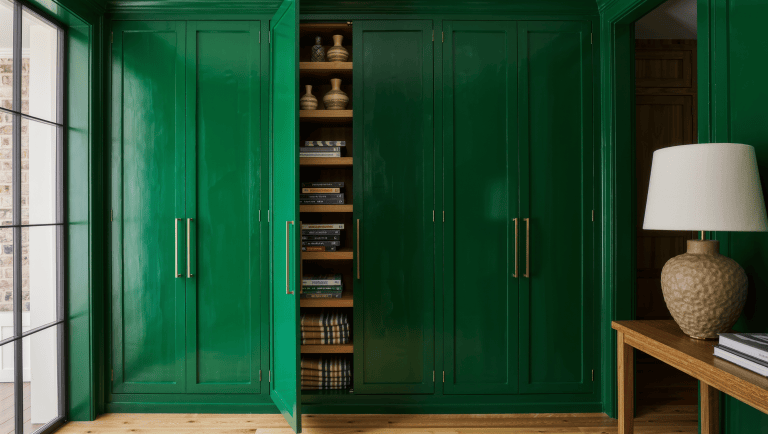 Furniture and Scale
Closed Storage Can Still Make a Room Feel Loud
Doors can reduce visible labels and still make a room feel heavier. Test the cabinet’s visual mass, operating clearance, reset behavior, and point-of-use logic before cal…
 Furniture and Scale
The Dining Table Is Too Big for the Life Around It
A table can fit dimensionally and still overclaim the room.
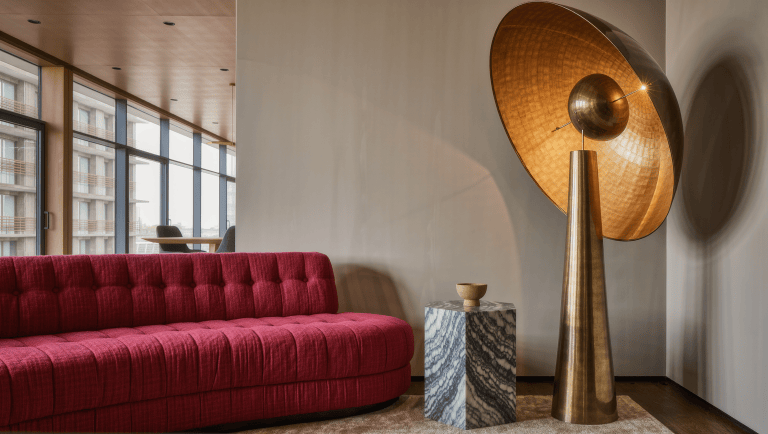 Furniture and Scale
The Furniture Is Fine. The Visual Weight Is Not.
Visual balance depends on perceived mass, not a furniture inventory.
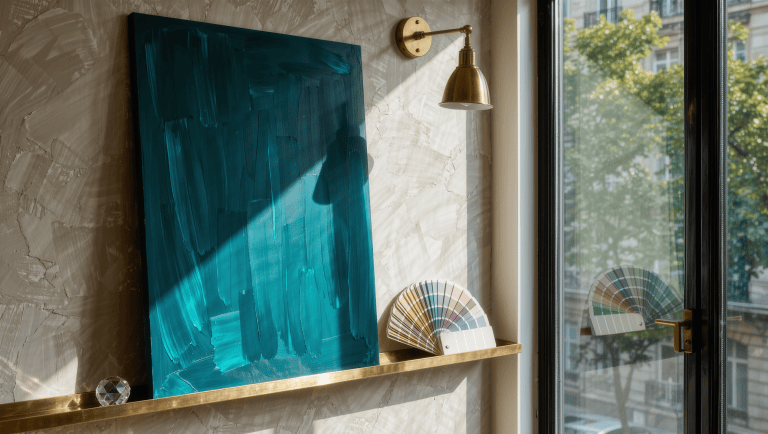 Light and Atmosphere
Color Decisions That Survive Morning, Afternoon, and Night
Choose paint and room colors by testing them through changing daylight and artificial light, then balance undertones, material, contrast, and neighboring rooms.
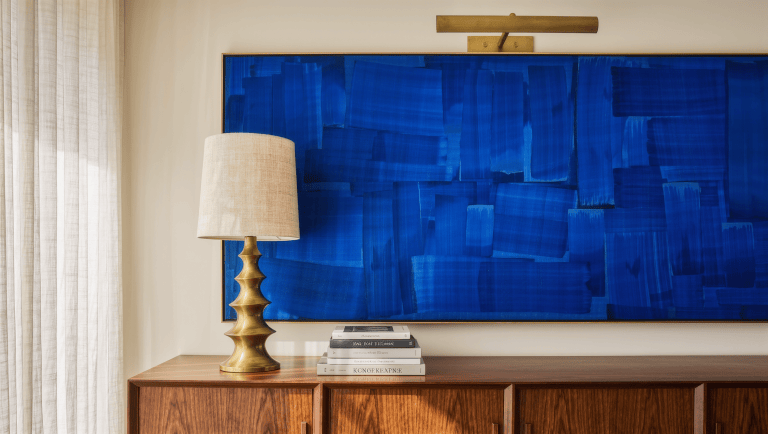 Light and Atmosphere
Lighting That Flatters Faces and Still Works for Tasks
Create room lighting that is flattering and functional by combining soft ambient sources, task light, controlled glare, good color rendering, and separate lighting scenes…
Furniture and Scale
The Room That Refused to Apologize
A black gallery wall, teal velvet, fuchsia drapery, marigold seating, brass light, and one electric wink: the hidden discipline that makes this exuberant living room work…
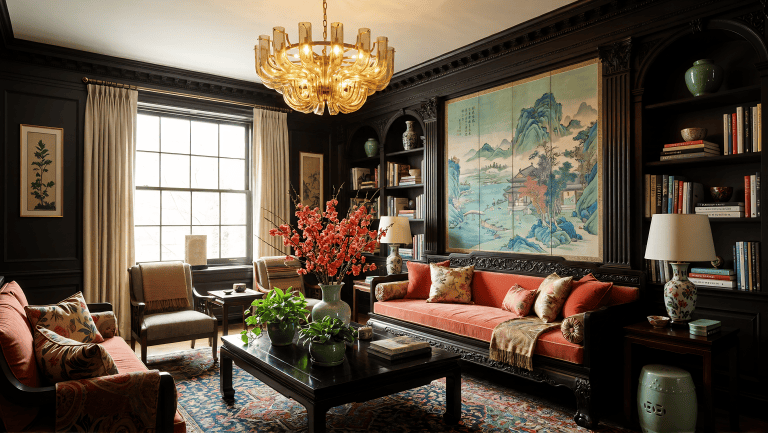 Light and Atmosphere
When a Room Decides Who It Is
A room where six things are equally important is not eclectic. It is undecided — and the fix starts with a photograph from the doorway, not a purchase.
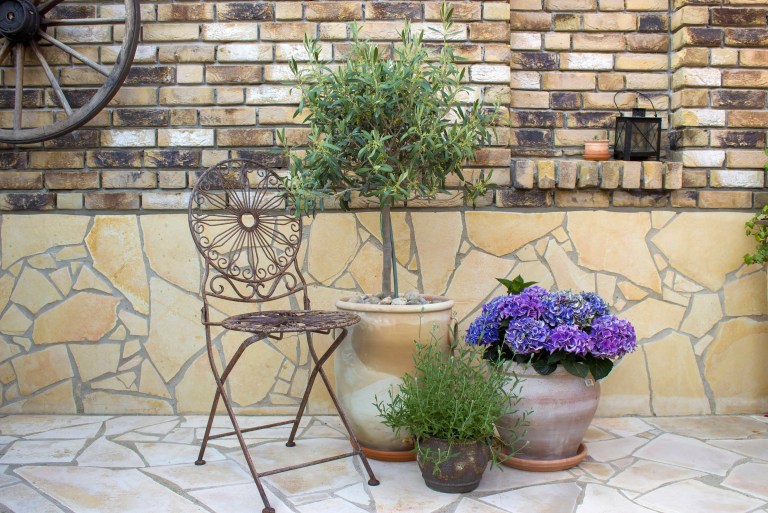 Light and Atmosphere
When a Plant Room Becomes a Parking Lot for Pots
Design a plant room as living architecture by assigning greenery jobs—frame, divide, shade, soften, screen, and guide the eye—while respecting real light and maintenance.
 Light and Atmosphere
The Room That Lets Flowers Take Over Without Becoming a Florist’s Lobby
Use branches, cut flowers, foliage, planted forms, vessels, color repetition, and seasonal scale to make living material part of the room’s architecture rather than a pol…
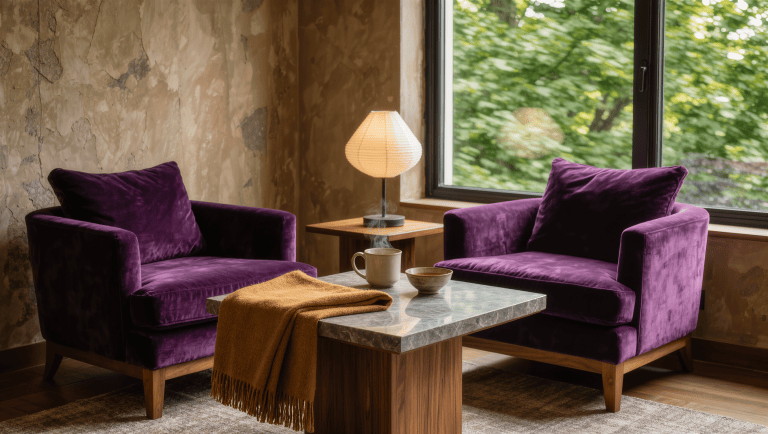 Light and Atmosphere
Atmosphere: The Part of a Room You Feel Before You Name It
Atmosphere comes from the combined effect of light, sound, texture, temperature, scent, scale, color, and use. Learn how to shape it deliberately without turning the room…
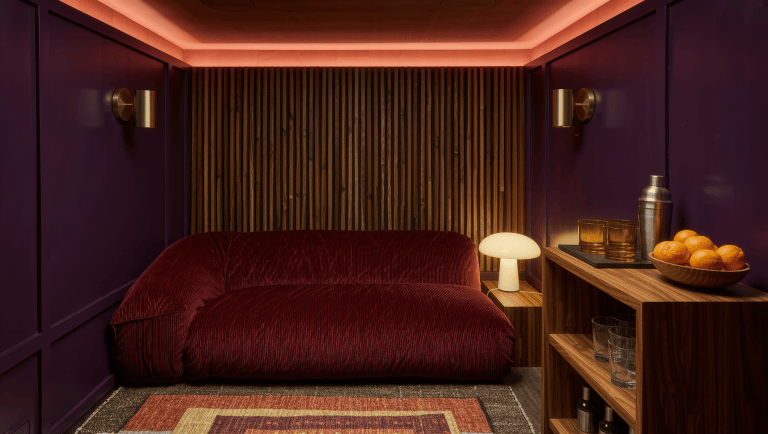 Light and Atmosphere
The Basement Stops Apologizing and Becomes the Night Room
Turn a basement into a deliberate night room with layered low light, acoustic softness, durable materials, strong color, and a layout designed for evening use.
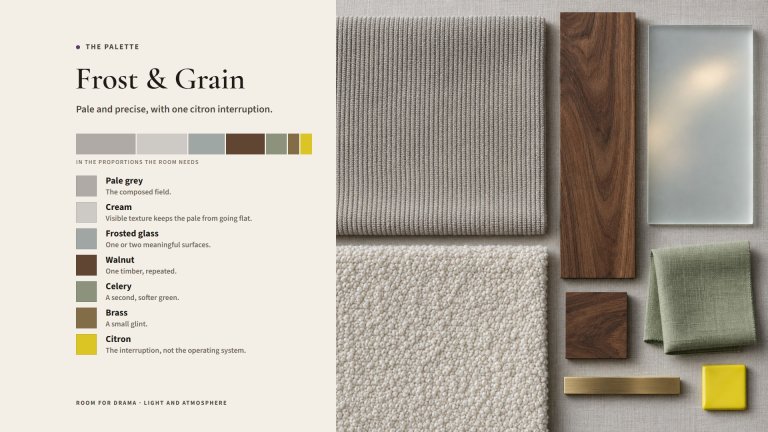 Light and Atmosphere
The Living Room That Keeps Its Cool Until Midnight
A polished full-build room in frosted glass, celery green, citron, cream, walnut, and brass—designed for clean sightlines, easy circulation, and a mood that warms as the…
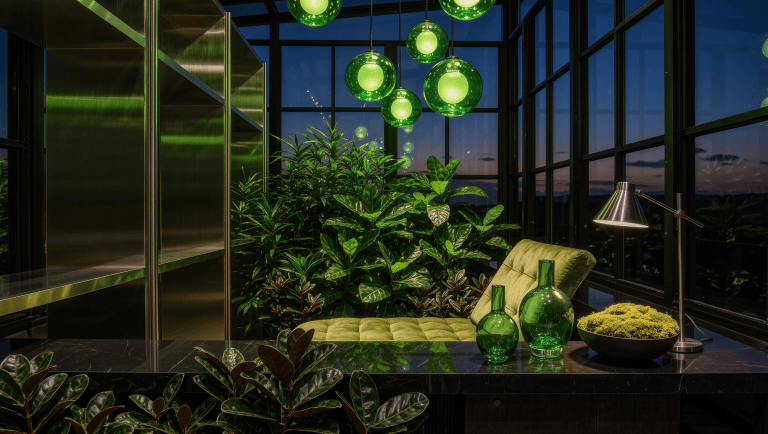 Light and Atmosphere
The Room With a Secret Garden After Dark
A full-build design for a polished night-garden room using green glass, black stone, brushed steel, glossy foliage, tarragon tones, controlled heat, layered lighting, and…
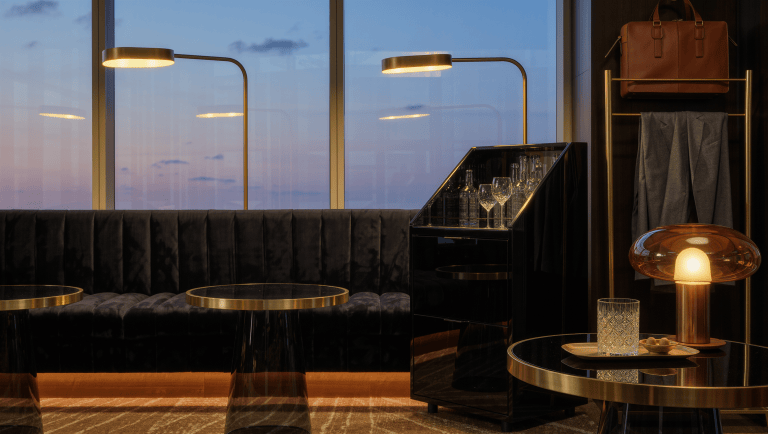 Light and Atmosphere
The Room That Has Already Called Valet
Create a polished, hospitality-inspired room with tailored upholstery, lacquered surfaces, strategic brass, flattering light, and practical places for bags, drinks, and c…
 Light and Atmosphere
The Dining Room That Learned to Smolder
A full-build room design in blackened wood, cream linen, woven cane, hammered metal, and precise candlelight—warm, architectural, and entirely uninterested in rustic clic…
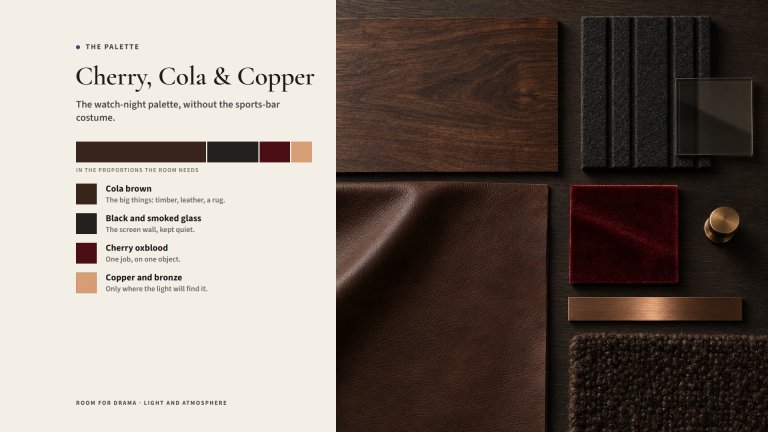 Light and Atmosphere
The Living Room That Thinks It Has Stadium Lights
A dark, polished everyday room built from cherry, cola, copper, smoked glass, layered viewing zones, and lighting dramatic enough to make Tuesday night feel televised.
 Light and Atmosphere
The Room That Knows When to Lower Its Voice
A softly mischievous full-build guide to creating a peach, chamomile, oat, and celery-green room that feels calm, useful, grown-up, and beautifully looked after.
 Light and Atmosphere
The Room That Wears Black After Six
Design a room that wears black after six by using dark surfaces, reflective accents, warm pools of light, texture, and enough contrast to keep the space dimensional.
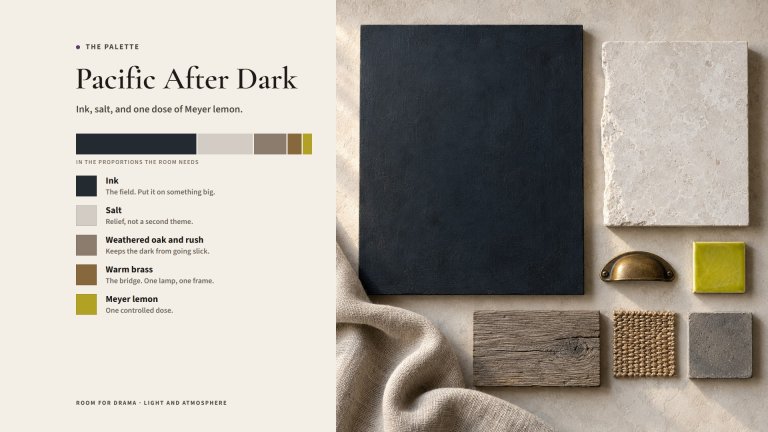 Light and Atmosphere
Pacific After Dark: Build an Ink, Salt, and Meyer-Lemon Room for Everyday Life
Build an ink, salt, and Meyer-lemon room with deep blue-black color, mineral pale surfaces, citrus accents, warm metals, and controlled lighting—without turning it into a…
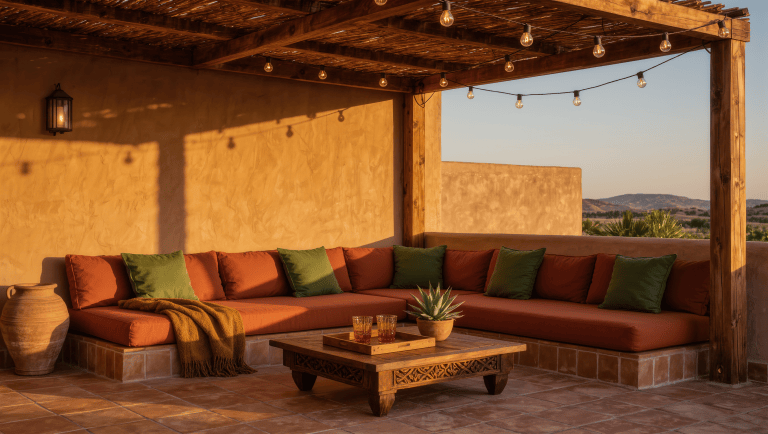 Light and Atmosphere
Bring Golden-Hour Mezcal Energy Into an Everyday Terrace or Lounge
A terrace scheme built out of mezcal, grilled pineapple, green chile and amber light — starting with the one honest question underneath it. Does your space actually get t…
 Light and Atmosphere
Design the Dining Room for 8 P.M., Not 8 A.M.
Build a dining room around the hours you actually use it: evening light, table scale, comfortable chairs, circulation, flattering contrast, and a quick reset that works a…
 Light and Atmosphere
A North-Facing Room Can Be Moody Without Becoming Miserable
Design a north-facing room around cooler, steadier daylight using paint tests, warm materials, layered lighting, contrast, and reflective surfaces instead of forcing it t…
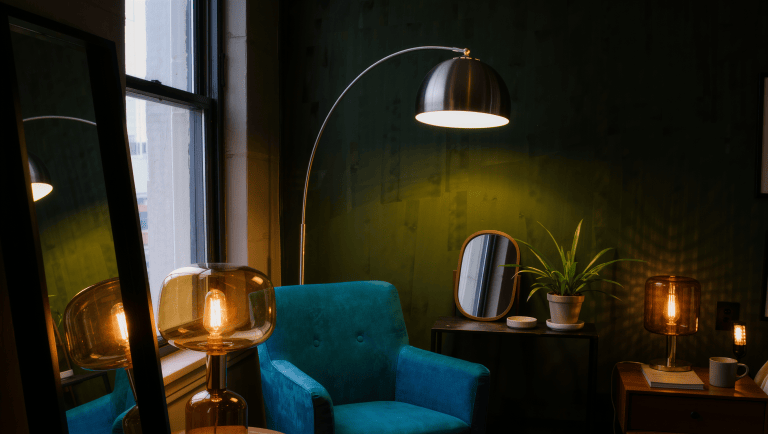 Light and Atmosphere
Your Dark Room Needs a Lighting Plot
Fix a dark room by separating daylight, task light, ambient light, and visual depth. Use reflective surfaces, lamp placement, contrast, and layered evening lighting befor…
 Light and Atmosphere
The Room That Helps You Come Back to Yourself
A seven-day function, light, surface, and reset test for making one room or corner more restorative before adding décor or buying furniture.
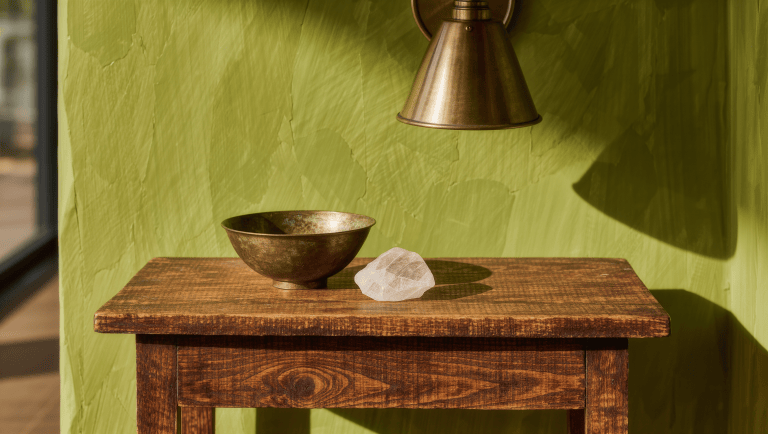 Light and Atmosphere
Put the Paint Down for a Minute
Paint is being used to solve problems caused by layout, lighting, scale, or clutter.
 Furniture and Scale
The Lamp Is in the Right Room and the Wrong Place
A lamp can be in the right room and still fail the seat it serves. Learn how to place task, ambient, and accent lighting around real use, glare, reach, and sightlines.
 Light and Atmosphere
Daylight Is Sneakier Than the Window
Daylight performance depends on what happens after light enters the room.
 Light and Atmosphere
Lighting After Dark: How the Room Behaves After Sunset
Daylight can conceal a weak lighting plan for half the day.
 Light and Atmosphere
The Room Is Evenly Lit and Emotionally Absent
Even illumination is useful for some tasks and disastrous as a permanent mood.
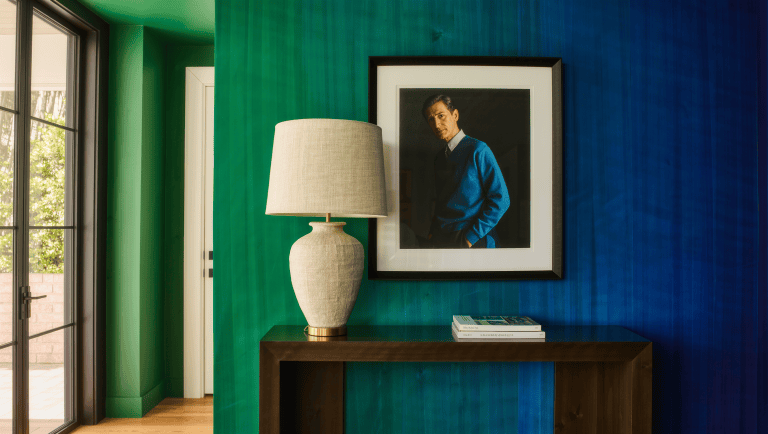 Function and Flow
What a Room Teaches You in the First Thirty Seconds
Read a room quickly by noticing the first sightline, main route, dominant furniture, light source, object landing places, and whether the room’s real purpose is immediate…
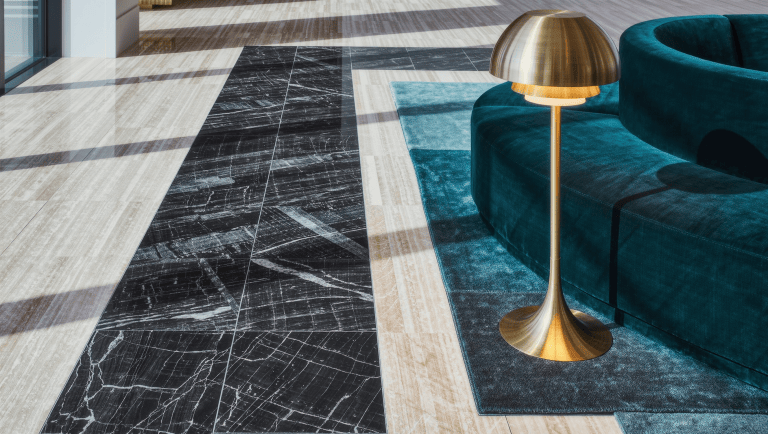 Function and Flow
 Without the Pinterest Hangover
Build room layouts around doors, occupied furniture, real walking routes, reach, and storage instead of copying styled floor plans that ignore daily movement.
 Function and Flow
What Your Entryway Teaches People About the Rest of the House
Use the entryway to establish the home’s visual language and daily logic through a clear path, useful landing places, light that works after dark, one strong material not…
 Function and Flow
Storage That Knows How to Disappear
Create quieter storage with integrated cabinetry, furniture that performs two jobs, concealed charging, disciplined open display, and materials that belong to the room.
 Function and Flow
Rooms in Real Life: Stop Decorating Around the Problem
When a room keeps failing, stop adding decor around the friction. Identify the repeated problem, protect the room’s real use, and make one change that improves daily life…
 Function and Flow
The Tiny Chef Took Over: A Compact Kitchen Design Adaptation
Give a compact kitchen playful culinary energy through efficient zones, bold color, visible tools, lighting, and storage—while keeping actual cooking guidance in the culi…
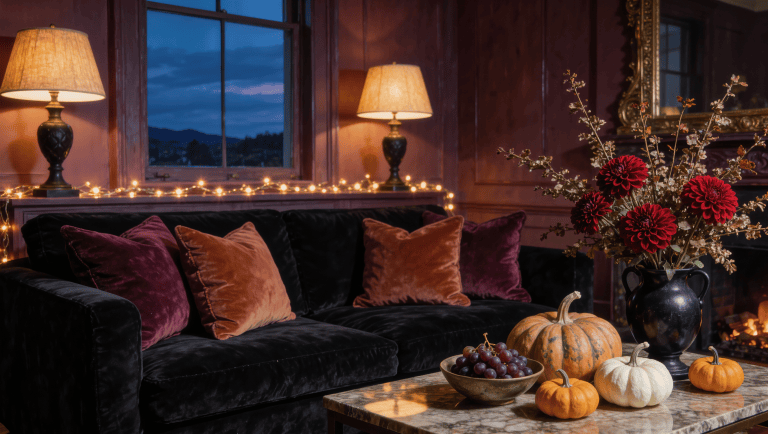 Function and Flow
The Holiday That Got Haunted: A Small-Space Home Adaptation
Small spaces can carry holiday atmosphere, not unlimited holiday inventory. Concentrate one seasonal story, protect the room's everyday job, decorate vertically, and plan…
 Function and Flow
The Garage Becomes the Loudest Room in the House
Turn a garage into a music, workshop, game, or creative room by solving ventilation, power, fire safety, storage, acoustics, temperature, and vehicle separation before de…
 Function and Flow
The Laundry Room Gets Better Lighting and a Much Better Attitude
A complete transformation for the hardworking room most homes treat like a punishment: stronger color, useful surfaces, layered light, storage with rhythm, and enough per…
Function and Flow
A Room Can Be Beautiful and Still Be Wrong
A beautiful room can still fail if circulation, reach, lighting, scale, maintenance, or accessibility are wrong. Use practical design intelligence to test function withou…
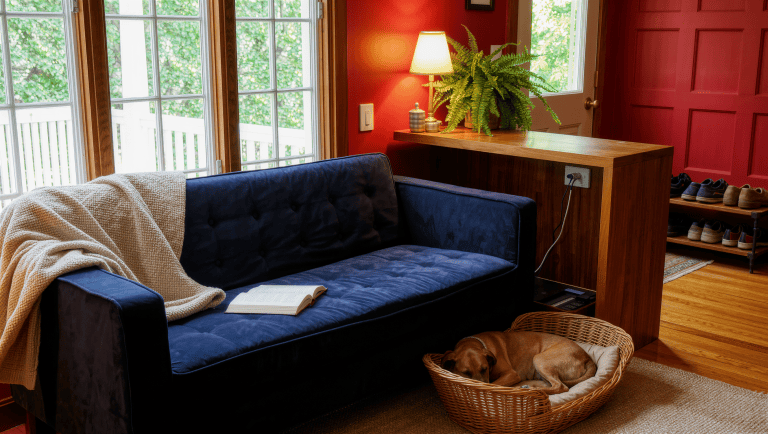 Function and Flow
Rooms in Real Life: Design After the Photograph
Design for the room after the styling is over: chargers, shoes, blankets, pets, work, cleaning, guests, aging, and reset routines are part of the interior, not evidence t…
 Function and Flow
Big Moves: Why One Strong Decision Beats Twelve Small Apologies
Rooms often improve faster with one decisive change—layout, color, scale, light, or material—than with layers of small accessories trying to compensate for an unresolved…
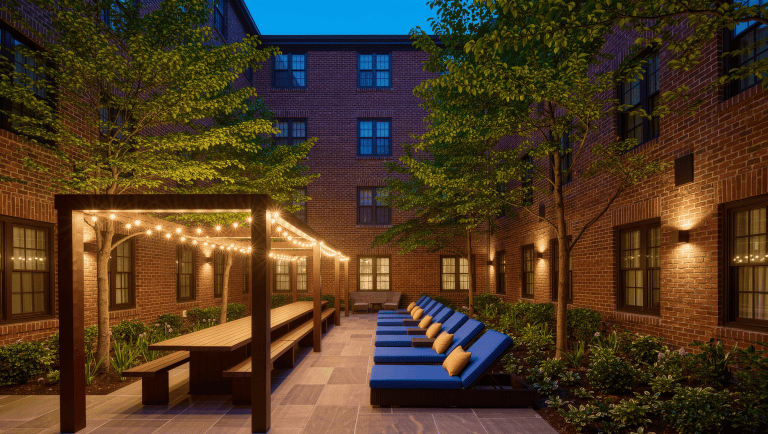 Function and Flow
The Courtyard That Knows Everyone’s Business
A full-build design for courtyards, shared terraces, lobbies, community rooms, and neighborhood commons with sharper lighting, flexible social zones, bold color, and no b…
 Function and Flow
The Patio That Refuses to Wear a Hawaiian Shirt
A full-build design for patios, sunrooms, lounges, and collaborative spaces using celery green, pale wood, mineral glass, toasted-coconut texture, and one disciplined lin…
 Function and Flow
Fire Escape Sunset: Build a Watermelon, Basil, and Black-Steel Space for Everyday Life
A complete urban-space build inspired by watermelon, basil, ancho chile, terracotta, black steel, and the brief electric glow of sunset between buildings.
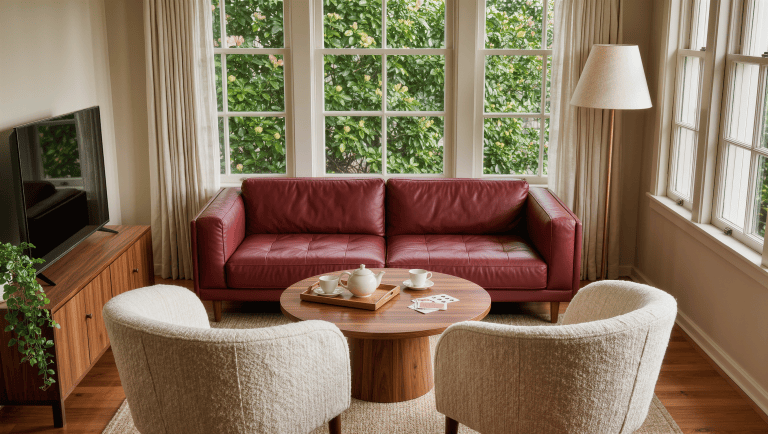 Function and Flow
Your Living Room Has a Social Life Beyond the Television
Build a conversation-friendly living room by changing seating angles, table placement, lighting, and screen hierarchy without turning the room into a formal parlor.
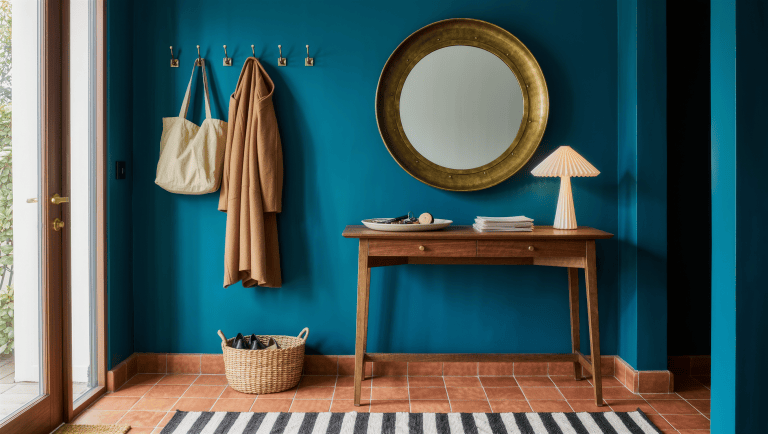 Function and Flow
The Entry Drop Zone That Refuses to Become a Clutter Shrine
Design an entryway drop zone around the first seconds after arrival, with practical storage, clear circulation, better lighting, and enough personality that the clutter h…
 Function and Flow
Your Open-Plan Room Needs Traffic Rules, Not More Furniture
Fix an open-plan layout by mapping traffic first, defining social centers with furniture and rugs, protecting work zones, and using lighting and storage instead of adding…
 Function and Flow
The 30-Day Room Function Experiment
Stop redecorating for 30 days. Observe room friction, test one reversible change, and decide what deserves to become permanent.
 Function and Flow
Five Questions the Room Should Answer Before You Buy Anything
A reader is about to buy before understanding the room's actual failure.
 Function and Flow
The One-Week No-Coffee-Table Experiment
Remove the coffee table for one week and use the empty floor to diagnose circulation, reach, clutter, seating behavior, and whether the room needs a different kind of sha…
 Function and Flow
Reset the Room Before You Shop for It
Readers need a disciplined sequence that prevents unnecessary purchases.
 Function and Flow
The Room Photo Reading: What the Camera Reveals and Distorts
Photos can expose visual imbalance while also flattening depth and exaggerating proportion.
 Function and Flow
The Coffee Table Is a Choreography Problem
Choose and place a coffee table around movement, reach, seating geometry, and real use so the center of the living room supports people instead of obstructing them.
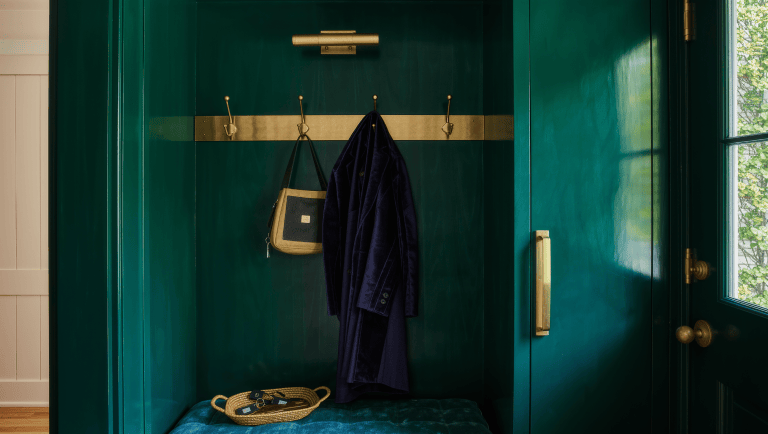 Function and Flow
The Room Reset That Survives Real Life
A beautiful reset collapses because daily behaviors were not designed into it.
 Function and Flow
The Before-and-After Reveal Is Hiding the Important Change
Dramatic reveals encourage readers to copy visible purchases instead of causal changes.
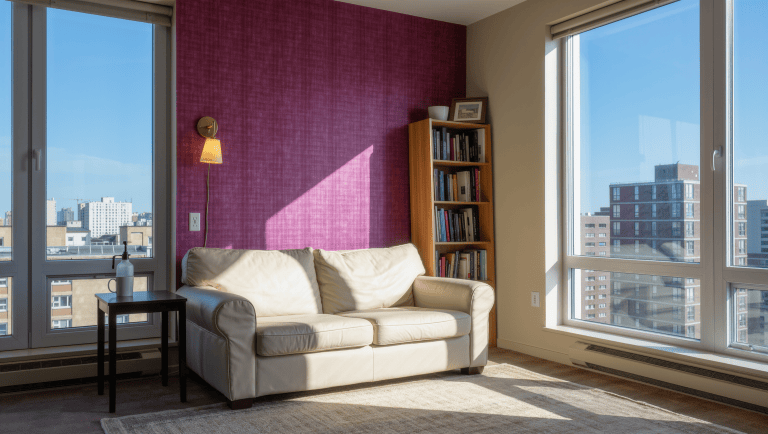 Function and Flow
The Renter-Safe Transformation Ladder
Renters need meaningful change without pretending every alteration is reversible or permitted.
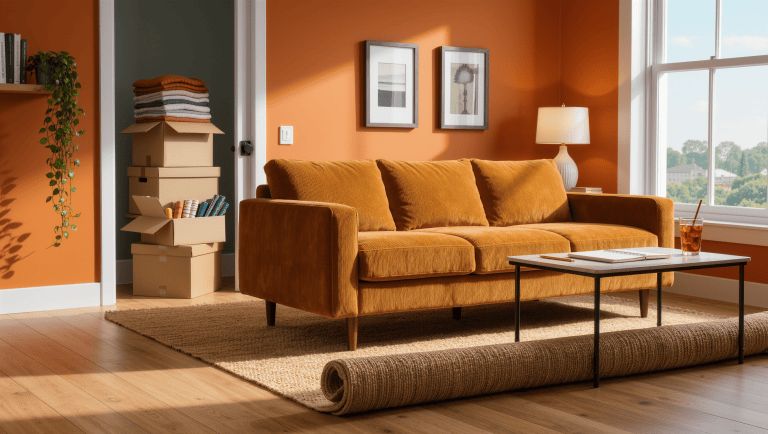 Function and Flow
The One-Afternoon Room Reset
A room needs functional relief without becoming a renovation project.
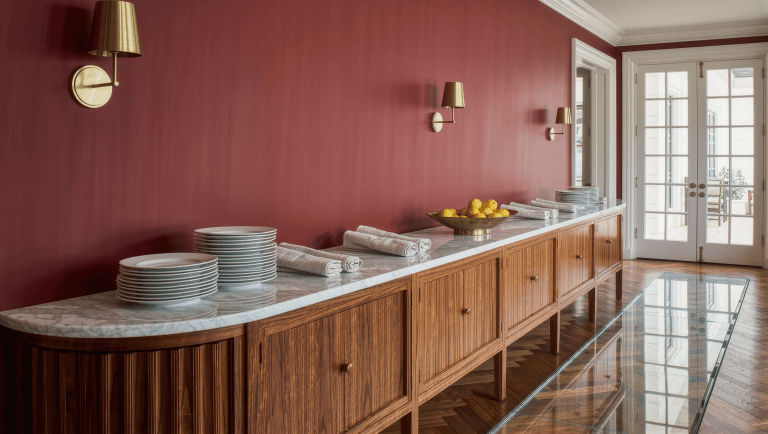 Function and Flow
The Buffet Is a Traffic Problem Before It Is a Food Problem
Plan a buffet around guest movement before food styling: separate arrival, plates, mains, drinks, waste, and return traffic so serving does not become a bottleneck.
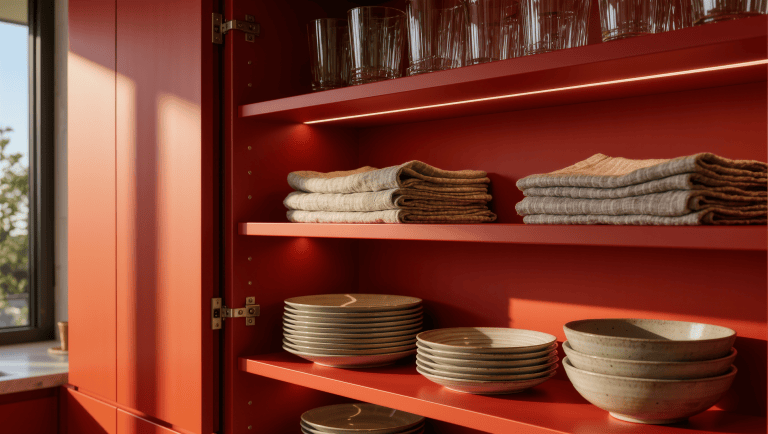 Function and Flow
The Linen Closet Is a Volume Problem, Not a Folding Problem
A linen closet often fails because bulky categories compete for limited volume. Organize by frequency, container size, shelf height, and retrieval instead of perfect fold…
 Function and Flow
Storage That Blocks Circulation Is Clutter Wearing a Cabinet
Storage has stopped earning its footprint when retrieval and circulation become harder than the original mess.
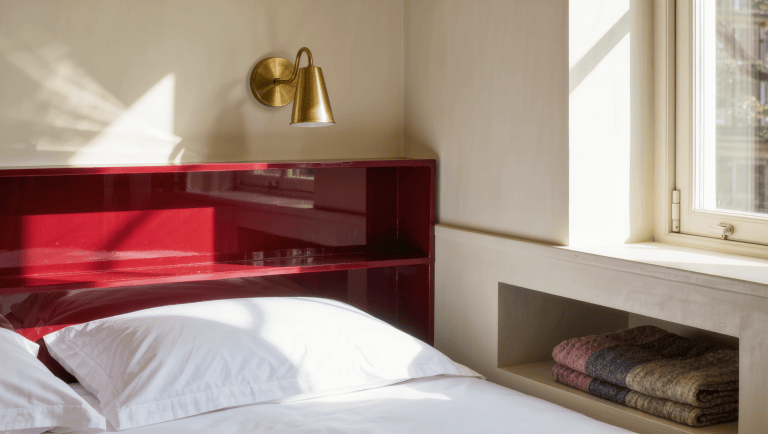 Function and Flow
The Bedroom Layout Is Punishing the Morning Routine
Fix a bedroom layout that makes mornings harder by mapping the wake-up route, protecting bedside access, staging clothes, and moving storage to the point of use.
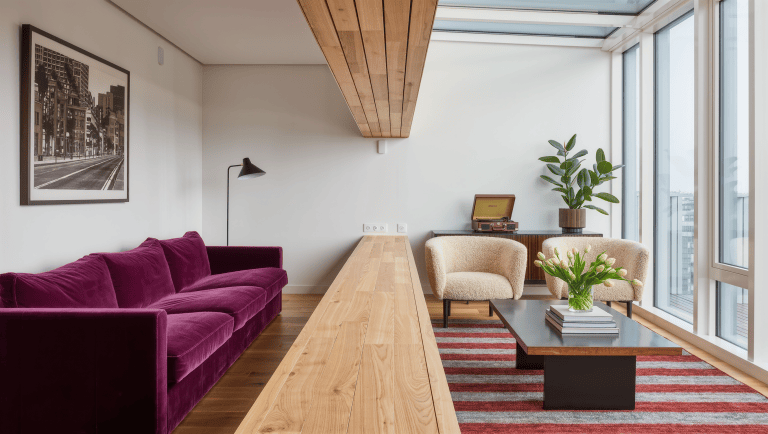 Function and Flow
The Walkway Through Your Living Room Is Designing the Room for You
Circulation is already the strongest line in the room; pretending otherwise makes every other choice weaker.
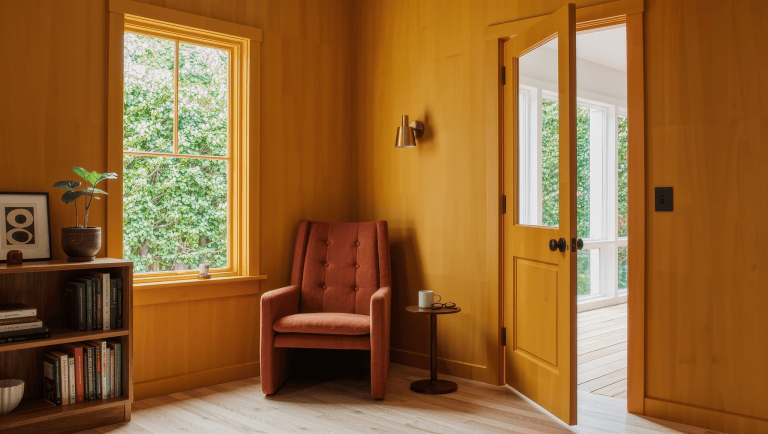 Function and Flow
The Door Swing Is Part of the Floor Plan
A door is not a line in a wall. It is a moving volume that claims space every time it operates.
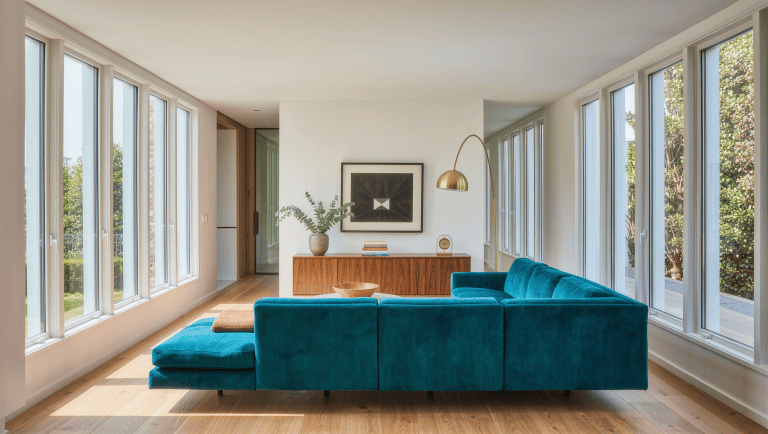 Function and Flow
Floating Furniture Changes the Traffic. That’s the Point.
Floating works only when it clarifies movement and relationships; otherwise it is furniture adrift.
 Outdoor Rooms
 That Photograph Well and Live Badly
An outdoor room can look perfect and still fail through glare, wind, weather storage, poor shade, weak lighting, awkward routes, and furniture that is miserable to mainta…
 Outdoor Rooms
The Outdoor Room Move That Still Works After the Guests Leave
Design an outdoor room for ordinary days first, then let it scale for guests with flexible seating, distributed surfaces, weather-ready storage, shade, lighting, and a cl…
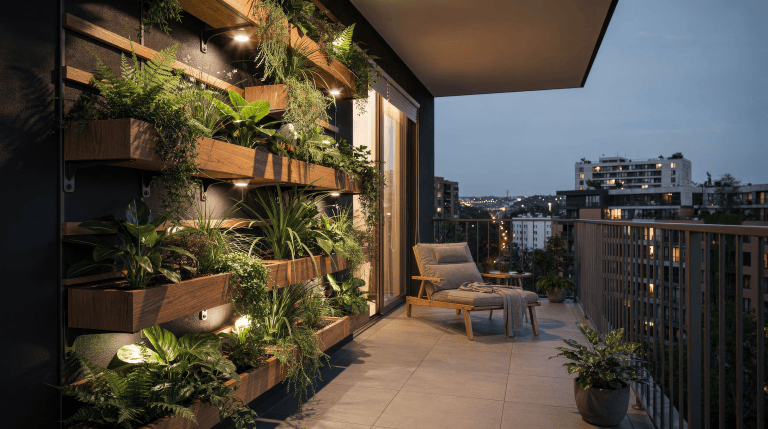 Outdoor Rooms
Let the Garden Into the Architecture
Biophilic design becomes powerful when nature stops decorating the room and starts shaping it—forming walls, thresholds, shade, privacy, light, movement, atmosphere, and…
 Outdoor Rooms
The Balcony Refuses to Close for Winter
Use a balcony through colder seasons with wind-aware furniture, warm lighting, removable weather protection, durable textiles, and a realistic storage and safety plan.
 Outdoor Rooms
The Garden Shed Becomes a Private Library
Turn a garden shed into a private library by solving weather, moisture, structure, power, insulation, book storage, seating, and light before styling the retreat.
 Outdoor Rooms
The Side Yard Becomes the Supper Room
Turn a side yard into an outdoor supper room with a clear table footprint, practical kitchen route, shade, lighting, privacy, planting, and weather-ready materials.
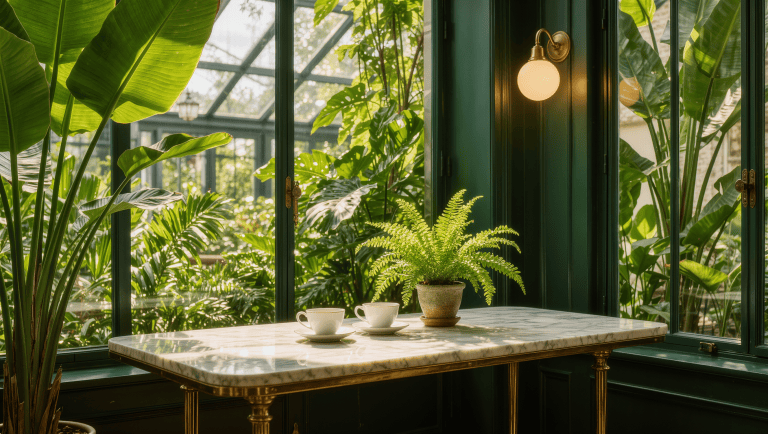 Light and Atmosphere
The Sunroom Becomes a Plant-Filled Breakfast Club
Turn a sunroom into a plant-filled breakfast club by matching plants to real light, keeping the dining route clear, using durable surfaces, and planning shade, watering,…
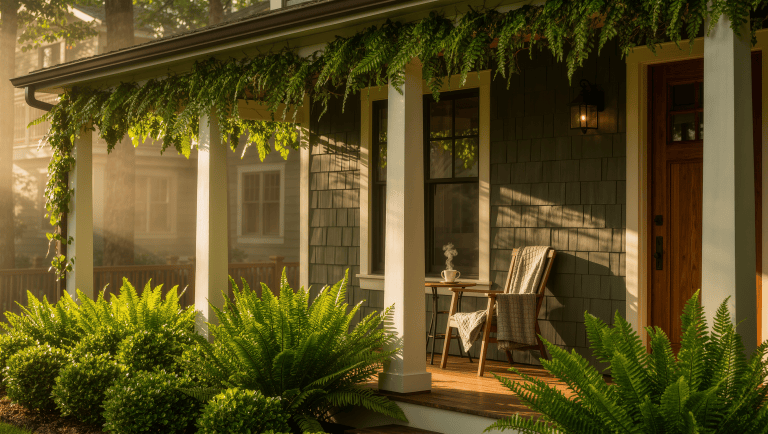 Light and Atmosphere
The Morning Room and the Midnight Room Are Not the Same Place
One outdoor footprint can support radically different daily lives when seating, shade, surfaces, sound, storage, planting, lighting, and reset are designed as deliberate…
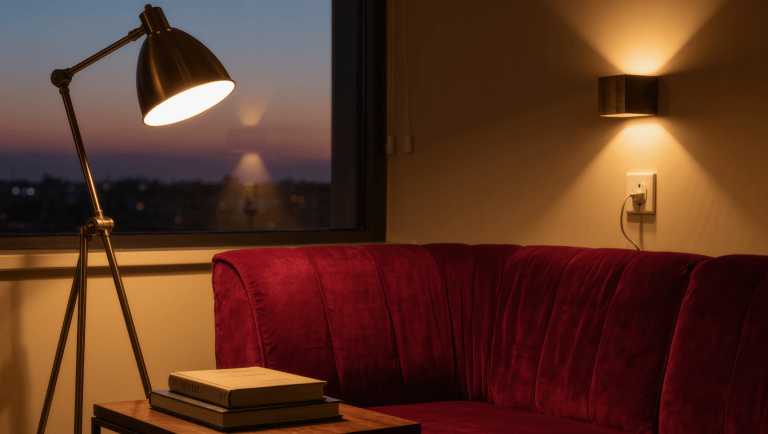 Function and Flow
The Party Needs a Retreat Route
Outdoor gatherings need a graceful route indoors when weather, temperature, fatigue, food service, or the evening itself changes. Design the transition before the party i…
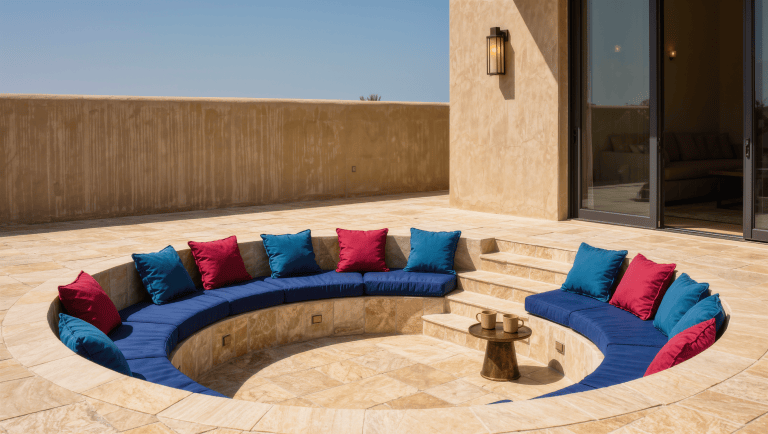 Light and Atmosphere
The Outdoor Room Needs More Than One Kind of Conversation
A successful outdoor gathering needs more than one compulsory conversation circle. Design for full-group talk, paired conversation, quiet observation, standing pauses, la…
 Light and Atmosphere
The Fire Pit Is Trying to Run the Whole Yard
A fire feature should earn the center of an outdoor room by supporting the actual activity, seating geometry, smoke movement, heat range, circulation, lighting, maintenan…
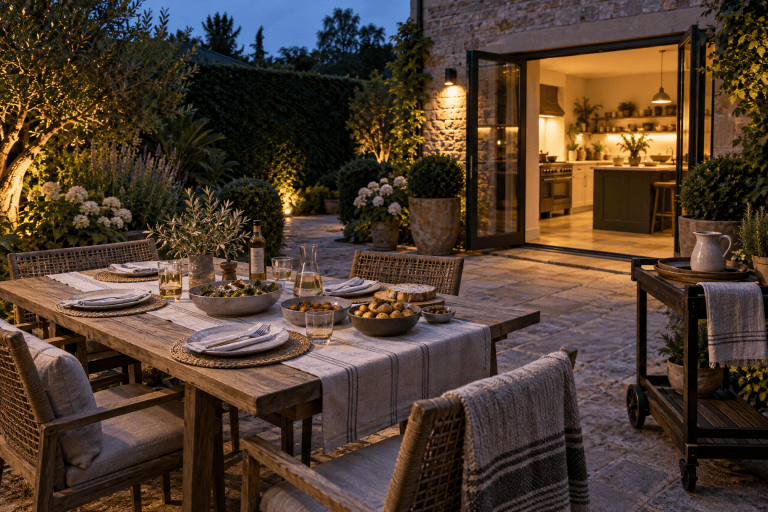 Function and Flow
Dinner Moved Outside. The Kitchen Did Not.
Outdoor dining succeeds when the route from kitchen to table, landing surfaces, serving sequence, lighting, dish return, waste, weather, and host burden are designed as o…
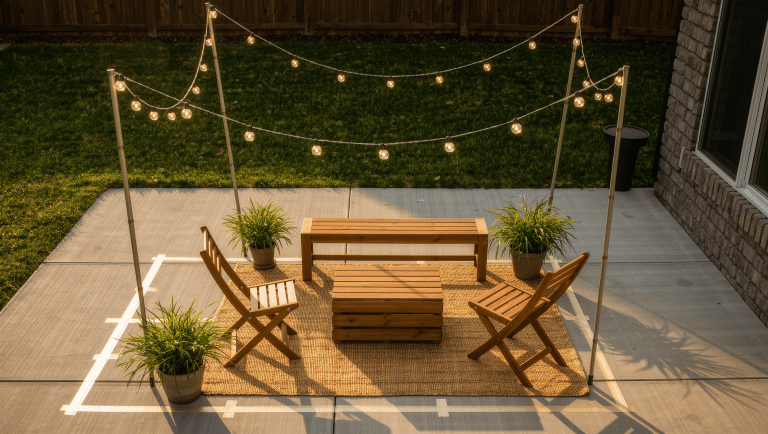 Function and Flow
The One-Week Outdoor Room Prototype
Test an outdoor room with borrowed furniture, temporary boundaries, portable light, movable shade, and clear success conditions before permanent materials or expensive pu…
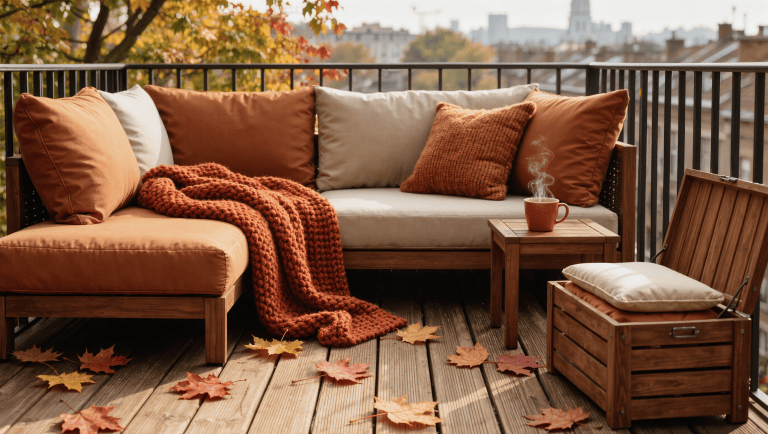 Furniture and Scale
The Cushion Logistics Department Has Been Abolished
Outdoor softness should increase comfort without creating a daily carrying, covering, drying, cleaning, storing, and weather-monitoring operation. Build a textile system…
 Awkward Spaces
Privacy Without Building a Fortress
Outdoor privacy works best when it blocks specific views, protects occupied positions, preserves sky and air, and uses layered boundaries instead of surrounding the entir…
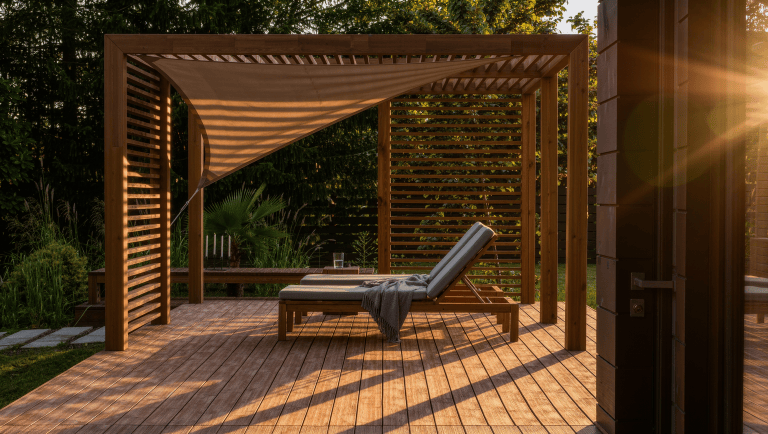 Light and Atmosphere
Shade Is a Moving Wall
Shade behaves like moving architecture. Track the occupied shadow, low sun, reflected heat, wind, seasonal change, and adjustment effort before fixing furniture or buildi…
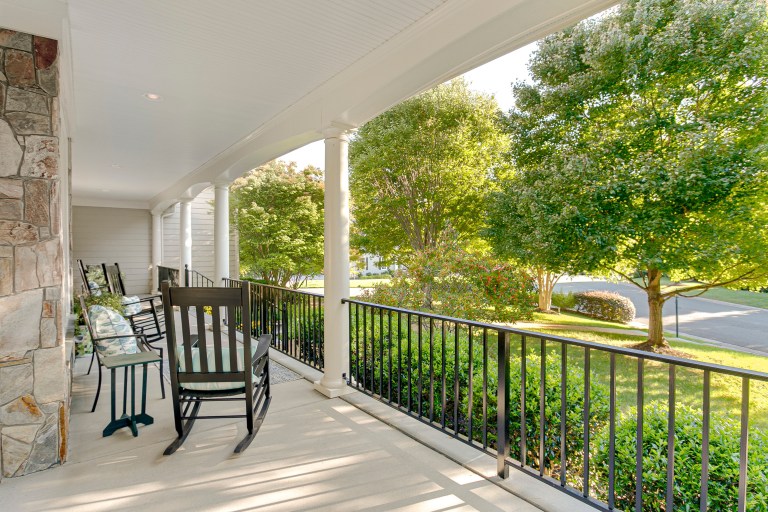 Light and Atmosphere
The Covered Porch Becomes a Weather Room
A covered porch becomes a weather room through layered shelter, a reliable dry center, honest materials, adjustable seasonal modes, and a deliberate relationship with rai…
 Materials, Color & Finish
Material Stories: What the Room Is Actually Made Of Matters
Choose room materials by how they age, reflect light, feel, sound, clean, and meet real use—not just by color. A coherent material story makes interiors richer and easier…
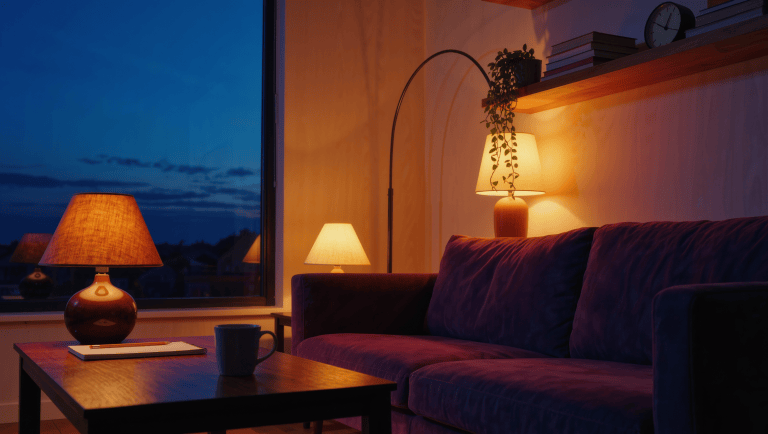 Light and Atmosphere
The 15-Minute Evening Lighting Experiment
A fast, no-purchase lighting test that shows whether a room needs more lamps, better placement, lower light, stronger task lighting, or simply fewer fixtures on at once.
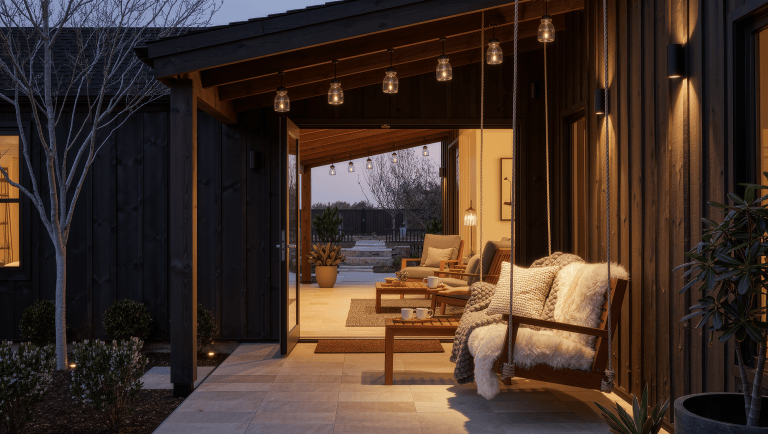 Awkward Spaces
The Back Door Is Part of the Outdoor Room
The outdoor room begins before anyone steps outside. Design the back door, landing, threshold, view, carrying route, weather transition, and daily reset as one continuous…
 Awkward Spaces
The Tiny Patio Needs a Horizon
A small patio feels larger when one horizon, one quiet edge, and a clear sequence of foreground, activity, and far point replace visual crowding.
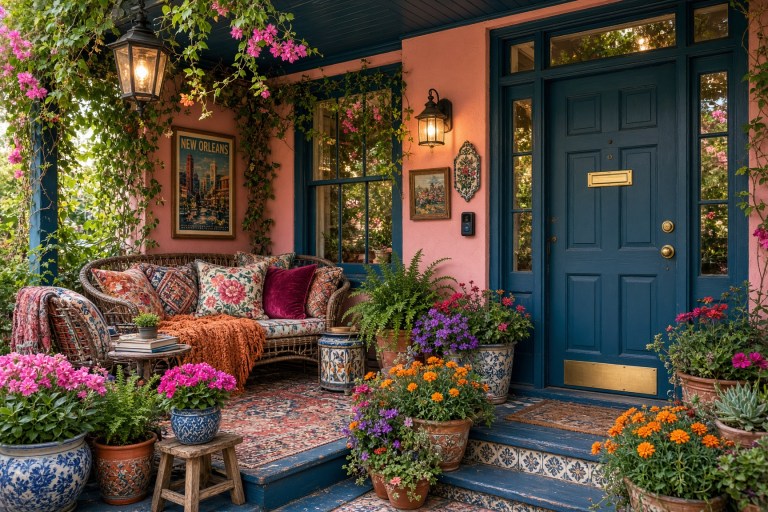 Awkward Spaces
The Porch Has a Front Door Problem
Porch furniture competes with arrival, packages, door operation, and welcome.
 Outdoor Rooms
Treat the Balcony Like a Room, Not a Storage Ledge
A small balcony accumulates leftovers instead of supporting one deliberate activity.
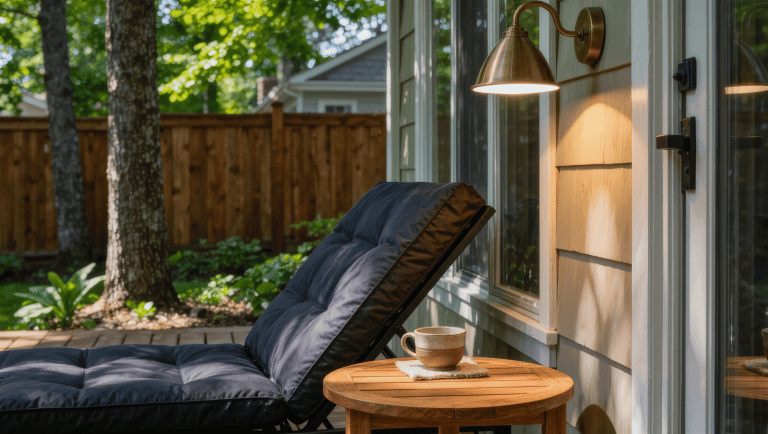 Furniture and Scale
Outdoor Furniture That Cannot Survive Your Routine
Outdoor furniture is selected for the photograph rather than exposure, storage, cleaning, and actual use.
 Materials, Color & Finish
When Decor Objects Become the Focal Point for the Wrong Reason
Small decor can steal attention when quantity, contrast, or placement overwhelms the room. Edit objects by scale, grouping, negative space, function, and relationship to…
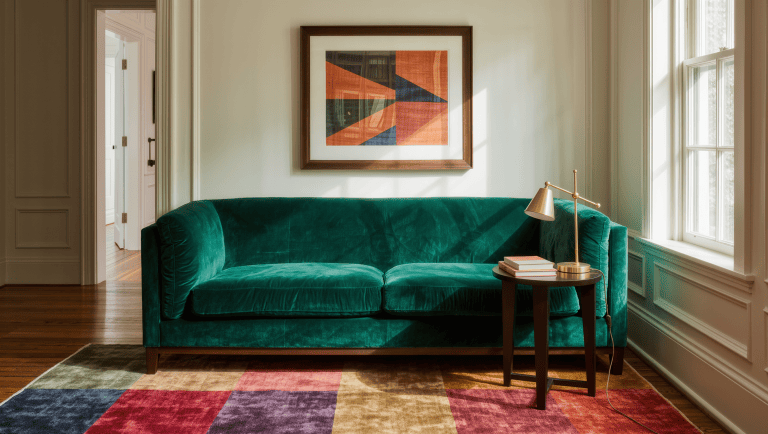 Furniture and Scale
What Furniture Scale Teaches You the Second You Walk In
Furniture scale shapes first impressions through visual weight, proportion, height, spacing, and relationship. Learn how to spot pieces that feel timid, crowded, or disco…
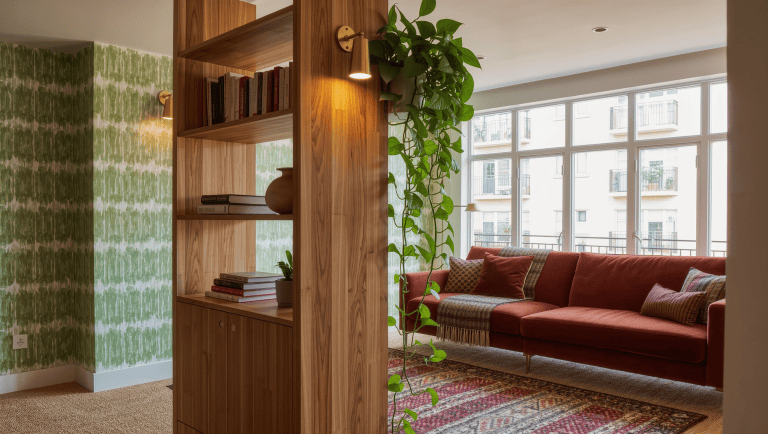 Function and Flow
Renter-Friendly Design Moves With the Permanent Consequences Removed
Change a rental substantially with removable color, lighting, textiles, furniture, hardware, and freestanding storage while checking lease terms, surface compatibility, a…
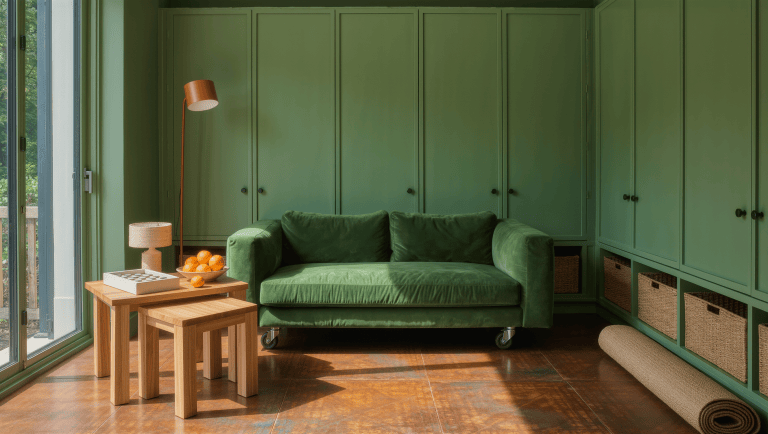 Multi-Use Rooms
The Family Room Changes Personalities Without Losing the Plot
Make a family room change modes for play, conversation, screens, work, and guests with one visual identity, flexible furniture, fast storage, and lighting that shifts the…
 Function and Flow
Your Room Has a Friction Point. Find It Before You Redecorate.
A room often announces its real problem through the same small annoyance every day.
Light and Atmosphere
The Bathroom May Be Necessary. Boring Is Entirely Optional.
A bathroom can be clean, practical, and beautifully behaved without becoming the dullest room in the house. This Room Edit explores color, art, lighting, metal, plants, s…
 Furniture and Scale
The Clock Has Taken the Wall
A design-intelligence reading of a dramatic industrial lounge—and a practical method for building a room around one impossible-scale object without letting the rest becom…
 Light and Atmosphere
The Lantern Lounge: How to Make Maximalist Light Feel Intimate
A Room Edit for a dark, jewel-lit lounge—where layered lanterns, low conversational seating, saturated textiles, and disciplined shadow turn abundance into intimacy.
 Function and Flow
The Library That Still Has a Day Job
A living room becomes a credible library and workroom by day, then gives the evening back through a freestanding book wall, disciplined storage, and a deliberate closing…
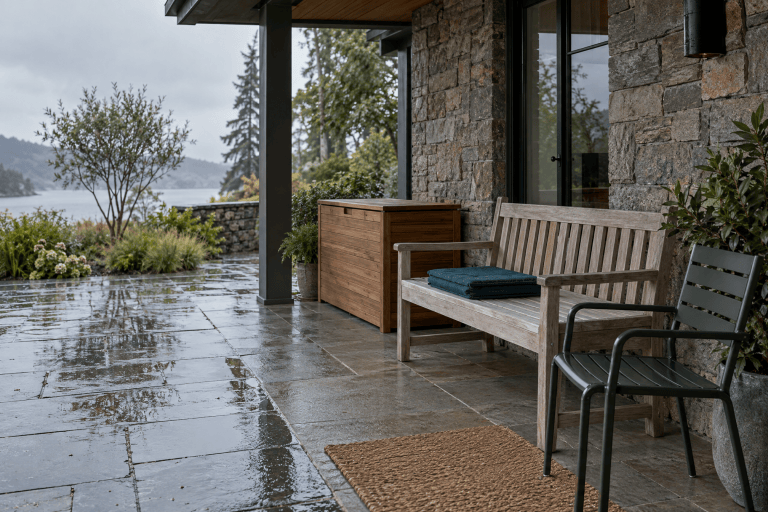 Function and Flow
Read the Weather Before You Buy the Furniture
Observe sun, wind, noise, access, privacy, and reset effort before making permanent outdoor-room decisions.
 Light and Atmosphere
After Sunset, the Outdoor Room Finally Tells the Truth
Design outdoor lighting around routes, faces, food, planting, contrast, and atmosphere so the room remains useful and compelling after daylight leaves.
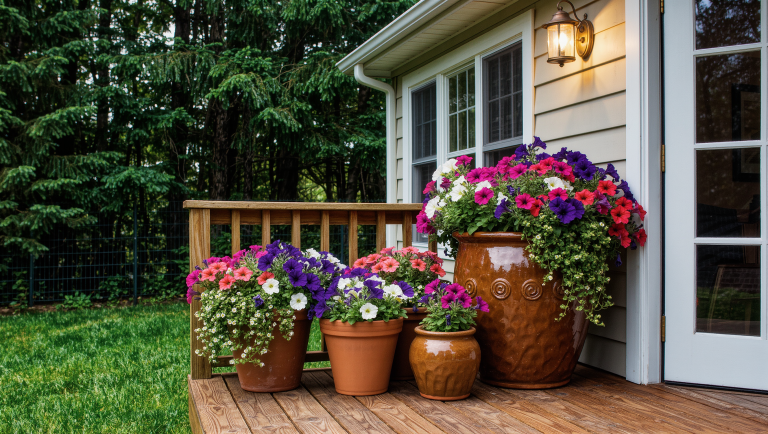 Outdoor Rooms
Plants Can Build the Walls
Use planting as outdoor architecture—to create edges, ceilings, thresholds, privacy, shade, rhythm, and changing atmosphere rather than treating greenery as garnish.
 Function and Flow
Outdoor Hosting Without Turning the Host Into Traffic Control
Plan outdoor hosting around arrival, drinks, food, conversation, weather, and recovery so the host is not trapped managing the room all evening.
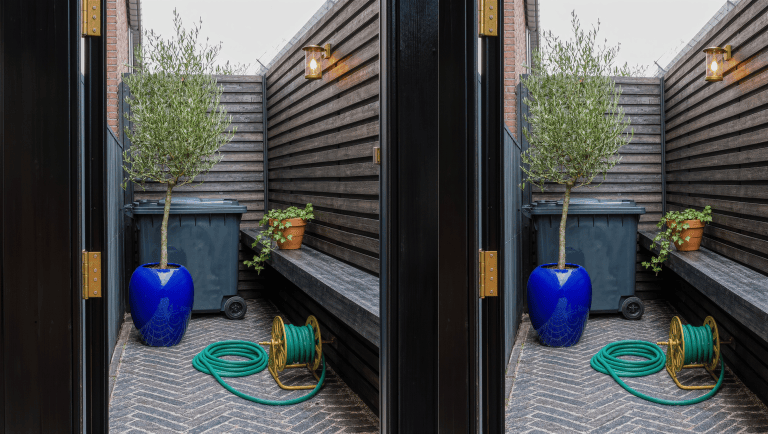 Awkward Spaces
The Side Yard Has Been Waiting for a Better Plot
Turn narrow side yards, exposed corners, sloped ground, and other awkward outdoor spaces into useful rooms by giving the difficult condition a deliberate job.
 Outdoor Rooms
How to Build an Outdoor Room Where the Architecture Forgot
Create an outdoor room from an undefined yard, patio, or garden footprint by establishing ground, edge, overhead protection, a center, and one clear activity.
 Outdoor Rooms
Give the Patio a Reason to Keep You There
An outdoor room begins with a clear activity, a readable boundary, and conditions that let people remain after the novelty of being outside wears off.
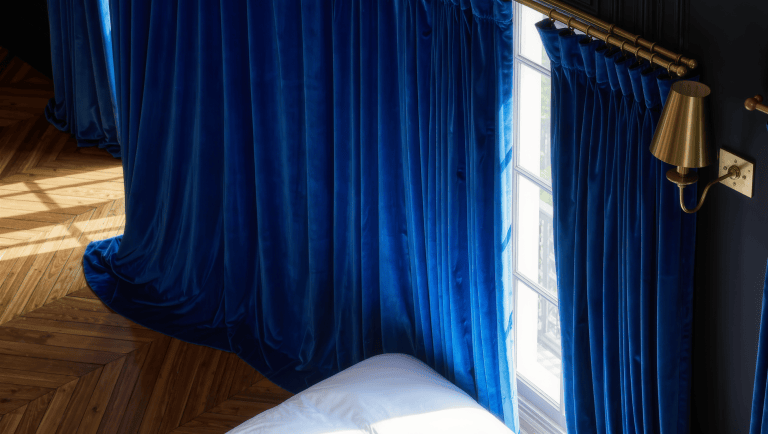 Awkward Spaces
The Awkward Room Is Usually Following the Wrong Geometry
An irregular room becomes harder when it is forced to imitate a rectangle it does not contain.
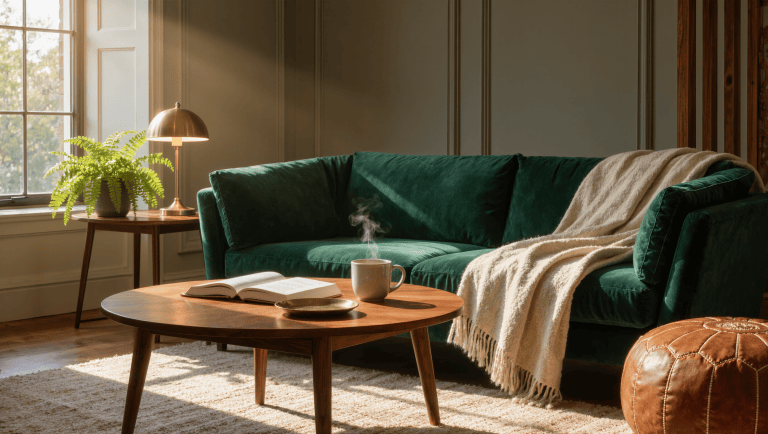 Function and Flow
Why Your Living Room Feels Like a Waiting Room
The room may contain all the expected furniture and still fail to create a reason to settle in.
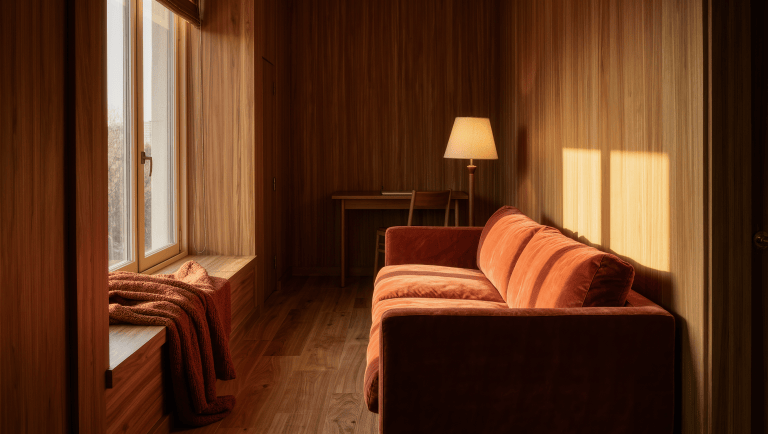 Function and Flow
Small Room, Too Many Priorities
Cramped is sometimes a scheduling problem disguised as a square-footage problem.
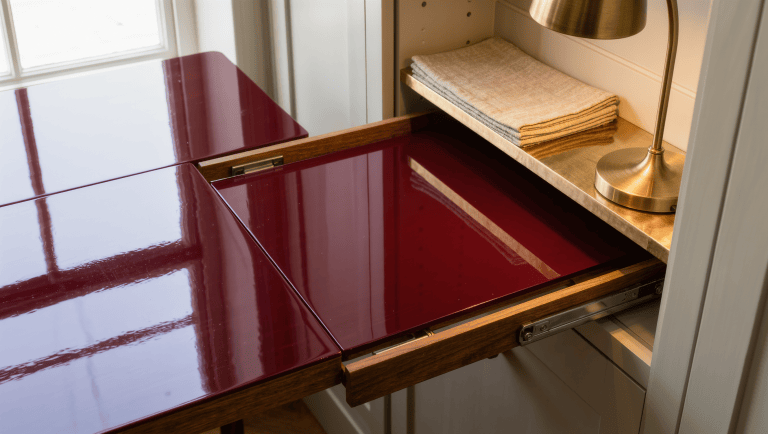 Small Interiors
Give the Small Room a Job Before You Give It More Storage
A practical room diagnosis for deciding what a small space must do, resolving competing activities, testing circulation, and delaying storage purchases until the room has…
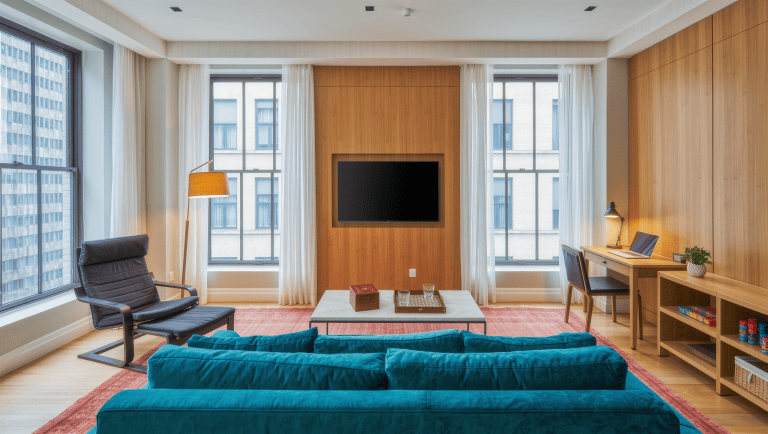 Function and Flow
Stop Blaming the Chair
When one living room must hold conversation, television, reading, work, play, storage, and passage, the answer is not a neutral compromise. It is a strong composition wit…
When the grid is not the answer
You can read four hundred articles, or you can look at the room.
Filters are good at finding the piece that matches a room you have already diagnosed. They are useless at telling you which of the six things wrong with it is doing the most damage. That is a different instrument, it is free, and it is allowed to tell you to buy nothing yet.
Read the room Browse by picture instead Start from the symptom Or just take the numbers