Outdoor Rooms
Shade Can Carry a Garden
Treat shade as a positive garden condition through measured light, layered foliage, pale notes, stable paths, moisture-aware planting, and an evening identity that does not imitate sun.
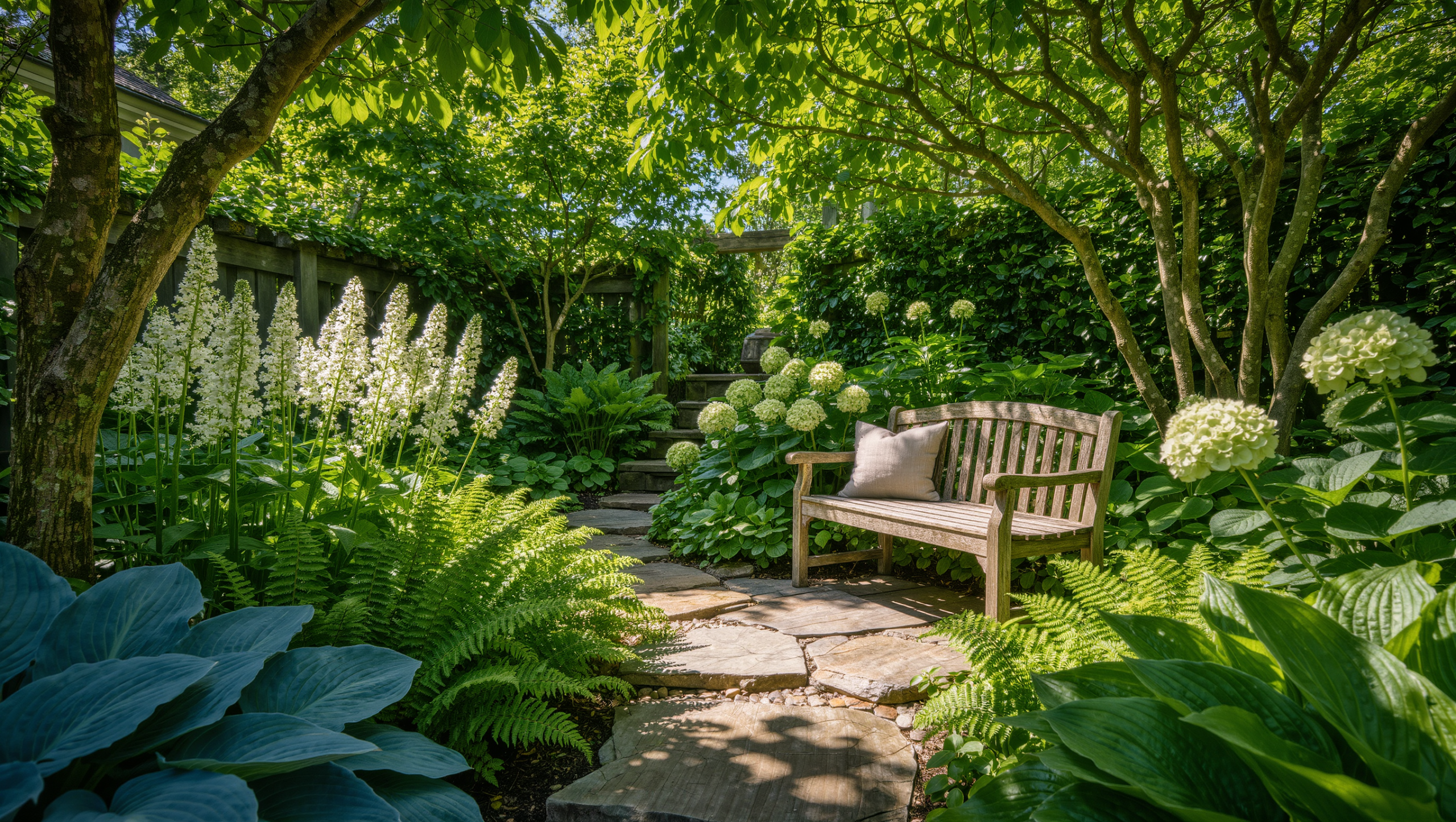
Shade is not the absence of a garden. It is a different light condition with its own advantages: cooler seating, richer foliage, softer contrast, slower transitions, and the possibility of making the space under a tree feel like a room instead of a dead zone.
The mistake is trying to reproduce a sunny border with plants that would rather file a complaint.
Design for the shade that exists.
Identify the type and timing of shade
Full shade, dappled light, morning sun, bright indirect light, and deep shade under dense canopy are not the same condition.
Observe the area through the day and across seasons. Deciduous trees may create very different spring and summer light.
Choose plants using credible regional guidance for the actual conditions, climate, soil, and moisture.
Under a tree is already a room
The trunk provides a vertical anchor and the canopy provides an overhead plane. Use those conditions to create seating, a path, a planted edge, or a quiet view.
Do not crowd the trunk or damage roots with inappropriate excavation, grade changes, compaction, irrigation, or construction. Mature tree health may require advice from a qualified arborist.
Foliage does the work flowers do elsewhere
Shade gardens lean on leaf size, shape, texture, and tone, because flowering is a different proposition in low light and the plants that manage it well are a shorter list. Combine broad leaves, fine textures, grasses or grass-like forms, ferns, shrubs, and groundcovers suited to the site. Variation inside a single color will build as much depth as four flower colors would, provided the shapes are strong enough to read from the far end of the garden.
A little reflectivity helps the eye find the edges. Variegated foliage, pale flowers, light gravel, stone, ceramic, a painted seat — any of them catch limited light and make the area legible. One or two is the dose. A shade garden answered entirely in white objects is a shade garden nobody trusted, and it looks anxious.
Shade and damp are not the same condition
They get filed together anyway. A mature tree is drinking constantly, which makes the ground beneath it some of the driest soil on the property despite no sun reaching it. Roof overhangs, walls, slope, and soil push the moisture further in one direction or the other.
Observe the drainage and the soil before buying a single plant, and let irrigation respond to what the site and the tree actually need rather than to a generic shade-garden formula. A great many plants die of thirst under a canopy while somebody explains that they were chosen for damp shade.
Design the seating for comfort
Shade can make a summer seat extremely appealing. Check insects, wind, moisture, falling debris, roots, and the route before placing furniture.
Use a stable surface and furniture appropriate to outdoor conditions. A romantic chair sunk into damp soil or roots will become less romantic quickly.
A path turns a margin into a sequence
A route through a shaded side or under-tree area can transform it from neglected margin to garden sequence.
Keep the path appropriate to drainage, roots, slope, and access. Lightly placed stepping stones or other reversible approaches may be preferable to heavy construction around established trees depending on site conditions.
What to do with ground you should not dig
Some shaded sites carry moss or shade-tolerant groundcovers beautifully; others refuse. Either way, stop forcing a lawn to survive where the conditions keep it thin. That patch of grass has been telling you something for several years. A groundcover, mulch, gravel, planting, or a different surface entirely may suit the site and the use far better, and the annual reseeding stops.
Where roots make digging a bad idea to begin with, containers do the planting without excavation. Choose size, drainage, stability, and species for the real light and watering conditions — a pot under a canopy receives neither rain nor sun and survives entirely on somebody remembering it exists.
Make the shaded room work at night
A naturally dark area can disappear completely after sunset. Low, restrained outdoor lighting can reveal the path, trunk, foliage, or seating without flooding the whole garden.
Use outdoor-rated equipment, avoid harmful or excessive light, and use qualified installation for fixed electrical work.
Use seasonal change as part of the composition
Spring bulbs before leaf-out, summer foliage, autumn color, bark, evergreen structure, and winter branching can create different versions of the same shaded room.
Design for sequence rather than demanding identical performance all year. Under a deciduous canopy, early spring is the one stretch when the shade garden gets real sun, which is why bulbs there can stage a small riot in April and then bow out politely once the leaves close overhead.
Nobody avoids that corner because it lacks lanterns
Ground under a tree or along a shaded boundary goes unused for physical reasons, almost every time. The route is muddy for four days after rain. The chair wobbles on a root. The seat is cold at exactly the hour people would otherwise sit in it. Something drips. Not one of those is a decorative problem, and not one of them is solved by lanterns, cushions, a string of lights, or a small ornamental object bought in good faith.
Fix the surface, the path, and the seating condition first. Then find out whether the space is still unused — because frequently it is not, and the corner written off as a dead zone turns out to be the best seat on the property on the hottest afternoon of the year, once somebody made it possible to walk there in ordinary shoes.
Same problem, elsewhere in the house
Room notes
Keep the room on the record.
One useful note at a time: what to test, what to ignore, and what changed when the room got another vote.