Outdoor Rooms
Flowers With a Job: Cutting, Pollinating, Edible, and Seasonal Planting
Build a cutting garden as a small production system with harvest goals, succession, access, conditioning space, useful stem roles, and enough structure to still read as a garden between cuts.

Flowers are more interesting when they have a job beyond “be colorful.”
A planting can supply cut stems, support pollinators, mix edible plants into ornamental borders, deliver one spectacular seasonal interval, or do several of those things without looking like a farm plot divided by categories.
The useful question is what the planting should contribute to the garden and household—not how many flower varieties can fit into the cart.
Start with site conditions
Sun, soil, drainage, climate, irrigation, wind, and local growing conditions determine what can thrive. Plant labels and regional guidance matter more than a photograph from another climate.
Before choosing a style, know which areas receive the light and moisture the plants require.
Cutting: the border can do it, with conditions
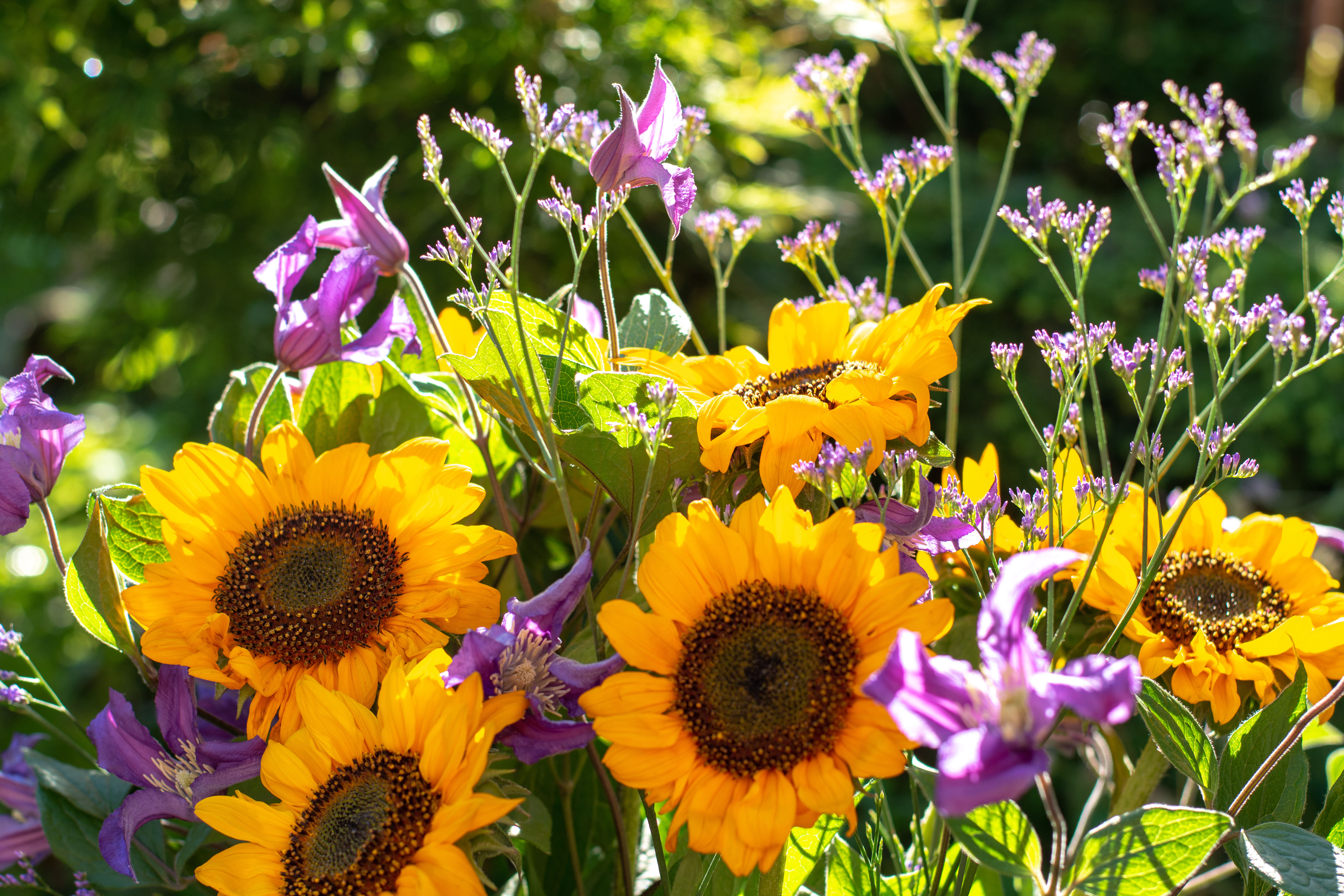
Plants grown for cutting live perfectly well inside a mixed border when their form, season, and maintenance suit the composition. Choose varieties that give usable stems and enough repeat growth for the way you actually cut, and leave reachable access so harvesting does not mean wading past three other plants to get at one. The real test comes on the walk back to the house with the stems in your hand: if the border now has a visible hole in it, that plant was in the wrong place, or there was only one of it.
Spread the season or accept a short one. Early, midseason, and later performers, or successive sowing where the crop allows, is what stands between a two-week glut and an empty patch for the rest of the summer. Keep the expectation honest about local climate and available labor. A continuous florist-level supply is a real thing real people achieve, and it is a project, not a side effect.
Pollinators: sequence, diversity, and no credit for looking wild
Pollinators want suitable forage across a long season, appropriate plant choices, and habitat conditions that suit the species actually present. Native and locally adapted plants are frequently valuable, though the best mix depends on region and species rather than on principle. Use local extension services, a botanical garden, or other credible regional guidance to decide what genuinely supports pollinators where you are. A bed is not ecologically useful because it looks ecologically useful. Aesthetics make claims that do not hold up.
None of that obliges the planting to look unplanned. Repeat a few species, use grasses or shrubs to hold the form, keep paths and edges legible, and let the loose flowering areas play against a disciplined boundary. A garden can support insects without being sentenced to look accidental — and the version with structure is the one that outlasts the household’s patience, which is the real limiting factor on most habitat planting.
Edible: integrate it, or it reads as a farm plot
Herbs, edible flowers, chard, kale, strawberries, and other productive plants mix into ornamental borders without objection wherever site and food-safety conditions allow. What makes them read as part of the garden rather than a vegetable patch that wandered in is repeated foliage, consistent edging, and compatible heights — the same three things that integrate anything else. Do not plant edible crops in contaminated soil or in locations exposed to inappropriate chemicals or runoff. Verify site conditions where that risk exists.
Herbs in particular are structure, not garnish. Woody herbs and mounded forms carry a border rhythm through the whole season and happen to be useful, which is the best ratio available in a garden. Put the ones you cut often close enough to the house that harvesting is not a trip. Rosemary at the bottom of the garden is a shrub. Rosemary by the door is an ingredient.
The seasonal event: go bigger, in one place
A concentrated tulip, dahlia, cosmos, or salvia display is genuinely spectacular for the weeks it runs. It depends entirely on what is holding the ground before and after — evergreen structure, grasses, shrubs, hardscape, some other quieter layer that nobody photographs. Twelve months of identical bloom was never the ambition. A garden that still has bones the week after the event ends is.
One ridiculous move will beat a dozen careful ones. A single oversized drift, one color repeated past the point of good manners, a doorway framed in bloom, one bed given over entirely to three spectacular weeks — any of those outperforms special plants distributed evenly across a garden where none of them reaches critical mass. Put the drama where there is a view, a route, or a gathering place strong enough to receive it. Drama with nobody standing in front of it is just expensive.
Plan support, cutting, and deadheading access
Some flowering plants need staking, tying, cutting back, deadheading, or repeated harvest.
Design paths or reach so the maintenance can happen without trampling the border. The prettiest planting plan is not useful if care requires climbing through it.
Use containers for seasonal flexibility
Pots can hold annuals, herbs, tender plants, or short seasonal color near entries and seating.
Choose container size, drainage, material, and plant mix for the site and maintenance capacity. Small pots dry quickly and can become a daily watering commitment in hot conditions. A row of little terracotta pots on the step is charming in May and, by the first heatwave, a row of small daily rescues.
Use Container Choreography for the container-specific composition.
Keep water and maintenance realistic
A dense flowering garden can require more irrigation, deadheading, feeding, staking, pest management, and seasonal cleanup than a restrained structural planting.
Choose the maintenance level deliberately. High-drama, high-maintenance is a legitimate choice when the household wants the work. A dahlia bed is closer to a pet than a planting, with feeding times, a staking habit and a tendency to collapse theatrically after one windy night. Adopt it on purpose.
Source plants with the site in mind
Local nurseries, seed suppliers, botanical resources, and regional growers can provide plants better suited to local conditions than generic national lists.
Check mature size and vigor. A plant that is charming in a nursery pot can become a territorial dispute in a mixed border.
One bed cannot hold all four jobs
The four stop being complementary once they all ask the same bed to put them first. A bed cut hard for the vase is a bed with fewer flowers standing for the pollinators. Varieties chosen for stem length are not necessarily the ones chosen for forage. The seasonal explosion wants mass of one thing; the edible border wants variety and access; the pollinator planting wants succession, which is the precise opposite of a concentrated display. All four can happen in one garden. Two can share a bed, carefully. Four cannot, and the attempt produces a planting that does each job at about sixty percent and looks like a sampler while it does them.
Assign the job bed by bed, not garden by garden. Respect the site, repeat enough of each plant to build structure, and decide now what that ground will look like in the four months after its moment is over.
Same problem, elsewhere in the house
Room notes
Keep the room on the record.
One useful note at a time: what to test, what to ignore, and what changed when the room got another vote.