Function and Flow
Soft Geometry: When a Room Needs Fewer Hard Stops
Use curves, arches, rounded furniture, scalloped details, and softer transitions where they improve circulation, sightlines, comfort, or visual rhythm—not simply because curved forms are trending.
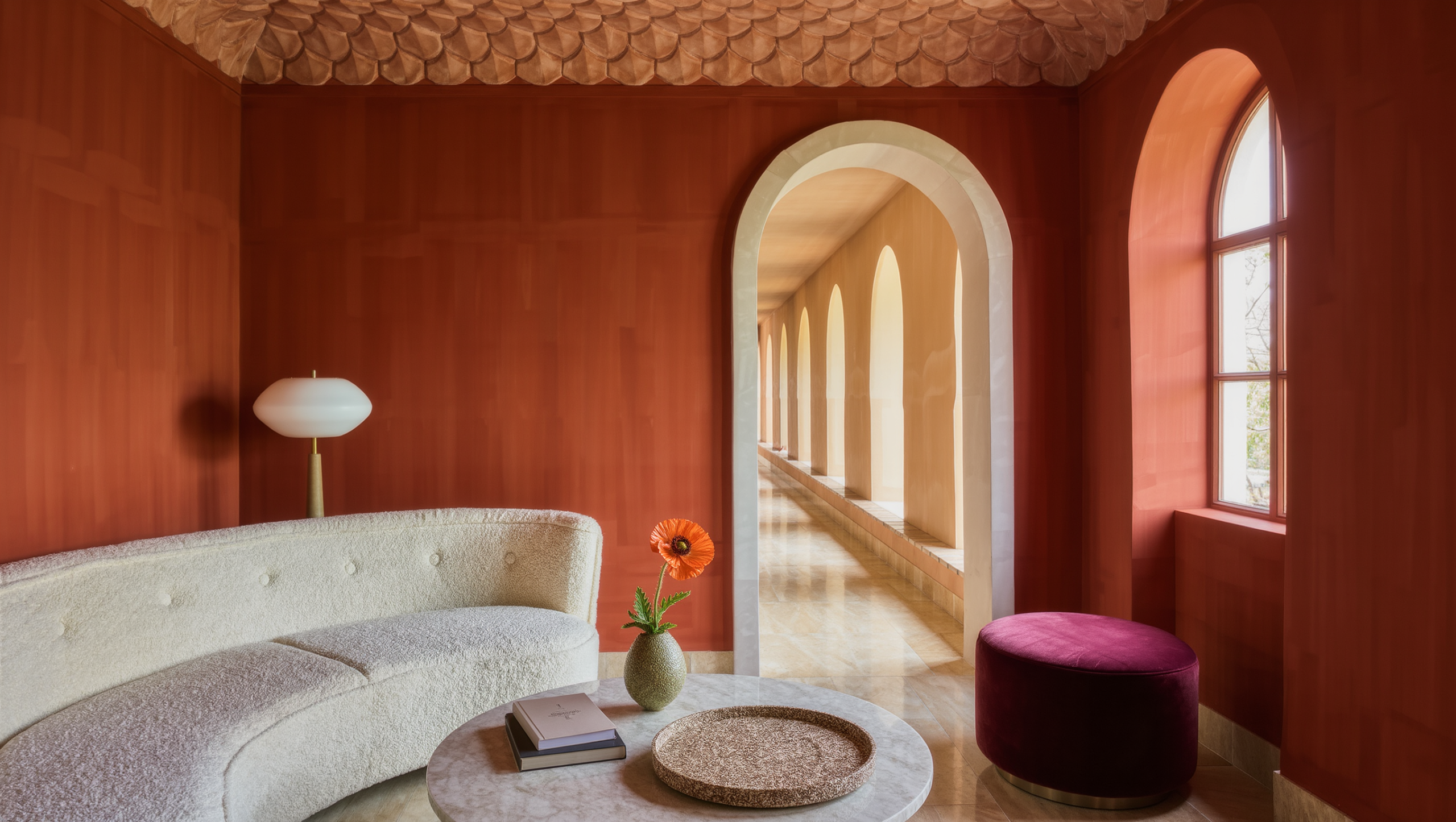
A curved chair can soften a room. Twelve curved things can make it look like the furniture is trying to avoid corners.
Soft geometry—arches, rounded furniture, scalloped edges, oval tables, curved islands, radius corners, wave-like tile—has real spatial value when it changes movement or visual rhythm. The question is where a hard line is creating an unnecessary stop.
Find the hard stops first
Stand at the main entrance and look for places where the eye or body hits a sharp visual edge: the corner of a table in the walkway, a square cabinet facing a diagonal route, a rigid furniture arrangement inside an irregular room.
Not every straight line needs correction. Architecture often benefits from clarity. Curves matter most where they mediate a transition.
Use curves where people move
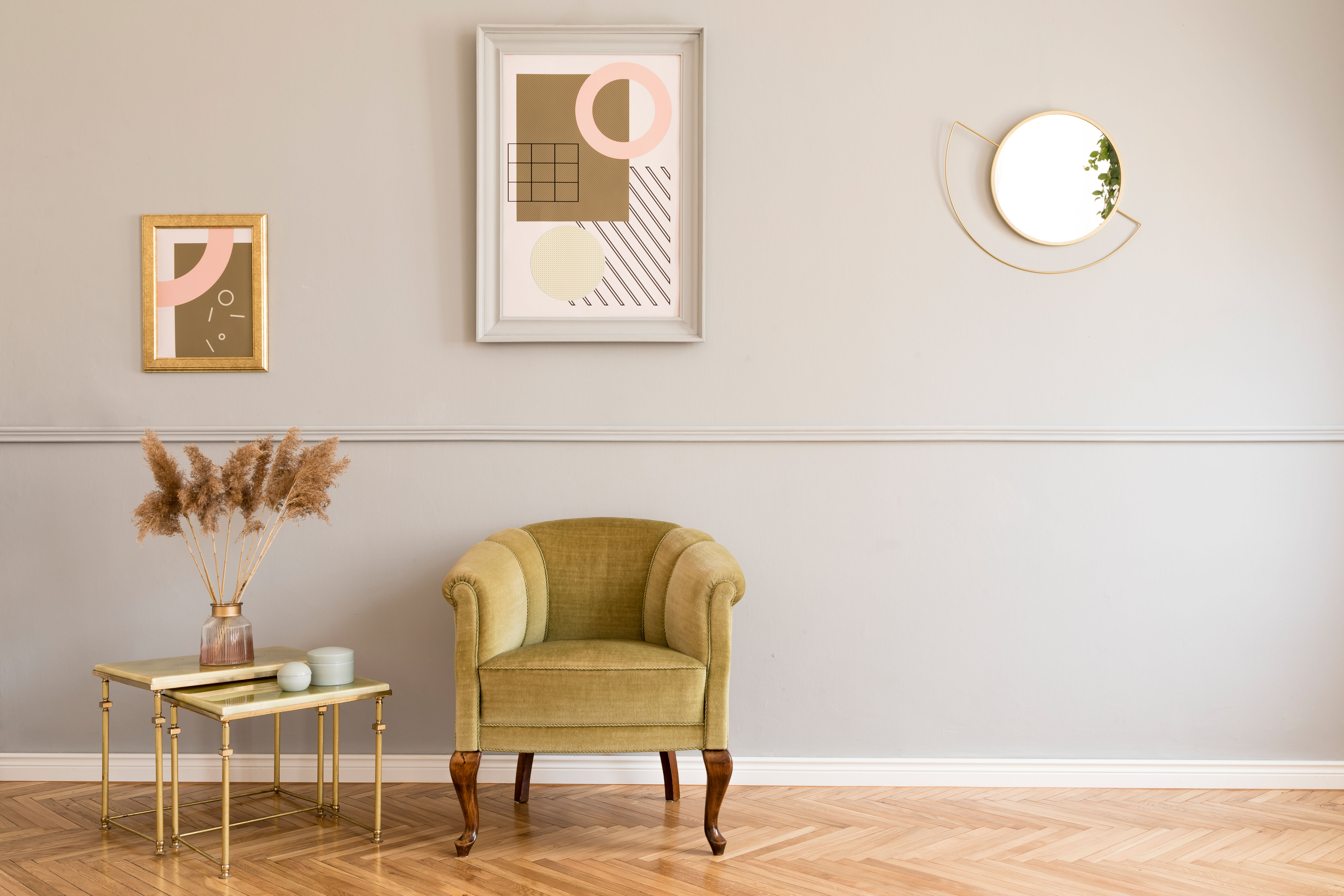
Rounded coffee tables, oval dining tables, curved consoles, and radius-edged casework can make tight circulation feel less confrontational. They do not create more floor area, but they can reduce the sense of navigating around points and corners.
Tape the actual footprint before buying. A large oval table can still block the room; a curved sofa can consume more depth than a straight one. Geometry does not excuse scale.
Use one dominant curve language
If the room has an arched opening, that shape can guide secondary choices: a rounded mirror, an oval table, or a chair with a curved back. Repetition is what makes the shapes read as a family.
Avoid collecting every possible variation—scallop, arch, wave, blob, circle—unless the room is deliberately exuberant. Soft geometry is strongest when the shapes seem related rather than randomly allergic to ninety degrees.
Balance curves with straight structure
Curves register because something around them is straighter. A round table against rectilinear cabinetry feels deliberate. A sculptural chair near a simple wall has room to be read. If every edge bends, the room can lose hierarchy.
Use straight elements as visual scaffolding: rugs, shelves, wall lines, window frames, large art, or simple storage.
Let furniture solve awkward architecture
Rooms with bay windows, angled walls, off-center openings, or diagonal circulation often resist standard furniture grids. A round pedestal table, curved bench, or oval rug may relate to the room more naturally than another rectangle forced into place.
Test the difficult condition rather than assuming curved furniture is automatically the answer. Sometimes the better solution is simply rotating the layout.
The wedge behind the curved sofa is floor you paid for
Put a curved back against a straight wall and you have made a wedge — widest at the middle, tapering to nothing at both ends — that no object can occupy and no person can stand in. In a large room that wedge is fine and even useful; it reads as air. In a small room it is a foot of floor that has quietly left the household.
Two honest answers. Pull the curved seating far enough forward that the gap becomes a genuine route with somewhere to go, which requires the room to be big enough to mean it. Or choose a piece whose shape agrees with the wall it is going against. What is not an answer is surrendering real floor area for a graceful silhouette that nobody is viewing from above.
Use arches with architectural restraint
Arched openings, niches, doors, and built-ins can soften transitions and create a sense of sequence. But applied arches that ignore the building’s proportions can feel theatrical rather than integrated.
Structural modifications, openings, and built-in changes should be planned with appropriate professionals where walls, loads, utilities, fire separation, or code requirements may be involved.
Use scallops and waves at the right scale
Small repeated curves in tile, trim, or fabric create rhythm rather than circulation. They are decorative geometry, and they need a quiet field around them.
Check the repeat from normal viewing distance. A tiny scallop can become visual static across a large surface. A larger wave may need fewer competing patterns nearby.
Two tests: one with your eyes, one with your body
The eye test is a photograph from the doorway, squinted at until it becomes shapes. Is the room an unbroken run of boxes? Then one curved chair, one round table, one arched lamp, or one plant with a spreading canopy may be all the interruption it needs. If the silhouette already holds arched windows, a curved sofa, round tables and soft upholstery, another blob adds nothing and costs whatever it costs.
The body test is less flattering and more useful. Walk the main route. Sit in every seat. Reach across the table. Pull the chair out. Open the cabinet door. A curved piece can look gentler and still fail at ordinary use — a round table nobody can reach the center of, a curved back supporting nothing, a radius cabinet whose door needs a foot of swing. Where accessibility, stability and movement are involved, function outranks visual softness, and it is not close.
A five-question soft-geometry audit
- Which hard edge is actually causing friction?
- Does the curve improve movement, sightline, or comfort?
- Is the curved piece correctly scaled for the room?
- Does its shape relate to another element?
- Would the room still work if the trend disappeared tomorrow?
See Space Intelligence and The Reference Room for more work on proportion, shape, and composition.
One curve in the right place turns a collision into a transition. Twelve curves turn a living room into a hotel lobby. Find the edge that is genuinely behaving like a barricade, deal with that one, and leave the remaining ninety-degree angles where they are. They were never the problem.
Same problem, elsewhere in the house
Room notes
Keep the room on the record.
One useful note at a time: what to test, what to ignore, and what changed when the room got another vote.