Function and Flow
Deep Cabinets Need Their Own Light
Interior cabinet lighting is becoming part of smarter storage. Use it where depth, darkness, and visibility are real problems—not as decoration inside every drawer.
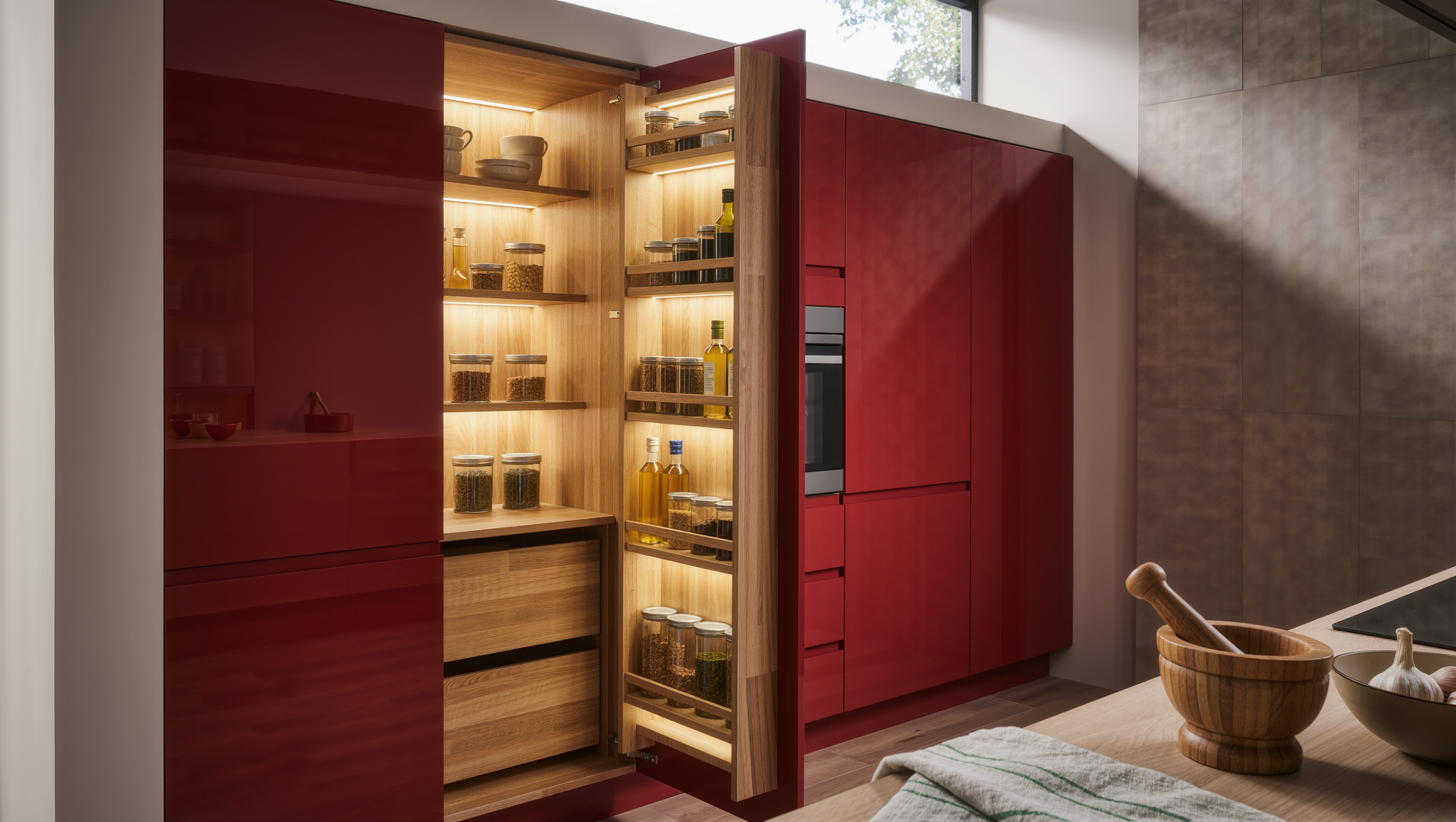
There is a difference between storage and a dark box where objects go to become theoretical.
As cabinets get taller, deeper, and more specialized, interior lighting starts making practical sense. A pantry shelf at eye level may not need help. A deep wardrobe, tall utility cabinet, under-stair compartment, or bathroom tower absolutely might.
Light the depth, not the door
Useful cabinet lighting reaches the back and lower portions of the storage zone. A bright strip mounted where it only illuminates the front edge creates a lovely glow and leaves the thing you are looking for in shadow. Placement matters more than novelty.
Side-mounted vertical lighting can make a tall cabinet easier to read than one bright source at the top. A pantry can benefit from light near the shelf face if the shelves are deep enough to block overhead illumination. A closet drawer may not need any lighting at all. The point is not to make every compartment look expensive. The point is to stop losing objects to darkness.
The best version of this is boring
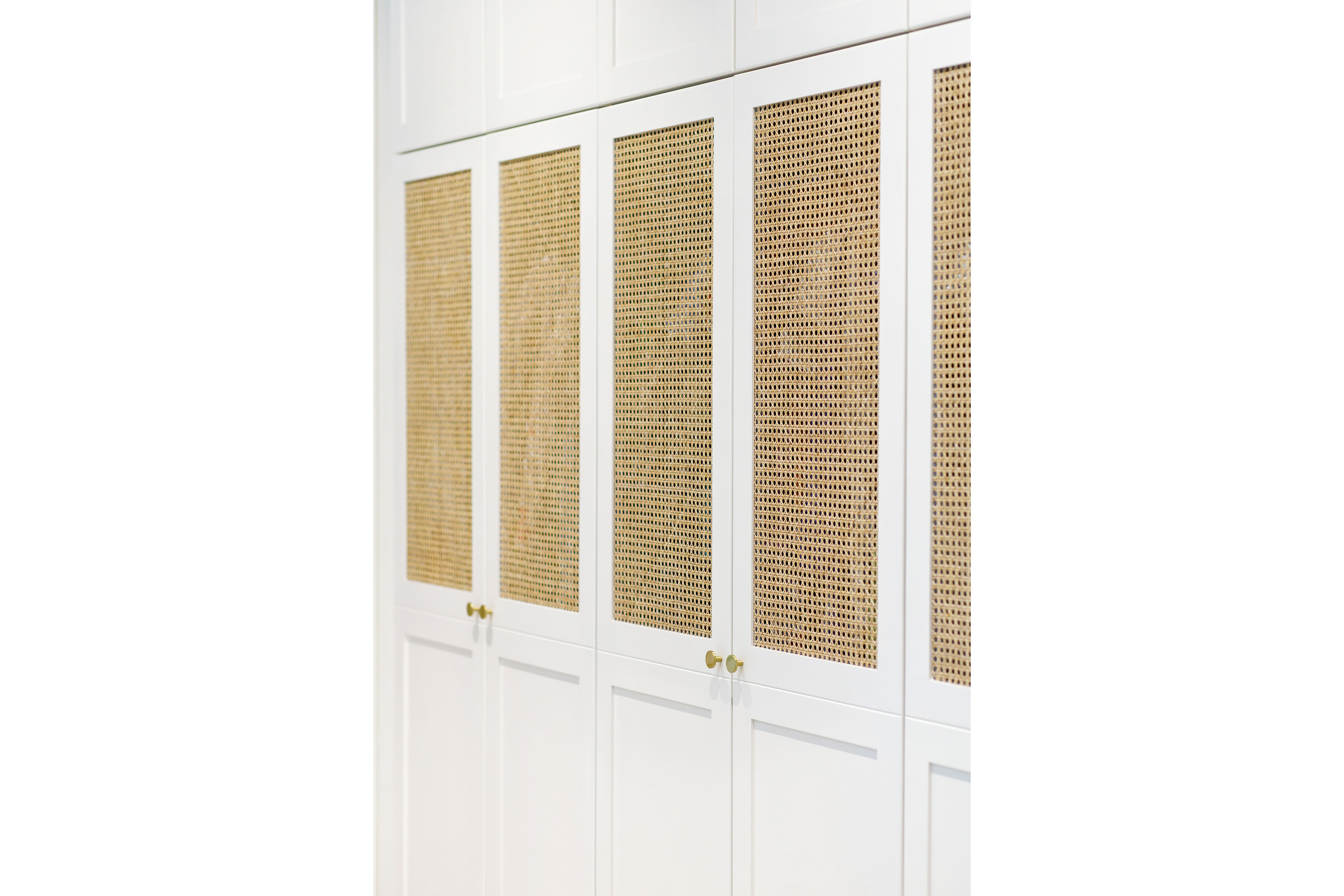
Door- or motion-activated light is useful because nobody wants to operate a separate switch every time they open a pantry. The best version disappears into the routine: open the cabinet, see the contents, close the cabinet, done.
This is exactly the kind of “smart” feature I like: boring in the best possible way. No dashboard. No voice command. No app asking permission to update. It simply makes the cabinet work better.
Visibility is the entire return on this, and it is a larger return than it sounds. Food storage, cleaning supplies, linens, shoes, small appliances and grooming tools all become easier to manage the moment the back of the cabinet can be seen. It reduces duplicate buying. It dissolves the archaeological layer of things nobody remembered owning. A household that can see its own supplies stops buying its third bottle of the same thing, which is a better return than most organizing products deliver.
It can also make a beautiful cabinet feel better rather than merely look better. Dark-stained interiors, deep paint colors, smoked glass, and richly finished millwork are atmospheric, but they absorb light. If you want the drama of a near-black pantry interior, give the shelves enough illumination that the black does not swallow the olive oil.
There is no design prize for illuminating six forks
And that is where a good idea starts becoming a product category. A shallow drawer that is already visible does not become more functional because it glows when opened. A glass cabinet full of objects can look beautiful lit from within, but that is display lighting, not storage lighting. Both are valid. They are just different jobs.
Be especially skeptical of lighting that makes the mechanism more complicated than the storage problem. If adding a strip requires awkward wiring, visible battery packs, or constant charging for a cabinet you open twice a month, let the cabinet be dark. We will all survive.
Scale it to the problem and the answers get cheap quickly. For a rental or an existing cabinet, rechargeable motion lights can test the idea cheaply. For a built-in, wire the lighting before the millwork closes up the wall. In a large pantry, treat the lighting like task light rather than decoration. In a small vanity tower, one concealed strip may be enough.
Smart storage should make things easier to find. Sometimes the most intelligent upgrade is simply being able to see what is already there. No organizer, cabinet or app required.
Same problem, elsewhere in the house
Room notes
Keep the room on the record.
One useful note at a time: what to test, what to ignore, and what changed when the room got another vote.