Function and Flow
The Pantry Is Turning Into a Service Room—and That Can Be Useful
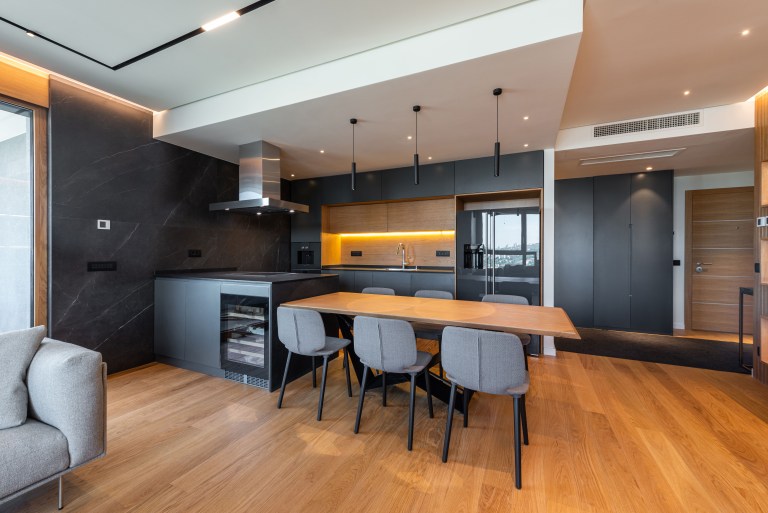
Specialty pantry and prep zones are a major 2026 kitchen signal. The useful version handles storage, appliances, drinks, and cleanup without creating a second kitchen nobody wants to maintain.

The pantry used to hold cereal, canned tomatoes, and the appliance you regretted buying. Now it would like a counter, a coffee machine, a sink, a beverage refrigerator, small-appliance storage, closed cabinetry, and possibly its own personality.
There is a reason this is happening. Open kitchens are being asked to look calm while functioning as work rooms. Moving some of the visual and practical mess into a support zone can make the main kitchen work better. The mistake is assuming more square footage automatically means more function.
Most households want the principle, not the room
Before any of this becomes a plan, be clear that the service-room idea does not require a service room. It fits inside one tall cabinet, one appliance garage, a beverage wall, a freestanding pantry, or a compact utility zone. The concept is separation: move one category of work out of the most visible part of the kitchen and give it a better home. Everything below applies at that scale too, and at that scale it is affordable.
Either way the space needs a job before it needs cabinetry. Decide whether it is mainly bulk storage, appliance parking, beverage service, baking, prep, cleanup, or entertaining support. It can do several things, but one job should determine the layout. Otherwise the room becomes a beautiful collection of counters with no clear reason to walk into it.
If the point is entertaining, give serving pieces, glassware, beverages, and cleanup a logical route. If the point is morning coffee and breakfast, keep mugs, beans, water, waste, cereal, and the machines together. If the point is bulk storage, accessibility matters more than a decorative backsplash nobody will see behind twelve packages of paper towels.
The support room should reduce travel, not create a second commute
Watch the route between the main kitchen and the pantry. Ingredients, dirty dishes, drinks, small appliances, and serving pieces all move. If the support room forces you to carry hot food through a doorway, circle an island, dodge a stool, and return for the thing you forgot, the floor plan has created theater of the wrong kind.
The door itself matters. Pocket doors are useful when they stay out of the way. Glass doors can make a pantry beautiful and also expose every cereal box to the living room. No door can be perfect if the room is meant to disappear into the kitchen. Choose based on how the space needs to behave, not on the current cabinet photo everyone is saving.
A bigger pantry can still have terrible storage
Deep shelves hold a great deal and make half of it annoying to reach. Tall cabinets add capacity and turn the top third into archaeology. Open shelves look generous until every bag, jar, appliance and backup supply becomes part of the room’s visual composition. Capacity is the easiest thing in the world to buy and very nearly the least useful thing to have.
Use drawers and pullouts for things that move often. Keep heavy appliances between knee and shoulder height when possible. Reserve the highest shelves for genuinely occasional items. Put task lighting where you prep, and enough interior light where deep storage would otherwise become a cave.
Let it have some personality
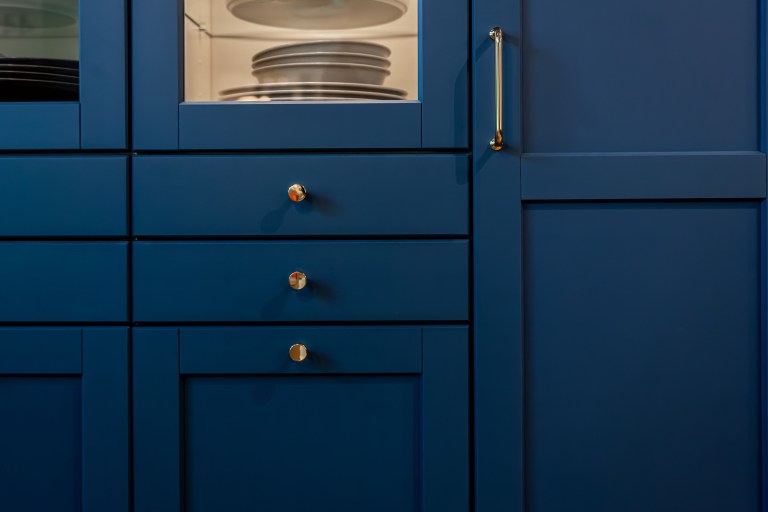
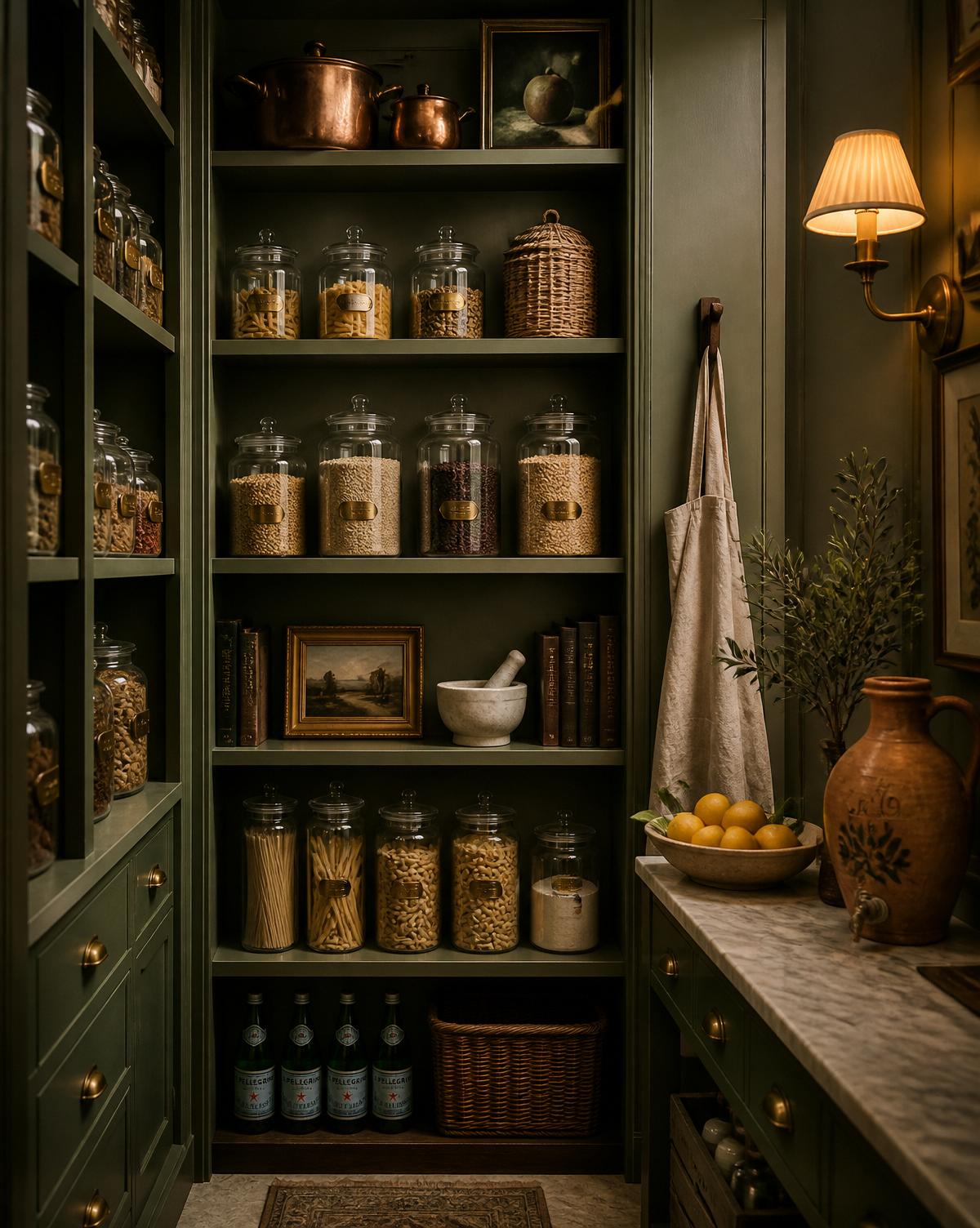
A back pantry does not have to be the beige understudy to the main kitchen. It can take darker cabinetry, stranger hardware, a richer wall color, a patterned tile, or a material you would not use across the entire public kitchen. Smaller support rooms are often good places to go further because the visual commitment is contained.
That does not mean every surface needs a trick. One strong move is plenty in a room that is already full of functional equipment, and hierarchy matters more here than anywhere else in the house, because a space packed with small objects has very little visual patience left to spend.
Whichever version of it gets built, the main kitchen should feel easier afterward. If the pantry removes countertop clutter, shortens hosting traffic, gives appliances a working home, or makes bulk storage easier to manage, it is doing useful work. If it simply duplicates cabinetry and becomes another room to clean, the house gained square footage and lost the argument. For what should actually live in the hosting layer of that pantry, Salty & Clever has the food-and-drink system.
Same problem, elsewhere in the house
Room notes
Keep the room on the record.
One useful note at a time: what to test, what to ignore, and what changed when the room got another vote.